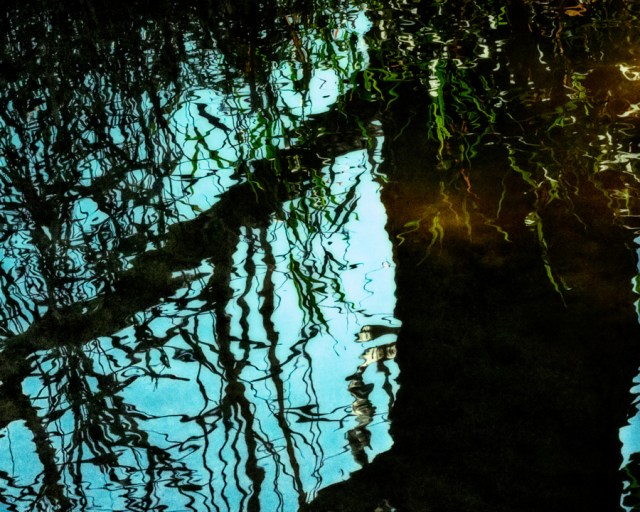
Nikon D750 f/29 1/400s 85mm 12800 ISO
Isn’t it true that it’s not people who meet,
but rather the shadows cast by their imaginations?
~Pascal Mercier, Night Train to Lisbon
Nikon D750 f/29 1/400s 85mm 12800 ISO
Isn’t it true that it’s not people who meet,
but rather the shadows cast by their imaginations?
~Pascal Mercier, Night Train to Lisbon
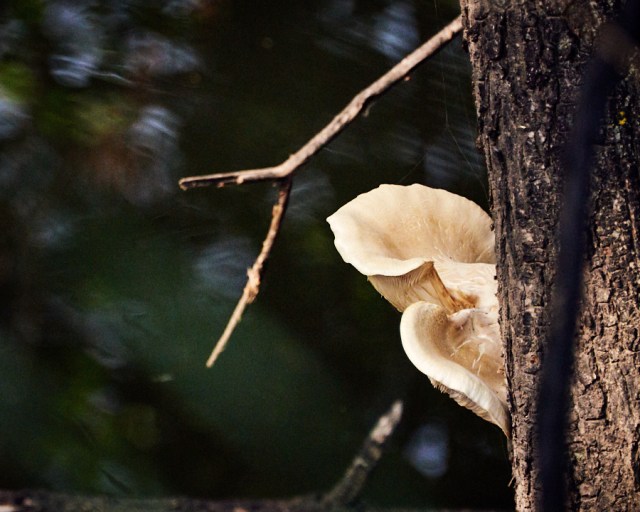
Nikon D750 f/5.6 1/400 300mm 100 ISO
When I was 14 I realized that a yucky, repetitive chore like mowing the lawn would end so much more quickly if I just allowed my mind to wander. In time I realized I could escape pain (physical and emotional) by shifting focus into an internal place of imaginative wanderings. As I write this it seems as if I chose to function in a vague dissociative dimension that is commonly referred to as autopilot. This mindless functioning is similar to how many people go through their daily lives, unaware of their unawareness.
To me this choice to go into autopilot is a stress management tool and can be an effective way to mange difficult moments; e.g., a root canal. The downsides of living life mindlessly by shifting focus to a place or time that is other than the present moment are:
1) life passes us by and we’ve miss wondrous moments – infant smiles, sun rises, bubble rainbows, falling stars, eye contact
2) we interact with others more from an imagined place, conversation, or conclusion than from reality itself
3) physical pain becomes chronic due to muscular tension that builds up from internal rehearsed arguments, speeches.
I have come to realize there is a physical tightening or bracing that unconsciously occurs while we are in our head. It is as if the brain senses the danger that comes from inattention and thus braces for an imagined attack from a saber tooth tiger or the possible fall that could occur while reading and walking.
4) we respond to life’s challenges from places of learned conditioning and imagined possibilities. For example, I have found myself grieving the ending of a Mozart piece while in the middle of the music. Thus sadness created from an expected outcome deafens me to the moment by moment experience. I call this personal crazy making.
So to pause in the middle of these emotional and mental rapids is to intentionally bring a roaming mind into the present. This intentional returning to self is to experience the refreshing flow of the breath; the movement of music as it travels throughout our soul (and to be with the music until it is no more and ask of ourselves, “where did the music go?”).
To quiet the ongoing ramblings within the mind and bring oneself into the present environment is to witness the dance of light and shadow upon a wall or the flow of steam above a cup of coffee. This stilled silence allows us to emotionally connect with another through the art of listening that guards us from injecting ourselves into their story.
When I do this I find that that these moment gift me with peaceful bliss as yesterday is not here and the next second has paused. In truth, despite all the worldly worries, possibilities, have tos, and shoulds this moment of non- judgmental awareness is life.
My awareness of this brings me to an intention. An intention that when doing yucky chores I will bring my focus to the sensual experience – the various sights, sounds, tastes, sensations, scents associated with dusting, washing dishes, sweeping, ect. Yet, I soon realize I unwittingly traveling through a land of Oz. So I non-judgmentally smile to myself in greeting and return to the moment, knowing and accepting that I’ll soon realize my mind has taken me elsewhere once again.
Research has found that mindfulness is associated with improved stress management, health, pain management, and problem solving. So to identify a event in one’s life — listening to music, bathing, walking, eating, knitting, writing in which to set out to be intentionally present is the door by which to learn how to be with oneself and to become aware when we have slipped away into a realm of mind making.
A daily formal meditative practice is good but most people struggle with setting aside 10 – 15 minutes for themselves (even though they will set aside hours watching TV).
So periodically throughout a day, I recommend a returning to the moment for a few minutes by asking oneself:
What am I thinking?
What physical sensations am I aware of in this moment?
What feeling am I feeling?
Where in my body do I feel this?
Shift your attention to the physical sensations of your breath. Be present with your breath for 3 cycles of in-breath, pause, out- breath, pause.
Ask yourself, “are my thoughts and/or feelings asking me to do something?” Listen to yourself for an answer.
End this mindful practice by bringing your awareness once again to your in-breath and with the out-breath release with a sigh. Gift yourself with a smile.
On a personal note, when I ask myself, “what am I thinking?” I often find that I can’t recall my thoughts.
May I welcome the peace within my in-breath. May I smile with the flow of peace within my out-breath. May all living beings know peace.
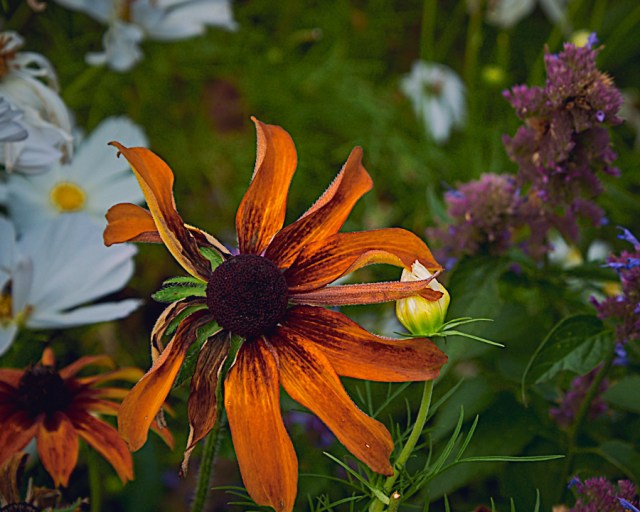
Nikon D750 f/5.6 1/400s 85mm 160 ISO
We leave something of ourselves behind when we leave a place, we stay there, even though we go away. And there are things in us that we can find again only by going back there.
~ Pascal Mercier, Night Train to Lisbon
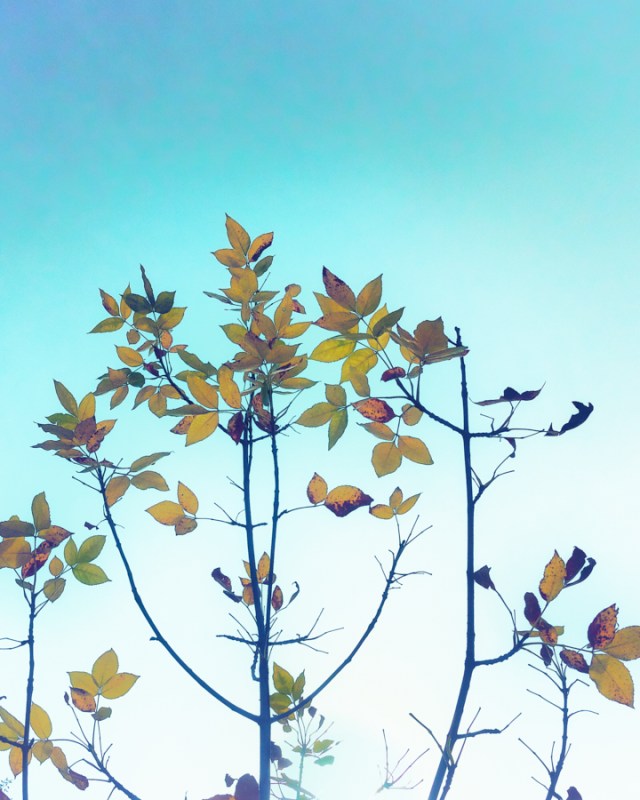
Sony RX100 III f/5 1/2000s 9.7mm 800 ISO
This week Patti at P.A. Moed invited photographers to “look up” and share what we see..I saw a smiling face. What do you see?

Intentionally, I set my mind upon the engagement of self with the process of reading the words of another with a knowing that I have accepted an invitation to consider an author’s worldview; that is, to place reality upon a shelf or to open a unique window of understanding.
…distraction, from this engagement as I become aware of a shadow presence – a transparent here-ness tinted with memories of you. It is as if you emerged from the printed page calling forth shared memories. I feel you sitting silently beside me. Within this silence, I begin to search for words, sentences that covey meanings and insights that awaken the joy that comes from an easing of longing and I hear myself whisper, “Here, a treasured story of thought that reconnects us, reflects a past time of us together, that validates words, ideas—you—and messages, ‘I have heard you within the sharing of love. I delight in knowing you. I wish to thank you for simply being…you are the joy that accompanies a gift in transit to being received.’”
…awareness, the words on the page have faded, I have disengaged myself from the invitation to consider the worldview of another as I entered imagined moments with you. I miss you. I miss us.
…accepting that what I yearn for can never be for I’m in the autumn of my life while you, my child, have now entered your summer as your children dance within their spring. Seasons flow one into another—their circular, repeating patterns defined by an unseen guiding hand—births expectations, hope and trust created from past consistencies.
History is remembrances re-emerging like the youthful sprout fragile in its newness, in its responding to life’s call. Yet, in time this newness will fade and become fragile as one’s autumn yields to their winter.
First posted on September 26, 2013
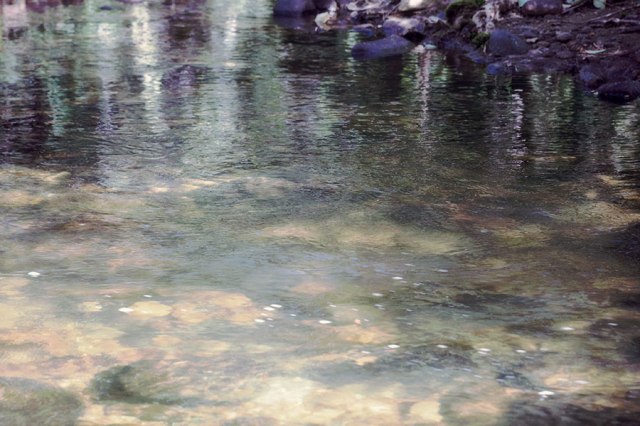
a metaphysical search…Nikon D750 f/7.1 1/25s 135m 100 ISO
I awaken to the mourning dove’s appeal for the sound of another, and find the passing dream state, like many before, was spent wandering through a petrified forest unlike any created by the ancient uniting of Gaea, Mother Earth, and Uranus, Father Heaven. It was filled with a longing, a seeking; it was a series of moments of futile endeavors.
As I walked upon moonlit pathways, edged by shadows of hidden yesterdays as well as shrouded by entangled memories, I encountered afterimages, echoes, phantoms, fragmented sequels, refrains, and vague specters. Now and then, it felt as though I had stepped on a “mind-trap” and suddenly became entangled inside an invisible emotional net that swirled me around and around from one apparition to another. Each apparition messaged that I have gone around and around in discursive circles once, twice, a thousand times throughout my lifetime of nights. I say to myself, “I’ve been here before. I’ve re-imaged, revisited, and reviewed past dreams as if I were an author rewriting a long ago discarded novel about an outcast.” Within this uncertainty a voice urges compassionate reflection.
Within stilled and silent reflection is an awareness of the emergence of a cluster of physical sensations from my stream of experiential consciousness. Together with the awareness of this particular cluster of physical sensations is the identification of a feeling I have labeled as “homesickness for a place, person, or time” and the creation of a story about an “I” who is an outcast.
TWO TRUTHS
From this point, I ask of myself, “What are the defining characteristics of a person who is an outcast?” I question if I have had these characteristics since the moment of my conception. I then discern if my relationship with all living beings, from my spouse to the robin outside my house, is limited to and defined by these characteristics. In other words, have I always been an outcast, and does every living being relate to me as an outcast?
I come to the conclusion that the answer to both of these questions is no. I now hear an encouragement to release the story line that arises from a false identification with “I am an outcast.” In conjunction with the release of this story line is the subsequent letting go of the construct of an unknown person, place, or time. Within the emptiness that accompanies this release arises a consciousness of feeling – sadness intertwined with loneliness. To find that to simply acknowledge this particular cluster of physical sensations with “sadness and loneliness is arising” and to resist the urge to identify with these feelings releases me from the wellspring of suffering within the label of “outcast.”
I am now free to concentrate on that discernment of myself as being freed from this metaphysical search, and to focus on this inferential understanding and to concentrate on discerning the impermanence of sadness and loneliness. This is the discriminating awareness that arises from meditating.
Thus you must train yourself: “In the seen there will just be the seen; in the heard, just the heard; in the reflected, just the reflected; in the cognized, just the cognized.” . . . when in the seen there will be to you just the seen; . . . just the heard; . . . just the reflected; . . . just the cognized, then . . . you will not identify yourself with it, you will not locate yourself therein. When you do not locate yourself therein, it follows . . . this will be the end of suffering. ~ The Buddha
Excerpts from B Koeford, A Meditative Journey with Saldage
Fallen to the ground
like those words of old –
glowing leaves ~Inko
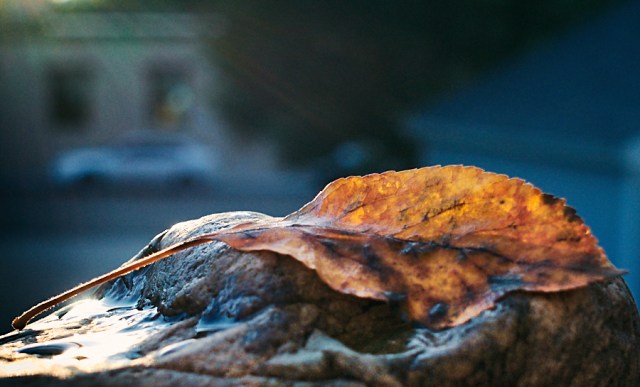
Sony RX100 III f/4 1/50s 17.9m 400 ISO
Amy (The World is a Book) invites us to share our interpretation of “small is beautiful.” Inko’s words tells me how the small messengers of autumn’s soon arrival are beautiful gifts celebrated today as well as long, long ago.
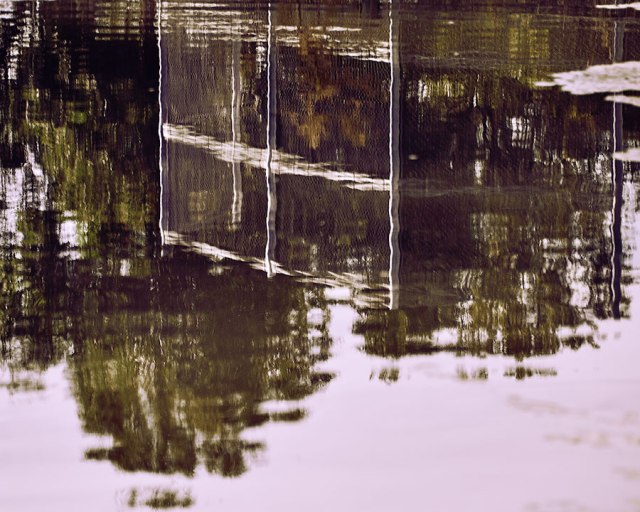
Nikon D750 f/5.6 1/400 180m 350 ISO
In the higher Buddhist view, appearances rise from emptiness and dissolve again…It is a process like birth, living, and dying…practice letting come and go…we may rest longer and longer in the space of openness…Don’t try to shape the oneness, or see it as one thing or another, or gain anything from it. Just let things be. This is the way to find your center. ~Tulku Thondup, The Healing Power of Mind
It is by its breath
That autumn’s leaves of trees and grass
Are wasted and driven.
So they call this mountain wind
The wild one, the destroyer.
~Fun’ya no Yasuhide

Nikon D750 f/4.5 1/400s 85mm 2200 ISO

contemplative photography…Nikon D750 f/5.3 1/80s 112mm 100 ISO
Standing at this Threshold
With uncertainty, I question:
What is it that I seek?
Protection? Compassion? Acceptance? Forgiveness? Completion?
Who is it that I beckon?
A father? A mother? A sister? A brother? A companion? A child? A god?
To be? To endure? To offer? To embrace? To validate?
An intentional presence that is drawn upon
A place and time of shadows, myths, and dreams?
Birthed within a family?
Matured within a relationship?
Nourished within a community?
Where the Stillness within Silence,
Affirms the exchange of life’s giving and taking,
Embraces the connection of life’s emotional threads, and
Observes the interdependence of life with non-judgmental awareness,
Yet, knows of a united oneness with another that can not be?
Since it can not be, do I yearn
To know integration through the formation of thought;
To see clarity through the flowing of ink; and
To feel completion through the act of creating?
And then, finally, within the stillness of silence,
I befriend
An internal companion with whom
There is an honoring of the who and what of which I am;
A woman, a daughter, a sister, a niece, a wife, a mother, an aunt, a grandmother, a great-grandmother.
I touch
With reverence the presence of all that was, is, and will be.
I release
The seeking, the beckoning, the yearning to the Winds of Change.
I with uncertainty, Step over this Threshold
Foreseeing a return
~bckofford

From my research about “seeing” through the eyes of a photographer, I learned that within our day-to-day lives we usually connect with the visual aspects of our world through various cognitive lenses. For example, a continuum of perceiving begins with sensory seeing on one side and conceptual seeing on the other. Sensory seeing perceives that which appear to our senses, and conceptual seeing perceives that which appear to the mind’s eye.
For example, while riding a train you glance up from your reading and do a quick glance at your fellow travelers. You may see a young adolescent, with blue hair, engrossed by the sounds coming through his earphones, an elderly couple with multi-colored silk scarves loosely wrapped around their necks and their gray-streaked hair, a handsome man, in a gray-toned business suit, snapping a newspaper as he becomes engrossed in an article, and towards the front you see and hear a group of tittering, fashionably-attired women.
Sensory seeing takes in the colors and textures of this environment—the sights, sounds, smells, tastes, and so on.
All the rest of your experience is conceptual. You see the visual forms of the “young adolescent”, “elderly couple,” “handsome man,” and “fashionably-attired women.” “Young,” “elderly,” “handsome,” “fashionably-attired” are not visible to the eye; these adjectives are the result of the thinking mind, the discriminating mind.

There are times as we move in and out of the dance of life, we become totally engrossed in the conceptual realm which blinds us to the sensory elements that create our world. Other times, our thinking mind begins to hush and a door opens to a sensory world. Generally, these two ways of being-in-the-world are in a mental flux in which we create stories with a blending and folding of what we are “seeing” overlaid with our “thinking.” It seems to me that this creative process serves to put-into-order the stuff within the environment so that there is an easing of uncertainty and to bring about a certainty of space and time; yet, this lessening of anxiety has the potential to obscure the richness and natural beauty of our sensory world.
Reality is transformed by our looking at it, because we enter it with our baggage of concepts. …But it is not easy to abandon concepts. …The armor of a scientist is his or her acquired knowledge and system of thought, and it is most difficult to leave that behind. … religious seekers have always been reminded that they must let go of all of their concepts to experience reality… ~ Thich Nhat Hanh (The Sun My Heart, p.82)
Personal concepts such as what is beautiful, artistic, worthwhile become blinding filters that overlay a photographer’s eye as they direct a search for subjects that fit into these personal templates. I was nudged away from my search for symmetric tree templates during a project in which I would spend 5 minutes being present with a Michael Kerr image. In time, I found myself slowly becoming freed from the fetters of this obsession to find the perfect tree.
Contemplative Photography
The word “contemplate” means to be within a process of reflection that draws on a deeper level of intelligence than our usual way of thinking about things. The root meaning of the word “contemplate” is connected with careful observation. It means to be present with something in an open space. This space is created by letting go of the currents of mental activity that obscure our natural insight and awareness.
Contemplative photography is a method of seeing and photographing the world in unique ways—through fresh eyes—inviting us to open ourselves to the richness and beauty through our sensory eyes. For example: capturing the beauty of shadows, elegance of lines or clash of colors, the elements which a passer by, lost in thought, will be unable to see.
Photography can be used to help distinguish the seen from the imagined, since the camera registers only what is seen. It does not record mental fabrications. As the photographer Aaron Siskind said, “We look at the world and see what we have learned to believe is there, [what] we have been conditioned to expect… But, as photographers, we must learn to relax our beliefs.”
Sensory Seeing
…the right presence of mind’ involves an empty and open state of mind with no definite plans, thoughts, desires, expectations, purposes, or ego-involvement-but where all is possible. ~Eugen Herrigel, cited W Rowe, Zen and the Magic of Photography
One thing that all these explanations have in common is that it is the process of clear seeing that is central to being at one with the present moment; to connecting with what you are experiencing.
How does clear seeing produce clear images? When you see clearly, your vision is not obscured by expectations about getting a good or bad shot, agitation about the best technique for making the picture, thoughts about how beautiful or ugly the subject is, or worries about expressing yourself and becoming famous. Instead, clear seeing and the creativity of your basic being connect directly, and you produce images that are the equivalents (this is Alfred Stieglitz’s term) of what you saw. What resonated within you in the original seeing will also resonate in the photograph.
Henri Cartier-Bresson offers key insights into this approach. He is reported to have said, “Thinking should be done beforehand and afterwards—never while actually taking a photograph. Success depends on the extent of one’s general culture, on one’s set of values, one’s clarity of mind and vivacity.”
…the creative mind of a photographer is like a piece of unexposed film. It contains no preformed images but is always active, open, receptive, and ready to receive and record an image. ~Minor White cited: W Rowe, Zen and the Magic of Photography
Exercise: Opening a Door to Sensory Seeing
The moment of clear seeing—an unfiltered flash of perception with silenced concepts generally last for a fraction of a second. Before the rush of the thinking, discriminating, conceptualizing, judging mind, we are gifted with a clarity of perception and basic form: color, light, texture, line, pattern, shape, space.
To open ourselves to “clear seeing”, I’m inviting you to open yourselves to an experiential exercise; to become a sensor of experience to flashes of perception.
I am finding myself excited about this learning phase of “a photo study.” I am looking forward to your images and thoughts. Let’s tag with #aphotostudy.
Moment after moment, everyone comes out from nothingness. This is the true joy of life.
~Shunryo Suzuki

Nikon D750 f/5.6 1/400 190m 100 ISO
 a meditative journey
You must be logged in to post a comment.