
Nikon D750 f/5.6 1/2,000 45mm 800 ISO
Nikon D750 f/5.6 1/2,000 45mm 800 ISO


Spring Creek…Nikon D750 f/4.5 1/2,000 85mm 100 ISO
“…we never just ‘see’ something in the sense that a photographic plate receives rays of light. In the real world we bring a lot of our selves to the party. And that means gaze alters what it finds.”
cited: Iain McGilchrist, The Master and his Emissary
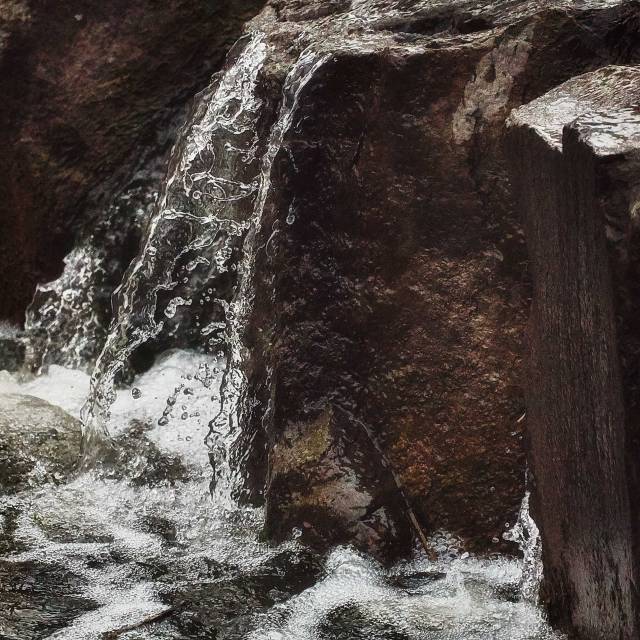
Spring Creek … f/5.6 1/4,000s 300mm 800 ISO
Choose one subject, anything will do — your own house, or the house opposite, or the next house — and in place of a tripod, drive a stake into the ground, nail a board on top of this, and make a screw hole in the board for the screw of your camera . . . Photograph your subject at every hour of the day, on fine days, and at intervals on dull days, photograph it after it has been rained on for weeks, and after it has been sun-dried for months.
~Frank Meadow Sutcliffe (cited: The Aperture History of Photography Series)
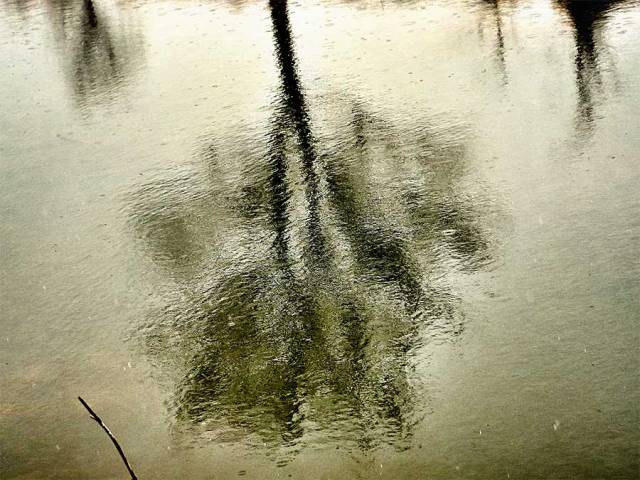
rippling reflections….Nikon D750 f/4.8 1/250 62mm 800 ISO
The weeping willows stand east of the curtained bowers;
Orioles and butterflies pass through the faded flowers.
But peach blossoms on Cold Food Day are beautified
By beauties living or buried by the lakeside.
~Liu Rushi
The other day, while wandering about YouTube, I stumble upon a Chinese movie, “Liu Ru Shi,” and was memorized by the story of her life’s journey within the Ming and Qing Dynasties.
The amazing cinematography that went into the telling of Liu Rushi’s life introduced me to a woman who is known as one of the “Eight Beauties of Qinhuai.” She was celebrated in her time for her beauty and talents and later appreciated and cherished for her integrity and patriotism.
Liu Rushi was not her original name, but a name she gave herself from one of her favorite poems written by Xin Qiji of the Song Dynasty (960-1279).
The movie begins at the time she was sold by her family to a prostitute as a stepdaughter and then, as a maidservant, to a rich scholar family. During the time in the Zhou household, she was educated in literature, poetry, music, calligraphy and painting. When Zhou died, she returned to a brothel when his wife and concubines threw her out of the home.
Liu often dressed as man, writing poems and discussing current affairs with scholars. She developed close relationships with a number of scholars such as Li Daiwen, Zong Zhengyu and Chen Zilong. She and Chen Zilong became romantically close; yet, when she learned that marriage was not an option he could consider she ended the relationship.
Years later, Liu introduced herself at home of Qian Qianyi, a well-known scholar and retired official, dressed in men’s clothing. Three years after their initial meeting Qian, in his late 50s, chose to disregard social norms and they married. The movie illustrates a close and supportive marriage, the events that occurred during her pregnancy with their daughter, and the struggles they experienced as the rebels entered Beijing and the Qing Dynasty took control.
Liu committed suicided a few months after Qian, 83 years of age, passed away.
Willow feathers fly into dream
Smoky moon brings out sorrow
From the moment I was thrown into the dusty world
I have experienced so many things and met so many people
So many crossroads
So much helplessness
Now I know that we will never understand
All the things happening around
Therefore I spent my whole life
To clean up the dusts my desires collected
Then I can be worry free and back to calmness.
Note: While trying to find published works of Liu Rushi’s poems I learned that she had some of her writings published alongside her husband’s. Yet, my research has not been very fruitful. If you know of any English translations, I would appreciate hearing from you.

Spring Creek Nikon D750 f/2 1/40s 35mm 100 ISO
The foundation of all mindfulness practice is awareness of the breath. There is no mindfulness without awareness of our in-breath and out-breath. Mindful breathing unites the body and mind and helps us to become aware of what is going on inside us and around us. In our daily life, we often forget that mind and body are connected. Our bodies are here but our minds are not. Sometimes we lose ourselves in a book, a film, the internet or an electronic game, and we’re carried off, far away from our body and the reality of where we are. Then, when we lift our head out of the book or look up from the screen, we may be confronted with feelings of anxiety, guilt, fear, or irritation. We rarely go back to our inner peace, to our inner island of calm and clarity, to be in touch with Mother Earth.
We can get so caught up in our plans, fears, agitations, and dreams that we aren’t living in our bodies anymore and we’re not in touch with our real mother, the Earth, either. We can’t see the miraculous beauty and magnificence that our planet offers to us. We are living more and more in the world of our minds and becoming increasingly alienated from the physical world. Returning to our breathing brings body and mind back together and reminds us of the miracle of the present moment. Our planet is rich here, powerful, generous, and supportive at every moment. Once we recognize these qualities in the Earth, we can take refuge in her in our difficult moments, making it easier for us to embrace our fear and suffering and to transform it.
Awareness of the in-breath and out-breath first of all calms us down. By paying attention to your breathing, without judgment, you bring peace back to your body, and release the pain and tension. …
When our minds and bodies have calmed down, we begin to see more clearly. When we see more clearly, we feel more connected to ourselves and to the Earth and we have more understanding. When there is clarity and understanding, love can bloom because true love is based on understanding.
…Each breath contains nitrogen, oxygen, and water vapor as well as other trace elements, so each breath that we inhale contains the Earth. With each breath, we’re reminded that we are part of this beautiful life-giving planet.
~Thich Nhát Hahn, (Love Letter to the Earth)
On the waters
of the flowing river
a jewel, a bead of foam —
the pity
of this fugitive world
~Saigyō (Poems of a Mountain Home, B Watson)
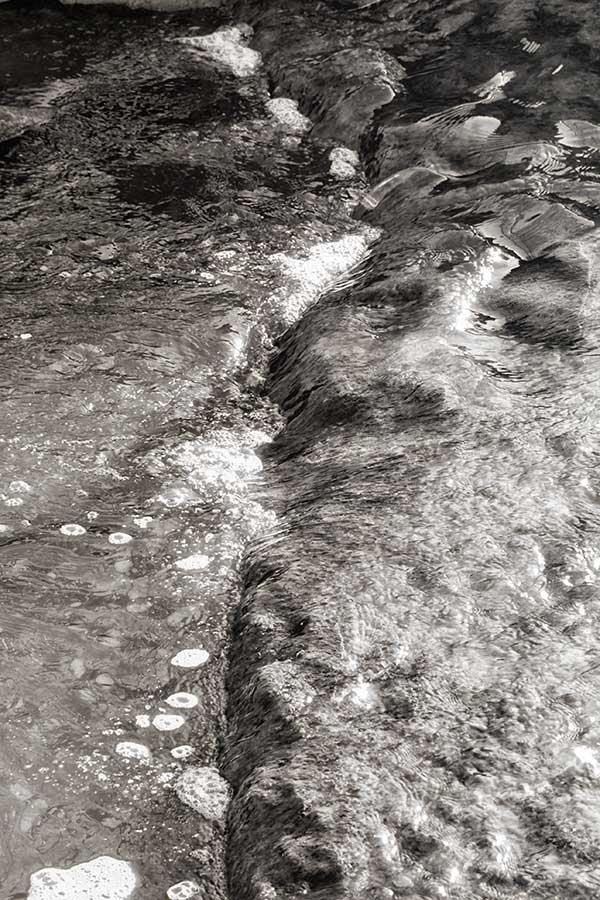
Nikon D750 f/9 1/160 90 mm

Horsetooth III Nikon D750 f/7.1 1/500s 50mm
Water covers 70% of our planet, and it is easy to think that it will always be plentiful. However, freshwater—the stuff we drink, bathe in, irrigate our farm fields with—is incredibly rare. Only 3% of the world’s water is fresh water, and two-thirds of that is tucked away in frozen glaciers or otherwise unavailable for our use
As a result, some 1.1 billion people worldwide lack access to water, and a total of 2.7 billion find water scarce for at least one month of the year. Inadequate sanitation is also a problem for 2.4 billion people—they are exposed to diseases, such as cholera and typhoid fever, and other water-borne illnesses. Two million people, mostly children, die each year from diarrheal diseases alone.
Many of the water systems that keep ecosystems thriving and feed a growing human population have become stressed. Rivers, lakes and aquifers are drying up or becoming too polluted to use. More than half the world’s wetlands have disappeared. Agriculture consumes more water than any other source and wastes much of that through inefficiencies. Climate change is altering patterns of weather and water around the world, causing shortages and droughts in some areas and floods in others.
At the current consumption rate, this situation will only get worse. By 2025, two-thirds of the world’s population may face water shortages. And ecosystems around the world will suffer even more
~www.worldwildlife. org
The wind whistles in the bamboo
and the bamboo dances.
When the wind stops,
the bamboo grows still.
A silver bird
flies over the autumn lake.
When it has passed,
the lake’s surface does not try
to hold on to the image of the bird.
~Poems by Vietnamese Dhyana Master Hai (Ocean of Fragrance)
Cited: Thich Nhat Hanh, The Heart of The Buddha’ Teachings

After my initial posting, I found myself motivated to revisit Spring Creek trail with more intention to pay attention to Raj’s (XDrive ) high speed lesson. He noted that this high speeds allows the photographer to freeze motion as it permits “only a fraction of a second for the sensor to ‘see’ the scene” and the sensor “is going to record things at standstill even though they are moving.”

Nikon D750 f/5.6 1/2,000 300mm ISO 800

Nikon D750 f/5.6 1/3,200 300mm ISO 800

Nikon D750 f/5.6 1/3,200 300mm ISO 800

Nikon D750 f/5.6 1/3,200 300mm ISO 800
Thank you Raj…this lesson plan opened up a whole new visual world as well as shed some light into the importance of intention and attitude within the creative process of photography.
If one’s mind is elsewhere,
one will look but not see,
listen but not hear.
~Confucian axion (cited: F Bowers, The Classic of Tradition of Haiku)

once green, now fading yellow
a beautiful leaf
all by itself in autumn

 a meditative journey
You must be logged in to post a comment.