Though the waterfall Ceased its flowing long ago, And its sound is stilled, Yet, in name it ever flows, And in fame may yet be heard. ~ Fujiwara no Kinto
Patti invited bloggers to explore the movement of objects or people. Since it is a bit too hot this weekend to go on a photo walkabout, I wandered through some old files. I hope you enjoy.
There is a unique joy within those moments when something flashes with an invitation to pause, to become acquainted, to compose, and to whisper, “Please remain as such while I set up my camera.”
To engage with what is as it is in the moment…one definition of contemplative photography.
A. Karr and M. Wood (The Practice of Contemplative Photography) notes that contemplative photography begins with “the flash of perception.”
In the flash of perception…there is a space for things to come to you. Experience is definite, because there is no doubt about what you are seeing… Whatever it is, it is here, and there is no doubt involved, no shakiness. The nature of perception is sharp, with a brilliant, clear quality. The flash of perception is a moment of seeing that is one-pointed, stable, and free from distraction. Experience is not diffused or scattered or moving. It is direct and in focus. It is stable because it is not tossed about by winds of thought or emotion. There is a stillness and roundedness as awareness remains with perception.
Visit Slow Shutter Speed to join this week’s lens-artist’s photo challenge: What’s your photographic groove?
the mouth that is penetrating distinguishes flavors,
the mind that is penetrating has understanding,
and the understanding that is penetrating has virtue. ~ CHUANG-TZU
peace lily
Every life is a point of view directed upon the universe. Strictly speaking, what one life sees no other can. Every individual, . . . is an organ, for which there can be no substitute, constructed for the apprehension of truth . . . Without the development, the perpetual change and the inexhaustible series of adventures which constitute life, the universe, or absolutely valid truth, would remain unknown . . . Reality happens to be like a landscape, possessed of an infinite number of perspectives, all equally veracious and authentic. The sole false perspective is that which claims to be the only one there is. ~José Ortega y Gasset
“Within the mind is a storehouse of memories that entered [my] psyche through the windows of [my] senses. The treaures received through the gift of sight, hearing, taste, touch, and smell…these are what I have come to cherish as yearnings for possessions fade from desire. What I yearn for now is to live a life filled with the creation of memories to visit and revisit again.”
April 2014
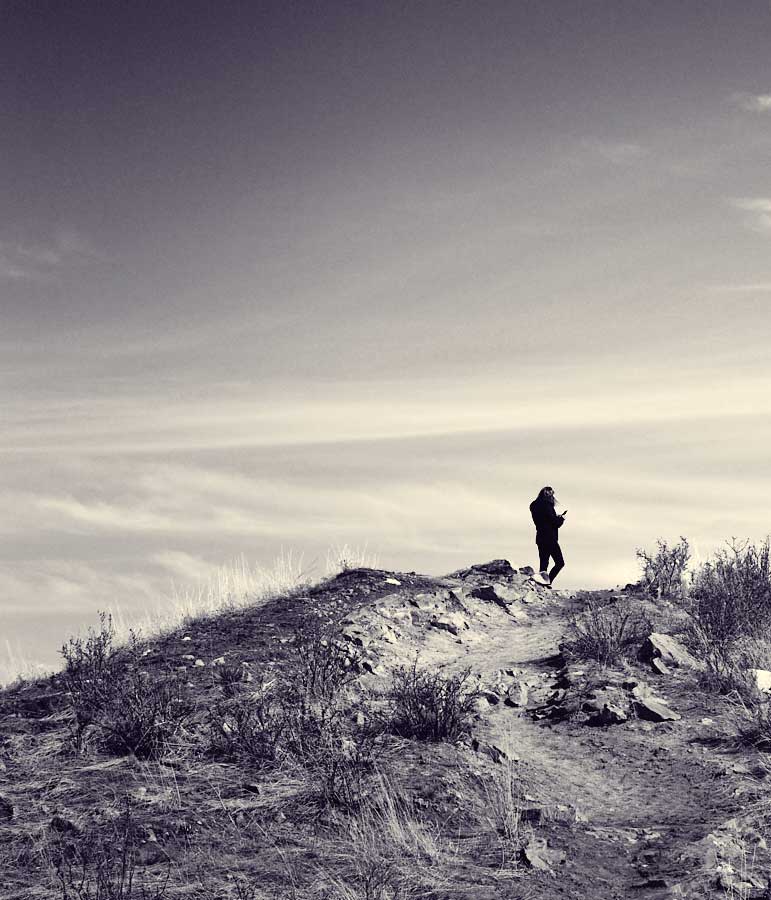
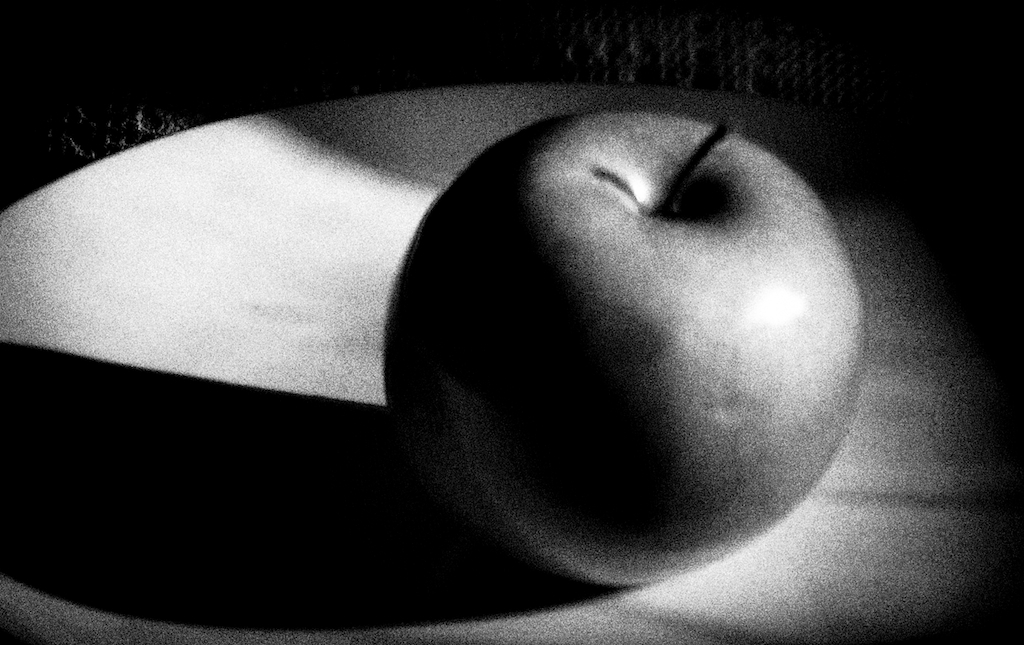
There was a man who was so disturbed by the sight of his own shadow and so displeased with his own footsteps that he determined to get rid of both. The method he hit upon was to run away from them.
So he got up and ran. But every time he put his foot down there was another step, while his shadow kept up with him without the slightest difficulty.
He attributed his failure to the fact that the was not running fast enough. So he ran faster and faster, without stropping, until he finally dropped dead.
He failed to realize that if he merely stepped into the shade, his shadow would vanish, and if he sat down and stayed still, there would be no more footsteps.*










 a meditative journey
You must be logged in to post a comment.