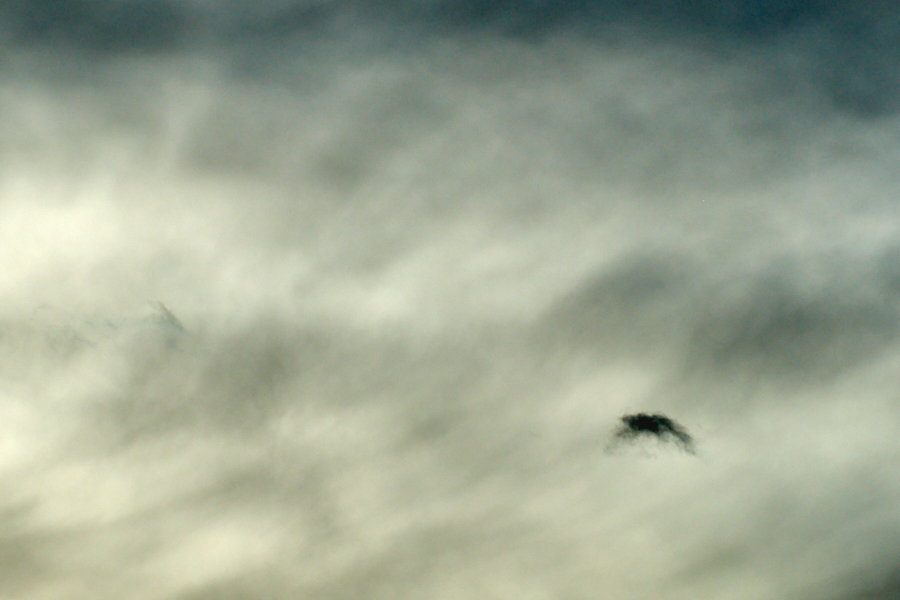
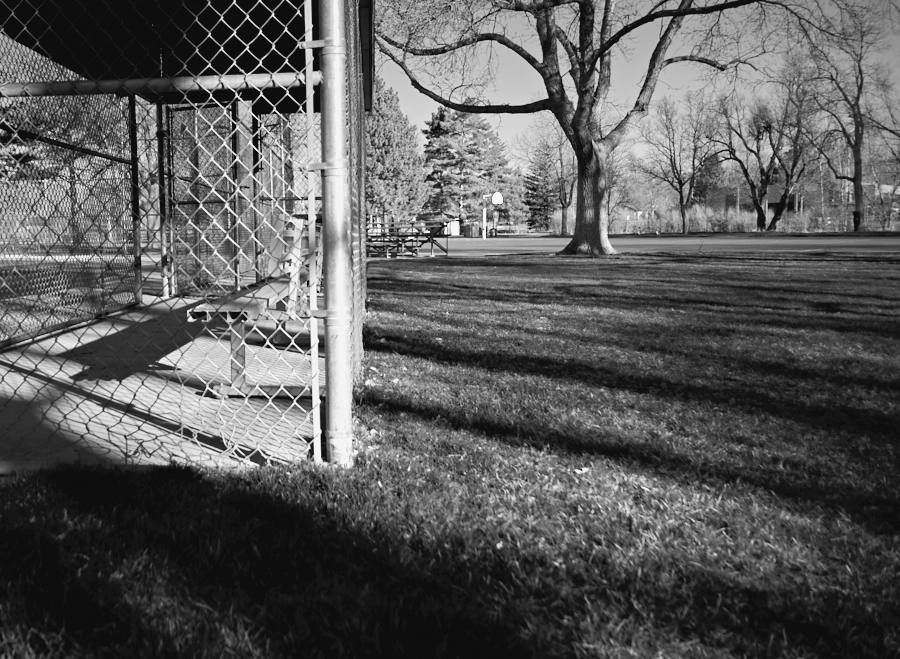
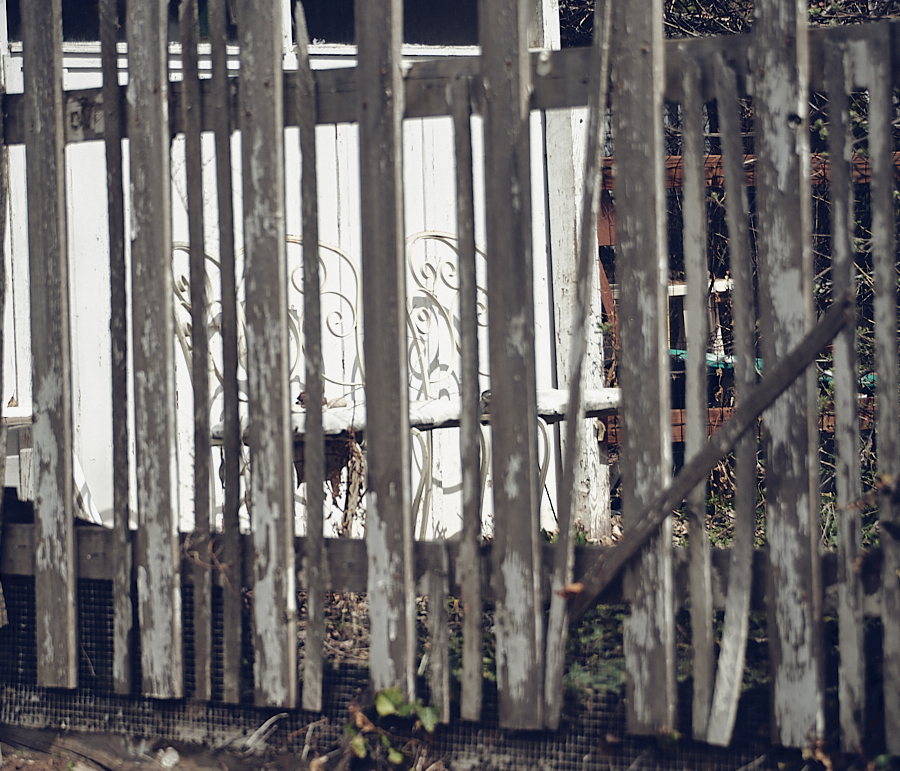
Stay at Home Order … day 28 plus 14 seclusion retreat days

Nikon D750 f/5.6 1/160s 300mm 400 ISO
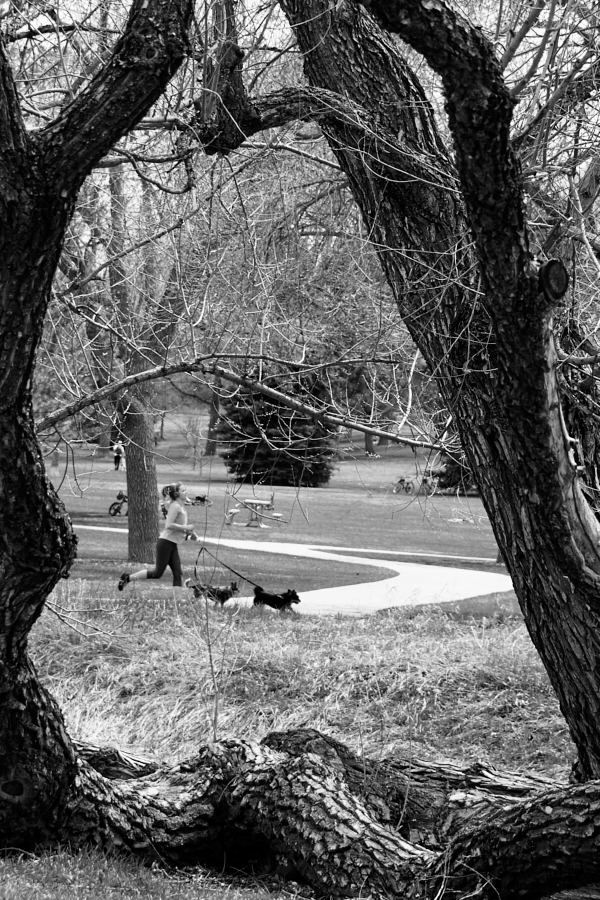
Stay at Home Order … day 28 plus 14 seclusion retreat days

Nikon D750 f/5.6 1/160s 300mm 400 ISO
Stay at Home Order … day 27 plus 14 seclusion retreat days
Refers to circumstances where it is possible to deny knowledge or responsibility of wrongdoing since the subject was unaware of the truth or due to a lack of evidence to confirm responsibility for an action. The use of the tactic implies intentionally setting up the conditions to plausibly avoid responsibility for future actions.
Fox News is nervous. This is what Gabriel Sherman, author of a New York Times-bestselling book about the cable news giant, recently told MSNBC. Sherman said Fox News insiders are expressing concern that the network’s “early downplaying” of COVID-19 might open it up to “legal action by viewers who maybe were misled and actually have died from this.”
Lawsuit Against Fox News Over Coronavirus Coverage: Can It Succeed? Should It?

Nikon D750 f/5.6 1/400s 72mm 400 ISO
The FCC prohibits broadcasting false information about a crime or a catastrophe if the broadcaster knows the information is false and will cause substantial “public harm” if aired.
FCC rules specifically say that “the public harm: must begin immediately and cause direct and actual damage to property or the health or safety of the general public; or divert law enforcement or public health and safety authorities from their duties.”
Broadcasters may air disclaimers that clearly characterize programming as fiction to avoid violating FCC rules about public harm.

The FCC is prohibited by law from engaging in censorship or infringing on First Amendment rights of the press. It is, however, illegal for broadcasters to intentionally distort the news, and the FCC may act on complaints if there is documented evidence of such behavior from persons with direct personal knowledge. For more information, please see our consumer guide, Complaints About Broadcast Journalism.
Stay at Home Order … day 26 plus 14 seclusion retreat days
in the thicket
behind the house, silence…
no one picking tea
~Issa (cited: haiku guy.com)

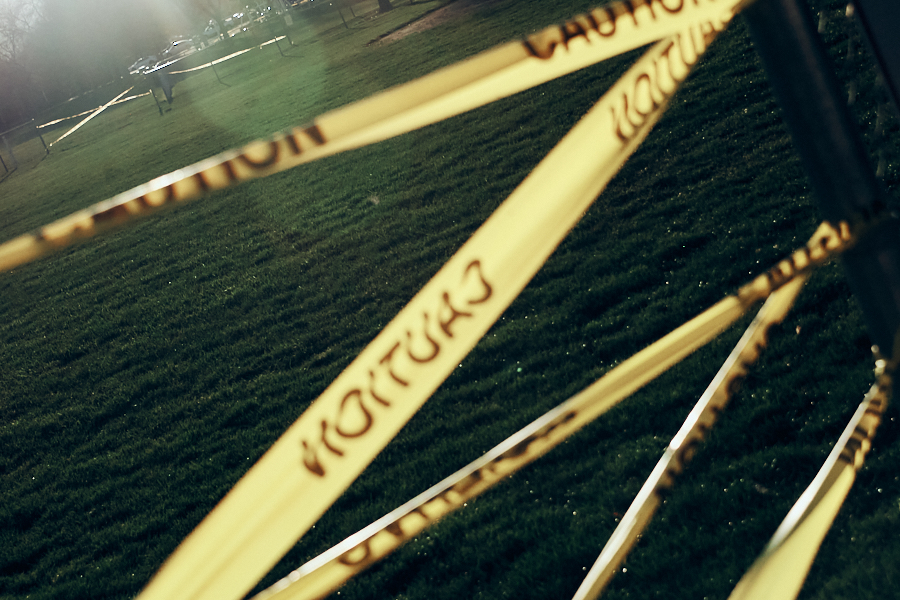
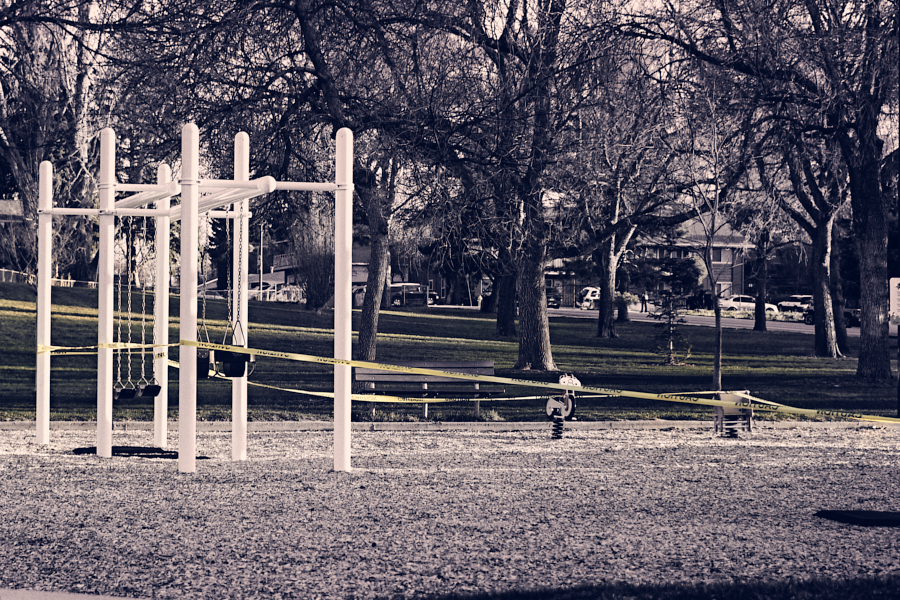
I find myself being drawn again and again to how the yellow caution tape forms a number of barriers around play areas within a park near my home. The tape intensifies the overwheming silence and emptiness contrasting with the news blitz that feeds powerlessness, sadness, anger, confusion, mistrust, division, anxiety, etc.
The empty playground also beings to mind the story of The Pied Piper of Hamelin. The story is a familiar one, but what most of us probably don’t know is that it has its feet at least somewhat planted in an apparently true event that took place in the real-life town of Hamelin, Germany in 1284.
The earliest accounts of the story don’t include the rats, which wouldn’t show up until around the year 1559, but they do include the piper, dressed in his “clothing of many colors.” there is not enough historical data to ascertain for certain what happened in the town of Hamelin in 1284, there is little doubt that something occurred there which left a heavy mark on the town, and on world folklore. Theories advanced over the years include that many of the town’s children died of natural causes that year; or possibly drowned in the nearby river; or were killed in a landslide, thus explaining the recurring motif of the rats being led into the water, or of the mountain opening up and swallowing the children. The pied piper himself is considered a symbolic figure of death.
One other explanation is that the children may have died of the Black Plague, which could be why the rats were later added into the story, though the Black Plague didn’t hit Germany until the 1300s, making its arrival probably too late to be the source of the legend.
Other theorists hold that the story of the pied piper actually refers to a mass emigration or even another Children’s Crusade like the one that may have occurred in 1212.
Our first clue about what really happened in the town of Hamelin comes from a stained glass window that stood in the town’s Market Church until it was destroyed in 1660. Accounts of the stained glass say that it alluded to some tragedy involving children, and a recreation of the window shows the piper in his colorful clothes and several children dressed in white. The date is set by an entry in Hamelin’s town chronicle, which was dated 1384 and said, simply and chillingly, “It is 100 years since our children left.”
Grammarist point out that the phrase “pied piper” usually has a pejorative connotation, pointing out that, “When it is time to pay the piper it is time to accept the consequences of a thoughtless or rash action” or to “fulfill a responsibility or promise, usually after the fulfillment has been delayed already.” Both of these meanings probably tie back to the legend of the pied piper.
Even the words “pied piper” have entered into common usage to mean everything from “a charismatic person who attracts followers” to “a leader who makes irresponsible promises” to “one who offers strong but delusive enticement,” according to the Merriam Webster Dictionary entry for pied piper meaning. “Pied piping” is also a phrase used to describe a certain phenomenon in linguistics in which some words “drag” others along with them when moved to the front of a sentence. (cited: The Chilling Story Behind the Pied Piper of Hamelin)
Now that I have got this obvious allusion out of my system, let’s move on the the composition elements within the above photograph:
Rule of Thirds
Rule of Odds
Leading Lines from right to left
Space
Triangle created by the placement of the “triangle” snow pile with the two subjects
Did I miss any or did I mis-see any?
Stay at Home Order … day 25 plus 14 seclusion retreat days
O for a friend–that we might see and listen together!
O the beautiful dawn in the mountain village!–
The repeated sound of cuckoos near and far away.
~The Sarashina Diary (cited: Diaries of Court Ladies of Old Japan)

in the silver dew
one sleeve cold…
morning sun
~Issa (cited: haikuguy.com)

A nightingale’s song
Brings me out of a dream:
The morning glows
~Ryokan

at dawn
not a soul in sight…
lotus blossoms
~Issa (cited: haikuguy.com)

In the Autumn night
The pale morning moon was setting
When I turned away from the shut door.
~The Diary of Izumi Shikibu (cited: Diaries of Court Ladies of Old Japan)

This week Ann-Christine invites us to look at our morning – or Any morning -maybe there is a special morning that we will never forget.
*The waning moon is called the morning moon because it can be seen after dawn
Have we now come to the time in which to honestly acquaint
ourselves with private inner and outer moral guiding principles
and within this solitude with self
foresee how our individual choices/actions may impact the future of humanity?
I begin this contemplation with a clear knowing that I do not wish to wake from this time of mistrust and uncertainty to the prison bars of moral shame.
Stay at Home Order … day 24 plus 14 seclusion retreat days

“… Syme could hardly see for the patterns of sun and shade that danced upon them. Now a man’s head was lit as with a light of Rembrandt, leaving all else obliterated; now again he had strong and staring white hands with the face of a negro. The ex-Marquis had pulled the old straw hat over his eyes, and the black shade of the brim cut his face so squarely in two that it seemed to be wearing one of the black half-masks of their pursuers. The fancy tinted Syme’s overwhelming sense of wonder. Was he wearing a mask? Was anyone wearing a mask? Was anyone anything? This wood of witchery, in which men’s faces turned black and white by turns, in which their figures first swelled into sunlight and then faded into formless night, this mere chaos of chiaroscuro (after the clear daylight outside), seemed to Syme a perfect symbol of the world in which he had been moving for three days, this world where men took off their beards and their spectacles and their noses, and turned into other people.

That tragic self-confidence which he had felt when he believed that the Marquis was a devil had strangely disappeared now that he knew that the Marquis was a friend. He felt almost inclined to ask after all these bewilderments what was a friend and what an enemy. Was there anything that was apart from what it seemed? The Marquis had taken off his nose and turned out to be a detective. Might he not just as well take off his head and turn out to be a hobgoblin? Was not everything, after all, like this bewildering woodland, this dance of dark and light? Everything only a glimpse, the glimpse always unforeseen, and always forgotten. For Gabriel Syme had found in the heart of that sun-splashed wood what many modern painters had found there. He had found the thing which the modern people call Impressionism, which is another name for that final scepticism which can find no floor to the universe.
As a man in an evil dream strains himself to scream and wake, Syme strove with a sudden effort to fling off this last and worst of his fancies. …

cited: The Project Gutenberg Ebook of The Man Who Was Thursday, by G.K. Chesteron
The above photographs were created with a Nikon D750, f1/8, 35mm, 100 ISO. Shutter speeds of 1/3200 to 1/4000.
Stay at Home Order … day 21 plus 14 seclusion retreat days
“A haiku is not a poem, it is not literature; it is a hand becoming,
a door half-opened, a mirror wiped clean. It is a way of returning
to nature, to our moon nature, our cherry blossom nature, our
falling leaf nature, in short, to our Buddha nature. It is a way in
which the cold winter rain, the swallows of evening, even the very
day in its hotness, and the length of the night, become truly
alive, share in our humanity, speak their own silent
and expressive language.”
– Haiku: Eastern Culture, 1949, Volume One, p. 243.

Nikon D750 f/5.6 1/640s 300m 400 ISO
This month I’ve continued with my intention to study and implement composition elements as offered through an on-line education site, Udemy. Thus far, I have completed two of their photography courses.
The Art of Seeing Photography training for the Artist in you
Art of Seeing Photography composition
It is my intention for the next 30 days to “focus” on the basics of composition, both within camera and digital darkroom.
The image above was created by moving closer (telephoto lens) at a construction site with simplicity in mind. I learned in the second class that if photographers find the environment to be boring…they need to move in closer. Also, beautifully composed photographs will include 3-5 rules. It is my thought that the above image includes:
space
golden points, right to left
lead room
close-in with blurred background
sharpness
Do the shadows meet the rule of odds?
Does this photo include the element of dark figure on light background?
Do you have any constructive feedback about the above image? Do you see something I may have overlooked? If so, I would enjoy reading your thoughts. Thanks!
Stay at Home Order … day 18 plus 14 seclusion retreat days

Nikon D750 f/1.8 1/4000s 35mm 200 ISO
Northeastern Colorado’s mundane landscape that speaks of the transition of spring’s awakening from late winter’s fading is a time in which I find myself yearning for colors other than the various shades of browns, yellows, and blue skies.

Nikon D750 f/1.8 1/4000s 35mm 200 ISO
After reading Fletcher and Hewitt’s ebook (A Journey in Composition) I set out to explore if I could open myself to the beauty within this time through various compositional elements of photography: leading lines, repetition, points of interest, complementary colors, and vanishing points.

Nikon D750 f/1.8 1/4000s 35mm 200 ISO

Nikon D750 f/1.8 1/3200s 35mm 200 ISO


A Journey in Composition, an ebook written by photographers Christian Fletcher and Tony Hewitt, outlines their travel across the western United States. The ebook covers fundamental aspects of composition, including color and interpreted composition techniques while paying homage to the techniques of the old masters – Stephen Shore and William Eggleston.
Stay at Home Order … day 16 plus 14 seclusion retreat days
Someone’s ragball
in the hedge, plum blossoms
fluttering down ~Enomoto Seifu
(cited: Trans: Makoto Ueda, Far Beyond the Field)

Nikon D750 f/1.8 1/640 35mm 200 ISO
Stay at Home Order … day 15 plus 14 seclusion retreat days
At best of times,
hard to break away,
and now with the flush of dawn
cuckoo* makes it worse
by singing out!
~Saigyō (cited: Trans: B Watson, Poems of a Mountain Home)

Nikon D750 f/1.8 1/640 35mm 200 ISO
*In Chinese and Japanese poetry, the cuckoo is the bird of memory
Stay at Home Order … day 14 plus 14 seclusion retreat days
leaving the town
breathing easier…
firefly ~Issa (cited: haikuguy.com)

Nikon D750 f/1.8 1/4000 35mm 200 ISO
“The rapid increase of carbon dioxide concentration in Earth’s modern atmosphere is a matter of major concern. But for the atmosphere of roughly two-and-half billion years ago, interest centres on a different gas: free oxygen (O2) spawned by early biological production. The initial increase of O2 in the atmosphere, its delayed build-up in the ocean, its increase to near-modern levels in the sea and air two billion years later, and its cause-and-effect relationship with life are among the most compelling stories in Earth’s history.”
(cited: Lyons, Timothy W.; Reinhard, Christopher T.; Planavsky, Noah J. The rise of oxygen in Earth’s early ocean and atmosphere: Nature, Volume 506, Issue 7488, pp. 307-315 (2014).
“The oxygen holocaust was a worldwide pollution crisis that occurred about 2,000 million years ago. Before this time there was almost no oxygen in the Earth’s atmosphere. The Earth’s original biosphere was as different from ours as that of an alien planet. But purple and green photosynthetic microbes, frantic for hydrogen, discovered the ultimate toxic waste, oxygen. Our precious oxygen was originally a gaseous poison dumped into the atmosphere. … (The atmospheres of Mars and Venus today are still more than 95 percent carbon dioxide; the Earth’s is only 0.03 percent.)…”
(cited: Lynn Margulis, Dorion Sagan Microcosmos: Four Billion Years of Microbial Evolution
Stay at Home Order … day 13 plus 14 seclusion retreat days

Nikon D750 f/1.8 1/4000 35mm 200 ISO
Return within,
to the place where there is nothing,
and take care that nothing comes in.
Penetrate to the depths of yourself,
to the place where thought no longer exists,
and take care that no thought arises there!
There where nothing exists,
Fullness!
There where nothing is seen,
the Vision of Being!
There where nothing appears any longer,
the sudden appearing of the Self!
Dhyana is this! ~Abhishiktananda, Swami (Henri Le Saux)

Nikon D750 f/1.8 1/2500 35mm 200 ISO
“‘I am a portrait,’ repeated the Professor. ‘I am a portrait of the celebrated Professor de Worms, who is, I believe in Naples.'” …
“‘Do explain yourself,’ said Syme.”
“‘With pleasure, if you don’t mind hearing my story,’ replied the eminent foreign philosopher. ‘I am by profession an actor, and my name is Wilks. When I was on the stage I mixed with all sorts of Bohemian and blackguard company. Sometimes I touched the edge of the turf, sometimes the riff-raff of the arts, and occasionally the political refugee. In some den of exiled dreamers I was introduced to the great German Nihilist philosopher, Professor de Worms. I did not gather much about him beyond his appearance, which was very disgusting, and which I studied carefully. I understood that he had proved that the destructive principle in the universe was God; hence he insisted on the need for a furious and incessant energy, rending all things in pieces. Energy, he said, was the All. He was lame, shortsighted, and partially paralytic. When I met him I was in a frivolous mood, and I disliked him so much that I resolved to imitate him. If I had been a draughtsman I would have drawn a caricature. I was only an actor, I could only act a caricature. I made myself up into what was meant for a wild exaggeration of the old Professor’s dirty old self. When I went into the room full of his supporters I expected to be received with a roar of laughter, or (if they were too far gone) with a roar of indignation at the insult. I cannot describe the surprise I felt when my entrance was received with a respectful silence, followed (when I had first opened my lips) with a murmur of admiration. The curse of the perfect artist had fallen upon me. I had been too subtle, I had been too true. They thought I really was the great Nihilist Professor. …'” (cited: The Project Gutenberg Ebook of The Man Who Was Thursday, G.K, Chesterton)
May you be safe.
my blossom comrades
when next we meet…
how many springs from now? ~Issa (cited: haikuguy.com)

Nikon D750 f/1.8 1/1600 35mm 200 ISO
You must be logged in to post a comment.