The hunting lanterns
on Mount Ogura have gone,
the deer are calling for their mates…
How easily I might sleep,
if only I didn’t share their fears.
~Ono no Komachi (cited: J Hirshfield & M Aratani, The Ink Dark Moon)
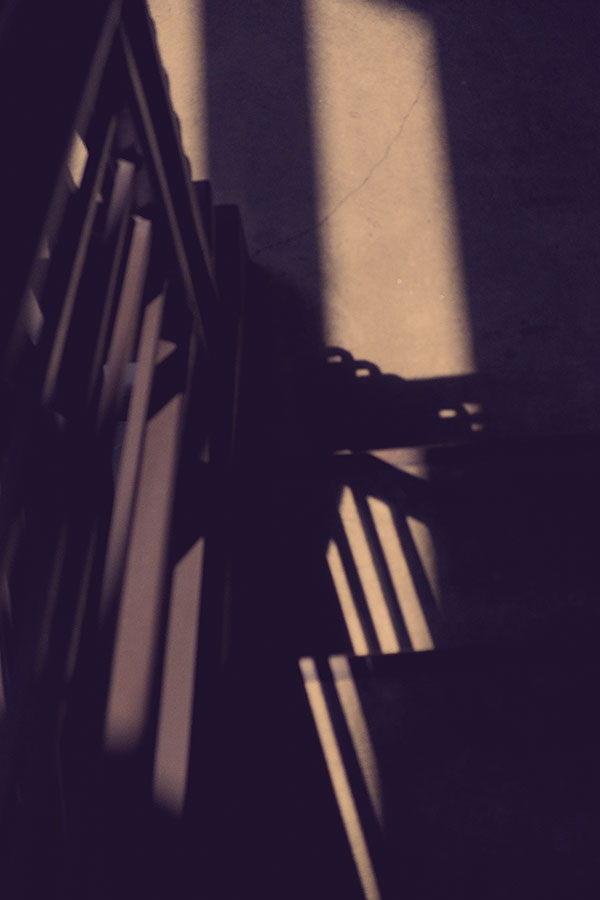
The hunting lanterns
on Mount Ogura have gone,
the deer are calling for their mates…
How easily I might sleep,
if only I didn’t share their fears.
~Ono no Komachi (cited: J Hirshfield & M Aratani, The Ink Dark Moon)
In the aging house,
crookedness of the door being straightened,
a spring-like winter day.
~Buson (Y Sawa & E Shiffert, Haiku Master Buson)

Walking on, walking on,
things wondered about — springtime,
where has it gone on too?
~Buson (Y Sawa & E Shiffert, Haiku Master Buson)

On the shortest path,
stepping through water to cross
in the summer rains.
~Buson (Y Sawa & E Shiffert, Haiku Master Buson)
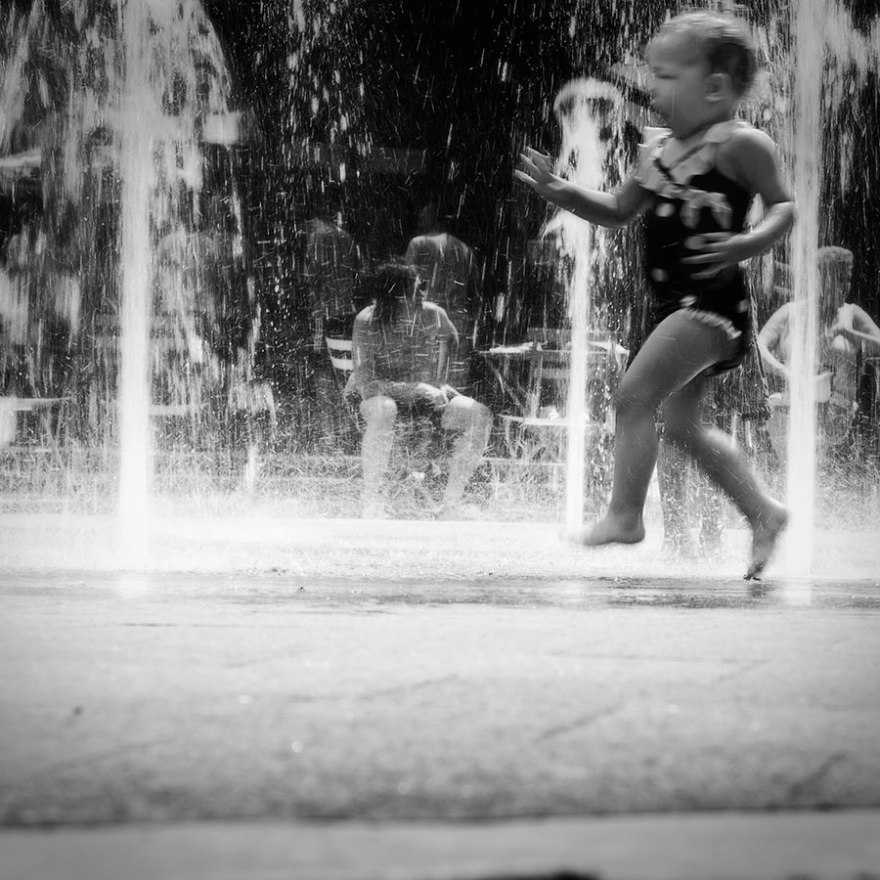
No trail to follow
where the teacher has wandered off —
the end of autumn
~Buson (Y Sawa & E Shiffert, Haiku Master Buson)

and then… Vivaldi’s Four Seasons
An artistic journey through the seasons….a lens-artist’s challenge offered by Tina.

image submitted in response to RyanPhotography’s mid-week monochrome – mwm – 11 challenge.
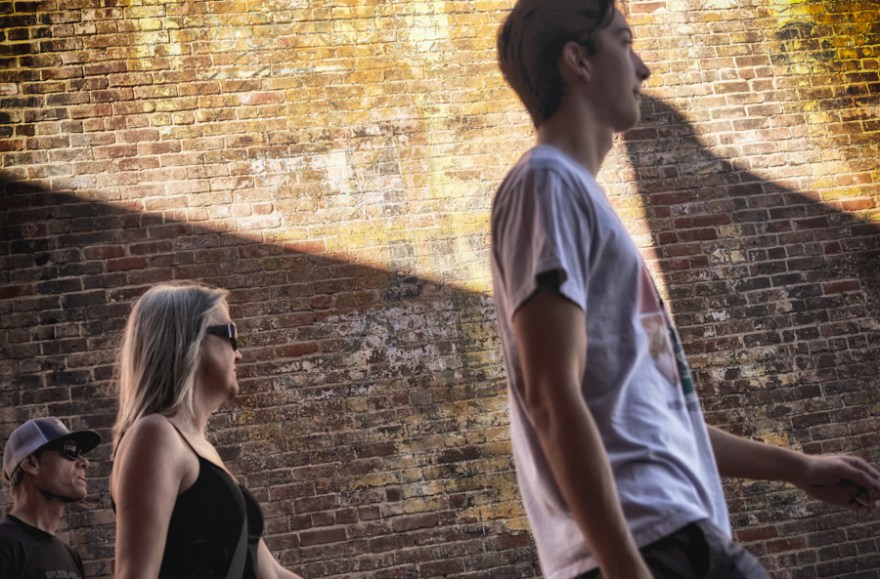
“The fact that one may misunderstand the content of a picture is of no concern to the picture, which leads its own life independent of our interpretations. For some years the writer thought that the tree in Edouard Boubat’s picture grew on the top of a hill… What he finally realized that the tree stands not against the sky but against a wall, it was a momentary shock. But the picture refused to adapt itself for the sake of the new interpretation. It remained precisely as it had been before. …A picture is what it looks like. ~J Szarkowski, Looking at Photographs


The last part of the Diary [Sarashina Diary] is concerned chiefly with accounts of pilgrimages and dreams. She married, who and when is not recorded, and bore children. Her husband dies, and with his death the spring of her life seems to have run down. Her last entry is very sad: “My people went to live elsewhere and I lived alone in my solitary home.” So we leave her “a beautiful, shy spirit whose life had known much sorrow.” ~Diaries of Court Ladies of Old Japan

Image and excerpt from Diaries of Court Ladies of Old Japan submitted in response to Traveling at Wits End’s photo challenge: the journey home.

You can learn about the pine only from the pine, or about the bamboo only from bamboo. When you see an object, you must leave your subjective pre-occupation with yourself; otherwise you impose yourself on the object, and do not learn. The object and yourself must become one, and from that feeling of oneness issues your poetry. However well phrased it may be, if your feeling is not natural—if the object and our self are separate—then your poetry is not true poetry but merely your subjective counterfeit. ~ Basho

a white egg, on a white plate, on a white table cloth…submitted in response to Jenn’s Traveling at Wit’s End photo challenge: white on white

Nikon D750 f/8 1/400s 300mm 1250 ISO
With five weeks left of this year-long project, it is the time to explore how we as photographers
…eventually get to a point where we are comfortable with a certain look, a certain subject, or genre. Our work becomes recognizably ours. Sometimes this is done intentionally, sometimes we become well known for a subset of our work and everyone wants more of it. ~Dan K (Japan Camera Hunter)
I found that Dan K’s last two learning steps — Find Yourself and Reinvent Yourself — dovetail nicely with the Master Class Live series that Ted Forbes created a number of years ago, Developing your Creative Style.
The first of this Master Class series, Developing your Eye, begins with an introduction of his intention for this four week series:
To introduce exercises that will help us improve our creative work as photographers and to encourage us to allow our images to emerge through the camera from the source of our individual selves:
To understand photography as an art form
The materials used in the Master Class series are: a camera (exception for the “Wish I had my camera” exercise), framing template, small notebook, pencil/pen, photo browser software like Adobe Bridge that allows you to view images that do not have post adjustment tools.
Exercise I: I Wish I Had My Camera
tear down walls to get from the concrete to the imagined
This exercise is designed to encourage awareness of photographic memory through the use of a journal to record spontaneous creative ideas that generally fade after a few seconds and incorporate pre-visualization as a creative tool. It is common for creative people to experience creative moments during times of disengagement — in the shower, while falling into or awakening from sleep.

Sony RX100 III f/2.8 1/100s 25.7mm 800 ISO
…just let your imagination flow. If you have an image in your head it may take a number of times to create the image or it may even takes years.
Exercise II: Finding Your Own Creative Voice
I would love to read about your experience with “wish I had my camera” and about the photographers who resonate with your creative soul. Let’s tag with #aphotostudy.
The Master Class YouTube videos and the history video are around an hour long. I have found that it is difficult to sit and view a video for this period of time, so I generally break it down to 20 minute segments.
Below are the The Photographer posts that reviewed Dan K’s steps to becoming a better photographer.
https://ameditativejourney.wordpress.com/2018/08/11/a-photo-study-the-photographer-iii/
https://ameditativejourney.wordpress.com/2018/08/18/a-photo-study-the-photographer-iv/

“…is it the wish—the dreamlike, bombastic wish—to stand once again at that point in my life and be able to take a completely different direction than the one that has made me who I am now?
“There is something peculiar about this wish, it smacks of paradox and logical peculiarity. Because the one who wishes it—isn’t the one who, still untouched by the future, stands at the crossroads. Instead, it is, the one marked by the future become past who wants to go back to the past, to revoke the irrevocable. And would he want to revoke it if he hadn’t suffered it. …it’s the absurd wish to go back behind myself in time and take myself—the one marked by events—along on this journey.” ~P Mercier (Night Train to Lisbon, pp. 51-54)
“No man ever steps in the same river twice, for it’s not the same river and he’s not the same man.” ~ Heraclitus
When my heart came to rule
in the world of love,
it was freed
from both belief
and from disbelief.
On this journey,
I found the problem
to be myself.
When I went beyond myself,
the pathway finally opened. ~Mahsati Ganjavi
In the autumn when words sound
like the echo of a stone ax,
some demon in me
wants to rise up and walk away.
~Baba Akiko (K Rexroth & I Atsumi, The Burning Heart)
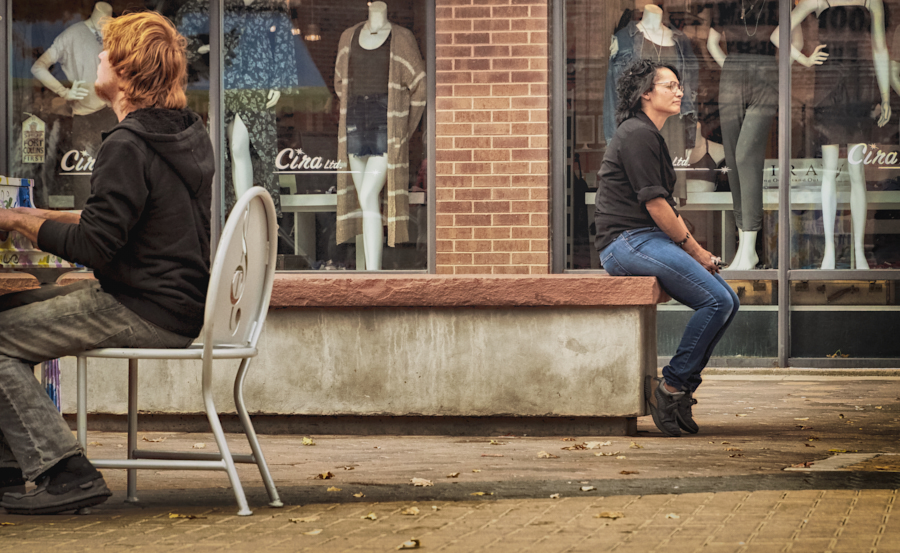
 a meditative journey
You must be logged in to post a comment.