a photo study: contemplative photography IX: equivalence

… to hold a moment, how to record something so completely, that all who see [the picture of it] will relive an equivalent of what has been expressed.    ~Alfred Stieglitz (cited: http://www.metmuseum.org)

The theory of equivalence was inspired by Wassily Kandinsky’s belief that colors, shapes, and lines reflect the inner, often emotive “vibrations of the soul.”  In his cloud photographs, which he termed Equivalents, Stieglitz emphasized pure abstraction, adhering to the modern ideas of equivalence, holding that abstract forms, lines, and colors could represent corresponding inner states, emotions and ideas.

The following are excerpts from Equivalence: The Perennial Trend: Minor White, PSA Journal, Vol. 29, No 7, pp 17-21, 1963 (cited: http://www.johnpaulcaponigro.com)

A change of perspective is a change in state. Jean Piaget reminds us that, “What we see changes what we know. What we know changes what we see.” Perception changes reality… The more conscious the perception the stronger the change. Furthermore, the quality of consciousness one engages perception with influences what is perceived, what is produced, how it is received and the consequences that has. Acting on what one observes, choosing and sustaining one thing / quality amid many others, reinforces that state of being and this is particularly true if during observation one creates something tangible and durable and never more true if multiple related works are created. Often, during the process of manifestation perception continues to change, further extending this process of revelation and transformation.

 The visible can be used to reveal the invisible; the external can be used to reveal the internal.    ~Alfred Stieglitz 

Minor White remarked, “One should photograph things not only for what they are but also for what else they are.” and “Equivalence is a function, not a thing.” He did not mean to suggest that equivalence was merely a rhetorical device. Equivalence is more than a rhetorical device, not a simile that suggests shared commonalities (this is like that), not a metaphor that observes shared qualities through the power of transformation (this is that), but a process inclusive and transcendent of both. Like a simile its power starts with the recognition of shared qualities and like a metaphor its power lies in transformation, but an equivalent transcends both through a heightened state of self-awareness, even to the point of transforming the self through its accompanying effects of clarity and commitment.

Equivalence embraces and elevates the debate over whether photographs are windows (onto the world) or mirrors (into the soul) and whether they are taken (through distant observation, objective to varying degrees) or made (through immediate interaction, subjective to varying degrees), illuminating many more levels of an evolving process. Through equivalence the photographic object created becomes a reflection of both the external things it represents and the internal states of its creator. This reflective capacity is extended to the viewers, who re-experience this shared process in their own ways.

Resonance is a consequence of equivalence. What we create can transform us. We then become co-creators, creating not only things and ideas but selves. What we create can also transform others, triggering cascades of sympathetic vibrations, if we imbue our creations with a persistent resonance, brought on by intensity, clarity and connection (connection to subject, medium, self, and others). Through the experience of art, the powers of perception and transformation can be awakened, in both the ones who create directly and the ones who [perceive] indirectly.

Stieglitz set a shining example for us all. He demonstrated that the full power of our photographs lies not in special subjects or moments but in what we bring to the picture, which can be much more than technical skill, compositional prowess, and cultural awareness. Through photography we can simultaneously bear witness to things / events, affirm our connection / participation with them (even if only as observers, no small thing), and clarify our understanding / interpretation of the confluence of everything that is brought to bear in each moment and the continuing resonances they produce. More than an intellectual interpretation or emotional expression, this is a process of holistic integration.

The photograph can be much more than a material trace of another material; it can even be much more than a trace of light and time; it can also be a trace of spirit, the energetic confluence of body, mind, and emotion, either single or multiple.

contemplative photography 4

White reminds us that this process of self-realization is open to everyone, “With the theory of Equivalence, photographers everywhere are given a way of learning to use the camera in relation to the mind, heart, viscera and spirit of human beings. The perennial trend has barely been started in photography.” Though all photographers do it, not all photographers do it with equal clarity or intensity. Regardless of what level they engage this process, whenever photographers break through to new levels of consciousness the results are transformative for the photographer and the viewer and even the viewed, sometimes subtly and sometimes dramatically is a form of contemplative photography that asks us to see our world in a new way. In some ways it seems very simple, but it is not always easy.

myths of suffering

contemplativephoto-reflectionweb9719

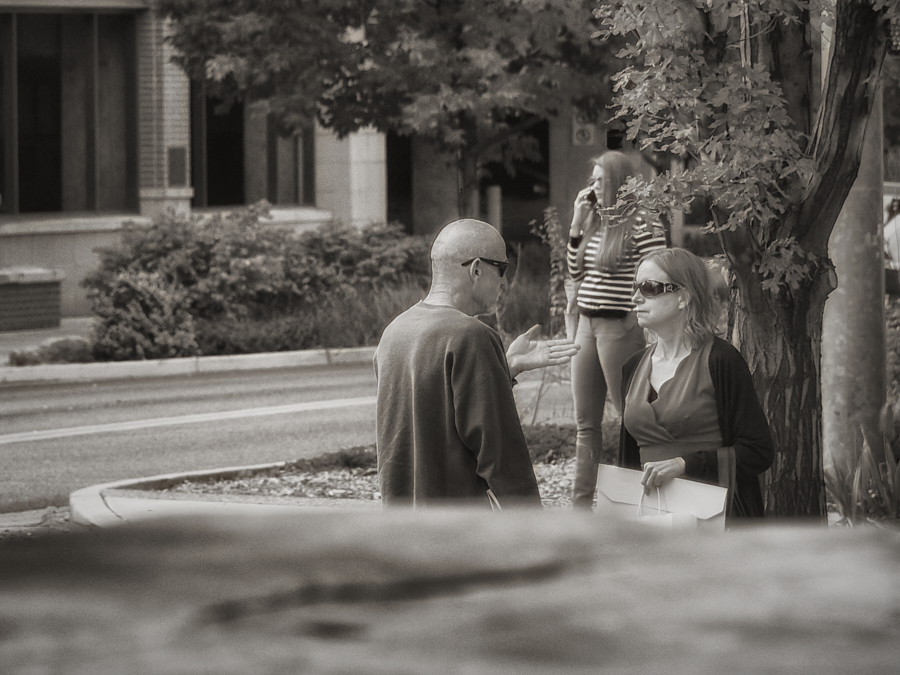
Baring the Soul…Nikon D750   f/4.5   1/1,250   85m   100 ISO

Stories, myths, and parables acknowledge and respect the unique individuality of each of us. Myths give voice, through their use of symbols, to what is hidden, unknown, or evasive. Stories that share the dynamics of human interactions silently plant a seed of personal truth in the dark component of each of us, waiting for the appropriate time to bloom and to nourish. They also illustrate the universal theme of suffering and its resolution. Parables, with their multiple levels of meaning, honor the unique perspective and understanding of both listener and speaker.  These multiple layers of meaning touch what is salient to the reader and thus gift all readers with an invitation to define for self their own understanding, interpretation, and application.  

The story of the Veranda provides an example . . .

once upon a time in a peaceful village people would gather during the lunch hour to rest, eat their afternoon meals, and exchange village news and gossip.  In the village square, some people chose to sit on the grass, others rested in the shade of a large tree, while some chose to sit underneath a century-old veranda. One afternoon without warning tragedy came to the village.  Five people died and two were seriously injured when the veranda broke loose and fell to the ground. 

Before the end of the day, rumors, myths, and suppositions began to formulate from questions such as why that particular veranda? Why that particular day? Why that particular time? Why those particular people and not others?  Does the heavens hear the cries of so many suffering souls?  Why does the heavens remain silent as weeping and yearnings fill the universe?  What needs to happen for one to be comforted by heaven’s truth of life and death?  

These universal questions which have failed to ease suffering have given birth to myths of old.

Excerpts from B Koeford, A Meditative Journey with Saldage

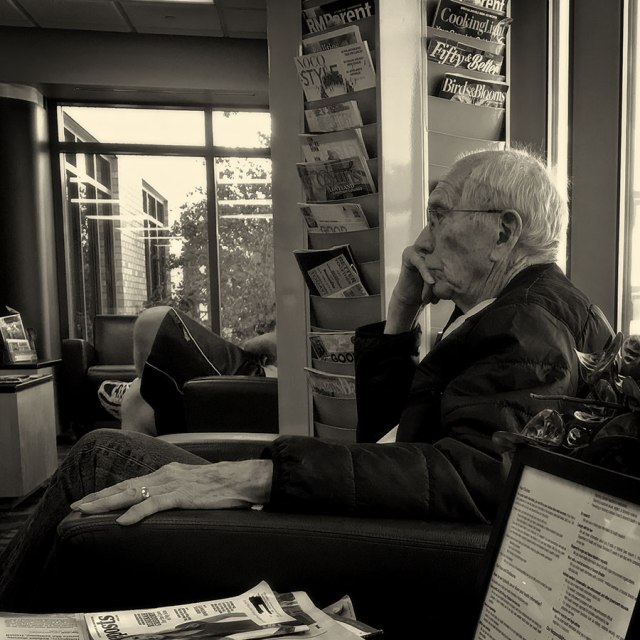
early morning readings

contemplative photography 26 copy

Sony RX100 III  f/5   1/800s   8.8mm  800 ISO

A world without memory is a world of the present. The past only exists in books, in documents. In order to know himself, each person carries his own ‘Book of Life,’ which is filled with the history of his life. By reading its pages daily, he can relearn… Without his Book of Life, a person is a snapshot, a two-dimensional image, a ghost. … Some pass the twilight hours at their tables reading from their Books of Life; others frantically fill its extra pages with the day events.

With time, each person’s ‘Book of Life’ thickens until it cannot be read in its entirety.  Then comes a choice.  Elderly men and women may read the early pages, to know themselves as youth; or they may read the end, to know themselves in later years.

Some have stopped reading altogether.  They have abandoned the past.  They have decided that it matters not if yesterday they were…. no more than it matters how a soft wind gets into their hair. ~A Lightman, Einstein’s Dreams

In his 1991 file ‘Prospero’s Books’, a cinematic adaptation of William Shakespeare’s ‘The Tempest’, Peter Geenaway showed a series of exotic books that were kept in a library on a magical island and revealed just enough of their content to have me wishing the fantasy books were real. Among my favorites are ‘The Book of Colors,’ where “the pages cover the spectrum in finely differentiated shades…a ‘Book of Motion’ that describes, in animated illustrations, all possibilities for dance with the human body. ~J F Simon, Jr., Drawing Your Own Path

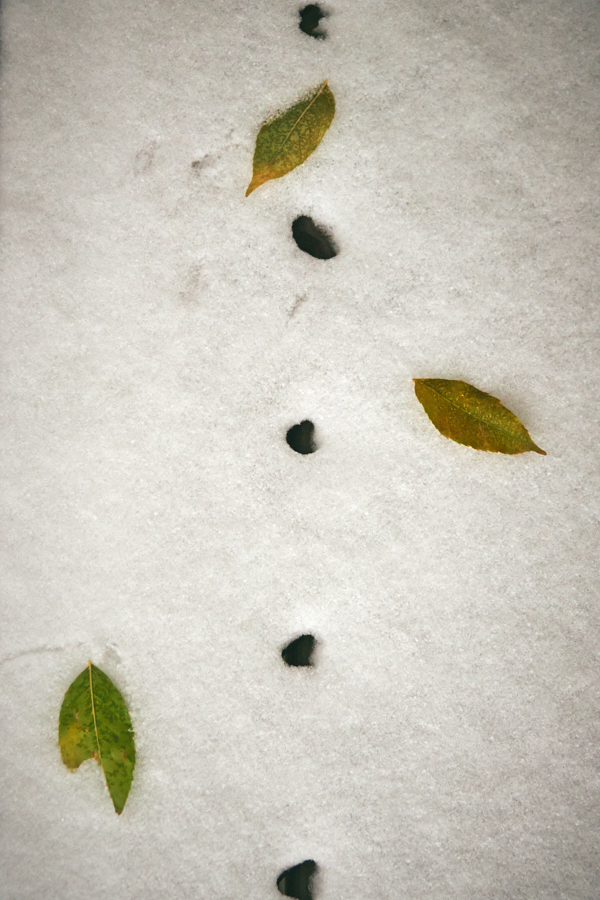
pond reflections

mind stream–rippling

a tumble jumble babble

current–afterthoughts

pondreflectionsweb82418

light patterns…Nikon D750   f/4.5   1/400s  85mm   200 ISO

“…there is something more fundamental about the world that is brought into being by the right hemisphere, with its betweenness, its mode of knowing which involves reciprocation, a reverberative process, back and forth, compared with the linear, sequential, unidirectional method of building up a picture favored by the left hemisphere.” ~I McGilchrist, The Master and his Emissary

early morning readings

contemplative photography 5

Sony RX100 III  f/4  1/80s  23.9m  250 ISO

“This LeWitt drawing [All Two-Part Combinations of Arcs from Corners and Sides, Wall, Drawing #842, white crayons, black pencil, grid, 14×18 ft.], white lines on a large black field, created a strong presence in the gallery. That presence was beautifully offset by the simplicity of the system it described. Until that show, I believed that conceptual art was about the idea-the concept–and thus that the drawing on the wall was only there to display the idea. I believed this until one day during the show, when I found myself alone in the gallery in front of the wall and my vision was filled with black paint and the pebbly, waxy marks of the white crayon. At that moment the piece seemed to open a door in my mind. Rather than the concept being processed like art in my brain, I felt a sense of integration–my eyes and body were involved, a union between the concept and the materials, neither standing alone. My view transitioned from an analytical appreciation of a system called ‘art’ into an utter, complete presence with an artwork…” ~J F Simon, Jr., Drawing Your Own Path

“Observe the changes that take place in your mind under the light of awareness. Even your breathing has changed and become ‘not-two’ (I don’t want to say ‘one’) with your observing self. This is also true of your thoughts and feelings, which, together with their effects, are suddenly transformed. When you do not try to judge or suppress them, they become intertwined with the observing mind.” ~Thich Nhat Hanh, The Sun My Heart