beauty in patterns of shadows

beautyofshadows

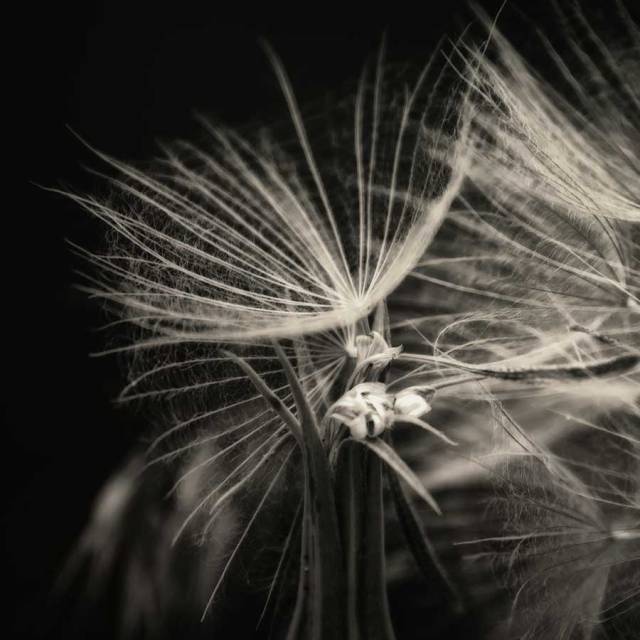
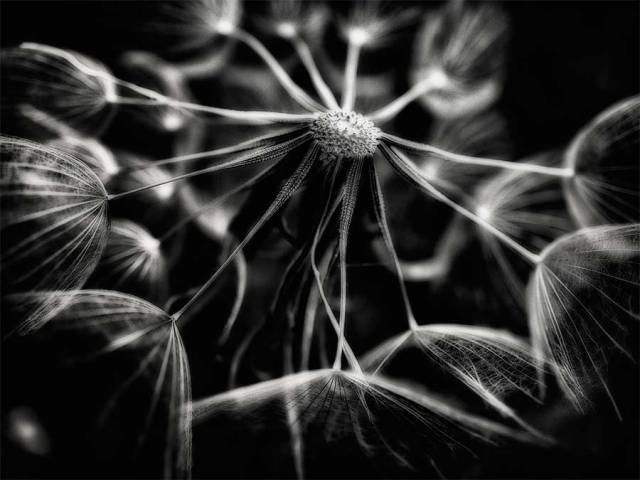
“My mother was remarkably slight, under five feet I should say, and I do not think that she was unusual for her time. I can put the matter strongly: women in those days had almost no flesh. I remember my mother’s face and hands, I can clearly remember her feet, but I can remember nothing about her body. She reminds me of the statue of Kannon in the Chuguji, whose body must be typical of most Japanese women of the past. The chest as flat as a board, breasts paper-thin, back, hips, and buttocks forming an undeviating straight line, the whole body so lean and gaunt as to seem out of proportion with the face, hands, and feet, so lacking in substance as to give the impression not of flesh but of a stick–must not the traditional Japanese woman have had just a physique? A few are still about–the aged lady in an old-fashioned household, some few geisha. They remind me of stick dolls, for in fact they are nothing more than poles upon which to hang clothes. As with the dolls their substance is made up of layer of clothing, bereft of which only an ungainly pole remains. But in the past this was sufficient. For a woman who lived in the dark it was enough if she had a faint, while face–a full body was unnecessary. …we…create a kind of beauty of the shadows we made in out-of-the-way places…we find beauty not in the thing itself but in the patterns of shadows, the light and the darkness, that one thing against another creates.”

~Jun’ichiro Tanizaki, (In Praise of Shadows, pp.29-30)

thursday’s special: vision

Vision:  Unable to see things clearly unless they are relatively close to the eyes, owing to the focusing of rays of light by the eye at a point in front of the retina; myopic

visionwebvisionbwebvisoncweb

The Six Blind Men & the Elephant, a famous Hindu fable that tells the story of six blind sojourners that come across different parts of an elephant. In turn, each blind man creates his own version of reality from that limited experience and perspective. The video below is a illustrated version sharing an aged truth about our human condition and the relation between relative and absolute truth.

Jump on over to Lost in Translation to join this week’s Thursday’s Special.

wpc: transient

this rain

a greeting card from heaven

midsummer heat.

~Issa (www.haikuguy.com)

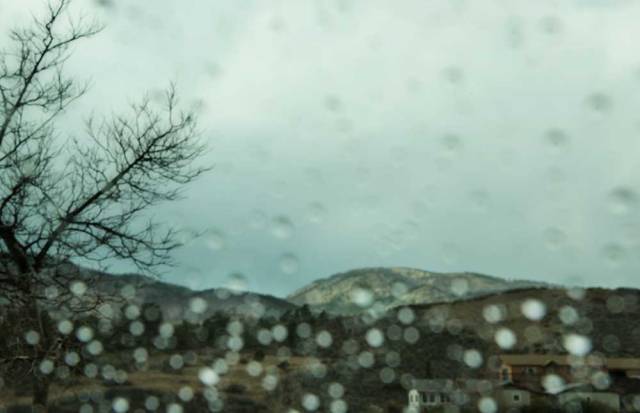
What are the various conditions—past and present, known and unknown—that come together to create raindrops? Scientists have suggested that the interactions between water vapor, dust particles, and wind turbulence within clouds create millimeter-sized droplets which are heavy enough to begin their descent towards earth. And in the process of falling, the droplets accumulate more and more moisture, becoming the raindrops we see on the ground.

wpc_transant

This scientific explanation of how raindrops form invites contemplation of the prior conditions that create vapor, dust, and wind. Each of these transient phenomenon is a telling of the ongoing weaving and unweaving of interconnected threads creating the various phenomena we experience within each given moment.

This weaving and unweaving of threads is noted by Thich Nhat Hanh, “This is, because that is. This is not, because that is not. This is born, because that is born. This dies, because that dies.”