In the peaceful light
Of the ever-shining sun
In the days of spring,
Why do the cherry’s new-blown blooms
Scatter like restless thoughts? ~ Ki no Tomonori

Nikon D750 f/8 1/8s 300mm 400 ISO edited: Capture One 20 and Color Efex Pro 4
In the peaceful light
Of the ever-shining sun
In the days of spring,
Why do the cherry’s new-blown blooms
Scatter like restless thoughts? ~ Ki no Tomonori
Nikon D750 f/8 1/8s 300mm 400 ISO edited: Capture One 20 and Color Efex Pro 4
80th day…

Excerpt from The Sarashina Diary, “Diaries of Court Ladies of Old Japan“
“There is a mountain called Ashigara [Hakoné] which extends for ten and more miles and is covered with thick woods even to its base. We could have only an occasional glimpse of the sky. We lodged in a hut at the foot of the mountain. It was a dark moonless night. I felt myself swallowed up and lost in the darkness, when three singers came from somewhere. One was about fifty years old, the second twenty, and the third about fourteen or fifteen. We set them down in front of our lodging and a karakasa [large paper umbrella] was spread for them. My servant lighted a fire so that we saw them. They said that they were the descendants of a famous singer called Kobata. They had very long hair which hung over their foreheads; their faces were white and clean, and they seemed rather like maids serving in noblemen’s families. They had clear, sweet voices, and their beautiful singing seemed to reach the heavens. All were charmed, and taking great interest made them come nearer. Some one said, ‘The singers of the Western Provinces are inferior to them,’ and at this the singers closed their song with the words, ‘if we are compared with those of Naniwa’ [Osaka]. * They were pretty and neatly dressed, with voices of rare beauty, and they were wandering away into this fearful mountain. Even tears came to those eyes which followed them as far as they could be seen; and my childish heart was unwilling to leave this rude shelter frequented by these singers.
“Next morning we crossed over the mountain.** Words cannot express my fear*** in the midst of it. Clouds rolled beneath our feet. Halfway over there was an open space with a few trees. Here we saw a few leaves of aoi**** [Asarum caulescens ]. People praised it and thought strange that in this mountain, so far from the human world, was growing such a sacred plant. We met with three rivers in the mountain and crossed them with difficulty. That day we stopped at Sekiyama. Now we are in Suruga Province. We passed a place called Iwatsubo [rock-urn] by the barrier of Yokobashiri. There was an indescribably large square rock through a hole in which very cold water came rushing out.”
“Mount Fuji is in this Province. …”
skyscape photograph created with Nikon D750 f/8 1/500s 200mm 400 ISO and edited in Capture One 20 and Photoshop
Footnotes:
*This seems to be the last line of a kind of song called Imayo, perhaps improvised by the singers; its meaning may be as follows: “You compare us with singers of the Western Provinces; we are inferior to those in the Royal City; we may justly be compared with those in Osaka.”
**Hakoné Mountain has now become a resort of tourists and a place of summer residence.
***Fear of evil spirits which probably lived in the wild, and of robbers who certainly did.
**** Aoi, or Futaba-aoi. At the great festival of the Kamo shrine in Kioto the processionists crowned their heads with the leaves of this plant, so it must have been well known.
79th day…
glorious sunset—
feeling a chill, my teeth,
twenty in all, rattle
~Ishibashi Hideno (1909-1947) cited: M Ueda, Far Beyond the Field

skyscape photography: Nikon D750 f/8 150s 92mm 400 ISO edited Capture One
isolation retreat 78th day
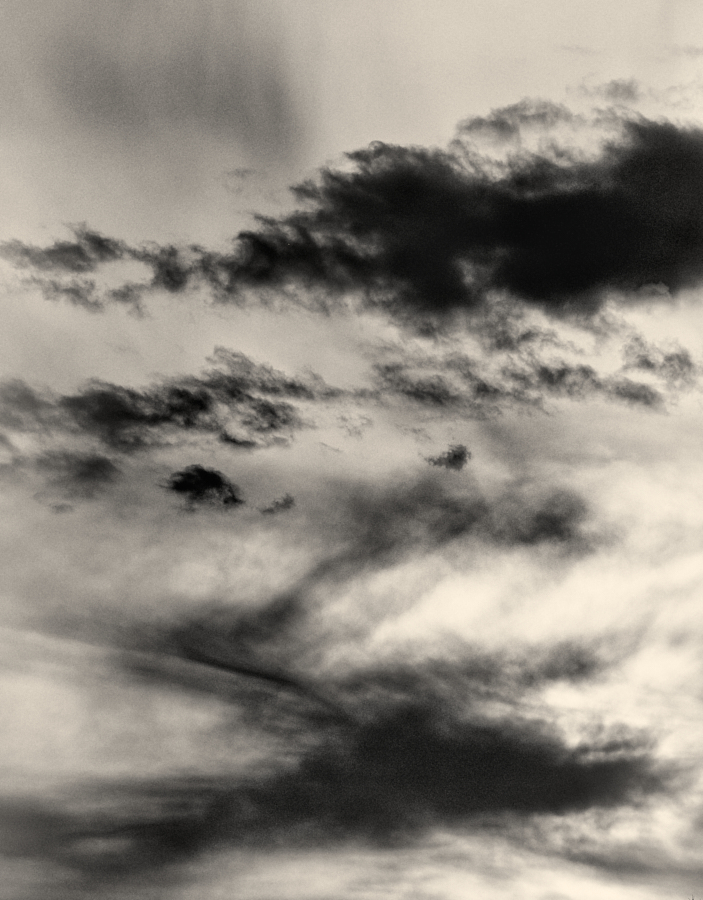
Edgar Allan Poe, Alone
From childhood’s hour I have not been
As others were—I have not seen
As others saw—I could not bring
My passions from a common spring—
From the same source I have not taken
My sorrow—I could not awaken
My heart to joy at the same tone—
And all I lov’d—I lov’d alone—
Then—in my childhood—in the dawn
Of a most stormy life—was drawn
From ev’ry depth of good and ill
The mystery which binds me still—
From the torrent, or the fountain—
From the red cliff of the mountain—
From the sun that ’round me roll’d
In its autumn tint of gold—
From the lightning in the sky
As it pass’d me flying by—
From the thunder, and the storm—
And the cloud that took the form
(When the rest of Heaven was blue)
Of a demon in my view—
Alone by Edgar Allan Poe video created by illneas, “I film and create movies for my favorite poems or spoken word art.”
skycape photography: Nikon D750 f/5.6 1/2500 112mm 400 ISO edited in Capture One
isolation retreat 74th day
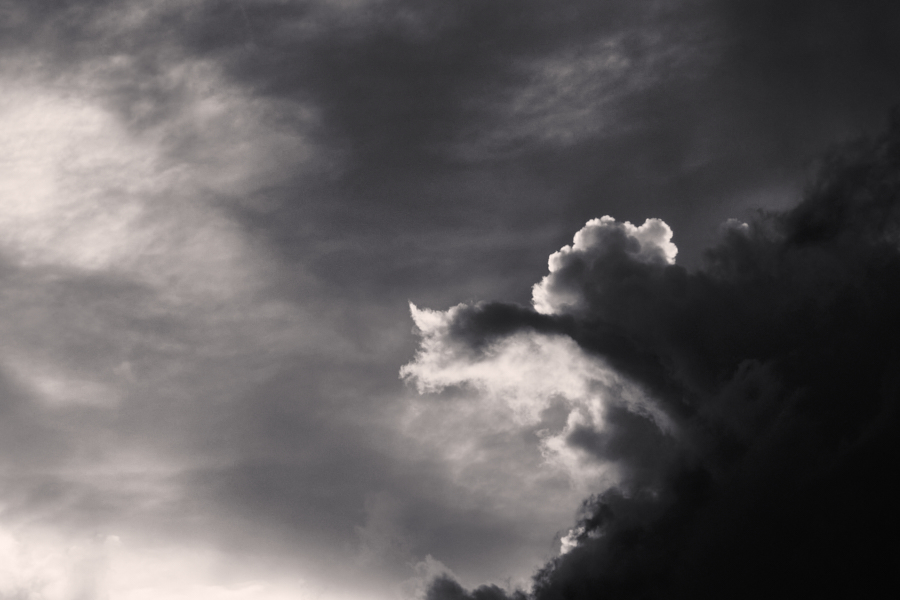
W H Auden: “Refugee Blues”
Say this city has ten million souls,
Some are living in mansions, some are living in holes:
Yet there’s no place for us, my dear, yet there’s no place for us.
Once we had a country and we thought it fair,
Look in the atlas and you’ll find it there:
We cannot go there now, my dear, we cannot go there now.
In the village churchyard there grows an old yew,
Every spring it blossoms anew;
Old passports can’t do that, my dear, old passports can’t do that.
The consul banged the table and said:
‘If you’ve got no passport, you’re officially dead’;
But we are still alive, my dear, but we are still alive.
Went to a committee; they offered me a chair;
Asked me politely to return next year:
But where shall we go today, my dear, but where shall we go today?
Came to a public meeting; the speaker got up and said:
‘If we let them in, they will steal our daily bread’;
He was talking of you and me, my dear, he was talking of you and me.
Thought I heard the thunder rumbling in the sky;
It was Hitler over Europe, saying: ‘They must die’;
We were in his mind, my dear, we were in his mind.
Saw a poodle in a jacket fastened with a pin,
Saw a door opened and a cat let in:
But they weren’t German Jews, my dear, but they weren’t German Jews.
Went down the harbour and stood upon the quay,
Saw the fish swimming as if they were free:
Only ten feet away, my dear, only ten feet away.
Walked through a wood, saw the birds in the trees;
They had no politicians and sang at their ease:
They weren’t the human race, my dear, they weren’t the human race.
Dreamed I saw a building with a thousand floors,
A thousand windows and a thousand doors;
Not one of them was ours, my dear, not one of them was ours.
Stood on a great plain in the falling snow;
Ten thousand soldiers marched to and fro:
Looking for you and me, my dear, looking for you and me.
Moving Poems, Refugee Blues by W H Auden, by Dave Bonta
Set to the verses of W.H. Auden’s 1939 poem, the multi-award winning “Refugee Blues” charts a day in ‘the jungle’, the refugee camp outside Calais. More intimate and unlike much of what has been seen in the mass media, this documentary poem counterpoints the camp’s harsh reality of frequent clashes with the French riot police with its inhabitants’ longing for a better future.
skycape photography: Nikon D750 f/8 1/400s 150mm 400 ISO edited in Capture One and Photoshop
isolation retreat 72nd day

excerpt from Rainer Maria Rilke’s Letters to a Young Poet. Trans: MD Herter Norton
“I want to talk to you again… You have had many and great sadnesses, which passed. And you say that even this passing was hard for you and put you out of sorts. But, please, consider whether these great sadnesses have not rather gone right through the center of yourself? Whether much in you has not altered, whether you have not somewhere, at some point of your being, undergone a change while you were sad? Only those sadnesses are dangerous and bad which one carries about among people in order to drown them out; like sicknesses that are superficially and foolishly treated they simply withdraw and after a little pause break out again the more dreadfully; and accumulate within one and are life, are unloved, spurned, lost life, of which one may die. Were it possible for us to see further than our knowledge reaches, and yet a little way beyond the outworks of our divining, perhaps we would endure our sadnesses with greater confidences than our joys. For they are moments when something new has entered into us, something unknown; our feelings grow mute in shy perplexity, everything in us withdraws, a stillness comes, and the new, which no one knows, stands in the midst of it and is silent. …”
skycape photography: breaking through Nikon D750 f/8 1/80s 190mm 400 ISO edited in Capture One

…In infinite succession light and darkness shift,
And years vanish like the morning dew.
Man’s life is like a sojourning,
His longevity lacks the firmness of stone and metal.
For ever it has been that mourners in their turn were mourned,
Saint and Sage,—all alike are trapped.
Seeking by food to obtain Immortality
Many have been the dupe of strange drugs.
Better far to drink good wine
And clothe our bodies in robes of satin and silk. …
The above 12th poem is from a series known as the Nineteen Pieces of Old Poetry. Some have been attributed to Mei Shēng (first century b.c.), and one to Fu I (first century a.d.). They are manifestly not all by the same hand nor of the same date. Internal evidence shows that No. 3 at least was written after the date of Mei Shēng’s death. These poems had an enormous influence on all subsequent poetry, and many of the habitual clichés of Chinese verse are taken from them.
cited: Trans: Arthur Waley, A hundred and Seventy Chinese Poems. Project Gutenberg. This ebook is made available at no cost and with almost no restrictions whatsoever. You may copy it, give it away or re-use it under the terms of the Project Gutenberg of Australia License which may be viewed online at http://gutenberg.net.au/license.html.
66th day of self isolation
Skyscape photograph Nikon D750 f/8 1/25s 32 mm 400 ISO edited: Capture One 20 and Photoshop

There was once a man who dreamt he went to Heaven:
His dream-body soared aloft through space.
He rode on the back of a white-plumed crane,
And was led on his flight by two crimson banners.
Whirring of wings and flapping of coat tails!
Jade bells suddenly all a-tinkle!
Half way to Heaven, he looked down beneath him,
Down on the dark turmoil of the World.
Gradually he lost the place of his native town…
~Po Chü
cited: Trans: Arthur Waley, A hundred and Seventy Chinese Poems. Project Gutenberg. This ebook is made available at no cost and with almost no restrictions whatsoever. You may copy it, give it away or re-use it under the terms of the Project Gutenberg of Australia License which may be viewed online at http://gutenberg.net.au/license.html.
65th day of self isolation
Skyscape photograph Nikon D750 f/8 1/80s 92 mm 400 ISO edited: Capture One 20
*Po Chü’s (AD 772-846) poem is an attack on the Emperor Hsien-tsung, a.d. 806-820, who “was devoted to magic.” A Taoist wizard told him that herbs of longevity grew near the city of T’ai-chou. The Emperor at once appointed him prefect of the place, “pour lui permettre d’herboriser plus à son aise” (Wieger, Textes III, 1723). When the censors protested, the Emperor replied: “The ruin of a single district would be a small price to pay, if it could procure longevity for the Lord of Men.”
sunset–
tears shine in a frog’s eyes
too
~Issa (cited: www.haikuguy.com)

David G. Lanoue writes
The most important word in this haiku is “too” (mo). The frog’s eyes look shiny, as if filled with tears. The “too” suggests someone else in the scene, and that someone else has to be Issa. Why are there tears in the poet’s eyes? He doesn’t say. Instead, he shows us, simply, a sunset and a frog. The day is over. Is the frog sad about this? Regretful? And what if the whole scene is symbolic, sunset suggesting death and the day that is almost gone, a lifetime? Then, the frog’s and Issa’s tears become even more significant and poignant. Together they weep for what has been and will never be again.
64th day of self isolation
Skyscape photograph Nikon D750 f/8 1/100s 190 mm 400 ISO edited: Capture One 20 & Photoshop
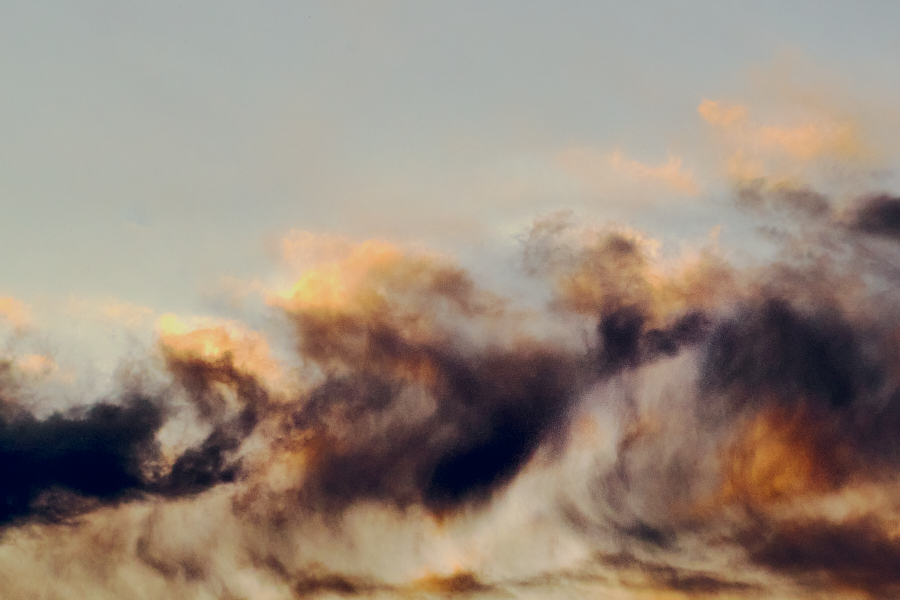
(Part of a Poem in Irregular Metre.)
On through the night I flew, high over the Mirror Lake. The lake-moon cast my shadow on the waves and travelled with me to the stream of Shan. The Lord Hsieh’s* lodging-place was still there. The blue waters rippled; the cry of the apes was shrill. I shod my feet with the shoes of the Lord Hsieh and “climbed to Heaven on a ladder of dark clouds.”** Half-way up, I saw the unrisen sun hiding behind the sea and heard the Cock of Heaven crowing in the sky. By a thousand broken paths I twisted and turned from crag to crag. My eyes grew dim. I clutched at the rocks, and all was dark.
The roaring of bears and the singing of dragons echoed amid the stones and streams. The darkness of deep woods made me afraid. I trembled at the storied cliffs.
The clouds hung dark, as though they would rain; the air was dim with the spray of rushing waters.
Lightning flashed: thunder roared. Peaks and ridges tottered and broke. Suddenly the walls of the hollow where I stood sundered with a crash, and I looked down on a bottomless void of blue, where the sun and moon gleamed on a terrace of silver and gold.
A host of Beings descended—Cloud-spirits, whose coats were made of rainbow and the horses they rode on were the winds.
Skyscape photography at sunset on 63rd day of self isolation Nikon D750 f/8 1/100s 190 mm 400 ISO edited: Capture One 20 & Photoshop
cited:
The Poet Li Po, by Arthur Waley and Bai Li The Project Gutenberg ebook
This eBook is for the use of anyone anywhere at no cost and with almost no restrictions whatsoever. You may copy it, give it away or re-use it under the terms of the Project Gutenberg License included with this eBook or online at http://www.gutenberg.org
Note:
*Hsieh Ling-yün (circa a.d. 400) was a famous mountain-climber who invented special mountain-climbing shoes.
**A quotation from one of Hsieh’s poems.

Who could’ve imagined fifty-nine days and still not free
to roam and play like a goose on the loose

or camp in a forest to simply see
a grumpy fox named bruce, yell, “truce!”

or hear tummies giggling with glee
when we deduce the orange lizard a woose

or bake a cake for afternoon tea
without an obtuse centipede’s truce
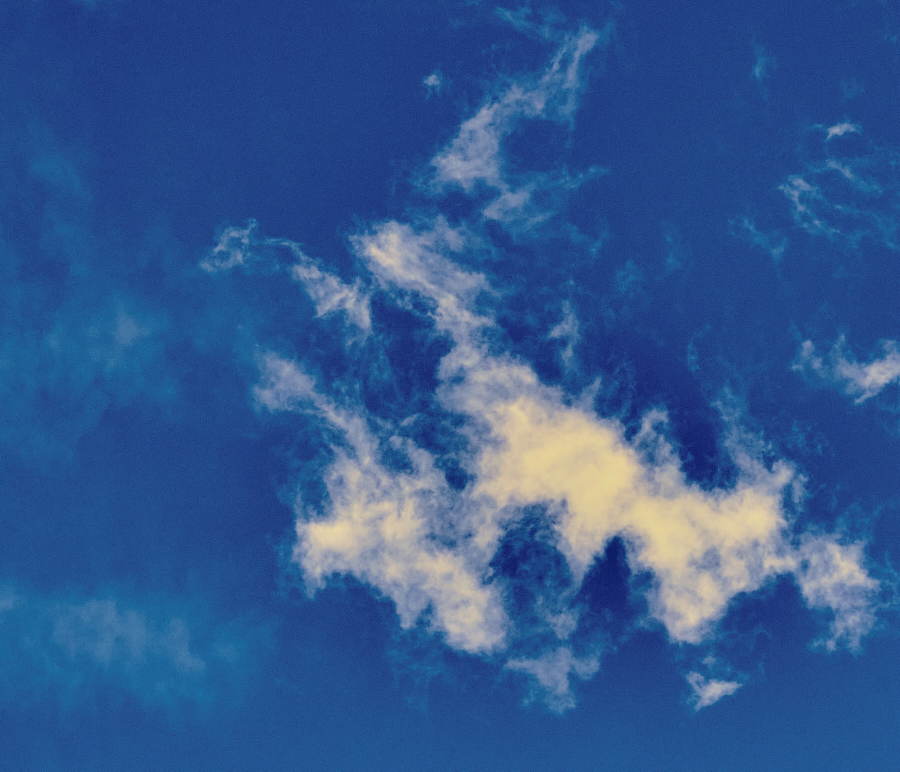
or romp with friends across sky’s blue sea
“no! not bed time, zeus – we’re playing Dr. Seuss“
impermanence at sunset…Nikon D750 f/8 1/160s – 1/400s 116mm 400 ISO
edited: Capture One 20 and Photoshop
“The Dragon is one of the four spiritually endowed creatures of China, the others being the Unicorn, the Phoenix, and the Tortoise. There are four principal Lung or Dragons–the Celestial Dragon, which supports and guards the mansion of the Gods; the spiritual Dragon, which causes the winds to blow and the rains to fall; the Earth Dragon, which marks out the courses of rivers and streams, and the Dragon of the Hidden Treasure, which watches over wealth concealed from mortals.

“…from a symbol of spiritual power from whom no secrets are hidden this dragon becomes a symbol of the human soul in its divine adventure, ‘climbing aloft on spiral gusts of wind, passing over hills and dreams, treading in the air and soaring higher than the Kwan-lun Mountains, bursting open the Gate of Heaven, and entering the Place of God.'”
Cited: JSTOR, Captain L Cranmer-Byng. Chinese Poetry and its Symbols
Photograph created with Nikon D750 f/8 1/20s 62mm 400 ISO and Capture One 20
 a meditative journey
You must be logged in to post a comment.