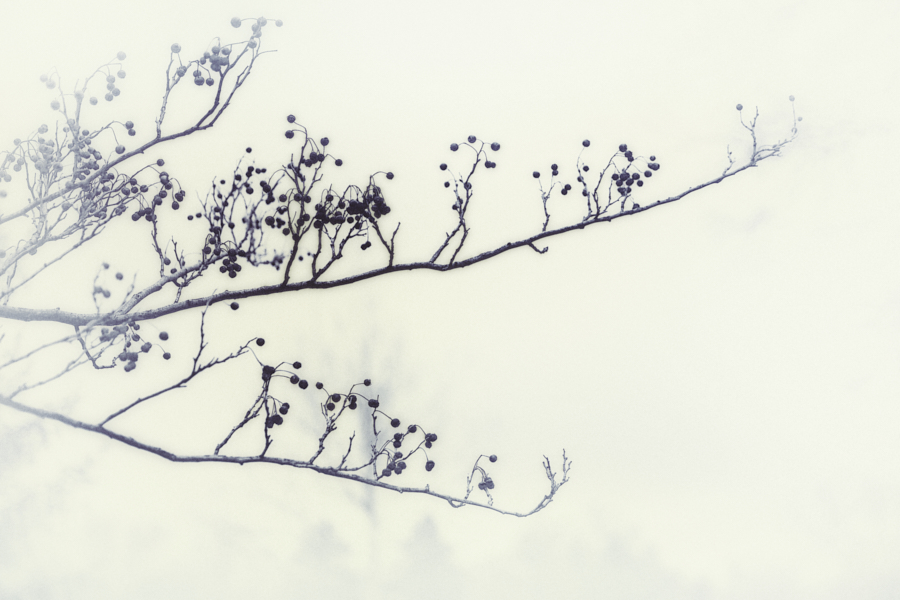
silence

Stay at Home Order … day 26 plus 14 seclusion retreat days

in the thicket
behind the house, silence…
no one picking tea

~Issa (cited: haiku guy.com)
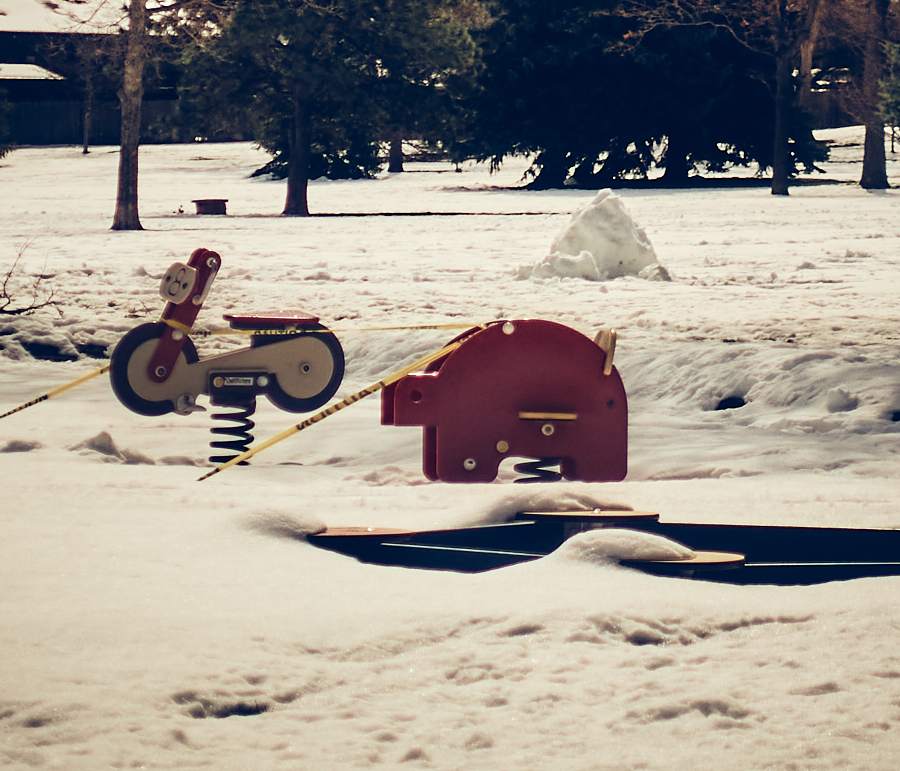
Sony RX1003 f/2.8 1/640s 25.7mm 80 ISO

I find myself being drawn again and again to how the yellow caution tape forms a number of barriers around play areas within a park near my home. The tape intensifies the overwheming silence and emptiness contrasting with the news blitz that feeds powerlessness, sadness, anger, confusion, mistrust, division, anxiety, etc.

The empty playground also beings to mind the story of The Pied Piper of Hamelin. The story is a familiar one, but what most of us probably don’t know is that it has its feet at least somewhat planted in an apparently true event that took place in the real-life town of Hamelin, Germany in 1284.

The earliest accounts of the story don’t include the rats, which wouldn’t show up until around the year 1559, but they do include the piper, dressed in his “clothing of many colors.” there is not enough historical data to ascertain for certain what happened in the town of Hamelin in 1284, there is little doubt that something occurred there which left a heavy mark on the town, and on world folklore. Theories advanced over the years include that many of the town’s children died of natural causes that year; or possibly drowned in the nearby river; or were killed in a landslide, thus explaining the recurring motif of the rats being led into the water, or of the mountain opening up and swallowing the children. The pied piper himself is considered a symbolic figure of death.

One other explanation is that the children may have died of the Black Plague, which could be why the rats were later added into the story, though the Black Plague didn’t hit Germany until the 1300s, making its arrival probably too late to be the source of the legend.

Other theorists hold that the story of the pied piper actually refers to a mass emigration or even another Children’s Crusade like the one that may have occurred in 1212.

Our first clue about what really happened in the town of Hamelin comes from a stained glass window that stood in the town’s Market Church until it was destroyed in 1660. Accounts of the stained glass say that it alluded to some tragedy involving children, and a recreation of the window shows the piper in his colorful clothes and several children dressed in white. The date is set by an entry in Hamelin’s town chronicle, which was dated 1384 and said, simply and chillingly, “It is 100 years since our children left.”

Grammarist point out that the phrase “pied piper” usually has a pejorative connotation, pointing out that, “When it is time to pay the piper it is time to accept the consequences of a thoughtless or rash action” or to “fulfill a responsibility or promise, usually after the fulfillment has been delayed already.” Both of these meanings probably tie back to the legend of the pied piper.

Even the words “pied piper” have entered into common usage to mean everything from “a charismatic person who attracts followers” to “a leader who makes irresponsible promises” to “one who offers strong but delusive enticement,” according to the Merriam Webster Dictionary entry for pied piper meaning. “Pied piping” is also a phrase used to describe a certain phenomenon in linguistics in which some words “drag” others along with them when moved to the front of a sentence. (cited: The Chilling Story Behind the Pied Piper of Hamelin)

Now that I have got this obvious allusion out of my system, let’s move on the the composition elements within the above photograph:

Rule of Thirds

Rule of Odds

Leading Lines from right to left

Space

Triangle created by the placement of the “triangle” snow pile with the two subjects

Did I miss any or did I mis-see any?

lens-artists photo challenge: morning

Stay at Home Order … day 25 plus 14 seclusion retreat days

O for a friend–that we might see and listen together! 
O the beautiful dawn in the mountain village!– 
The repeated sound of cuckoos near and far away.

~The Sarashina Diary (cited: Diaries of Court Ladies of Old Japan)


Sony RX1003 f/2.8 1/125s 25.7mm 80 ISO

in the silver dew
one sleeve cold…
morning sun

~Issa (cited: haikuguy.com)


Nikon D750 f/1.8 1/1600s 35m 100 ISO

A nightingale’s song
Brings me out of a dream:
The morning glows

~Ryokan


Sony RX 1003 f/2.8 1/250s 19.48mm 80 ISO

at dawn
not a soul in sight…
lotus blossoms

~Issa (cited: haikuguy.com)


Sony RX1003 f/2.8 1/126s 22.38mm 80 ISO

In the Autumn night 
The pale morning moon was setting 
When I turned away from the shut door.

~The Diary of Izumi Shikibu (cited: Diaries of Court Ladies of Old Japan)


The pale morning moon* … camping with my family in the “Snowies”

This week Ann-Christine invites us to look at our morning – or Any morning -maybe there is a special morning that we will never forget.

*The waning moon is called the morning moon because it can be seen after dawn

returning to the basics

Stay at Home Order … day 21 plus 14 seclusion retreat days

“A haiku is not a poem, it is not literature; it is a hand becoming, 
a door half-opened, a mirror wiped clean.  It is a way of returning
to nature, to our moon nature, our cherry blossom nature, our 
falling leaf nature, in short, to our Buddha nature.  It is a way in
which the cold winter rain, the swallows of evening, even the very
day in its hotness, and the length of the night, become truly 
alive, share in our humanity, speak their own silent 
and expressive language.”

–  Haiku: Eastern Culture, 1949, Volume Onep. 243.

Nikon D750 f/5.6 1/640s 300m 400 ISO

This month I’ve continued with my intention to study and implement composition elements as offered through an on-line education site, Udemy. Thus far, I have completed two of their photography courses.

The Art of Seeing Photography training for the Artist in you

Art of Seeing Photography composition

It is my intention for the next 30 days to “focus” on the basics of composition, both within camera and digital darkroom.

The image above was created by moving closer (telephoto lens) at a construction site with simplicity in mind. I learned in the second class that if photographers find the environment to be boring…they need to move in closer. Also, beautifully composed photographs will include 3-5 rules. It is my thought that the above image includes:

space

golden points, right to left

lead room

close-in with blurred background

sharpness

Do the shadows meet the rule of odds?

Does this photo include the element of dark figure on light background?

Do you have any constructive feedback about the above image? Do you see something I may have overlooked? If so, I would enjoy reading your thoughts. Thanks!

flush of dawn

Stay at Home Order … day 15 plus 14 seclusion retreat days

At best of times,

hard to break away,

and now with the flush of dawn

cuckoo* makes it worse

by singing out!

~Saigyō (cited: Trans: B Watson, Poems of a Mountain Home)

Nikon D750 f/1.8 1/640 35mm 200 ISO

*In Chinese and Japanese poetry, the cuckoo is the bird of memory

this is because that is

Stay at Home Order … day 14 plus 14 seclusion retreat days

leaving the town

breathing easier…

firefly ~Issa (cited: haikuguy.com)

Nikon D750 f/1.8 1/4000 35mm 200 ISO

“The rapid increase of carbon dioxide concentration in Earth’s modern atmosphere is a matter of major concern. But for the atmosphere of roughly two-and-half billion years ago, interest centres on a different gas: free oxygen (O2) spawned by early biological production. The initial increase of O2 in the atmosphere, its delayed build-up in the ocean, its increase to near-modern levels in the sea and air two billion years later, and its cause-and-effect relationship with life are among the most compelling stories in Earth’s history.”

(cited: Lyons, Timothy W.; Reinhard, Christopher T.; Planavsky, Noah J. The rise of oxygen in Earth’s early ocean and atmosphere: Nature, Volume 506, Issue 7488, pp. 307-315 (2014).

“The oxygen holocaust was a worldwide pollution crisis that occurred about 2,000 million years ago. Before this time there was almost no oxygen in the Earth’s atmosphere. The Earth’s original biosphere was as different from ours as that of an alien planet. But purple and green photosynthetic microbes, frantic for hydrogen, discovered the ultimate toxic waste, oxygen. Our precious oxygen was originally a gaseous poison dumped into the atmosphere. … (The atmospheres of Mars and Venus today are still more than 95 percent carbon dioxide; the Earth’s is only 0.03 percent.)…”

(cited: Lynn Margulis, Dorion Sagan Microcosmos: Four Billion Years of Microbial Evolution

I am a portrait…

Stay at Home Order … day 13 plus 14 seclusion retreat days

Nikon D750 f/1.8 1/4000 35mm 200 ISO

Return within,
to the place where there is nothing,
and take care that nothing comes in.

Penetrate to the depths of yourself,
to the place where thought no longer exists,
and take care that no thought arises there!
There where nothing exists,
Fullness!
There where nothing is seen,
the Vision of Being!
There where nothing appears any longer,
the sudden appearing of the Self!
Dhyana is this!
~Abhishiktananda, Swami (Henri Le Saux)

Nikon D750 f/1.8 1/2500 35mm 200 ISO

“‘I am a portrait,’ repeated the Professor. ‘I am a portrait of the celebrated Professor de Worms, who is, I believe in Naples.'” …

“‘Do explain yourself,’ said Syme.”

“‘With pleasure, if you don’t mind hearing my story,’ replied the eminent foreign philosopher. ‘I am by profession an actor, and my name is Wilks. When I was on the stage I mixed with all sorts of Bohemian and blackguard company. Sometimes I touched the edge of the turf, sometimes the riff-raff of the arts, and occasionally the political refugee. In some den of exiled dreamers I was introduced to the great German Nihilist philosopher, Professor de Worms. I did not gather much about him beyond his appearance, which was very disgusting, and which I studied carefully. I understood that he had proved that the destructive principle in the universe was God; hence he insisted on the need for a furious and incessant energy, rending all things in pieces. Energy, he said, was the All. He was lame, shortsighted, and partially paralytic. When I met him I was in a frivolous mood, and I disliked him so much that I resolved to imitate him. If I had been a draughtsman I would have drawn a caricature. I was only an actor, I could only act a caricature. I made myself up into what was meant for a wild exaggeration of the old Professor’s dirty old self. When I went into the room full of his supporters I expected to be received with a roar of laughter, or (if they were too far gone) with a roar of indignation at the insult. I cannot describe the surprise I felt when my entrance was received with a respectful silence, followed (when I had first opened my lips) with a murmur of admiration. The curse of the perfect artist had fallen upon me. I had been too subtle, I had been too true. They thought I really was the great Nihilist Professor. …'” (cited: The Project Gutenberg Ebook of The Man Who Was Thursday, G.K, Chesterton)

May you be safe.

how many nights…

Stay at Home Order … day 11 plus 14 seclusion retreat days

“The sight of the leaves ever reminds me strangely of my own sadness. I cannot go within, but lie on the veranda; mayhap my end is not far off. I feel a vague anger that others are in comfortable sleep and cannot sympathize with me. Just now I hear the faint cry of a wild goose.* Others will not be touched by it, but I cannot endure the sound.

How many nights, alas!-

Sleepless-

Only the calls of the wild geese-

~The Diary of Izumi Shikibu (cited: Diaries of Court Ladies of Old Japan)

isolation

*Footnote within the Diary of Court Ladies of Old Japan notes that the “wild geese visit Japan in Autumn and fly away northwards in the early spring. They are never alone, and their cries calling to each other make the solitary woman feel loneliness more keenly.”

May you be well. May you be safe. May you find solace.

to simply believe

Stay at Home Order … day 9 plus 14 seclusion retreat days

So remote the mountains

the only callers to break

the tedium of my window

are top branches of sumac

just starting to change color

~Saigyō (cited: B Watson, Poems of a Mountain Home)

Nikon D750 f/1.8 1/4000s 35mm 200 ISO

What is faith: a wholesome mental formation

belief, credence, credit, trust, hope, confidence, sureness, certainty, reliance, dependence, acceptation, reception, credulity, suspension of disbelief

The absence of faith is suffering. This time of uncertainty “…has brought me to a place and time in which to unweave and sort through the pseudo-beliefs I have simply, without question, absorbed through the lens of childhood fantasy and comprehension.  To begin this process is to reformulate beliefs through a process of mindfulness and analysis and then to know for myself, “These things are bad, blamable, censured by the wise; undertaken and observed, these things lead to harm and ill… These things are good, blameless, praised by the wise… These things lead to benefit and happiness.”

“It is not an easy undertaking to not simply believe what has been learned within family, school and church as well as conclusions reached through readings. The invitation to not simply follow tradition brings to the surface conflicts with compliance and opposition that come from an avalanche of values and guiding principles that outlines how I understand the roles and expectations of women.

“To not adhere to that which was surmised within family stories about an ancestor, who upon seeing a swarm of locust “knelt in his patch of grain and pleaded with his Maker to spare his wheat” and then saw them divide and not damage his remaining crops. Or within the story about the ancestor, who during a trip from New York to England, calmed the seas with a prayer, and while in England, after much fasting and prayer administered to a deaf and dumb boy who was subsequently healed. To not simply believe opens a door of pondering about generations of family members who intimately knew powerlessness and insecurity, who eased their feelings of incompetence through prayer, and whose conceptions blinded them to their neighbors’ plight.

“To not simply believe that I must endure suffering is to reject the axiom that there is an absence of fundamental faith and goodness. To not adhere to the assumed abilities of ancestors frees me from the belief that a sincere act of making amends for my sins will open the doors to Shangri-La.  To not simply draw upon scripture unbinds me to the shame that I don’t have the faith – even of the size of a mustard seed – to be deeded as “good and without sin” so what I wish for, even that which goes counter to nature’s laws, will be granted.  To ease the suffering within discontent is to not simply hold to be true that I am to acquiesce to pain until the final judgment of death, and only then will I be forever at peace, or forever condemned to an existence of even greater suffering.

“To not simply believe opens my ears to the incongruence within a belief in an all-knowing presence who, if not validated, punishes, absent of the grace within loving-kindness.  To not simply believe brings a compassionate acknowledgment to the painful efforts to sway God into granting me my desires through bargaining, sacrifice, negation, and suffering, and to finally surrender with acceptance to “Thy will be done on earth as it is in heaven.”  To not simply believe sheds light upon the greed, aversion, and delusions that are intertwined into my conception of and relationship with life.

“I do hold that my beliefs and the subsequent desire for their illusive promises of validation, forgiveness, or reunification have set me upon an unending path of suffering.  These beliefs lead to harm and ill as they are like thorns that tear into my heart.  This searing pain releases resentment intertwined with envy, awakens alienation, and denies me the essence of Christ’s wisdom and loving compassion.

“Christ stood before self-righteous anger and commanded that only the one without sin was to cast the first stone of punishment and, at another time and in the midst of his own suffering, sought forgiveness for those who “know not what they do.”   Within these written words, I hear compassion speaking for the suffering intertwined within anger ungoverned by moral shame and moral dread.  Compassion is telling us how suffering, entangled into knots of mental, emotional, and social turmoil, deafens us to our guiding principles and blinds us to the horrors our moral shame will witness as it awakens from darkened ignorance.”*

The practice of the presence of God as being

comparable to that of consciousness

finally makes possible “full awareness” applied

to every thought, world, and deed.

~ Unknown

*cited: BC Koeford, A Meditative Journey with Saldage

a time of contemplation…

Stay at Home Order … day 8 plus 14 seclusion retreat days

The true person is
Not anyone in particular;
But, like the deep blue color
Of the limitless sky,
It is everyone, everywhere in the world
.

~Eihei Dōgen

Nikon D750 f/1.8 1/4000 35mm 200 ISO


Yesterday my mother came to visit…it was a remembered touch that announced her arrival not as the frail woman with a fierce determination time had transformed from the woman who carried with her the stature of Danish Vikings…warriors, explorers, conquerors, survivors.  The English genes of a woman whose life was colored by an incessant search for union with God, an unquestioning moral and social mandate, and an aloneness I did not know. 

She visited as my mom and walked alongside me as I gathered the ingredients for homemade soup, she watched me — with discerning eyes — as I made the bed and gathered the laundry, and she sat with me as I flipped through a photo book of fading memories. Memories…the mundane moments swept away into darkness by brooms of discontent, negation, and yes…shame. The shame that arises from a felt sense of a marginalized family’s “being different.”

She woke the memory within the shifting images of a night when I saw her sitting alone within the silence of deafness nested within the silence of night.  Before her was a topsy-turvy pile of children’s scuffed and worn shoes. I watched her from the doorway, hiding as I did not want to be sent back to bed, slowly polishing each one and then matching them into pairs, forming a straight row — creating a sense of order.  When her eyes acknowledged my presence, she invited me to sit alongside her.  Moments passed as I felt her listening presence…a mother and a daughter sitting quietly in a dimly lit room, a protective barrier. 

As this remembering faded, I felt a gentle gaze that spoke of a silent loving-kindness. It was as if she came from a place of waiting knowing that the barriers that blocked me from being receptive to the multiple color threads that weaved her life had begun to weaken and fade and — for the first time — I entered, felt, and embraced her aloneness. And she, in return, eased the discontent that ebbs and flows throughout this time of uncertain isolation.

I have often wondered, since her passing, that if we had met – not as mother-daughter but as children in a playground would she have wanted to be my friend?

the stories we tell…ourselves

Stay at Home Order … day 6 plus 14 seclusion retreat days

The sound of water

is my companion

in this lonely hut

in lulls between

the storms on the peak

~Saigyō (cited: Trans: B Watson, Poems of a Mountain Home)

Nikon D750… f/1.8 1/4000s 35mm 200 ISO

John F Simon’s Drawing your own Path:

“We all confabulate. When tragedy strikes, we want narratives to explain why it happened. When scientist try to put together conflicting data, they theorize. I attempt to reconcile disparate facts by concocting plausible scenarios–making up stories about drawings for my art collectors because, after all, what art patron doesn’t like to know the real story behind an artwork.

“If my mind seems to always make up stories what do those stories say about who I am and how I see the world? Does consciously shifting my view change how I describe myself? How responsible am I for the content and direction of my story? What if I am not telling a story but a story is telling me? If I am open to listening, are there changes to be learned from the images?”

Nikon D750 f/1.8 1/4000s 35mm 200 ISO

Nourishing Positive States of Mind

Invest some time in recognizing, embracing, and nourishing positive states of mind.

Thus far, my list includes: gratitude, loving-kindness, inclusiveness, compassion, mindfulness, tranquility, equanimity, humility.

Identify, contemplate, and set out an intention to practice 1-3 positive mind states throughout the day.

This morning I silently expressed gratitude for continued safe water, electricity, internet, mail delivery, trash pick up, and traffic lights and experienced an easing of resentment.

I have found that inclusiveness opens doors of supportive unity with others as well as silences isolation.

What are your positive states of mind and how can an intention to practice them help you through this unsettling time?

Please be safe.