they found their man…

911multiexposureweb

Disillusionment is an important part of the spiritual path. It is a powerful and fiery gate, one of the purest teachers of awakening, independence, and letting go that we will ever encounter. To be disillusioned is to be stripped of our hopes, imaginings, and experiences. But while it opens our eyes, the resulting pain all too often closes our hearts. The great challenge of disillusionment is to keep our eyes open and still remain connected with the great heart of compassion. Whether our heart is torn open in the dark night of our inner practice or the dark night of system difficulties, we can use this experience to learn a deeper consciousness and wiser love.

~unknown

I am…

Civil rights community doesn’t need to look Farr for racism in Trump.

Excerpt from The Hill, 12.22.2017

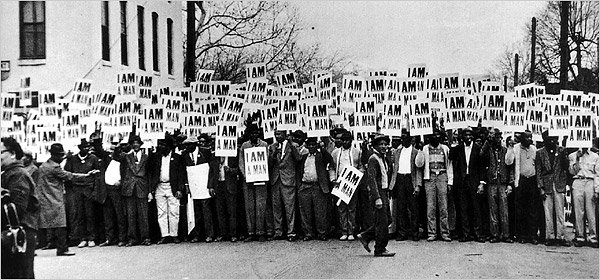
Our decision to protest President Trump’s visit to the opening of the Mississippi Civil Rights Museum wasn’t simply about the insult of his presence to the legacy of civil rights, it was also about his ongoing war to recreate the barriers and protections so many gave their lives to tear down.

ernest withers, civilrightsphoto

Sanitation workers’ protest in Memphis, TN in 1968
Ernest Withers, Civil Rights Photographer


Through his refusal to condemn white supremacy and his policies to dilute the voting strength and political power of the poor, the middle class and communities of color, Trump has frightened civil rights communities in ways they have not felt in a long time.  It is with this same fear and dread that we look upon his current nominations to the federal courts.

civilrights

Students’ Arrest in Jackson, MS 1961 

…we stand on the verge of a watershed moment that could impede progressive issues for decades. [Thomas] Farr’s nomination represents the tip of the iceberg in what many consider our president’s attempt to remake America’s ideology in his own image. Trump’s judicial nominees, like those elsewhere in his government, are more than 90 percent white and overwhelmingly male. In fact, white males make up 81 percent of the nearly 60 nominees (14 confirmed), including at least four who were determined to be “unqualified” by the American Bar Association.

images

Protest against racial integration in schools, at the Arkansas State Capitol in Little Rock, August 20, 1959. U.S. News and World Report photograph. Public domain

If ever there was a time to guard the federal judiciary, this is it. These nominees share dreadful records on civil rights and are simply unfit to serve. Unlike policy or legislation, these judges are lifetime appointees with the ability to influence all aspects of jurisprudence for decades to come.

~ Derrick Johnson, President and CEO of the National Association for the Advancement of Colored People (NAACP).

truth & strength…together

geesetwo-3web

…we were determined to speak the truth. Now I understand that truth and virtue must be joined by strength. When I first read the French author La Fontaine many years ago, I was disturbed by this statement: ‘The argument of the strongest party is always the best.’ …life has taught me more than once that his statement is at least partly true. Truth without strength cannot stand firm. Strength does not have to mean tyranny or violence, but one must be strong. Without strength, how could those with no more than a pen challenge powerful authorities? 

~Thich Nhat Hanh (Fragrant Palm Leaves)


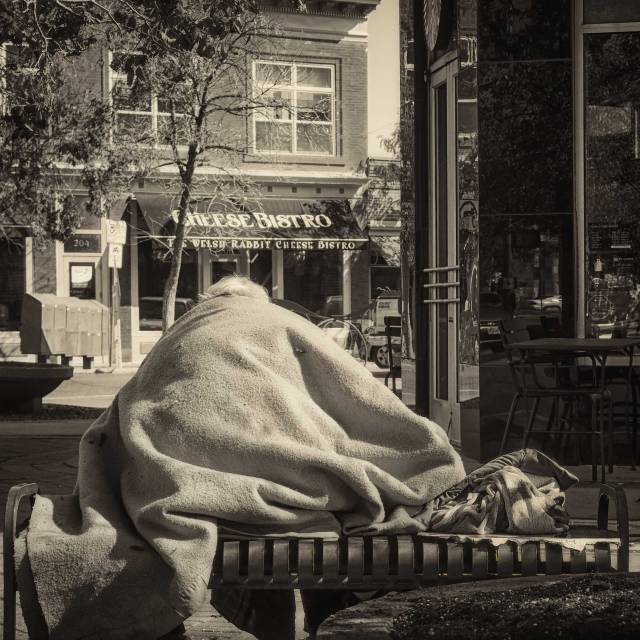
in the shadow…homelessness

This abandoned house

shining

in the mountain village–

how many nights

has the autumn moon spent here?

~Ono no Komachi (J Hirshfield & M Aratani, The Ink Dark Moon)

streethomelessness

Lumix GX85   f/5.6   1/400 s   32 mm   200 ISO

Just a few words about today’s homelessness from the AP:

A homeless crisis of unprecedented proportions is rocking the West Coast, and its victims are being left behind by the very things that mark the region’s success: soaring housing costs, rock-bottom vacancy rates and a roaring economy that waits for no one. All along the coast, elected officials are scrambling for solutions.

“I’ve got economically zero unemployment in my city, and I’ve got thousands of homeless people that actually are working and just can’t afford housing,” said Seattle City Councilman Mike O’Brien.

cited:  Amid booming economy, homelessness soars on US west coast, Gillian Flaccus & Geoff Mulvihill, Associated Press, Nov. 9, 2017

Homeless advocates and city officials say it’s outrageous that in the shadow of a booming tech economy – where young millionaires dine on $15 wood-grilled avocado and think nothing of paying $1,000 for an iPhone X – thousands of families can’t afford a home. Many of the homeless work regular jobs, in some cases serving the very people whose sky-high net worth is the reason housing has become unaffordable for so many.

cited: ‘We still need to eat’: Tech boom creates working homeless, Janie Har, Associated Press, November 8, 2017.

And in the shadow of homelessness, tax havens for the wealthy:

The fundamental lesson of the Panama and Paradise Papers is twofold. First, the people everywhere, regardless of whether they live in Russia or America, are being oppressed by the same minuscule social circle of wealthy elites who unduly control our governments, corporations, universities and culture.

We now know without a doubt – thanks to the incontrovertible evidence provided by the Panama and Paradise Papers – that there is a global plutocracy who employ the same handful of companies to hide their money and share more in common with each other than with the citizens of their countries. This sets the stage for a global social movement.

Second, and most importantly, these leaks indicate that our earth has bifurcated into two separate and unequal worlds: one inhabited by 200,000 ultra high-net-worth individuals and the other by the 7 billion left behind.

cited: Why aren’t the streets full of protest about the Paradise Papers?, Micah White, The Guardian, November 10, 2017.

and…continued denial of basic human needs over political and corporate greed

… over the past few weeks, several Republicans have indicated that the tax bill would boost the wealth of the already rich and ensure that their political donations keep flowing to help the GOP hold power in 2018.

“My donors are basically saying, ‘Get it done or don’t ever call me again,’” Rep. Chris Collins (R-N.Y.), himself a millionaire,

Sen. Lindsey Graham (R-S.C.) told reporters on Thursday that a failure to pass tax reform would fracture the Republican Party and lead to more far-right wing primary challengers. “The financial contributions will stop,” he added.

cited: Republicans Admit that CEOs and Donors Really Need the Tax Cut Bill To Pass, Paul Blumenthal, HuffPost, November 9, 2017

How much money does one person really need?

In closing

Little is known about Ono no Komachi’s life, “and the stories about her are drawn from a blending of historic fact and suppositions drawn from her writings.  In The Dark Moon, Hirshfield and Aratani noted that historians believe she was the daughter of the lord of Dewa and served the court in the middle of the ninth century.  Legends, folktales, and songs paint her as the outstanding woman poet of her time and the most beautiful and desirable of woman.  Legend also tells us that towards the end of her life, she lived “in anonymity, isolation, and poverty, an ancient, half-mad hag living outside the city walls, though still writing poetry and possessing a deep understanding of Buddhist teachings.

Can we look at each other and recognize ourselves in each other?

This youtube video is drawn upon Thich Nhat Hanh’s poem Please Call Me By My True Names. 

Why again?

tourdefatweb

A mom whose family’s budget is struggling to meet their basic needs of shelter, food, transportation, education, and medical care inquires, “Why do I as a mother of an ill child need to keep coming back to you to ask you NOT to take away my child’s health care?”

Senator Cory Gardner of Colorado, “Because my campaign fund-raising is drying up…”

I wonder, “and RNC funds are being redirected to Trump’s Russia defense expenses?”

a label


labelsweb

a label transforms a “unknown” person into a preconceived concept

People want to identify and label you so they can place you somewhere they already have set in their mind. …

We have these labels in little piles in our mind and we take them out and stick them on things. That’s our habit. We like to be able to say, “This is an American. That is a Dutch person. This is a Mexican person.” We put the label on as if we know what we mean by Mexican, American, or Dutch. This is a Communist, this is a Republican, this is a capitalist. In fact, the label has no meaning. “This is a person I love, this is a person I hate.” When we put a label on, we can’t see the person. If someone labels you as a “terrorist,” he may shoot you. But if he sees that you are a human being who has his own suffering, who has children and a wife to look after, he won’t be able to shoot you. It’s only when he gives you a label that he can say, “You’re a terrorist; your presence isn’t needed in this world; if you weren’t in the world, it would be a more beautiful place.” It’s all a matter of putting a label on a person. And when you see the real human being, you can’t assign a label anymore. We give labels only in order to praise or to destroy. We have a great bagful of labels–we don’t even know where they came from. And when we stick them onto people, we cut ourselves off from those people, and we can no longer know who they really are.

~Thich Nhat Hanh, Zen Battles

xdrive photo lession – 8 – close up/macros

RAJ’s photo lesson about close ups and macros, encouraged me to create images with my camera set to manual focus, “Remember, only you know the story you are trying to tell, not the camera!”

macrochallenge9517a

Nikon D750  f/6.3 40mm  1/4s  100 ISO

This initial exploration with manual focus brought to mind the summer between the 4th and 5th grade, when I put on my first pair of glasses (Cat Eyes). I can still recall the visual experience of seeing for the first time individualized leaves on trees and multiple shapes and colors of gravel stone…the world, sharpened and focused, was a moment of awe.  Corrective lenses was a means of normalization; yet, there are no words to describe and there are no photographs that can replicate the amazing bokeh of Christmas lights created by astigmatism and myopia.

Nikon D750  f/5  40mm  0.2s  100 ISO

The ease of using auto focus–a reliance upon technology–to create images that satisfy a self-imposed standard has me question if the advancements in genetic, genomic, and reproductive technologies, identified by a UC Berkeley sociologist Troy Duster as a back door to eugenics, to lessen human suffering will also nudge us into a world absent of human uniqueness.


a new kind of empathy

newkindofempathy

After listening to the TED Talk, “Can a Divided America Heal”, I did a brief exploration of the three basic principles of moral psychology

  1. Generally we influenced by intuition and then use that which “feels right” to justify our moral judgments.
  2. The underlying motivation in moral reasoning and communication is directed more towards manipulation or persuasion than exploration of truth.
  3. Morality is a crucial element of tribalism which is the building block for the development of large, cooperative societies.

A bit of personal reflection opens a window of understanding of how I’m more often than not influence by what feels right and yes, the importance I place in intuition over reasoning.  Often a movement towards “spiritual” reasoning occurs after a period of solitude and contemplation.

There is also an awareness that I do enjoy the rhythmic power of football tribalism while being perplexed by a religious leader’s comment about limiting compassion to one’s own tribe.

Then finally…do I acknowledge the possibility of some hidden agenda to persuade you to join me in what feels right over someone else’s sense of right?  Ugh, I think I’ll close this window for a bit and open one that has us explore a new empathy.

…we have an existential threat on our hands..we need a new kind of empathy…if you want to escape from this [the anger and worry of the last year], read Buddha, read Jesus, read Marcus Aurelius. They have all kinds of great advice for how to drop the fear, reframe things, stop seeing the other people as your enemy. There’s a lot of guidance in ancient wisdom…(Jonathan Haidt)

Ancient wisdom guiding us to “a new kind of empathy.”  I believe that the on-the-ground community response to Harvey is a living example of an ancient empathy that has the potential to heal.

I invite you to listen to the TED talk below in which social psychologists Jonathan Haidt and TED Curator Chris Anderson explore the sharp divisions of today and then discuss how we may be able to move forward.   _()_

wpc: corner

wpc_corner2web

The above image, “My Corner of of the World” submitted in response to Ben’s weekly photo challenge is a sharp contrast to the various reports that are coming out of Yemen, “The World’s Worst Humanitarian Crisis.”

The New York Times, reports:

“It’s a slow death…We’re just waiting for doom or a breakthrough from heaven…

“Repeated bombings have crippled bridges, hospitals and factories. Many doctors and civil servants have gone unpaid for more than a year. Malnutrition and poor sanitation have made the Middle Eastern country vulnerable to diseases that most of the world has confined to the history books.

“In just three months, cholera has killed nearly 2,000 people and infected more than a half million, one of the world’s largest outbreaks in the past 50 years

“The [coalition airstrikes have] killed and wounded civilians…bombings have also heavily damaged Yemen’s infrastructure, including a crucial seaport and important bridges as well as hospitals, sewage facilities and civilian factories. …[making] it harder for humanitarian organizations to bring in and distribute aid.

“The United States is also a major donor [of humanitarian aid], as well as a primary supplier of arms to the members of the Saudi-led coalition. Although the United States is not directly involved in the conflict, it has provided military support to the Saudi-led coalition, and Yemenis have often found the remnants of American-made munitions in the ruins left by deadly airstrikes.”

Al Jazeera, August 23, 2017 notes:

The military intervention in Yemen led by the Saudi Arabia’s military has proven to be a “strategic failure” that has killed more than 10,000 people and injure more than 40,000 to date. Yet, a full and official withdrawal is unlikely, “A retreat means defeat…”

All of this leaves me questioning the distractions of the never-ending, on-going political drama from the White House that blinds and deafens me to the unimaginable in Yemen, as well as to the emotional, physical, and relational injury to members of the American military, their families, and Afghanistan civilians in what has become a fading, if not forgotten war, in my corner of the world.


hungry ghosts

hungry-ghost

“,,,when we offer food to the hungry ghost, the ceremony always begins with a dharani for the hungry ghost to help increase the size of their throats so that they can receive our offerings. In classical Buddhist literature, hungry ghosts are described as having a big belly but a very tiny throat–so even though they are always very hungry they are never able to take in enough nourishment. There are many kinds of hungry ghosts that need our help to transform their suffering. They are hungry for love and understanding but because they are so suspicious, because their hearts are not open enough, they cannot receive our love and compassion.

“All the hungry ghost bear great injustices in themselves and that is why they have become hungry ghosts. Many of us are victims of injustice, and if there is no compassion and understanding there is no way we can undo the knot of injustice within ourselves and become free. We still continue to suffer if no one can help us undo the knot of injustice in our heart.
art-eater_asuras_wrath_pretas_hungry_ghosts_05
“There are so many hungry ghosts in the world. Many of them are caught in their situation and have no opportunity to experience the kind of safe, calm, stable space that will allow them to get in touch with what is nourishing and healing…they will be hungry ghosts all their lives, wandering aimlessly in suffering, destroying themselves physically and mentally.

“Hungry ghosts are drive by the habit energy in themselves. They may want to tear up the new roots, they may not be able to feel peace, they may not be capable of establishing themselves in the here and now. …it is important for us to become aware of the habit energy in ourselves. It is always pushing us to tear up our roots, to play the role of a wandering soul, a hungry ghost. We can become so used to being a hungry ghost that staying in one place becomes very difficult.  So we practice mindful breathing and recognize that the habit energy of being a hungry ghost is still very strong in us.

aaa_gakizoshi_1-0

“All of us who are the friends of the Earth-Store Bodhisattva must pool our ideas and energies to help the many hungry ghosts in our family, community, and society…

~Thich Nhat Hanh, Opening the Heart of the Cosmos

The images within this posting were drawn from the internet and reflect historical representations of hungry ghosts.

Solitude…

solitude

Today’s edition of Aeon offered an amazing piece, Before you can be with others, first learn to be alone, written by Jennifer Stitt.  Hope you find this discussion about solitude as enlightening as I do.

“In 1840, Edgar Allan Poe described the ‘mad energy’ of an ageing man who roved the streets of London from dusk till dawn. His excruciating despair could be temporarily relieved only by immersing himself in a tumultuous throng of city-dwellers. ‘He refuses to be alone,’ Poe wrote. He ‘is the type and the genius of deep crime … He is the man of the crowd.’

Like many poets and philosophers through the ages, Poe stressed the significance of solitude. It was ‘such a great misfortune’, he thought, to lose the capacity to be alone with oneself, to get caught up in the crowd, to surrender one’s singularity to mind-numbing conformity. Two decades later, the idea of solitude captured Ralph Waldo Emerson’s imagination in a slightly different way: quoting Pythagoras, he wrote: ‘In the morning, – solitude; … that nature may speak to the imagination, as she does never in company.’ Emerson encouraged the wisest teachers to press upon their pupils the importance of ‘periods and habits of solitude’, habits that made ‘serious and abstracted thought’ possible.

In the 20th century, the idea of solitude formed the centre of Hannah Arendt’s thought. A German-Jewish émigré who fled Nazism and found refuge in the United States, Arendt spent much of her life studying the relationship between the individual and the polis. For her, freedom was tethered to both the private sphere – the vita contemplativa – and the public, political sphere – the vita activa. She understood that freedom entailed more than the human capacity to act spontaneously and creatively in public. It also entailed the capacity to think and to judge in private, where solitude empowers the individual to contemplate her actions and develop her conscience, to escape the cacophony of the crowd – to finally hear herself think.

In 1961, The New Yorker commissioned Arendt to cover the trial of Adolf Eichmann, a Nazi SS officer who helped to orchestrate the Holocaust. How could anyone, she wanted to know, perpetrate such evil? Surely only a wicked sociopath could participate in the Shoah. But Arendt was surprised by Eichmann’s lack of imagination, his consummate conventionality. She argued that while Eichmann’s actions were evil, Eichmann himself – the person – ‘was quite ordinary, commonplace, and neither demonic nor monstrous. There was no sign in him of firm ideological convictions.’ She attributed his immorality – his capacity, even his eagerness, to commit crimes – to his ‘thoughtlessness’. It was his inability to stop and think that permitted Eichmann to participate in mass murder.

Just as Poe suspected that something sinister lurked deep within the man of the crowd, Arendt recognised that: ‘A person who does not know that silent intercourse (in which we examine what we say and what we do) will not mind contradicting himself, and this means he will never be either able or willing to account for what he says or does; nor will he mind committing any crime, since he can count on its being forgotten the next moment.’ Eichmann had shunned Socratic self-reflection. He had failed to return home to himself, to a state of solitude. He had discarded the vita contemplativa, and thus he had failed to embark upon the essential question-and-answering process that would have allowed him to examine the meaning of things, to distinguish between fact and fiction, truth and falsehood, good and evil.

‘It is better to suffer wrong than to do wrong,’ Arendt wrote, ‘because you can remain the friend of the sufferer; who would want to be the friend of and have to live together with a murderer? Not even another murderer.’ It is not that unthinking men are monsters, that the sad sleepwalkers of the world would sooner commit murder than face themselves in solitude. What Eichmann showed Arendt was that society could function freely and democratically only if it were made up of individuals engaged in the thinking activity – an activity that required solitude. Arendt believed that ‘living together with others begins with living together with oneself’.

But what if, we might ask, we become lonely in our solitude? Isn’t there some danger that we will become isolated individuals, cut off from the pleasures of friendship? Philosophers have long made a careful, and important, distinction between solitude and loneliness. In The Republic (c380 BCE), Plato proffered a parable in which Socrates celebrates the solitary philosopher. In the allegory of the cave, the philosopher escapes from the darkness of an underground den – and from the company of other humans – into the sunlight of contemplative thought. Alone but not lonely, the philosopher becomes attuned to her inner self and the world. In solitude, the soundless dialogue ‘which the soul holds with herself’ finally becomes audible.

Echoing Plato, Arendt observed: ‘Thinking, existentially speaking, is a solitary but not a lonely business; solitude is that human situation in which I keep myself company. Loneliness comes about … when I am one and without company’ but desire it and cannot find it. In solitude, Arendt never longed for companionship or craved camaraderie because she was never truly alone. Her inner self was a friend with whom she could carry on a conversation, that silent voice who posed the vital Socratic question: ‘What do you mean when you say …?’ The self, Arendt declared, ‘is the only one from whom you can never get away – except by ceasing to think.’

Arendt’s warning is well worth remembering in our own time. In our hyper-connected world, a world in which we can communicate constantly and instantly over the internet, we rarely remember to carve out spaces for solitary contemplation. We check our email hundreds of times per day; we shoot off thousands of text messages per month; we obsessively thumb through Twitter, Facebook and Instagram, aching to connect at all hours with close and casual acquaintances alike. We search for friends of friends, ex-lovers, people we barely know, people we have no business knowing. We crave constant companionship.

But, Arendt reminds us, if we lose our capacity for solitude, our ability to be alone with ourselves, then we lose our very ability to think. We risk getting caught up in the crowd. We risk being ‘swept away’, as she put it, ‘by what everybody else does and believes in’ – no longer able, in the cage of thoughtless conformity, to distinguish ‘right from wrong, beautiful from ugly’. Solitude is not only a state of mind essential to the development of an individual’s consciousness – and conscience – but also a practice that prepares one for participation in social and political life. Before we can keep company with others, we must learn to keep company with ourselves.”Aeon counter – do not remove

Jennifer Stitt

This article was originally published at Aeon and has been republished under Creative Commons.