“Artists are people driven by the tension between the desire to communicate and the desire to hide.” ― Donald Woods Winnicott
Blogging despite living within a continuum of a drive to communicate through art and an emotional need to be hidden behind one’s art … is an act of courage.
“It is a joy to be hidden, and disaster not to be found.” ― D.W. Winnicott
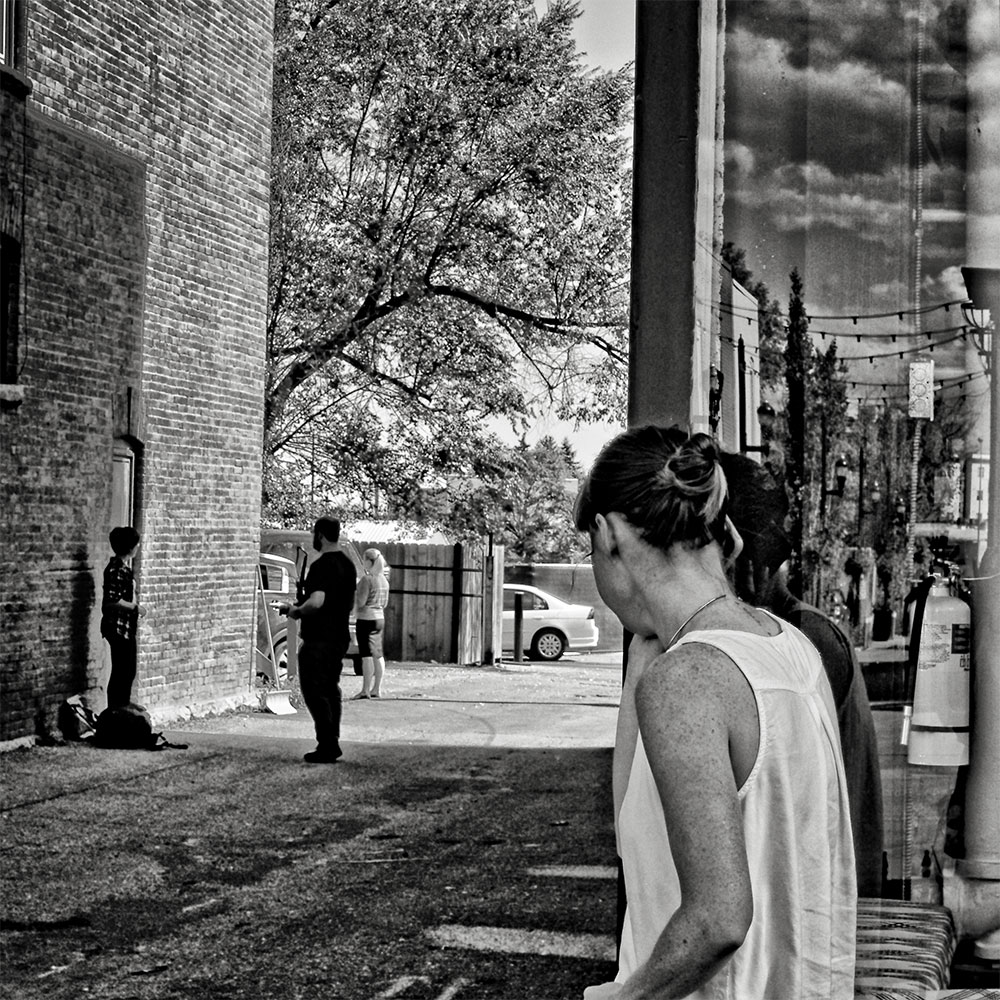
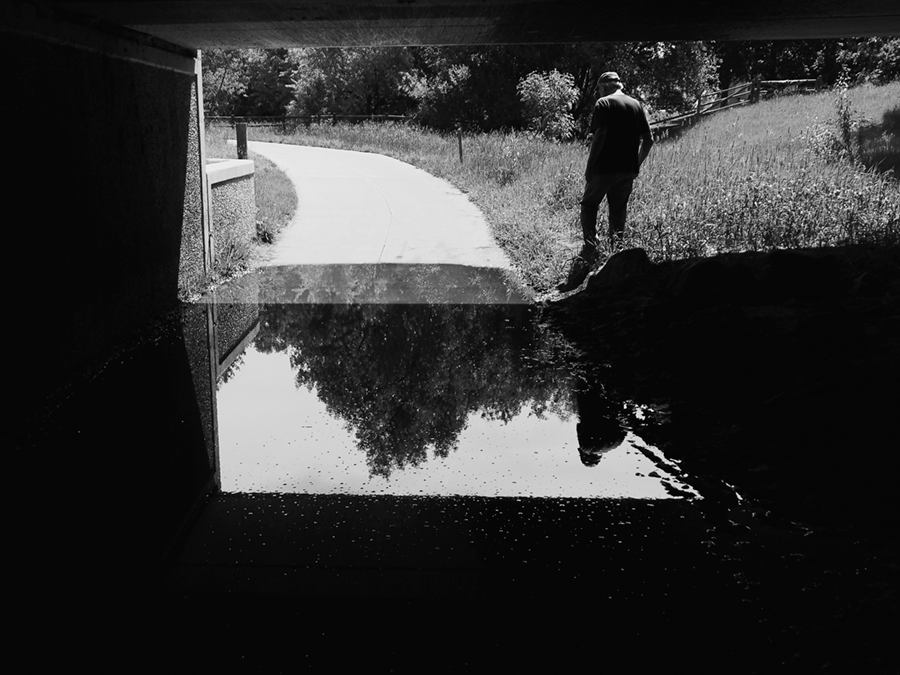
This week, Patti gives us the opportunity to focus on emotions…to share portraits or street photography that captures people’s feelings, such as happiness, anger, sadness, curiosity, or fear.
Okay…this weeks lens-artist challenge, emotions, opens the door to one of my secret struggles…it is one of many that remain in a mud puddle of confusion.
I am not sure if I understand the difference between a feeling and an emotion.
So far this ongoing search for clarity has me understand an awareness of a feeling, like sadness, arises from my awareness of … tears/heart pain. I am able to acknowledge “anger” from a awareness of variations of speech and thoughts. Fear…the gut punch feeling in my stomach. I have experienced a lot of gut punch feelings since the latest events in Washington D.C.
I continue to ask myself, what is an emotion? I’ve looked at the word, emotion, and came to an awareness of “motion.” So, I’ve asked myself is emotion a feeling that motivates me to action? Today, at this moment in time, I’m going to go with yes…well…a tentative yes because within the word heroin is hero. There clearly is a mismatch there.
I do know for certain that to be driven by the emotional system often times is action that is separated from thinking. It can be action that is blocked from an awareness of moral shame, both internal shame or external shame. Now, I find myself questioning is shame a feeling, an emotion, or is it a mental formation that arises after a period of reflection?
Then I wonder…do feelings of anxiety (is anxiety a feeling or an emotion?) fog up a clear reflection of self with protective mechanisms of denial, rationalization, displacement, projection, and/or sublimation
Now…I ask myself are these defense mechanisms emotions…driven by feelings of anxiety, uncertainty, confusion.
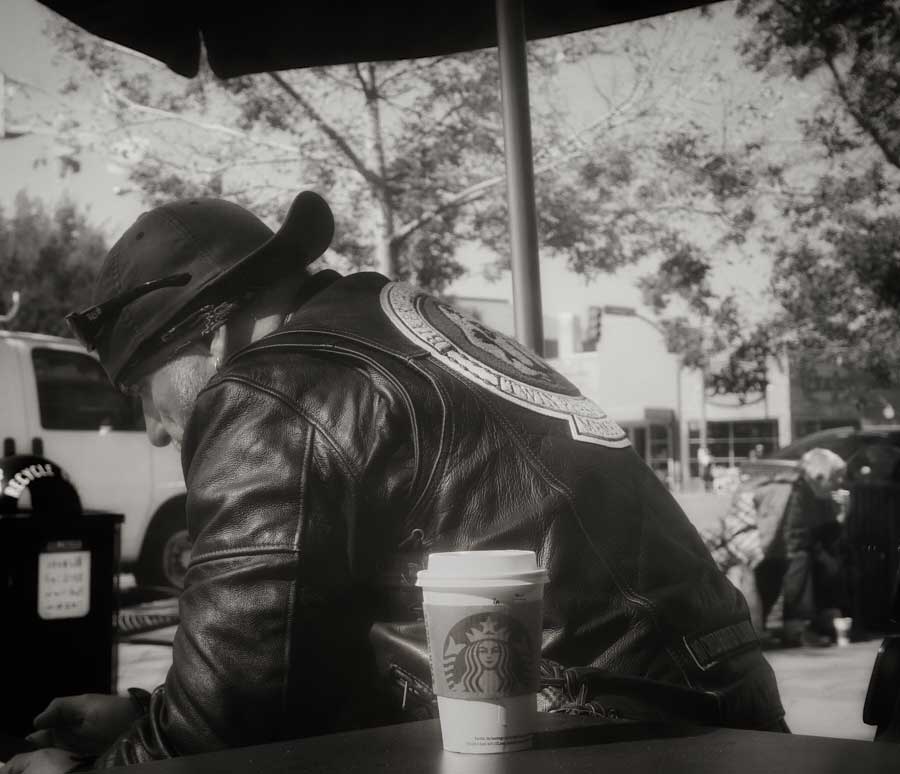
I am certain that most of our communication with others is drawn from nonverbal communication. That is, the feelings/emotions that we interpret by another’s body language. Problems arise from this channel of communication when these interpretations are not clarified by the other.
I also believe that feelings are contagious; that is, a smile awakens a smile, a tear awakens a tear and fear awakens fear and anger awakens anger. I find that I just half smiled at this moment with an internal notation – we are impacted by a contagious virus as well as infectious feelings/emotions.
How are you feeling right now? I’m feeling a bit confused.
I’ve been stuck in a family’s surgical waiting room since November 3, 2020. Today as I wait for the results of the Electoral College I fear that a widespread uncritical acceptance of questionable concepts is tearing our county apart.
I’ve also come to fear that the foundation of our democracy was built from a “gentlemen’s agreement” and not upon laws as this anxiety-filled waiting now extends to January 6th when the the vice president, as assigned by the Constitution, tallies the Electoral College results and declares a winner.
Putting aside uncritical acceptance, laws, and gentleman’s agreements would there be a coming together of beliefs so that we may begin to heal in unity if our leaders practiced the qualities listed below?
▪ Charity — Willingness to sacrifice one’s interest for the good of the people.
▪ Morality — Maintaining a high moral order in one’s personal conduct.
…the scent of mothballs signals the opening of a small steamboat trunk entrusted with long-forgotten memorabilia. Carefully placed upon a layer of women’s 1930 era clothing are three stacks of yellow ribbon-tied envelopes. Within each are hand-written letters reminiscent of second grade penmanship inquiring, “Dear Mother, how are you? Fine I hope.” On the left side is a stationery box filled with certificates of marriage, birth, baptism, and death intermingled with a child’s brilliantly colored drawings.
Beneath the box is a small silk sachet holding a solitary diamond engagement ring and an ivory locket. At the bottom of the trunk, children’s books and wooden blocks with carved letters surround a miniature wooden rocking chair and a one-button eyed velvety-patched teddy bear. I become distracted from the remaining contents as black and white photograph images softly held within the folds of a woman’s garnet silk dress glide in the air and scatter on the floor.
The photographic images are a visual memoir of a young family where trust once allowed two young sisters to roam free throughout a field of tall, yellowed grass. “How many days,” my questioning mind wonders, “how many days were left before the decline of my father’s health shifted the lights of a colorful present into the gray-shaded time of waiting?” Within this stillness of waiting, memory tells of a young child seeking solace through repetitive rocking behaviors and of a father’s fragile heart enduring a turbulent wait for a donated aorta.
I hear compassion speak to my heart and I begin to feel how my father intuitively knew of my inner turmoil and of the tranquil stillness within rhythmic repetition. His gift of a rocking chair tells me some fifty years after his death of the multiple emotional and physical sufferings within his suffering, the interconnectedness of the suffering within the family, and of his wish to ease our suffering.
As the fabric of the dress glides between my fingertips, the shadow of grief that holds the memories of my son emerges from a compartment hidden within the trunk. An old fear awakens as the image of grief’s blackened shadow looms over me with its death-filled abyss of intermingled condemnation, uncertainty, and emptiness. I feel the void that will consume me if I were to release the eternal care of my son to its embrace. I come to know that I hold no trust that within death is compassionate loving-kindness. Awareness arises to tell me that as I run from grief with the anguish of powerlessness to protect the heart of my soul, like an addict running from her addiction, grief becomes even more insidious. In this undifferentiated chaos of anguish, fear, and mistrust there is hope [larger than a mustard seed] which seeks for the magical garment when donned will transform me into the Great Mother. It is childhood faith that clings to the belief that as God witnesses this transformation, absolution and reconciliation would simultaneously subdue this impenetrable monster and return my son, whole with the spirit of life, to…*
cited: B Koeford, A Mediative Journey with Saldage
Individuals have within themselves vast resources for self understanding and for altering their self concepts, basic attitudes, and self directed behavior; these resources can be tapped if a definable climate of facilitative psychological attitudes can be provided. ~ Carl Rogers
I am acquainted with a mind filled with multiple crosscurrents of unfinished thoughts, stifled emotions, and passing moods. There is also a growing recognition that at times I am overwhelmed by discursive thoughts that are formed by habitual ways of thinking, led by my own various prejudices, impacted by personal preferences or aversions, colored by laziness or selfishness, and intensified by faulty or superficial observations. Sometimes I awaken to myself to find that while engaged in a behavior, my mind has entered a dreamlike state, and therefore events and conversations are vague and fragmentary.Sometimes I acknowledge this process or attribute it to boredom, anxiety, doubt, impatience, exhaustion, misjudgments, and self-salient triggers.
Protecting oneself, one protects others; protecting others, one protects oneself . . . And how does one, in protecting oneself, protect others? By the repeated and frequent practice of meditation.
And how does one, in protecting others, protect oneself? By patience and forbearance, by a non-violent and harmless life, by loving kindness and compassion.” But self-protection is not selfish protection. It is self-control, ethical and spiritual self-development. ~ The Buddha
Every healing intervention is motivated by suffering and hope – be it of the individual, family, friends, or a community agency.The value within suffering is that it contains a message of incongruence that awakens the motivation to heal. William James wrote that life is the manifestation of behaviors that attempt to avoid, overcome, or remove that which is seen to block us from that which we desire.
The personal story is a narrative of our unique sense of identity.We create our identities through the stories we weave onto a tapestry that is formed against the background of our family mythologies. We pull threads from of an assemblage of recalled details from our pasts and weaved them into images that cast us in whatever role corresponds with our current situations, feelings, thoughts, or actions. The colored threads of this tapestry are often re-embroidered to reflect the creative and dynamic process of our perspectives as we shift in, out, and between various roles, feeling states, and cognitions.As we reflect on our self-created images we are in turn affected by them; therefore, there is an unconscious re-weaving of our tapestries.
Our self-stories as well as our family mythologies create and maintain our identities and thus influence how we anticipate experiences, act, and subsequently interpret our situation.Becoming aware of the tapestry and images we are creating frees us to review patterned behaviors, reframe our story through different colored concepts, and to release rigid interpretations.
…
Within … a supportive and non-judgmental environment, each is invited into a process of bare attention that is non-coercive as they uncover the seeds of their suffering and thus begin to strengthen their recovery with renewed energy.It is after a meeting during the quiet of one’s alone time that each attendee begins a process of dismissing what is personally invalid, questioning harmful behavioral patterns, or replacing painful concepts with constructive meanings.They, through their own individual reflection, take what is helpful for them at the moment and let the rest flow away.
Through this process of externalization, validation, and reformation an individual is being invited to become other to herself as if she were the audience in a movie theatre watching her life story being retold on a screen.Consequently, a new relationship with the self is formed that lessens the suffering that comes out of subjective rigidity, alienation of self as “the only one”, and attachment to shame and guilt.
Excerpts: Koeford, B., A Meditative Journey with Saldage
Stay at Home Order … day 6 plus 14 seclusion retreat days
The sound of water
is my companion
in this lonely hut
in lulls between
the storms on the peak
~Saigyō (cited: Trans: B Watson, Poems of a Mountain Home)
Nikon D750… f/1.8 1/4000s 35mm 200 ISO
John F Simon’s Drawing your own Path:
“We all confabulate. When tragedy strikes, we want narratives to explain why it happened. When scientist try to put together conflicting data, they theorize. I attempt to reconcile disparate facts by concocting plausible scenarios–making up stories about drawings for my art collectors because, after all, what art patron doesn’t like to know the real story behind an artwork.
“If my mind seems to always make up stories what do those stories say about who I am and how I see the world? Does consciously shifting my view change how I describe myself? How responsible am I for the content and direction of my story? What if I am not telling a story but a story is telling me? If I am open to listening, are there changes to be learned from the images?”
Nikon D750 f/1.8 1/4000s 35mm 200 ISO
Nourishing Positive States of Mind
Invest some time in recognizing, embracing, and nourishing positive states of mind.
Thus far, my list includes: gratitude, loving-kindness, inclusiveness, compassion, mindfulness, tranquility, equanimity, humility.
Identify, contemplate, and set out an intentionto practice 1-3 positive mind states throughout the day.
This morning I silently expressed gratitude for continued safe water, electricity, internet, mail delivery, trash pick up, and traffic lights and experienced an easing of resentment.
I have found that inclusiveness opens doors of supportive unity with others as well as silences isolation.
What are your positive states of mind and how can an intention to practice them help you through this unsettling time?
Oh! What A Tangled Web We Weave When First We Practice To Deceive
~Walter Scott, Marmion
Nikon D750 … f/1.8 1/320s 35mm 200 ISO
You can fool all the people some of the time, and some of the people all the time, but you cannot fool all the people all the time.
~Abraham Lincoln
“… to abstain from false speech is found in the position that people connect with one another within an atmosphere of mutual trust, where each draws upon the belief that the other will speak the truth. It is suggested therefore that families and societies will fall into chaos as one untruth shatters trust, as it is the nature of lies to proliferate through attempts to weave a harmonious tapestry of reality.
“When I reflect upon those times in which I experience an intense urge to say other than what I believe is true, I know it is fed by the anxiety intrinsic to uncertainty, and inherent with the aloneness of expulsion. At other times, the drive seems to come from a sense of nothingness that seeks validation through inclusion with others or continuity within mangled and haphazard memories. It feels as though it is an act that preserves or ensures a sense of control, power, or protection.
“What this force blinds me to is the powerlessness that coincides with the telling of an untruth, as well as the emotional separation that overlaps the fear of discovery. It also creates the need for another story to support the one prior. Therefore, the beliefs that compel me to lie are but a layer of lies within a lie. …” (cited: B C Koeford, A Meditative Journey with Saldage.)
Oh hell…let’s just get up and shake out those negative toxins with Fleetwood Mac – “Little Lies” from the 1987 album “Tango In The Night”. The new Fleetwood Mac collection ’50 Years – Don’t Stop
The Chinese expression for “nostalgia” is xiangchou, literally “village sadness” … the grief that accompanies the traveler who cannot find a way back to the home village.
Vera Schwarcz, Bridge Across Broken Time
Sony RX 3… f/2.8 1/400s 25.7mm 800 ISO
Hiraeth (pronounced [hiraɪ̯θ] is a Welsh concept of longing for home. Many Welsh people claim hiraeth is a word which cannot be translated, meaning more than solely “missing something” or “missing home.” To some, it implies the meaning of missing a time, an era, or a person. It is associated with the bittersweet memory of missing something or someone, while being grateful of their existence. It can also be used to describe a longing for a homeland, potentially of your ancestors, where you may have never been. Similarly, the Cornish equivalent is hireth.
lost in the woods —
only the sound of a leaf
falling on my hat ~Tagami Kikusha (trans: Makoto Ueda, Far Beyond the Field)
Hiraeth bears considerable similarities with the Portuguese concept of saudade, Galician morriña, Romanian dor, Gaelic cianalas, Russian toska (тоска), German Sehnsucht and Ethiopian tizita (ትዝታ)
Death of a loved one disturbs the relationships that sustain a person’s sense of ‘identity’ and the high level of binding and cathexis concentrated on the person who is lost is suddenly disrupted . . . there is a close link between the doctrines of egolessness and suffering.
De Silva, Padmasiri. An Introduction to Buddhist Psychology. Landam, MD, 2000.
Poudre Canyon… f/7.1 1/200s 28mm 4500 ISO
Through this lens of Buddhist thought, I begin to feel a crumbling of a child’s self with an understanding of how my father’s absolute and final absence from our lives disrupted the multiple relationships between my father, mother, sister, and me. Besides the sudden severing of the identity I was forming via my father, the connecting emotional threads between those of us that were left, although still intact, were unknowingly stretched and pulled by our own individual fears of egolessness.
My father’s death left my mother, a young woman deaf from infancy, with two daughters and pregnant with her first son. I do not recall whose idea it was to wander outside the house early that morning as my mother slept. I can, however, imagine my young self following my older sister as if an invisible thread that tied us together tugged me along as she, with her five-year-old world view, undertook an emotional duty to find our father. Did we believe we could find him fly fishing in the creek that ran alongside the house? Or was there something about the water that enticed us into abandoning our search? I can recall to this day the cessation of anxiety and arising rapture that coincided with my surrender to the inevitable. Two young men, I am told, rescued us both from this search for our father.
Koeford, BC. A Meditative Journey with Saldage Homesickness for a place, a time, a person that cannot be
Who on earth was she when when no one knew she was Hanna…
“But what made the greatest impression during those early days was the man who employed her at the bakery. ‘What’s your name?’ Hanna hesitated for a while before answering, ‘Hanna, Lovisa, Greta . . . Broman.’ ‘Married?’
Sony RX1003 f/2.8 1/250 25.7mm 800 ISO
“‘Yes, but my husband’s dead.”’ “’Now, then,’ said the man, noting it down. ‘Date of birth?’ She was silent. She’d never heard anything so silly. He had to repeat it. ‘”When and where were you born, woman?’ She stated both year and parish, got the job . . . she never forgot the foreman’s questions and repeated themselves to herself every evening for a long time afterwards. Name, married, born? To her it was if she’d fallen into a gigantic hollow on Wolf Mountain. Who on earth was she when no one knew she was Hanna Augustdotter from Braten, granddaughter of the rich Erik of Framgarden, and who become the miller’s wife at Norakvattnet? Fortunately she wasn’t given to brooding. But many a time over the next few years she had to fend off the feeling of having lost her foothold.”
[Fredriksson, M. (1994). Hanna’s Daughters. The Ballantine Publishing Group: New York]
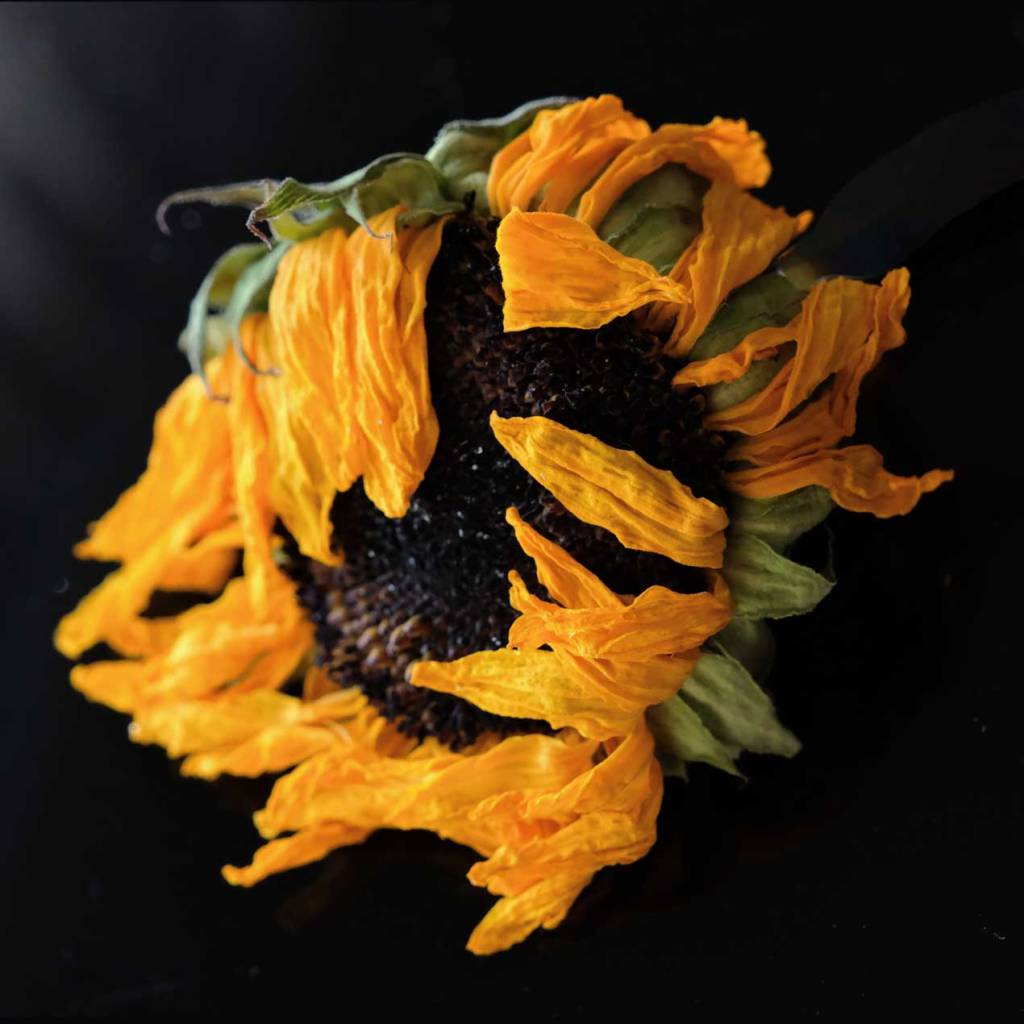







 On the left side is a stationery box filled with certificates of marriage, birth, baptism, and death intermingled with a child’s brilliantly colored drawings.
 awakens as the image of grief’s blackened shadow looms over me with its death-filled abyss of intermingled condemnation, uncertainty, and emptiness. I feel the void that will consume me if I were to release the eternal care of my son to its embrace. I come to know that I hold no trust that within death is compassionate loving-kindness. Awareness arises to tell me that as I run from grief with the anguish of powerlessness to protect the heart of my soul, like an addict running from her addiction, grief becomes even more insidious. In this undifferentiated chaos of anguish, fear, and mistrust there is hope [larger than a mustard seed] which seeks for the magical garment when donned will transform me into the Great Mother. It is childhood faith that clings to the belief that as God witnesses this transformation, absolution and reconciliation would simultaneously subdue this impenetrable monster and return my son, whole with the spirit of life, to…*

















 a meditative journey
You must be logged in to post a comment.