reweaving within grieving

the uncertainty within grief’s reweaving memories…

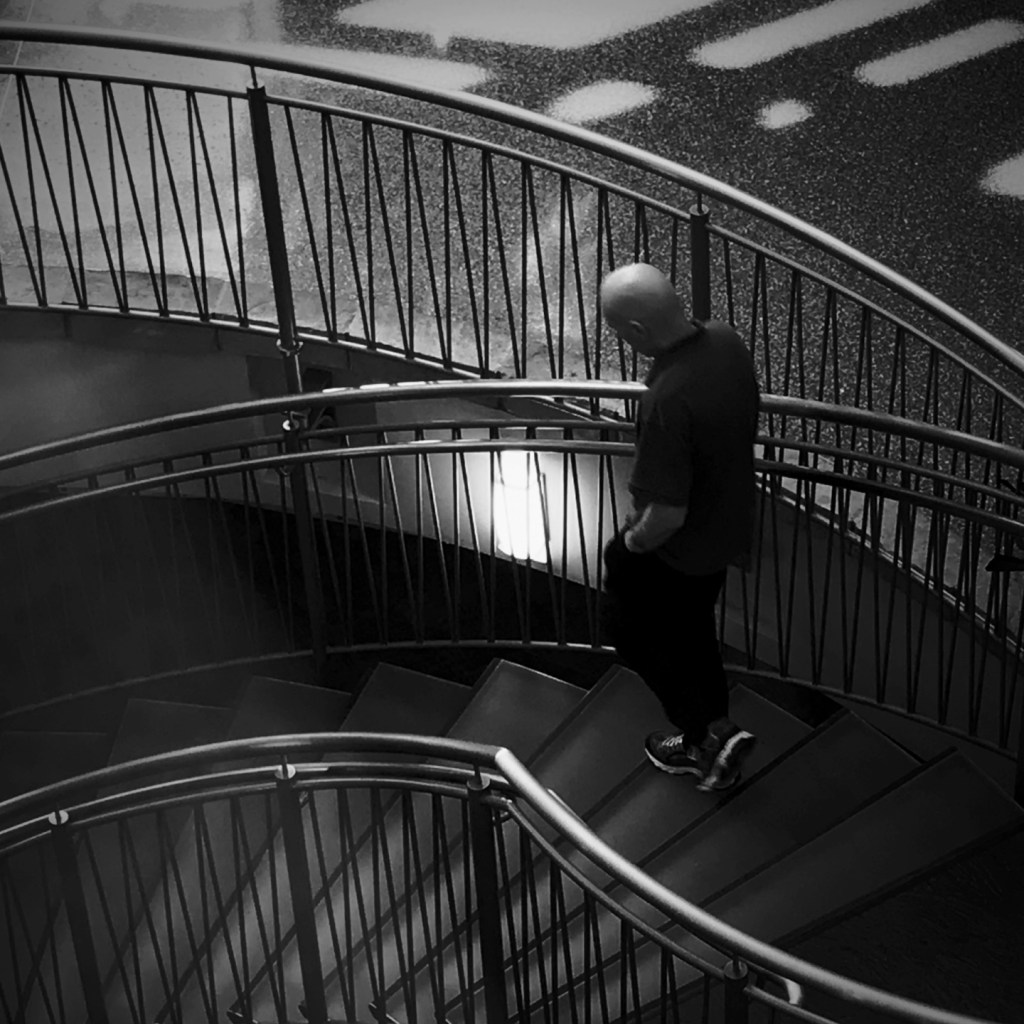
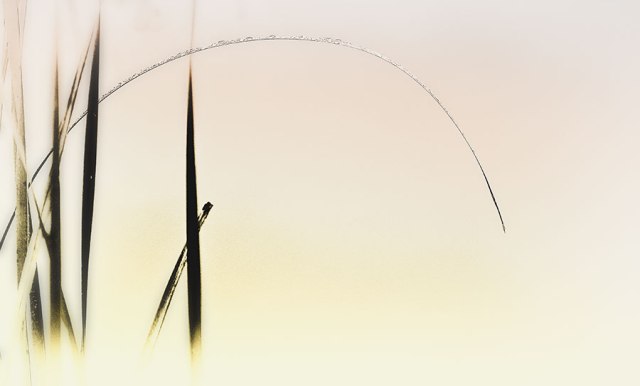
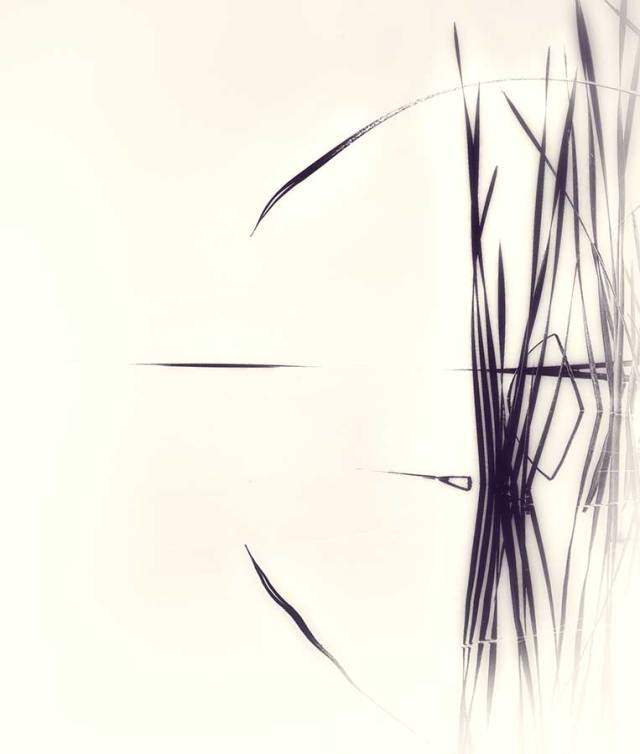
The personal story is a narrative of our unique sense of identity.  We create our identities through the stories we weave onto a tapestry that is formed against the background of our family mythologies. We pull threads from of an assemblage of recalled details from our pasts and weaved them into images that cast us in whatever role corresponds with our current situations, feelings, thoughts, or actions. The colored threads of this tapestry are often re-embroidered to reflect the creative and dynamic process of our perspectives as we shift in, out, and between various roles, feeling states, and cognitions.  As we reflect on our self-created images we are in turn affected by them; therefore, there is an unconscious re-weaving of our tapestries. ~The Meditative Journey with Saldage

shadows of squares -6

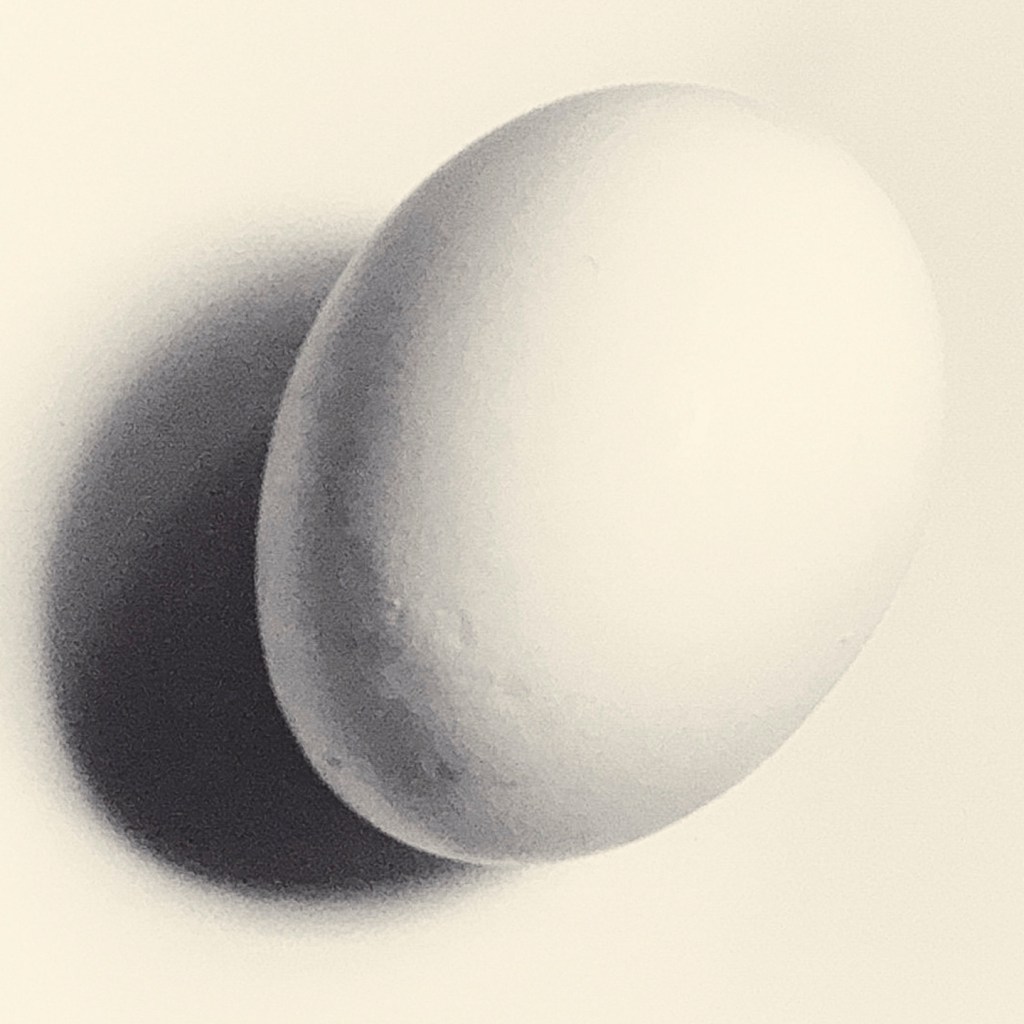
The Art of the Egg or the Egg and I

“It occurred to me that I have done an awful lot of egg drawings and paintings. Not quite sure why. It is a subject I use in my drawing classes quite frequently and I tell my students that if they can draw an egg, they can draw anything. It is like a little creature, a tiny model – and symbolic of so much: new life, fertility, possibilities … It is the perfect shape to to practice tone and get the 3-D effect. Some love this exercise; some will never look at an egg again!”*

*Catherine Wells,
Director, Pointe-St-Charles Art School

Visit The Life of B to join November’s Shadows of Squares

shadows of squares -5

In Adelbert von Chamisso’s, Peter Schlemihl, Peter the title character of the 1814 novella, sells his shadow to the Devil for a bottomless wallet, only to find that a man without a shadow is shunned by human societies. Later when the devil wants to return his shadow to him in exchange for his soul, Schlemihl rejects the proposal and throws away the wallet. After this he seeks refuge in nature and travels around the world in scientific exploration, with the aid of seven-league boots.*

Schlemihl finds reconciliation with others as they care for him during a long illness and he no longer searches for his shadow. After he recovers, he returns to his scientific studies and in time develops a deep harmony with both nature and his personal self.

*Seven-league boots are an element in European folklore. The boots allow the person wearing them to take strides of seven leagues per step, resulting in great speed. The boots are often presented by a magical character to the protagonist to aid in the completion of a significant task.

Asked which book by another author he would most like to claim as his own work, Italo Calvino once said without hesitation, Adelbert von Chamisso’s Peter Schlemiel. First published in 1814, this brilliant novel is not only a precursor of Poe, Kafka, and the magic realists – it is a timeless fable with a remarkably contemporary flavor.

Visit The Life of B to join November’s Shadows of Squares

shadows of squares -4

“Unfortunately there can be no doubt that man is, on the whole, less good than he imagines himself or wants to be. Everyone carries a shadow, and the less it is embodied in the individual’s conscious life, the blacker and denser it is. At all counts, it forms an unconscious snag, thwarting our most well-meant intentions.” ~Carl Jung*

*Carl Gustav Jung was a Swiss psychiatrist, psychologist, and psychotherapist who founded Analytical Psychology.

saturday morning with joanne harris

“She’s growing up, I tell myself.”

becoming…Nikon D750 f/2.5 1/1000s 35mm 800 ISO multiple exposure, 3*

” Receding, dwindling like a child glimpsed in a hall of mirrors – Anouk at nine, still more sunshine than shadow. Anouk at seven, Anouk at six, waddling duck-footed in her yellow wellingtons, Anouk with Pantoufle bouncing blurrily behind her, Anouk with a plume of candy floss in one small pink fist – all gone now, of course, slipping away and into line behind the ranks of future Anouks. …Marching faster and faster towards a new horizon –“**

*becoming first included in July 31, 2019 post, Dreaming Dreams.

**Joanne Harris. Lollipop Shoes, p.33.

lens-artists … everyone should see this

This week’s lens-artists challenge is hosted by Joanne. She writes that “Often times we see something that inspires us” and wish others could see what we see. She invites lens-artist to share some inspiriting photographs of things/people/places.

At this time of my life my travels are through books. As I wander through pages of someone’s thoughts and imaginations, it is often that I think of someone to share inspiring passages.

The Practice of Contemplative Photography Seeing the World with Fresh Eyes” by Andy Karr and Michael Wood is one such book. To be introduced to their Two Ways of Seeing opens me to a new way of being…being present during photo walks. The images below were created during pond walks.

“To see clearly you need to untangle perception from conception. To distinguish them you need to take out your (metaphoric) microscope and look closely at each one.

“Visual images appear when consciousness connects with the eye. Mental images appear when consciousness connects with the conceptional mind. …

What appears to conceptual mind is only an abstract, general image that encompasses all the views and pictures of a thing that you have ever seen. It is a very different kind of object from the specific ones that appear to the non-conceptual senses.

“The visual object that appears to the eye appears clearly, in great detail. You see–all at once–color, shape, texture, and the rest.

“The usual sequence of perception is that in the first moment, there is direct sensory experience. In the second moment, a concept and label arise, superimposed on the direct perception. …These moments of perception and conception are extremely brief. The sequence happens very quickly, so quickly that you don’t notice that a whole process is unfolding.”

Thank you Joanne for inviting me to continue my contemplation of how life is in a perception state of change and what I simply see within a moment transforms into an ideal/story/memory of a thing. What is difficult to embrace is possibility that no one actually sees what we see…

monday morning with pascal mercier

He often complained in his last year that he didn’t understand what it really consisted of, the loneliness we all feared so much.

Fujifilm X-T4: f/4 1/75 s 60.8 mm 400 ISO

What is it that we call loneliness, he said, it can’t simply be the absence of others, you can be alone and not lonely, and you can be among people and yet be lonely. So what is it? … All right, he said, it isn’t only that others are there, that they fill up the space next to us. But even when they celebrate us or give advice in a friendly conversation, clever, sensitive advice: even then we can be lonely. So loneliness is not something simply connected with the presence of others or with what they do. Then what” What on earth? (cited: Night Train to Lisbon, p 319.)

saturday morning with pascal mercier

“”We live here and now, everything before and in other places is past, mostly forgotten and accessible as a small remnant disordered slivers of memory that light up in rhapsodic contingency and die out again.

Fujifilm X-T4: f/9 1/10 s 80 mm 400 ISO

“This is how we are used to thinking about ourselves. And this is the natural way of thinking, when it is others we look at: they really do stand before us here and now, no other place and no other time, and how should their relationship to the past be thought of if not in the form of internal episodes of memory, whose exclusive reality is in the present of their happing?” Pascal Mercier, Night Train to Lisbon, pp, 241-242

thursday morning with pascal mercier

Encounters between people, it often seems to me, are like crossings of racing trains at breakneck speed in the deepest night.

We cast fleeting, rushed looks at the others sitting behind dull glass in dim light, who disappear from our field of vision as soon as we barely have time to perceive them. Was it really a man and a woman who flitted by there like plantoms in an illuminated window frame, who arose out of nothing and seemed to cut into the empty dark, without meaning or purpose? ~ Pascal Mercier, Night Train to Lisbon, pg. 94

Fujifilm X-T4: f/4 1/1400 s 78.1 mm 640 ISO

lens-artists: books

Within one of the realms of The Wheel of Suffering, is the animal realm in which a bodhisattva is depicted holding a book representing the need for wisdom that arises through thought, speech, and reflection.

” … I come to a place where I envision myself eagerly standing before bookshelves, my eyes lightly and briefly touching upon one book’s title and then another, feeling their words tickle my thoughts until I surrender to their unspoken promises. Once engaged by the promising nature of a title, it is hope that opens a book jacket and begins another journey through pages.  With the turning of each page, desire seeks the experience of validation within the configuration of a writer’s text. All of this, I believe, is driven by memory traces of how the words of unknown authors enfolded my emotional self …” (cited: B Catherine Koeford, A Meditative Journey with Saldage)

“… you and I in the living room.  You gave me three hard bound books…illustrated books. One about the lives of bees, the other about the Civil War, and lastly…the female reproductive system, “You are a woman now.  You must wash your face twice a day …” 

I was a woman.  Three books. Books freed us to worlds beyond a rural newspaper route.  Books were trips to the library, classical comic books left on my bed, novel reenactments, and later carefully National Geographic cutouts attached to your letters.  

I loved novels. You, nature and science …”  (cited: My Mother Came to Visit, memories of my mother during Covid …”it was a remembered touch that announced her arrival”)

Unseeded and Two Springs – two photo books of personal journeys of healing.

Two Springs: you left,
I remained… two springs

A photo journey…in remembrance of my mother, Elberta.

Unseeded: “The first time I heard the word “unseeded” I felt it resonate with another term saudade, a unique Portuguese word with no immediate English equivalent.

Saudade describes a vague and constant desire for something that does not and probably cannot exist …”

 Ritva has invited lens-artists “to embrace your inner book lover and share your most creative photographic interpretation of anything related to books.”

lens-artists: it’s a wild life!

“And he sailed off through night and day. And in and out of weeks. And almost over a year to where the wild things are.”*

“Max said ‘BE STILL!‘ and tamed them with the magic trick of staring into all their yellow eyes without blinking once and they were frightened and called him the most wild thing of all and made him king of all wild things.”*

“And now,” cried Max, “let the wild rumpus start!”*

“And Max, the king of all wild things, was lonely and wanted to be where someone loved him best of all.”*

Submitted in response to Egídio’s lens-artists challenge, “I would love to see your wild side.”

*Maurice Sendak, Where the Wild Things Are