The cloud-covered sky
is all open
The heart of takuhatsu*
as it is–
a gift from heaven ~Ryokan, The Life and Poetry of Zen Master Ryokan, Trans: Kabuki Tahanhashi

Fujifilm X-T4 f/4 1/25 s 17.1 mm 500 IS)
*A term for the monk’s alms-begging round

The cloud-covered sky
is all open
The heart of takuhatsu*
as it is–
a gift from heaven ~Ryokan, The Life and Poetry of Zen Master Ryokan, Trans: Kabuki Tahanhashi
Fujifilm X-T4 f/4 1/25 s 17.1 mm 500 IS)
*A term for the monk’s alms-begging round

The two guardians of the world – the bright states that protect the world – moral shame and moral fear.

The Buddha shared that a sense of shame and the fear of blame are two bright states that protect the world. Having a sense of shame means that we refrain from doing evil because we do not want to harm ourselves. It is because we wish to preserve our self-respect that we develop a sense of shame. We wish to be respected by others, so we develop the fear of blame.
When there is a leader who does not ask his predecessor to give him advice of how to govern, he will rule according to his own opinion which sets the stage for a decline in morality and consequently the quality of peoples’ lives. If we look at the world today, the two guardians of the world are fading away.
We have stories of immoral characters who go unpunished.
We begin to see and hear of increasing violence in its manifestation of negation of others, verbal and physical abuse, threats, power and control, and murder.
There are increasing rigid polarizations within families, between friends, and among neighbors and strangers.
There are reports of increasing incidents of racism.
There is a growing absence of social governance and increasing incidents of lawlessness; as well as, a growing sense of distrust, fear, anger, isolation, and sadness.
Looking to find resolution we find that government figures are more concerned with winning votes than with governing.
Some religious leaders seem ready to do almost anything to accommodate their followers while others resort to fanaticism.
What are the variables that can begin to nudge us out of this time of discontent? Faith, virtue, a sense of shame, the fear of blame, mindfulness, concentration, wisdom, compassion, and/or loving-kindness?
~reference: The Two Guardians of the World
The dance of light and shadow are ordinary experiences …

the seen and unseen fleeting moments within our lives …
the infinite gifts of raw material for the artist’s soul.
what if …
the understanding I grasp onto within my weltanschauung, in truth, lives within spheres of understanding beyond this worldview and this grasping imprisons with fury.

Visit The Life of B to join November’s Shadows of Squares

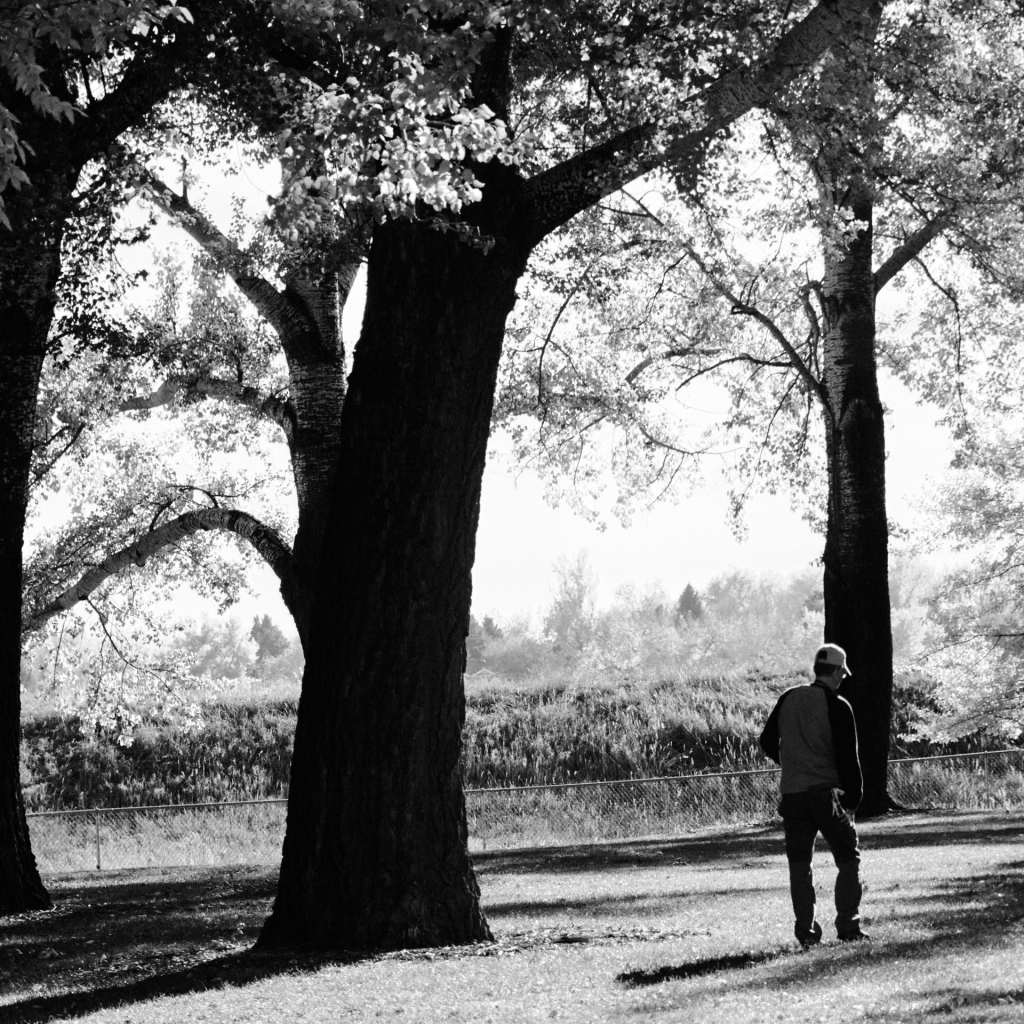

I was introduced to the Portuguese word, saudade, which has no immediate English equivalent about 30 years ago. Saudade is a word that feels intimate as it named a life-long companion. It touched upon a vague and constant desire for something that does not and probably cannot exit, for something other than the present, a turning toward to past or towards the future; not an active discontent or poignant sadness but an indolent dreaming, a wishfulness.


Over 30 years ago, I met a homeless woman who identified herself as a sundowner. She described how each evening’s sun invited her to settle down along the side of her life’s path so that her journey could begin afresh in the morning sun. She eloquently described an undercurrent of yearning that ebbed and flowed throughout her soul and how, in her past days, she found herself at the mercy of private memories, thoughts, and imaginations and had encountered, time and time again, various degree of discontent that wandered along side her aloneness.


As I heard the suffering within women who story their lives through the multi-colored threads of substance use, I find myself acknowledging a similarity within each of these unique stories with my own metaphysical search for someone, something, or some place that remains beyond the forever next horizon. Each of our unique narratives reveal an unending wandering with satchels of discontent that tell of a spiritual emptiness and an emotional intimacy wit, “a homesickness for a place one knows cannot be.”
Thank you Egídio for your invitation to wander through loneliness.
may you find peace within gratitude.

over the fields of
last night’s snow–
plum fragrance.
~Okano Kin’emon Kanehide*

*cited:
Japanese Death Poems
Yoel Hoffmann

Imagine the dimension of time as a vertical line. Place yourself in the present on that line with the past above you and the future below you. Establish yourself in time. See all your ancestors that have come before you. The youngest generation of your ancestors is your parents. All of them are above you on this line of time. Then below you, see all your dependents, your children, your grandchildren, and all their future descendants. If you have no children, your descendants are the people you have touched in your life, and all the people they in turn influence.
In you are both your blood ancestors and your spiritual ancestors. You touch the presence of your father and mother in each cell of your body. They are truly in you, along with your grandparents and great-grandparents. Doing this, you realize their continuation. You may have thought that your ancestors no longer existed, but even scientist will say that they are present in you, in your genetic heritage, which is in every cell of your body.

Look into a plum tree. In each plum on the tree there is a pit. That pit contains the plum tree and all previous generations of plum tree. The plum pit contains an eternity of plum trees. Inside the pit is an intelligence and wisdom that knows how to become a plum tree, how to produce branches, leaves, flowers, and plums. It cannot do this on its own. It can only do this because it has received the experience and heritage of so many generations of ancestors. You are the same. ~Thich Nhat Hanh (No Death, No Fear, 137-138)

This posting was created in memory of Dustin, Bob, Elberta, Donna, Chris, Larry, Margaret, Thella, John, Clive, and Jeff who all live on within the lives of my beloved.
How invisibly
it changes color
in this world,
the flower
of the human heart.
~Ono no Komachi*
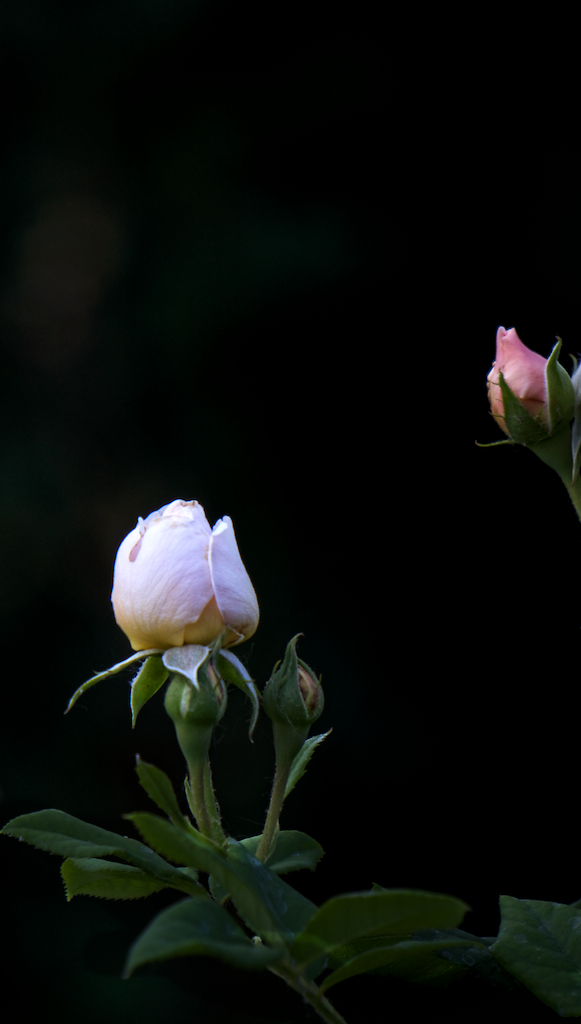
“… our ordinary vision is limited, and…our conventional consensus of reality is not the only version of reality.
The complex multidimensionality of the modern world no doubt contributes to the constructive habit of the mind that, in its attempt to provide meaning, continually rearranges the world to fit individual needs. The failure to recognize the constructive nature of the mind can be a major obstacle to artistry and creativity. Conversely, understanding the constructive nature of the mind and reality can lead the way to Great Understanding in the art of photography and in the art of living.” (61)**
cited:
*The Ink Dark Moon
Trans: Jane Hirshfield with Mariko Aratant
**Tao of Photography
Philippe L Gross & S.I. Shapiro
Someone asked, “what is my true nature?”

If you search for your “true’ nature, you grant the existence of a “false” one.
If you make no attempt to define your nature, you will find nothing in it that is not true.*
*cited:
Japanese Death Poems
Yoel Hoffmann
Is my mind elsewhere
Or has it simply not sung?
Hototogisu*
~Ihara Saikaku (1642-1693)**

*Hototogisu, translated as cuckoo, wood thrush and sometimes nightingale.
The bird’s song is a strong but mournful cry.
It is said to die after singing 8,008 times.
It is also known as the “bird of time,”
“messenger of death” and “bird of disappointed love,”
and flies back and forth from this world to the next.
Confucian axiom: If one’s mind is elsewhere, one will look but not see, listen but not hear
**cited in:
The Classic Tradition of Haiku
Edited by: Faubion Bowers

“What is the cause of everything? …everything relies on everything else in order to manifest. A flower has to rely on non-flower elements in order to manifest. If you look deeply into the flower, you can recognize non-flower elements. Looking into the flower, you recognize the element sunshine; that is a non-flower element. Without sunshine, a flower cannot manifest. Looking at the flower, you recognize the element cloud; that is a non-flower element. Without clouds, the flower cannot manifest. Other elements are essential, such as minerals, soil, the farmer and so on; a multitude of non-flower elects has come together in order to help the flower manifest.”
~Thich Nhat Hanh, No Fear, No Death
 a meditative journey
You must be logged in to post a comment.