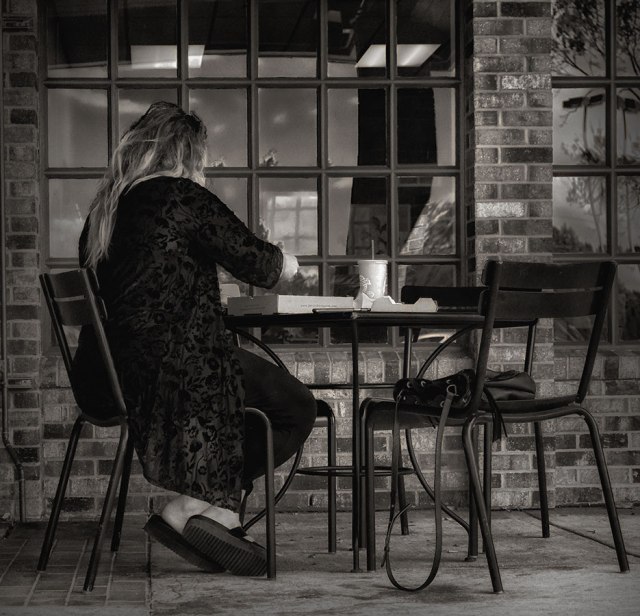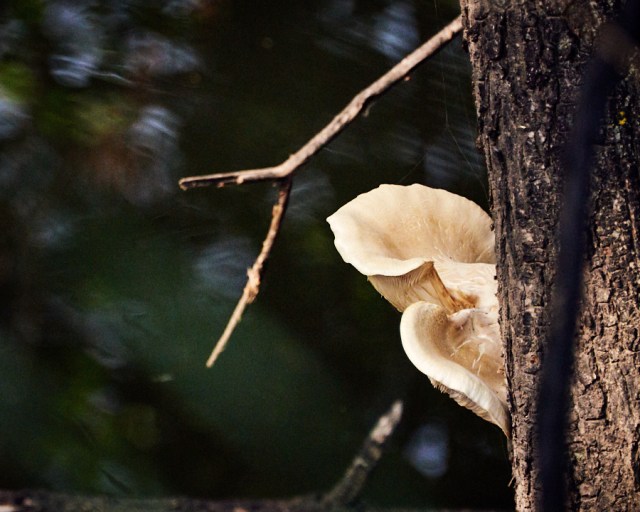
early morning readings

contemplative photography 26 copy

Sony RX100 III  f/5   1/800s   8.8mm  800 ISO

A world without memory is a world of the present. The past only exists in books, in documents. In order to know himself, each person carries his own ‘Book of Life,’ which is filled with the history of his life. By reading its pages daily, he can relearn… Without his Book of Life, a person is a snapshot, a two-dimensional image, a ghost. … Some pass the twilight hours at their tables reading from their Books of Life; others frantically fill its extra pages with the day events.

With time, each person’s ‘Book of Life’ thickens until it cannot be read in its entirety.  Then comes a choice.  Elderly men and women may read the early pages, to know themselves as youth; or they may read the end, to know themselves in later years.

Some have stopped reading altogether.  They have abandoned the past.  They have decided that it matters not if yesterday they were…. no more than it matters how a soft wind gets into their hair. ~A Lightman, Einstein’s Dreams

In his 1991 file ‘Prospero’s Books’, a cinematic adaptation of William Shakespeare’s ‘The Tempest’, Peter Geenaway showed a series of exotic books that were kept in a library on a magical island and revealed just enough of their content to have me wishing the fantasy books were real. Among my favorites are ‘The Book of Colors,’ where “the pages cover the spectrum in finely differentiated shades…a ‘Book of Motion’ that describes, in animated illustrations, all possibilities for dance with the human body. ~J F Simon, Jr., Drawing Your Own Path

autopilot

contemplative photography 2

Nikon D750   f/5.6   1/400   300mm   100 ISO

When I was 14 I realized that a yucky, repetitive chore like mowing the lawn would end so much more quickly if I just allowed my mind to wander. In time I realized I could escape pain (physical and emotional) by shifting focus into an internal place of imaginative wanderings.  As I write this it seems as if I chose to function in a vague dissociative dimension that is commonly referred to as autopilot.  This mindless functioning is similar to how many people go through their daily lives, unaware of their unawareness. 

To me this choice to go into autopilot is a stress management tool and can be an effective way to mange difficult moments; e.g., a root canal.  The downsides of living life mindlessly by shifting focus to a place or time that is other than the present moment are: 

1) life passes us by and we’ve miss wondrous moments – infant smiles, sun rises, bubble rainbows, falling stars, eye contact

2) we interact with others more from an imagined place, conversation, or  conclusion than from reality itself

3) physical pain becomes chronic due to muscular tension that builds up from internal rehearsed arguments, speeches.   

I have come to realize there is a physical tightening or bracing that unconsciously occurs while we are in our head.  It is as if the brain senses the danger that comes from inattention and thus braces for an imagined attack from a saber tooth tiger or the possible fall that could occur while reading and walking.

 4) we respond to life’s challenges from places of learned conditioning and imagined possibilities.  For example, I have found  myself grieving the ending of a Mozart piece while in the middle of the music.  Thus sadness created from an expected outcome deafens me to the moment by moment experience. I call this personal crazy making. 

So to pause in the middle of these emotional and mental rapids is to intentionally bring a roaming mind into the present. This intentional returning to self is to experience the refreshing flow of the breath; the movement of music as it travels throughout our soul (and to be with the music until it is no more and ask of ourselves, “where did the music go?”). 

To quiet the ongoing ramblings within the mind and bring oneself into the present environment is to witness the dance of light and shadow upon a wall or the flow of steam above a cup of coffee.  This stilled silence allows us to emotionally connect with another through the art of listening that guards us from injecting ourselves into their story.

When I do this I find that that these moment gift me with peaceful bliss as yesterday is not here and the next second has paused. In truth, despite all the worldly worries, possibilities, have tos, and shoulds this moment of non- judgmental awareness is life.

My awareness of this brings me to an intention.  An intention that when doing yucky chores I will bring my focus to the sensual experience – the various sights, sounds, tastes, sensations, scents associated with dusting, washing dishes, sweeping, ect.  Yet, I soon realize I unwittingly traveling through a land of Oz. So I non-judgmentally smile to myself in greeting and return to the moment, knowing and accepting that I’ll soon realize my mind has taken me elsewhere once again.

Research has found that mindfulness is associated with improved stress management, health, pain management, and problem solving. So to identify a event in one’s life — listening to music, bathing, walking, eating, knitting, writing in which to set out to be intentionally present is the door by which to learn how to be with oneself and to become aware when we have slipped away into a realm of mind making.

A daily formal meditative practice is good but most people struggle with setting aside 10 – 15 minutes for themselves (even though they will set aside hours watching TV).

So periodically throughout a day, I recommend a returning to the moment for a few minutes by asking oneself: 

What am I thinking?

What physical sensations am I aware of in this moment?

What feeling am I feeling?

Where in my body do I feel this?

Shift your attention to the physical sensations of your breath.  Be present with your breath for 3 cycles of in-breath, pause, out- breath, pause.

Ask yourself, “are my thoughts and/or feelings asking me to do something?” Listen to yourself for an answer.

End this mindful practice by bringing your awareness once again to your in-breath and with the out-breath release with a sigh.  Gift yourself with a smile.  

On a personal note, when I ask myself, “what am I thinking?” I often find that I can’t recall my thoughts.    

May I welcome the peace within my in-breath.  May I smile with the flow of peace within my out-breath.  May all living beings know peace. 

the stories we weave

This slideshow requires JavaScript.

Individuals have within themselves vast resources for self understanding and for altering their self concepts, basic attitudes, and self directed behavior; these resources can be tapped if a definable climate of facilitative psychological attitudes can be provided.   ~ Carl Rogers

I am acquainted with a mind filled with multiple crosscurrents of unfinished thoughts, stifled emotions, and passing moods. There is also a growing recognition that at times I am overwhelmed by discursive thoughts that are formed by habitual ways of thinking, led by my own various prejudices, impacted by personal preferences or aversions, colored by laziness or selfishness, and intensified by faulty or superficial observations. Sometimes I awaken to myself to find that while engaged in a behavior, my mind has entered a dreamlike state, and therefore events and conversations are vague and fragmentary.  Sometimes I acknowledge this process or attribute it to boredom, anxiety, doubt, impatience, exhaustion, misjudgments, and self-salient triggers.

Protecting oneself, one protects others; protecting others, one protects oneself . . . And how does one, in protecting oneself, protect others? By the repeated and frequent practice of meditation.

And how does one, in protecting others, protect oneself? By patience and forbearance, by a non-violent and harmless life, by loving kindness and compassion.” But self-protection is not selfish protection. It is self-control, ethical and spiritual self-development.  ~ The Buddha

springcreekbnwreflections2web

Every healing intervention is motivated by suffering and hope – be it of the individual, family, friends, or a community agency.  The value within suffering is that it contains a message of incongruence that awakens the motivation to heal. William James wrote that life is the manifestation of behaviors that attempt to avoid, overcome, or remove that which is seen to block us from that which we desire.

The personal story is a narrative of our unique sense of identity.  We create our identities through the stories we weave onto a tapestry that is formed against the background of our family mythologies. We pull threads from of an assemblage of recalled details from our pasts and weaved them into images that cast us in whatever role corresponds with our current situations, feelings, thoughts, or actions. The colored threads of this tapestry are often re-embroidered to reflect the creative and dynamic process of our perspectives as we shift in, out, and between various roles, feeling states, and cognitions.  As we reflect on our self-created images we are in turn affected by them; therefore, there is an unconscious re-weaving of our tapestries.

 Our self-stories as well as our family mythologies create and maintain our identities and thus influence how we anticipate experiences, act, and subsequently interpret our situation.  Becoming aware of the tapestry and images we are creating frees us to review patterned behaviors, reframe our story through different colored concepts, and to release rigid interpretations.

landscape 1

While a person sits in a recovery group and labels her struggle with drug and alcohol as an “addiction”, she has begun to free herself from the power inherent in long-held secrets.   As she tells her story she is weaving a tapestry of images that validates the hidden stories within others and thus invites listeners to abandon their alienated shame, anxieties, confusion, and anger. When she labels the various demons within addiction she dwindles their power as she un-shields their false promises.  At the same time, the power of detrimental thinking begins to dwindle as its unsubstantiated lies are confirmed within the stories of others.

Within such a supportive and non-judgmental environment, each is invited into a process of bare attention that is non-coercive as they uncover the seeds of their suffering and thus begin to strengthen their recovery with renewed energy.  It is after a meeting during the quiet of one’s alone time that each attendee begins a process of dismissing what is personally invalid, questioning harmful behavioral patterns, or replacing painful concepts with constructive meanings.  They, through their own individual reflection, take what is helpful for them at the moment and let the rest flow away.

contemplativephoto-peace

Through this process of externalization, validation, and reformation an individual is being invited to become other to herself as if she were the audience in a movie theatre watching her life story being retold on a screen.  Consequently, a new relationship with the self is formed that lessens the suffering that comes out of subjective rigidity, alienation of self as “the only one”, and attachment to shame and guilt.

Excerpts: Koeford, B., A Meditative Journey with Saldage

a photo study: contemplative photography VI – eye & mind

This week’s A Photo Study is inspired by the writings of A Karr and M Wood (The Practice of Contemplative Photography), “Photographing color gives us something to look for that will synchronize [cause or occur to operate at the same time] eye and mind.”

Photographing color is the first of their contemplative photography assignments in which the photographer is encouraged to open herself to color:

contemplativephoto-11web9218

labeling the color “red”

  • keep a narrow focus on color
  • see colors absent of identifying them as “red”  “yellow” “blue” “purple”, etc.
  • look at color in a simple and open way
  • look at color out of context…free from association, memories, reference points, likes, or dislikes
  • look at billboards as color and form rather than words and messages
  • see the redness of red, the blueness of blue without superimposing anything on them at all.
  • when stopped by a flash of color, let you mind stop – physically stop and spend 1/2 minute looking at the color
  • contemplate what stopped you
  • raise your camera and look at your perception through the view finder or the camera’s screen.  Ask yourself, “is this what stopped me?”
  • make any adjustments to focus, exposure, and depth of field
  • release the shutter
  • enjoy yourself

This slideshow requires JavaScript.


As always, I’m looking forward to reading your comments and seeing what colors touched your awareness.  Let’s tag with aphotostudy.

pond reflections

mind stream–rippling

a tumble jumble babble

current–afterthoughts

pondreflectionsweb82418

light patterns…Nikon D750   f/4.5   1/400s  85mm   200 ISO

“…there is something more fundamental about the world that is brought into being by the right hemisphere, with its betweenness, its mode of knowing which involves reciprocation, a reverberative process, back and forth, compared with the linear, sequential, unidirectional method of building up a picture favored by the left hemisphere.” ~I McGilchrist, The Master and his Emissary

early morning readings

contemplative photography 5

Sony RX100 III  f/4  1/80s  23.9m  250 ISO

“This LeWitt drawing [All Two-Part Combinations of Arcs from Corners and Sides, Wall, Drawing #842, white crayons, black pencil, grid, 14×18 ft.], white lines on a large black field, created a strong presence in the gallery. That presence was beautifully offset by the simplicity of the system it described. Until that show, I believed that conceptual art was about the idea-the concept–and thus that the drawing on the wall was only there to display the idea. I believed this until one day during the show, when I found myself alone in the gallery in front of the wall and my vision was filled with black paint and the pebbly, waxy marks of the white crayon. At that moment the piece seemed to open a door in my mind. Rather than the concept being processed like art in my brain, I felt a sense of integration–my eyes and body were involved, a union between the concept and the materials, neither standing alone. My view transitioned from an analytical appreciation of a system called ‘art’ into an utter, complete presence with an artwork…” ~J F Simon, Jr., Drawing Your Own Path

“Observe the changes that take place in your mind under the light of awareness. Even your breathing has changed and become ‘not-two’ (I don’t want to say ‘one’) with your observing self. This is also true of your thoughts and feelings, which, together with their effects, are suddenly transformed. When you do not try to judge or suppress them, they become intertwined with the observing mind.” ~Thich Nhat Hanh, The Sun My Heart

history is remembrances re-emerging

contemplative photography 6 copy

Intentionally, I set my mind upon the engagement of self with the process of reading the words of another with a knowing that I have accepted an invitation to consider an author’s worldview; that is, to place reality upon a shelf or to open a unique window of understanding.

…distraction, from this engagement as I become aware of a shadow presence – a transparent here-ness tinted with memories of you. It is as if you emerged from the printed page calling forth shared memories.  I feel you sitting silently beside me. Within this silence, I begin to search for words, sentences that covey meanings and insights that awaken the joy that comes from an easing of longing and I hear myself whisper, “Here, a treasured story of thought that reconnects us, reflects a past time of us together, that validates words, ideas—you—and messages, ‘I have heard you within the sharing of love.  I delight in knowing you.  I wish to thank you for simply being…you are the joy that accompanies a gift in transit to being received.’”

…awareness, the words on the page have faded, I have disengaged myself from the invitation to consider the worldview of another as I entered imagined moments with you.  I miss you.  I miss us.

…accepting that what I yearn for can never be for I’m in the autumn of my life while you, my child, have now entered your summer as your children dance within their spring.  Seasons flow one into another—their circular, repeating patterns defined by an unseen guiding hand—births expectations, hope and trust created from past consistencies.

History is remembrances re-emerging like the youthful sprout fragile in its newness, in its responding to life’s call.  Yet, in time this newness will fade and become fragile as one’s autumn yields to their winter.

First posted on September 26, 2013