weekend reflections

reflections91617web

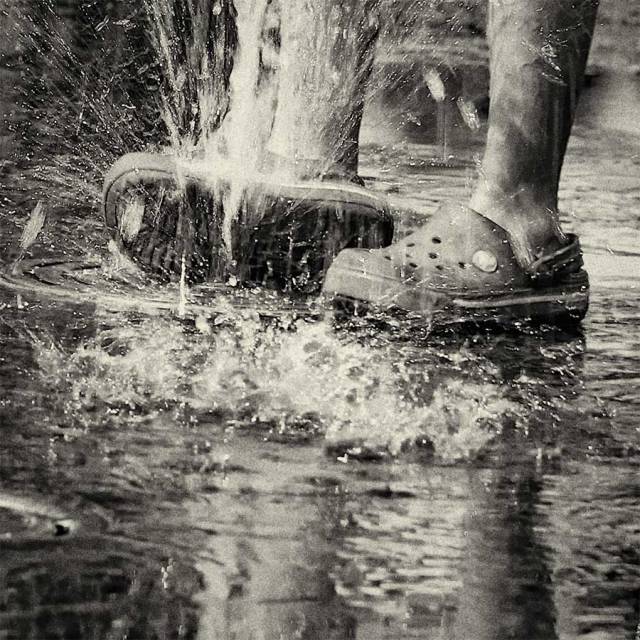
Nick Cave and Warren Ellis create film and theatre scores that are elegantly minimal, hauntingly beautiful and instantly recognisable as theirs alone. Full of light and shade, creeping dread and inconsolable yearning, these heavily instrumental sound paintings inject aching humanity into ghostly frontier towns, parched desert vistas and post-apocalyptic war zones. Most are built around the duo’s intertwined piano and violin melodies, with sporadic use of guitar, flute, mandolin, celeste, percussion and other elements. Vocals are rare and sparing. But even without lyrics, they are always lyrical.

a label


labelsweb

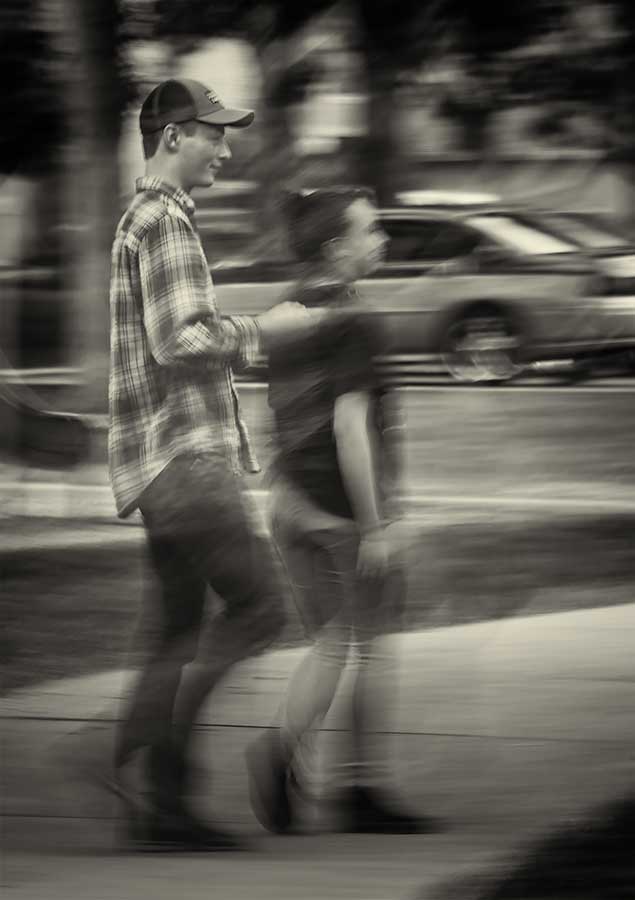
a label transforms a “unknown” person into a preconceived concept

People want to identify and label you so they can place you somewhere they already have set in their mind. …

We have these labels in little piles in our mind and we take them out and stick them on things. That’s our habit. We like to be able to say, “This is an American. That is a Dutch person. This is a Mexican person.” We put the label on as if we know what we mean by Mexican, American, or Dutch. This is a Communist, this is a Republican, this is a capitalist. In fact, the label has no meaning. “This is a person I love, this is a person I hate.” When we put a label on, we can’t see the person. If someone labels you as a “terrorist,” he may shoot you. But if he sees that you are a human being who has his own suffering, who has children and a wife to look after, he won’t be able to shoot you. It’s only when he gives you a label that he can say, “You’re a terrorist; your presence isn’t needed in this world; if you weren’t in the world, it would be a more beautiful place.” It’s all a matter of putting a label on a person. And when you see the real human being, you can’t assign a label anymore. We give labels only in order to praise or to destroy. We have a great bagful of labels–we don’t even know where they came from. And when we stick them onto people, we cut ourselves off from those people, and we can no longer know who they really are.

~Thich Nhat Hanh, Zen Battles

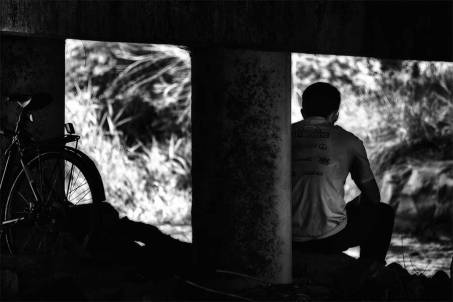
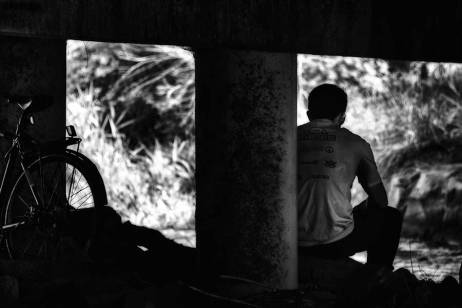
tuesday photo challenge – dark

darkweb

Nikon D750   f/3.2   1/1,000 s    40 mm     ISO 100

A raindrop resting upon the fragile lace of goats beard, a pesky weed,  an amazing umbrella for Thumbelina. It has been told that an old widowed woman planted a seed given to her from a good witch and within the flower that grew from that seed was a little girl no bigger than the old woman’s thumb.  Fairy tales can be somewhat dark, but not the story of Thumbelina.


the journey begins

brendakofford_dandelionproject819web

You can learn about the pine only from the pine, or about the bamboo only from bamboo.  When you see an object, you must leave your subjective pre-occupation with yourself; otherwise you impose yourself on the object, and do not learn.  The object and yourself must become one, and from that feeling of oneness issues your poetry.  However well phrased it may be, if your feeling is not natural—if the object and our self are separate—then your poetry is not true poetry but merely your subjective counterfeit.

~ Basho*

Keith Kenniff is an American composer, multi-instrumentalist, and electronic music producer. He composes ambient/electronic music under the moniker Helios and post-classical piano music under Goldmund.

Learning Photography

f5.6_2.5

Nikon D750   f/5.6   2.5s   40mm   ISO 100


f8_2.5

Nikon D750   f/8   2.5s   40mm   ISO 100

f11_1.30

Nikon D750   f/11   1.30s   40mm   ISO 100

f6.3_1.3

Nikon D750   f/6.3   1.30s   40mm   ISO 100

After pondering the feedback about the image I submitted for RAJ’s closeup/macro lesson, I realized my understanding of shutter speed was a bit fuzzy and in need of  study.  So with a bean bag for camera support and the Nikon set on auto-focus (I did not want to be impeded by my lack of experience with manual focus), I experimented with 40 various macro images of  peppercorn and Himalayan salt.  Of the four posted above, my preference is f/11 at 1.30 seconds.

The image I submitted for RAJ’s “frame your subject” lesson was revisited to darken the lit rectangle on the left as it was noted to be a distraction.

pc_frameweb

Before

pc-frame2web

After


RAJ’s notation about the sunflower image in portrait mode brought to mind a photo article about how, as a camera moves closer, an peanut in a match box transforms from an image of a peanut to one of a piece of sculpture.  In the sunflower image (right) I cropped the image in portrait and followed up with a bit of clean up along the bottom with Photoshop’s content-fill.

Jump on over to RAJ’s Photography Lesson to begin a great learning experience.


xdrive photo lession – 8 – close up/macros

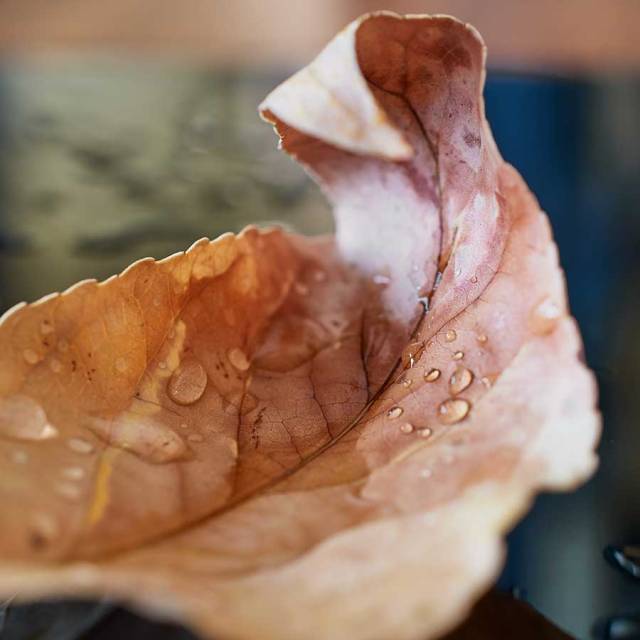
RAJ’s photo lesson about close ups and macros, encouraged me to create images with my camera set to manual focus, “Remember, only you know the story you are trying to tell, not the camera!”

macrochallenge9517a

Nikon D750  f/6.3 40mm  1/4s  100 ISO

This initial exploration with manual focus brought to mind the summer between the 4th and 5th grade, when I put on my first pair of glasses (Cat Eyes). I can still recall the visual experience of seeing for the first time individualized leaves on trees and multiple shapes and colors of gravel stone…the world, sharpened and focused, was a moment of awe.  Corrective lenses was a means of normalization; yet, there are no words to describe and there are no photographs that can replicate the amazing bokeh of Christmas lights created by astigmatism and myopia.

Nikon D750  f/5  40mm  0.2s  100 ISO

The ease of using auto focus–a reliance upon technology–to create images that satisfy a self-imposed standard has me question if the advancements in genetic, genomic, and reproductive technologies, identified by a UC Berkeley sociologist Troy Duster as a back door to eugenics, to lessen human suffering will also nudge us into a world absent of human uniqueness.