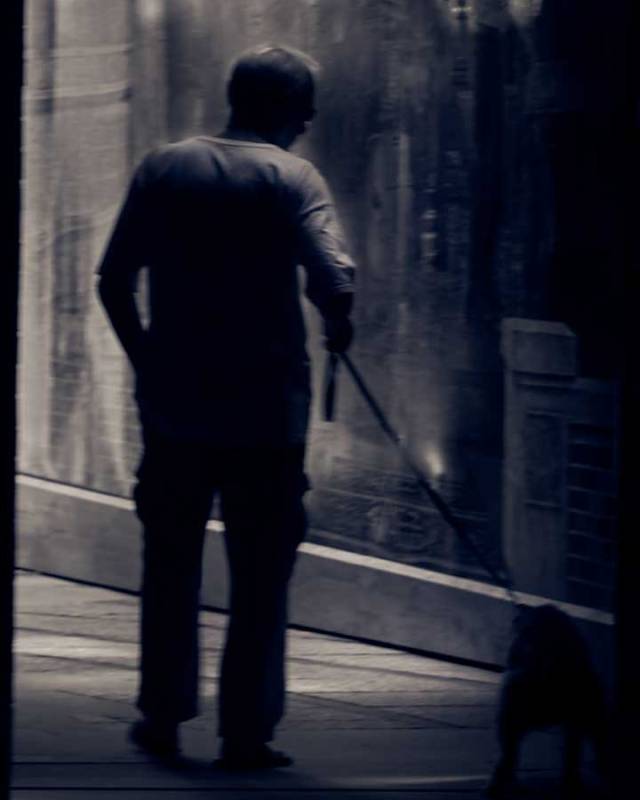
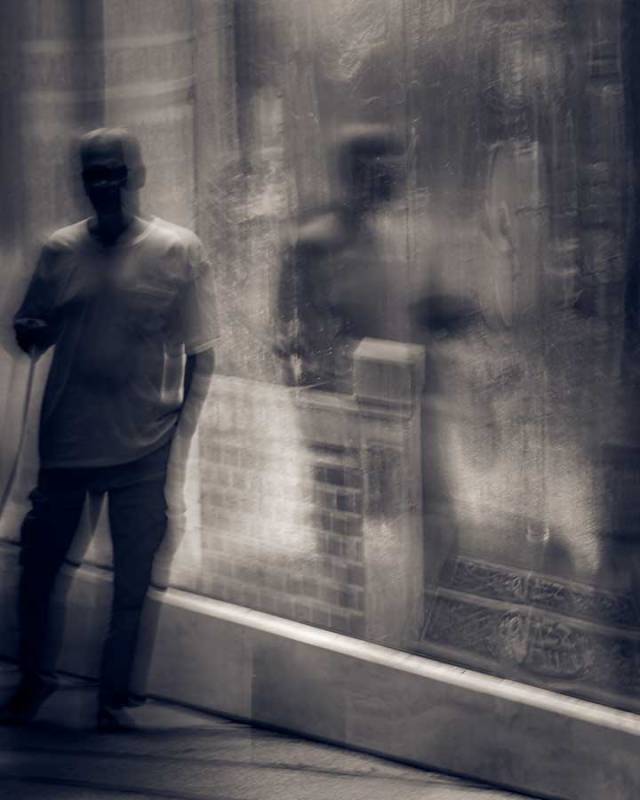
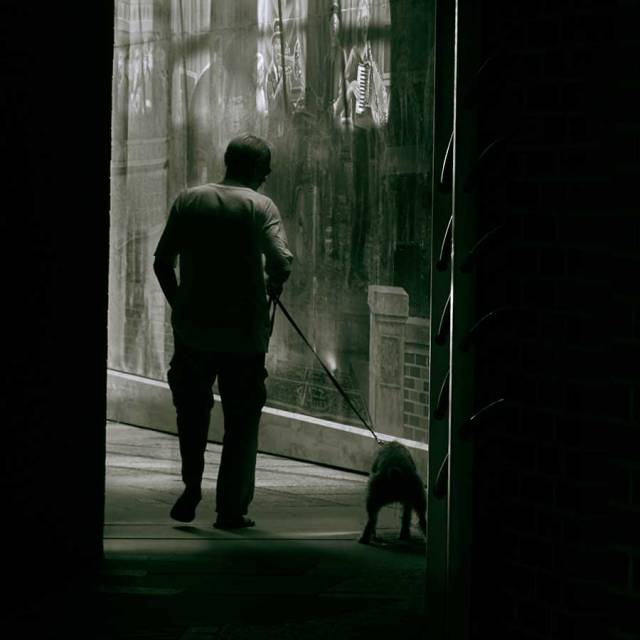
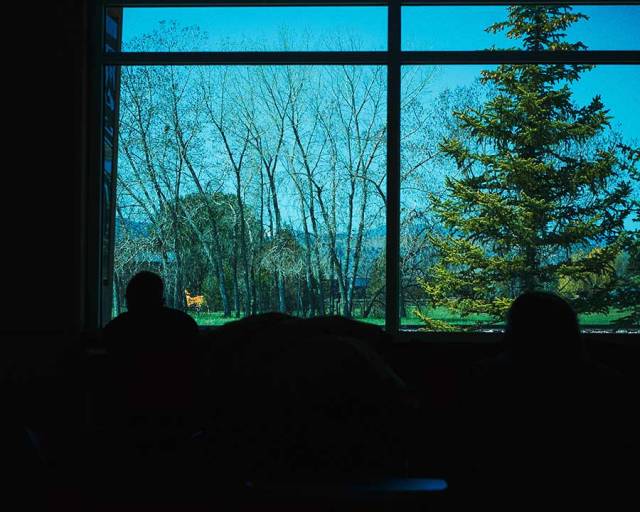
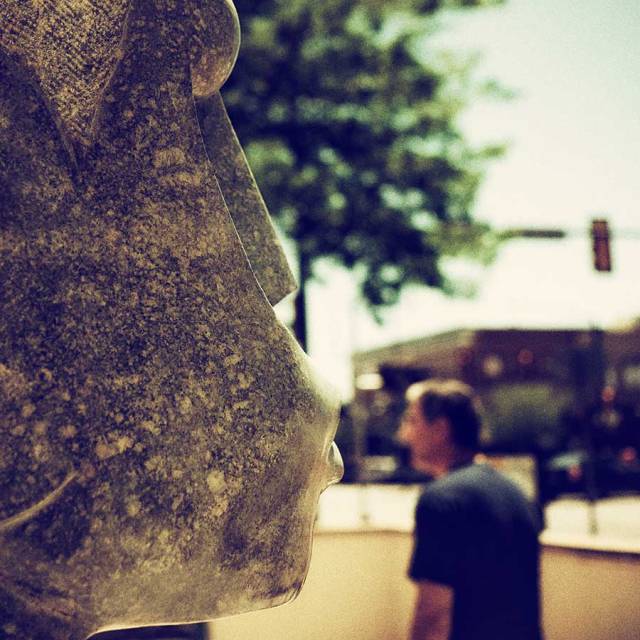
a photo study: contemplative photography VII – visual engagement

There are no colors out there in the world, Galileo tells us. They only exist in our heads. In the first of our dialogues about the mind, Riccardo Manzotti and I established that by “consciousness” we mean the feeling that accompanies our being alive, the fact that we experience the world rather than simply interacting with it mechanically. We also touched on the problem that traditional science cannot explain this fact and does not include it in its account of reality. That said, there is a dominant understanding of where consciousness happens: in the brain. This “internalist,” or inside-the-head, approach shares Galileo’s view that color, smell, and sound do not exist in the outside world but only in the brain. “If you could perceive reality as it really is,” says leading neuroscientist David Eagleman, “you would be shocked by its colorless, odorless, tasteless silence.”

…the subject/object divide, not to mention the addition of a feeling or “percept,” is particularly pertinent when we talk about color.

…when scientists look inside the brain to see what’s going on, they find only billions of neurons exchanging electrical impulses and releasing chemical substances. They find what they call correlates of consciousness, not consciousness itself; or in this case, they find correlates of color, but not color itself. There is no yellow banana in the head, just the grey stuff

..the other traditional claim, still widely taught in school, that colors exist in light, or that different colors are different wavelengths of light. And of course the colors of the rainbow immediately come to mind. But that explanation doesn’t work 100 percent either. The same wavelength, for example, will give rise to different colors if the surrounding environment is different.

…Three hundred years on, what and where colors actually are remains a mystery.

~cited:  NYR Daily, The Color of Consciousness by Riccardo Monzotti & Tom Parks

We often take something that is clear to us initially, and we begin to embellish, over-think and romanticize it, and then translate it into the photographic medium all the way through Photoshop and filters and everything. We begin with our original experience, and, when it is done, there is little or no relationship between the original perception and the final result.  This the Miksang version of “lost in translation.”

~M Wood, (Opening the Good Eye)

Contemplative practices cultivate a critical, first-person focus, sometimes with direct experience as the object, while at other times concentrating on complex ideas or situations. The practical, radical, and transformative aspects of this practice is noted to increase a deepening concentration and quieting of the mind.

Mindfulness is:

  • Spacious presence
  • Focused attention
  • Wakefulness
  • Recollecting recognition of experience
  • A presence of being that is:
    • Relaxed
    • Aware
    • Receptive
    • Inclusive

To experience photography as a way of seeing and as a contemplative practice, an attitude of genuine receptivity is required. The absence of expectations and preconceptions opens us to the beauty within the ordinary. We are more able to become engaged with the variables within colors, lines, light, forms, textures, space so that within this silent stillness an intimacy inspires us to pick up our camera in order to see through the viewfinder and then…

…we begin to see the difference between a perception and a conception, and our allegiance begins to align with freshness.

~A Karr & M Wood (The Practice of Contemplative Photography)

Being present with a perception of an object that has visually awakened you allows for what is referred to by M Wood as visual discernment in which the photographer delays picking up her camera and allows a resting in a contemplative state of mind.  Within the stillness of this pausing, it is noted that the relationship between the brain, light, and visual form of the object will silently and visually begin an introduction.  To be relaxed, aware, receptive, and inclusive in these moments is to begin to become acquainted with…the photographer, the external form, eyes, eye consciousness, and the  brain’s processing of light, colors, shapes, lines, texture.

And yes, most likely during this process your discursive mind will interrupt the process, like a jealous child.  So, when you become aware of the dialogue, simply note and smile at the thoughts and return to the silent visual introduction…with a relaxed, letting go, and aware presence.  If, you find that you are unable to return…just let go of the experience…other objects of perception are waiting for a similar moment of connection and introduction.

In the fourth posting of contemplative photography, an exercise, Opening a Door to Sensory Seeing was offered as a way to experientially explore what A Karr and M Wood identify as  “flashes of perception.”   Within The Practice of Contemplative Photography, they offer us a process of discovery, Looking Deeply by which to experience “visual discernment.”

  1. Sit within a room that has at least one window.
  2. Gaze around the room in an relaxed and receptive manner with no intention to see anything in particular.
  3. Gaze at the wall in front of you and allow the qualities of the wall, it’s color, texture,  light, shadows, and changes associated with variations of light to introduce themselves to you.
  4. Gaze at the ceiling and notice the the various qualities of the ceiling and the seam where the wall meets the ceiling.
  5. Move your gaze to the floor open yourself to the qualities  of the floor and the elements within your perceptional field.
  6. Gaze at the furniture in the room and identify their unique qualities and differences; i.e., smooth vs rough, heaviness, reflections, colors.  Allow your gaze to shift between different objects within the room.
  7. Look at the window in a way that you  become acquainted with it’s design, sense of feel, texture.  Extend your gaze beyond the window in a similar manner as you have the room…introduce yourself to the sky, clouds, trees, buildings, quality of light.

This slideshow requires JavaScript.

This is the type of extensive engagement with the world that opens us to the subtleties of perception, of becoming aware of  the meeting of our eyes and eye consciousness as we  silently open ourselves to this amazing world.

I would love to hear about your thoughts about visual discernment and the Looking Deeply exercise.

a photo study: contemplative photography VI – eye & mind

This week’s A Photo Study is inspired by the writings of A Karr and M Wood (The Practice of Contemplative Photography), “Photographing color gives us something to look for that will synchronize [cause or occur to operate at the same time] eye and mind.”

Photographing color is the first of their contemplative photography assignments in which the photographer is encouraged to open herself to color:

contemplativephoto-11web9218

labeling the color “red”

  • keep a narrow focus on color
  • see colors absent of identifying them as “red”  “yellow” “blue” “purple”, etc.
  • look at color in a simple and open way
  • look at color out of context…free from association, memories, reference points, likes, or dislikes
  • look at billboards as color and form rather than words and messages
  • see the redness of red, the blueness of blue without superimposing anything on them at all.
  • when stopped by a flash of color, let you mind stop – physically stop and spend 1/2 minute looking at the color
  • contemplate what stopped you
  • raise your camera and look at your perception through the view finder or the camera’s screen.  Ask yourself, “is this what stopped me?”
  • make any adjustments to focus, exposure, and depth of field
  • release the shutter
  • enjoy yourself

This slideshow requires JavaScript.


As always, I’m looking forward to reading your comments and seeing what colors touched your awareness.  Let’s tag with aphotostudy.

a photo study: a color primary

I have very elementary understanding of color theory so if you find that there is an error within this post or a particular point needs additional clarification, I would appreciate hearing from you in the comments section. I appreciate any positive critique that assists with this year-long learning project.

Color is light, and light is composed of many colors—the reds, oranges, greens, blues, and violets create the visual spectrum the human eye is able to see.  The objects in our world absorb certain wavelengths while reflecting other colors; for example, we see the leaves on trees as green because that is the wavelength that is being reflected by the tree’s leaves.

colorwheel

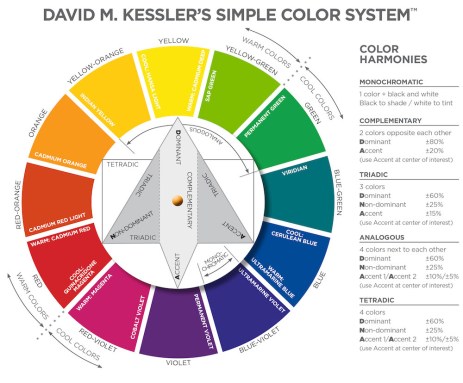
The color wheel is a chart representing the relationships between colors. The colors include: 

Primary Colors: Red, yellow, and blue are the basic colors and cannot be made from mixing other colors.

Secondary Colors: Orange, green, and violent – each of these colors are created by mixing two primary colors.

Tertiary Colors:  There are six tertiary colors, each made by mixing one primary color with an adjacent secondary color.

On the Pocket Color Wheel, for Amateur and Professional Use one will read that color is described by three characteristics: hue, value, and intensity.

Hue is the name of a particular color. 

Value is the relative lightness or darkness of a color (refer to gray scale). To increase contrast in your color scheme, you can adjust the value of a specific color; for example, making a yellow darker or lighter.

Intensity (Chroma, Saturation) is the purity of a color which determines its relative brightness or dullness.  

redblueyellowsaturatedweb82918

Saturated Primary Colors red, yellow, and blue

  • Chroma: how pure a hue is in relation to gray.
  • Saturation: the degree of purity of a hue.  A contrast of saturation is created by the juxtaposition of light and dark values and their relative saturation. 
  • Intensity: the brightness of a hue. One may change the intensity by adding white or black.
  • Luminance/Value: a measure of the amount of light reflected from a hue. Those hues with a high content of white have a higher luminance or value.

Shade and tint are terms that refer to a variation of a hue.

  • Tint: Color plus white.
  • Tone: Color plus gray.
  • Shade: Color plus black.

Neutral Gray is a balanced combination of white and black.  


Warm (Advancing) Colors:  Reds, oranges, and yellows.

Cool (Receding) Colors:  Greens, blues, and violets.

Monochromatic is the use of any tint, tone or shade of just one color. These color schemes can be subtle and sophisticated and the contrast within these image is formed by the juxtaposition of light and dark values. 

monchromeweb82918

Using a color wheel divided into various shades and tints is one method of identifying possible options for color schemes. By varying the saturation and experimenting with shades and tints within the hue relationship, you can achieve quite a variety of palette options. Color combinations may pass unnoticed when pleasing, yet offend dramatically when compositions seem to clash.

Analogous: Using colors that are adjacent to each other on the Color Wheel. Use at least two colors but no more than five consecutive colors on the wheel.

Complementary: Using any two colors directly opposite each other on the wheel.  Complementary colors bring out the best in each other and fully saturated colors offer the highest level of contrast.  When one choses from tints o shades within the hue family the over contrast is reduced.

Split Complementary:  Using any color with the two colors of each side its complement.

Triad: Using three colors equally spaced from each other on the wheel.

Tetrad: using a combination of four colors on the wheel that are two sets of complements.

Key Color: Predominant color in the color scheme of a painting or other creative project. Color is very psychological and different color harmonies produce different effects. For example, because analogous colors are similar in hue they will create a smooth transition from one color to the next.

When we are working on a computer, the RBG colors we see on the screen are created by combining the light from three colors (red, blue, and green). The complementary primary-secondary combinations are red-cyan, green-magenta, and blue-yellow.  Black is [0,0,0], and White is [255, 255, 255]; Gray is any [x,x,x] where all the numbers are the same. The max value of each of the colors is 255.

How do you use color in your images? Do you find that your creative work tends toward back and white, monochrome, or color? Do you have a favorite photographer who works with color?

I am looking forward to any images you would like to share and your thoughts about the use of color in photography. Let’s tag with #aphotostudy.

a photo study: contemplative photography IV – seeing

contemplativephoto-3web82118

From my research about “seeing” through the eyes of a photographer, I learned that within our day-to-day lives we usually connect with the visual aspects of our world through various cognitive lenses.  For example, a continuum of perceiving begins with sensory seeing on one side and conceptual seeing on the other.  Sensory seeing perceives that which appear to our senses, and conceptual seeing perceives that which appear to the mind’s eye. 

For example, while riding a train you glance up from your reading and do a quick glance at your fellow travelers.  You may see a young adolescent, with blue hair, engrossed by the sounds coming through his earphones, an elderly couple with multi-colored silk scarves loosely wrapped around their necks and their gray-streaked hair, a handsome man, in a gray-toned business suit, snapping a newspaper as he becomes engrossed in an article, and towards the front you see and hear a group of tittering, fashionably-attired women.

Sensory seeing takes in the colors and textures of this environment—the sights, sounds, smells, tastes, and so on. 

All the rest of your experience is conceptual. You see the visual forms of the “young adolescent”, “elderly couple,” “handsome man,” and “fashionably-attired women.” “Young,” “elderly,” “handsome,” “fashionably-attired” are not visible to the eye; these adjectives are the result of the thinking mind, the discriminating mind. 

sonycity-4web8918

There are times as we move in and out of the dance of life, we become totally engrossed in the conceptual realm which blinds us to the sensory elements that create our world. Other times, our thinking mind begins to hush and a door opens to a sensory world.  Generally, these two ways of being-in-the-world are in a mental flux in which we create stories with a blending and folding of what we are “seeing” overlaid with our “thinking.” It seems to me that this creative process serves to put-into-order the stuff within the environment so that there is an easing of uncertainty and to bring about a certainty of space and time; yet, this lessening of anxiety has the potential to obscure the richness and natural beauty of our sensory world. 

Reality is transformed by our looking at it, because we enter it with our baggage of concepts. …But it is not easy to abandon concepts. …The armor of a scientist is his or her acquired knowledge and system of thought, and it is most difficult to leave that behind. … religious seekers have always been reminded that they must let go of all of their concepts to experience reality… ~ Thich Nhat Hanh (The Sun My Heart, p.82)

Personal concepts such as what is beautiful, artistic, worthwhile become blinding filters that overlay a photographer’s eye as they direct a search for subjects that fit into these personal templates.  I was nudged away from my search for symmetric tree templates during a  project in which I would spend 5 minutes being present with a Michael Kerr image.  In time, I found myself slowly becoming freed from the fetters of this obsession to find the perfect tree. 

Contemplative Photography

The word “contemplate” means to be within a process of reflection that draws on a deeper level of intelligence than our usual way of thinking about things. The root meaning of the word “contemplate” is connected with careful observation. It means to be present with something in an open space. This space is created by letting go of the currents of mental activity that obscure our natural insight and awareness.

Contemplative photography is a method of seeing and photographing the world in unique ways—through fresh eyes—inviting us to open ourselves to  the richness and beauty through our sensory eyes.  For example: capturing the beauty of shadows, elegance of lines or clash of colors, the elements which a passer by, lost in thought, will be unable to see.

Photography can be used to help distinguish the seen from the imagined, since the camera registers only what is seen. It does not record mental fabrications. As the photographer Aaron Siskind said, “We look at the world and see what we have learned to believe is there, [what] we have been conditioned to expect… But, as photographers, we must learn to relax our beliefs.”

Sensory Seeing

…the right presence of mind’ involves an empty and open state of mind with no definite plans, thoughts, desires, expectations, purposes, or ego-involvement-but where all is possible. ~Eugen Herrigel, cited W Rowe, Zen and the Magic of Photography

One thing that all these explanations have in common is that it is the process of clear seeing that is central to being at one with the present moment; to connecting with what you are experiencing.

How does clear seeing produce clear images? When you see clearly, your vision is not obscured by expectations about getting a good or bad shot, agitation about the best technique for making the picture, thoughts about how beautiful or ugly the subject is, or worries about expressing yourself and becoming famous. Instead, clear seeing and the creativity of your basic being connect directly, and you produce images that are the equivalents (this is Alfred Stieglitz’s term) of what you saw. What resonated within you in the original seeing will also resonate in the photograph.

Henri Cartier-Bresson offers key insights into this approach. He is reported to have said,  “Thinking should be done beforehand and afterwards—never while actually taking a photograph. Success depends on the extent of one’s general culture, on one’s set of values, one’s clarity of mind and vivacity.”

…the creative mind of a photographer is like a piece of unexposed film. It contains no preformed images but is always active, open, receptive, and ready to receive and record an image. ~Minor White cited: W Rowe, Zen and the Magic of Photography

Exercise:  Opening a Door to Sensory Seeing

The moment of clear seeing—an unfiltered flash of perception with silenced concepts generally last for a fraction of a second. Before the rush of the thinking, discriminating, conceptualizing, judging mind, we are gifted with a clarity of perception and basic form: color, light, texture, line, pattern, shape, space.  

To open ourselves to “clear seeing”, I’m inviting you to open yourselves to an experiential exercise; to become a sensor of experience to flashes of perception.  


This slideshow requires JavaScript.

  • First: place yourself in location where you feel free and relaxed…in your home or someplace outdoors.  Don’t scan the environment, just relax. 
  • Second:  ground yourself by connecting with the sensation of your feet on the ground, knowing that the earth is below and the sky is above.  Clear your mind and silence a desire to see and find something to photograph.  
  • Third: Imagine you are a camera with your eyes, your shutter, closed.
  • Fourth:  Breathe in…be aware of the flow of your in-breath.  Breathe out…be aware of the sensation of your out-breath… Breathe in…aware of the length of your in-breath.  Breathe out…aware of the length and sensation of your out-breath.  Breathe in…and be aware of your body relaxing.  Breathe out…smile with your relaxing body. 
  • Fifth: Slowly turn 180 degrees with your eyes closed. Breathe in…be aware of your in-breath.  Breathe out…be aware of your out-breath. Allow yourself to be aware of the sounds and physical sensations that surround you in this environment.  No thinking, no judging, no expectations, no planning…just awareness of you in your body with your eyes closed. 
  • Sixth:  Open you eyes suddenly.  Open them wide and let your eyes settle on whatever greets you. Noice what happens the first instant, and then what flows from there. After a few minutes, close your eyes as suddenly as you opened them before.  In a few moments, the after-image of what greeted you will begin to fade.  
  • Seventh: Move your body in a quarter turn and, with your eyes still closed shift your head downwards toward the ground. Repeat the in and out breathing exercise in the fourth step. 
  • Eight:  Open your eyes suddenly. Notice your experience. Then, after a few seconds, close your eyes and move your head upwards.  Repeat the fourth, sixth and seventh steps.  Continue this exercise for about five minutes, each time closing your eyes, shifting the tilt of your head, and turning absent of a preconception of what you will see when you open your shutter.
  • Ninth:  Return to the sixth step with camera in hand.  When you open your eyes, photograph that which greets your open eyes (if your mind begins to seek, compose, categorize, discriminate, negate, or judge close your eyes and allow the after-image to fade). 
  • Tenth: Close your eyes and move on to step seven, photographing what your eyes connect with.  Enjoy this exercise for 5 minutes.

I am finding myself excited about this learning phase of “a photo study.”  I am looking forward to your images and thoughts.  Let’s tag with #aphotostudy.

a photo study: contemplative photography III – hindrances

A. Kaplan (Jewish Meditation, New York, 1958) noted that when one is in a meditative state, one has obtained the ability to turn off the faint after-images that are constantly with us and interfere with seeing objects with total clarity. He noted that when one is able “to turn off the spontaneous self-generated images . . . the beauty of the flower . . . seen in these higher states of awareness is indescribable [and] appears to radiate beauty.”

This slideshow requires JavaScript.

 The possibilities of perception are limitless, and clear seeing is joyful  …we get caught up in cascades of internal dialogue and emotionality. Immersed in thoughts, daydreams, and projections, we fabricate our personal versions of the world and dwell within them like silkworms in cocoons.  ~A Karr & M Wood (cited: The Practice of Contemplative Photography)

Hindrances to Receptivity  (H Zehr, Contemplative Photography)
Many aspects of our lives and habits hinder a mindful approach to the world.

  • An acquisitive, aggressive approach to photography
  • Preoccupation with technique or with the technical side of photography
  • Preconceptions and pre-established rules about what to photograph and how to compose
  • A discriminating or judging attitude that constantly labels, categorizes, and elevates ourselves.
  • Concern about the approval and disapproval of others or about what some ‘authority’ has said.
  • Perfectionism and/or a goal orientation, over-concern about an end product
  • An appreciation for the extraordinary and a devaluing of the ordinary
  • Being so used to the world around us that we take it for granted
  • Over-reliance on the ‘head’ and on the intellect rather than on initiation and feeling
  • Preoccupation with ourselves: too much self-consciousness or self-criticism
  • Lack of spontaneity; an obsession with prediction and planning
  • A need to be in control of the process and to impose one’s concept and viewpoint
  • An intolerance for unidentifiable or unknowable

This slideshow requires JavaScript.

Knowledge can be an obstacle, and we are reminded that truth can only be found in life, and not in the accumulation of knowledge…If our mind is burdened by worry, suffering, confusion, anger, or strong views, then it is very hard for us to practice mindfulness, concentration, and insight and look deeply into ourselves and into reality. Our mind must be free from views, preconceptions, and afflictions if we are to see ~Thích Nhất Hạnh (The Other Shore)

Generally we are unaware of these current of mental activity; and it is hard to distinguish what we see from from what we think about. ~A Karr & M Wood (The Practice of Contemplative Photography)

“Photography can be used to help distinguish the seen from the imagined, since the camera registers only what is seen. It does not record mental fabrications. …we are often surprised to find that our photographs did not show what we thought we were shooting

“In contemplative photography the camera’s literalness is uses as a mirror to reflect your state of mind . It shows when you shot what you saw—what actually appeared—and when you shot what you imagined. When a properly exposed photograph faithfully replicates your original perception; you saw clearly. When your original perception is masked in the photograph by shadows, reflections, or other extraneous things you didn’t notice, you were imagining. Clear seeing produces clear, fresh images.

This slideshow requires JavaScript.

“Concepts about pictorial techniques can further constrict your vision. Trying to see the world through the rule of thirds to create good composition, or shooting very early or very late in the day because the light will be warm, or, playing with exposure and color balance to make the image more dramatic, turns photographers away from things as they are, and toward their thoughts about how they want them to appear. This separates them from the immediacy of what they experience.” ~A Karr & M Wood (The Practice of Contemplative Photography)

Contemplative Photography Exercise

Consciously or unconsciously, we have all learned many rules about when and how to photograph. These limit our ability to be open to new possibilities

  • Think of some of the rules reviewed in past “a photo study” posts or assumptions you have made about what and when you should photograph. For example: rule of thirds, rule of space, rule of odds, don’t photograph during mid day.
  • Create a list of these rules/should do or not do.
  • Make a series of photographs in which you consciously break as many of these rules, and in as many ways, as you can.
  • Reflect on your images.
    Do your photographs suggest that the ‘rules’ were worth taking seriously? What happened when you did not? Were there any surprises? What do they suggest about how you may photograph in the future? Do any of the hindrances impact your creativity?

This slideshow requires JavaScript.

I am excited about this phase of my photo journey. Yet, my identified hindrances, silencing composition/technical rules and should do/should not do will be a challenge after the investment of time, energy, and mental ‘focus’ that has thus far directed this photo study project.

Am looking forward to reading your throughs and seeing the images you created after being freed from your hindrances.   Please tag with #aphotostudy.

a photo study: story photography

A series of photographs has the ability to convey a story through the inclusion of emotion, mood, ideas, and visual narrative.

Five basic elements of story photography are:

  1. Mood can be created by experimenting with blurring the background and ensuring the background has a relationship with the main subject(s).
  2. Illustrate an idea through abstraction, symbolism, or a close up of a particular detail.
  3. Emotions are conveyed through facial expressions or body language.
  4. Narrative begin with an established photograph of what occurs before the story begins.
  5. Message is created through an object, location, colors, style or a combination that leaves clues that encourages the viewer to formulate ideas.

The introduction – an image that identifies the important characters while giving information about the context of the story and introducing the theme.  The first image should also be compelling and invite curiosity so that your viewer is drawn into the story.

horsetooth-13story

the gaze

The Plot – introduces ideas, feelings, experiences while exploring themes. Do not forget to  follow the “rule of thirds” as this will definitely isolate and immediately draw the viewer’s attention to your subject.

swimmerswebstory

elsewhere

Varying characters’ perspective – photograph closer to your subject(s) or further away. Photograph from multiple angles to find which angle best communicates your story.

horsetooth-9story

watching

Stages – show images taken at different times/stages of the photo session.  Explore which subject needs to be included or excluded in an image.

horsetoothstoryweb

connecting

horsetoothstoryweb2

looking away

Focus on detail – you can also tell a story by paying attention to detail.  When photographing outdoors, make sure the sun is behind you or off to the side.

horsetooth-10photostory

disconnected

horsetoothstory4web

exclusion

Photo editing – ensure there is variety among the images to create interest while at the same time link them together by processing them in a similar manner (black and white, lightening).

horsetooth-storyweb3

distancing

If you chose to caption your photos be sure to take note of what the subject(s) are doing without giving it away.  Cations should be short, clear, and simple.

Projects such as story telling, variations, and photo series are excellent learning experiences because they help explore creativity, encourage you to compare your work with earlier photographs and allow you to see how your ideas and techniques evolve over time.

I love a great story…do you have one to share?  Let’s tag with #aphotostudy.

a photo study: street variations

toystorebnwweb

Sometimes I wonder if life is just a series of links that takes us on journeys of multiple “turned corners” until we suddenly find ourselves in some unimagined place. This week’s photo study is such a journey undertaken to research the genre of street photography.


I found four amazing street photographers (David Geffin, Jasper Tejano, Fan Ho, Dotan Saguy).  Each of them inspired me to explore new ways of seeing the life around me through variations of  light, shadow, shapes, colors, and tones.  I invite you to wander about their online galleries.

“You don’t need to be on ‘a street.’ Street photography is more about capturing candid and often fleeting moments. If you think of street photography in that way, you will always be ‘out on the street,’ looking to make photographs.”  ~David Geffin

“Though I admire many street photographers who present their work in black and white, color street photography, to me, presents life with much more realism and dynamism. Especially with my work on silhouettes, the darkness of my subjects will just drown in the different shades of gray. I need color to make my subjects emerge from the frame.” ~Jasper Tejano

“I always had an instinct for light, shadow, lines and form but the second important thing is the subject matter; the character that will create empathy.” ~ Fan Ho (1931-2016)

Ted Forbes, The Art of Photography Remembering Fan Ho

“For me street photography is above all about people and moments. … it’s just a question of being present with all my senses. The best I can describe myself in that state is as a meditative hunter.” ~Dotan Saguy

I do hope you enjoyed your linked journey through these amazing images.  Do you have a street photographer that awes you?  If so, please share and tag with #aphotostudy.

Quote

Creative Composition in Street Photography – Part Two

For this week’s photo study, I decided to continue with Ian’s creative composition posts as they seem to be an ideal way to revisit basic elements of composition and explore how to incorporate them into street photography.  He begins the second positing with noting the importance of slowing down with intentional “seeing” as a foundation to finding the ideal background and good light and then deciding to or not to press the shutter.

via Creative Composition in Street Photography – Part Two

Photography is not what’s important. It’s seeing.
The camera, film, even pictures, are not important.
~Algimantas Kezys (cited: H Zehr, The Little Book of Contemplative Photography)

Setting the Stage, Timing the Steps (fishing)  Ian writes, “The key concept for this approach is to establish the static elements in your frame first (i.e. background and light), then patiently work to add interesting dynamic elements by moving close and far, exploring various angles, adjusting the camera’s settings, and finally with patience waiting for the person who fits into your story to walk on your stage.

photostudystreetcompositionweb

Frame within a Frame  Create a frame within the image through the use of doorways, windows, window displays, trees, or any object that creates a frame around your subject.

photostudystreetcompweb

Leading Lines  Drawing the viewer’s eye is an important compositional element  especially when lines converge toward each other and draw the eye to the subject.  I found that the gaze of both the man and the dog create an implied line as well as invite a story.

photostudystreetcomp9web

Juxtaposition  Ian describes juxtaposition is where two adjacent objects appear to contrast with each other, as within the image below.   The person in the foreground leans to the left opening us to the elderly man in the midground who is leading left.  The Starbucks coffee cup in the center adds a social justice element as well as a contrast to both men.

photostudystreetcomp5web

Perspective – create high-angle images by standing on stairs, platforms, balconies or low-angle photos by  getting close to the ground and shooting upwards.

photostudystreetcompweb4

Scale  Images where the subject is dwarfed by the environment seems to be a way of introducing feeling into the image and drawing the eye to the person within the frame.

streetnoontues-1

Color  Color intermixed with light, shadows, and silhouettes have the potential to create unique photographs that nudge images away from the photojournalism and documentary genre.

noontunes-blurcolorweb

Reflections  Entire stories can be created through the layers that are created when photographing through glass.

brendaweb

Light and Shadows  Using your exposure compensation to drop the exposure on the frame (which protects the highlights while creating wonderful deep shadows) will create amazing interactions of shadows, light, and silhouettes.

aphotostudylowexposureweb

The Candid Frame  Within “Less than Obvious”, Ibarionex encourages us to open ourselves to “seeing” the world’s amazing detail and “being” intentional before we press the shutter.

I hope you find Ian’s educational blog and the Candid Frame to be an invaluable sources of information as well as doorways to a world of creative possibilities.  I’m looking forward to seeing your creative work as well as reading your throughs about the use of basic composition elements into street photograph.  Let’s tag with #aphotostudy.  Until next week…

a photo study: street photography II

This week’s  photo study was inspired by The Candid Frame’s video in which Ibarionex speaks about the opportunities of light and shadow that a photographer will find in rural communities as well as in the dynamics of cities such as New York or Hong Kong.

Bring out the play of light and shadow within the scene.

jeffstreet-1web

Be open to how light and shadow shifts the mundane into something exciting.

jeffstreet-3web

Allow the shadows to go black by adjusting the exposure.

jeffstreet-5web

Find a scene and wait…

southststationweb

throughglasswebI appreciate the encouragement to silence the envy when viewing photographs created within the dynamics of large urban areas by waking up to the amazing opportunities of light and shadow one will find…anywhere.

I hope you, too, are inspired by The Candid Frame’s video, Street Photography Anywhere.   I am looking forward to reading your comments and seeing how you play with light and shadow within your town.   Let’s tag with #aphotostudy.

a photo study: high-angle photography

This week’s photo study was motivated by Ted Forbes’ (The Art of Photography) photo assignment that explored high-angle photography.

High-angle photography is created when the photographer is situated above her subject(s)–upper floors of a buildings, at the top of stairs, up on a ladder, holding the camera above the head–and the camera is focused downwards. It is often used for the group shot as it is the best way to include everyone in an image and brings about a dynamic element not found in an eye-level image.

highangle-2web

Ricoh GX100  f/2.5   1/143s   5.1m   80 ISO

It can also be use for a standard portrait where the subject’s eye are looking up at the camera; yet, it has the potential to have a person appear small, vulnerable, weak, subservient, confused, or childlike.

high-anglephotoweb

Nikon D750   f/4.1   1/500s   46mm   100 ISO

A sense of solitude and isolation can be evoked when photographing from the vantage point of looking down from the upper floors of a building. It also has the potential to bring about a sense of freedom, transcendence, and omniscience as you, the viewer, are invited to be see the whole picture. Also from this perspective, people’s faces and expressions are less likely to be part of the image and, because they are less likely to be aware of your camera, poses and actions will be more natural.

streetnoontues-2

Ricoh GX100   f/3.9   1/125s   10.5m   80 ISO

When compositing from buildings, interesting images are created through the use of lines, objects, and patience to wait until someone walks into your canvas.

streetnoontuesweb

Ricoh GX100   f/4.1   1/200   5.1m    80 ISO

I found that street photography from “high above it all” is less likely to stir up the same degree of anxiety that I experience with eye-level photography.  Would love to see your images taken from this perspective and to read about your experiences.  Let’s tag wit #aphotostudy.

I hope you enjoy these amazing examples of high-angle photographs.

a photo study: contemplative photography

1hreggstudy5

iPad     f/1.8   1/130 sec   ISO 64

“The object is of secondary importance to how I see the object.  …concentrated looking is the way to get past labels and our preconceived ideas of what interests us.  Looking slowly and in detail, …gives way to interlocked abstract shapes, energetic textures, ranges of colors, spaces in between things, sharp edges, and soft shadows.  This way of seeing objects turns any item into an interesting subject.”

~John F Simon, Jr (Drawing your own Path)

I began this week with a posting of a 20 minute photo project with an egg and then went on to a second project…20 minutes with two eggs, a white small dish, a white tea cloth, a white pitcher, a small ball.  Images edited in Snapfeed.

Limited resources has the potential to awaken creativity.

The third mediative photography project…one hour photographing an egg and a small white dish…2 minutes with each image before clicking the shutter.   Images edited in Snapfeed.

Creativity begins as we begin to think differently, move out of our comfort zone, start to use our head over the camera, and go beyond all apparent possibilities.  

1hreggstudy2

iPad f/1.8 1/50 sec ISO 64

A closing note: My restless soul resisted the idea to photograph an egg for an hour with a  point and shoot camera (I substituted the point and shoot with an iPad).  As a consequence, I began with two separate 20 minute exercises and then found the inspiration to set a meditative app for an hour with bells to chime every 2 minutes.  Now I’m wondering what images would have emerged if I challenged myself for 2 hours…

Are you up to this challenge…one 20 minute photo session, two 20 minute sessions, or an hour?  Let’s tag with #aphotostudy.

a photo study: street photography

What is street photography?

street-4-web

Nikon D750   f/22    1/25s    35mm    800 ISO

Nick Turpin writes that “…When a child picks up a camera and pushes the button that simple spontaneous image is a Street Photograph, it is, first of all, a raw reaction to the scene in front of it, a person, a car, a color. That primitive urge to react, to make a picture is at the heart of Street Photography beyond any other area of picture making, it comes before any other agenda.

“So we are all Street Photographers before we narrow our sights and impose conditions and rules on ourselves to become Portrait photographers, Fashion Photographers, Landscape Photographers, Art Photographers (whatever that really means) etc.”

street-12web

Nikon D750    f/20    1/25s    35mm    800 ISO

Eric Kim defines street photography as the “…candid photography of life and human nature. It is a way for us to show our surroundings, and how we as photographers relate to them. We are filtering what we see, to find the moments that intrigue us, and to then share them with others. It’s like daydreaming with a camera.”

irishdancers4web

Nikon D750    f/1.8    1/10s    35mm    800 ISO

Within “The Ultimate Guide to Street Photography” James Maher writes “…the best image of your life can pop right in front of you on the way to get your morning coffee. This spontaneity is what’s celebrated. That is why grainy images, slightly off-kilter framing a-la Garry Winogrand, or import focus will not alway ruin a street photography. Sometimes they will, and we must aim for technical mastery, but other times they can add to the realness of the moment. Sometimes these deficiencies may actually improve the image.”

street-5web

Nikon D750    f/2.5    1/2,500   35mm    800 ISO

Sometimes the best way to understand something is to put aside the book, silence the mind, and visually explore the creative works of others. With this in mind, I would like to introduce three of my favorite street photographers.

To journey through Salle de Shoot — Photographie’s blog is to inspired by his creative and unique examples of street photography.

The Streets of Nuremberg.com identifies street photography as “…a free creative design in which the artist’s impression…experiences are brought to life…the aim of street photography to depict reality unadulterated, whereby the specific artistic aspect is expressed in the conscious selection of the detail of reality and the design with photographic means.” To take the time to visit this blog is to view amazing street images as well as educational posts.

And finally,  Reinhold Staden Photography’s gifts us with inspiring photography as well as a super visual journey through Berlin.

https://youtu.be/8gKO03ePFw0

How do you understand street photography? Do you have one or three street photographers that inspire you? I would love to see your street images and read your ideas about street photography.  Let’s tag with #aphotostudy.