The two guardians of the world – the bright states that protect the world – moral shame and moral fear.
The Buddha shared that a sense of shame and the fear of blame are two bright states that protect the world. Having a sense of shame means that we refrain from doing evil because we do not want to harm ourselves. It is because we wish to preserve our self-respect that we develop a sense of shame. We wish to be respected by others, so we develop the fear of blame.
When there is a leader who does not ask his predecessor to give him advice of how to govern, he will rule according to his own opinion which sets the stage for a decline in morality and consequently the quality of peoples’ lives. If we look at the world today, the two guardians of the world are fading away.
We have stories of immoral characters who go unpunished.
We begin to see and hear of increasing violence in its manifestation of negation of others, verbal and physical abuse, threats, power and control, and murder.
There are increasing rigid polarizations within families, between friends, and among neighbors and strangers.
There are reports of increasing incidents of racism.
There is a growing absence of social governance and increasing incidents of lawlessness; as well as, a growing sense of distrust, fear, anger, isolation, and sadness.
Looking to find resolution we find that government figures are more concerned with winning votes than with governing.
Some religious leaders seem ready to do almost anything to accommodate their followers while others resort to fanaticism.
What are the variables that can begin to nudge us out of this time of discontent? Faith, virtue, a sense of shame, the fear of blame, mindfulness, concentration, wisdom, compassion, and/or loving-kindness?
Imagine the dimension of time as a vertical line. Place yourself in the present on that line with the past above you and the future below you. Establish yourself in time. See all your ancestors that have come before you. The youngest generation of your ancestors is your parents. All of them are above you on this line of time. Then below you, see all your dependents, your children, your grandchildren, and all their future descendants. If you have no children, your descendants are the people you have touched in your life, and all the people they in turn influence.
In you are both your blood ancestors and your spiritual ancestors. You touch the presence of your father and mother in each cell of your body. They are truly in you, along with your grandparents and great-grandparents. Doing this, you realize their continuation. You may have thought that your ancestors no longer existed, but even scientist will say that they are present in you, in your genetic heritage, which is in every cell of your body.
Look into a plum tree. In each plum on the tree there is a pit. That pit contains the plum tree and all previous generations of plum tree. The plum pit contains an eternity of plum trees. Inside the pit is an intelligence and wisdom that knows how to become a plum tree, how to produce branches, leaves, flowers, and plums. It cannot do this on its own. It can only do this because it has received the experience and heritage of so many generations of ancestors. You are the same. ~Thich Nhat Hanh (No Death, No Fear, 137-138)
This posting was created in memory of Dustin, Bob, Elberta, Donna, Chris, Larry, Margaret, Thella, John, Clive, and Jeff who all live on within the lives of my beloved.
“What is the cause of everything? …everything relies on everything else in order to manifest. A flower has to rely on non-flower elements in order to manifest. If you look deeply into the flower, you can recognize non-flower elements. Looking into the flower, you recognize the element sunshine; that is a non-flower element. Without sunshine, a flower cannot manifest. Looking at the flower, you recognize the element cloud; that is a non-flower element. Without clouds, the flower cannot manifest. Other elements are essential, such as minerals, soil, the farmer and so on; a multitude of non-flower elects has come together in order to help the flower manifest.”
May I find the Equanimity that will lift a veil of shamed despair and acquaint me to the perceived and perceiver absent of greed, anger, and ignorance.
This journey with saldage has brought me to a place and time in which to unweave and sort through the pseudo-beliefs I have simply, without question, absorbed through the lens of childhood fantasy and comprehension.To begin this process is to reformulate beliefs through a process of mindfulness and analysis and then to know for myself, “These things are bad, blamable, censured by the wise; undertaken and observed, these things lead to harm and ill… These things are good, blameless, praised by the wise… These things lead to benefit and happiness.”
It is not an easy undertaking to not simply believe what has been learned within family, school and church as well as conclusions reached through readings. The invitation to not simply follow tradition brings to the surface conflicts with compliance and opposition that come from an avalanche of values and guiding principles that outlines how I understand the roles and expectations of women.
To not adhere to that which was surmised within family stories about an ancestor, who upon seeing a swarm of locust “knelt in his patch of grain and pleaded with his Maker to spare his wheat” and then saw them divide and not damage his remaining crops. Or within the story about the ancestor, who during a trip from New York to England, calmed the seas with a prayer, and while in England, after much fasting and prayer administered to a deaf and dumb boy who was subsequently healed. To not simply believe opens a door of pondering about generations of family members who intimately knew powerlessness and insecurity, who eased their feelings of incompetence through prayer, and whose conceptions blinded them to their neighbors’ plight.
To not simply believe that I must endure suffering is to reject the axiom that there is an absence of fundamental faith and goodness. To not adhere to the assumed abilities of ancestors frees me from the belief that a sincere act of making amends for my sins will open the doors to Shangri-La.To not simply draw upon scripture unbinds me to the shame that I don’t have the faith – even of the size of a mustard seed – to be deeded as “good and without sin” so what I wish for, even that which goes counter to nature’s laws, will be granted.To ease the suffering within discontent is to not simply hold to be true that I am to acquiesce to pain until the final judgment of death, and only then will I be forever at peace, or forever condemned to an existence of even greater suffering.
To not simply believe opens my ears to the incongruence within a belief in an all-knowing presence who, if not validated, punishes, absent of the grace within loving-kindness.To not simply believe brings a compassionate acknowledgment to the painful efforts to sway God into granting me my desires through bargaining, sacrifice, negation, and suffering, and to finally surrender with acceptance to “Thy will be done on earth as it is in heaven.”To not simply believe sheds light upon the greed, aversion, and delusions that are intertwined into my conception of and relationship with life.
I do hold that my beliefs and the subsequent desire for their illusive promises of validation, forgiveness, or reunification have set me upon an unending path of suffering.These beliefs lead to harm and ill as they are like thorns that tear into my heart.This searing pain releases resentment intertwined with envy, awakens alienation, and denies me the essence of Christ’s wisdom and loving compassion.
Christ stood before self-righteous anger and commanded that only the one without sin was to cast the first stone of punishment and, at another time and in the midst of his own suffering, sought forgiveness for those who “know not what they do.” Within these written words, I hear compassion speaking for the suffering intertwined within anger ungoverned by moral shame and moral dread.Compassion is telling us how suffering, entangled into knots of mental, emotional, and social turmoil, deafens us to our guiding principles and blinds us to the horrors our moral shame will witness as it awakens from darkened ignorance.
The practice of the presence of God as being comparable to that of consciousness finally makes possible “full awareness” applied to every thought, world, and deed. ~ Unknown
Excerpts from B Koeford, A Meditative Journey with Saldage
May you become acquainted with tranquil single-pointed concentration . . . those who seek wisdom through the lens of tranquility glimpse reality in the same manner as a lighted candle — the light chases away that which is hidden within the shadows of a darken closet. Insight, once risen, shines light into closed hearts and minds and keeps the gloom of ignorance at bay
Death of a loved one disturbs the relationships that sustain a person’s sense of ‘identity’ and the high level of binding and cathexis concentrated on the person who is lost is suddenly disrupted . . . there is a close link between the doctrines of egolessness and suffering.
De Silva, Padmasiri. An Introduction to Buddhist Psychology. Landam, MD, 2000.
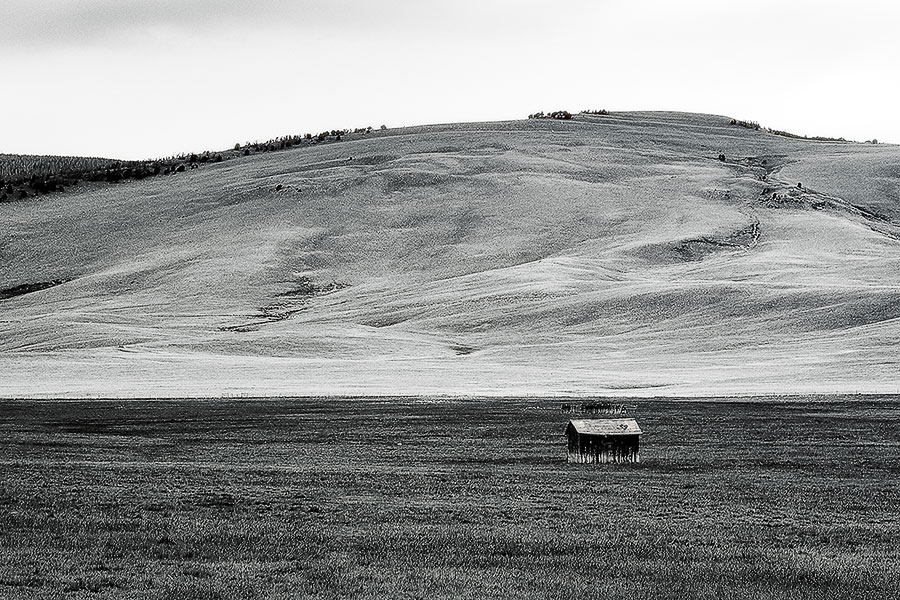
Poudre Canyon… f/7.1 1/200s 28mm 4500 ISO
Through this lens of Buddhist thought, I begin to feel a crumbling of a child’s self with an understanding of how my father’s absolute and final absence from our lives disrupted the multiple relationships between my father, mother, sister, and me. Besides the sudden severing of the identity I was forming via my father, the connecting emotional threads between those of us that were left, although still intact, were unknowingly stretched and pulled by our own individual fears of egolessness.
My father’s death left my mother, a young woman deaf from infancy, with two daughters and pregnant with her first son. I do not recall whose idea it was to wander outside the house early that morning as my mother slept. I can, however, imagine my young self following my older sister as if an invisible thread that tied us together tugged me along as she, with her five-year-old world view, undertook an emotional duty to find our father. Did we believe we could find him fly fishing in the creek that ran alongside the house? Or was there something about the water that enticed us into abandoning our search? I can recall to this day the cessation of anxiety and arising rapture that coincided with my surrender to the inevitable. Two young men, I am told, rescued us both from this search for our father.
Koeford, BC. A Meditative Journey with Saldage Homesickness for a place, a time, a person that cannot be
“…you cannot know how many people your words, actions and thoughts have touched.
When I make a pot of oolong tea, I put tea leaves into the pot and pour boiling water on them. Five minutes later there is tea to drink. When I drink it, oolong tea is going into me. If I put in more hot water, making a second pot of tea, the tea from those leaves continues to go into me. After I poured out all the tea, what will be left in the pot is just the spent tea leaves. The leaves that remain are only a very small part of the tea. The tea that goes into me is a much bigger part of the tea. It is the richest part.
We are the same; our essence has gone into our children, our friends and the entire universe. We have to find ourselves in those directions and not in the spent tea leaves. I invite you to see yourself reborn in forms that you say are not yourself. You have to see your body in what is not your body. This is called your body outside of your body.”
The ocean of suffering is immense, but if you turn around, you can see the land. The seed of suffering in you may be strong, but don’t wait until you have no more suffering before allowing yourself to be happy. When one tree in the garden is sick, you have to care for it. But don’t overlook all the healthy trees. Even while you have pain in your heart, you can enjoy the many wonders of life — the beautiful sunset, the smile of a child, the many flowers and trees. To suffer is not enough. Please don’t be imprisoned by your suffering. … When you have suffered, you know how to appreciate the elements of paradise that are present. If you dwell only in your suffering, you will miss paradise. Don’t ignore your suffering, but don’t forget to enjoy the wonders of life. For your sake and the benefit of many beings.
When I was young, I wrote this poem. I penetrated the heart of the Buddha with a heart that was deeply wounded.
My youth an unripe plum. Your teeth have left their marks on it. The tooth marks still vibrate. I remember always, remember always
Since I learned how to love you, the door of my soul has been left wide open in the winds of the four directions. Reality calls for change. The fruit of awareness is already ripe, and the door can never be closed again.
Fire consumes this century, and mountains and forest bear its mark. The wind howls across my ears, while the whole sky shakes violently in the snowstorm.
Winter’s wounds lie still, Missing the frozen blade, Restless, tossing and turning in agony all night.
I grew up in a time of war…Once the door of awareness has been opened, you cannot close it. The wounds of war in me are still not all healed. … Embrace your suffering, and let it reveal to you the way to peace.
~Thich Nhat Hanh (The Heart of the Buddha’s Teaching, pp. 3-5)
‘… the flower is made of non-flower elements. We can describe the flower as being full of everything. There is nothing that is not present in the flower. We see sunshine, we see the rain, we see clouds, we see the earth, and we also see time and space in the flower.
A flower, like everything else, is made entirely of non-flower elements. The whole cosmos has come together in order to help the flower manifest herself, The flower is full of everything except one thing: a separate self, a separate identity.
The flower cannot be by herself alone. The flower has to inter-be with the sunshine, the cloud and everything in the cosmos. If we understand being in terms of inter-being, then we are much closer to the truth. Inter-being is not being and it is not non-being. Inter-being means being empty of a separate identity, empty of a separate self.” ~Thich Nhat Hanh, No Death, No Fear: Comforting Wisdom for Life
Individuals have within themselves vast resources for self understanding and for altering their self concepts, basic attitudes, and self directed behavior; these resources can be tapped if a definable climate of facilitative psychological attitudes can be provided. ~ Carl Rogers
I am acquainted with a mind filled with multiple crosscurrents of unfinished thoughts, stifled emotions, and passing moods. There is also a growing recognition that at times I am overwhelmed by discursive thoughts that are formed by habitual ways of thinking, led by my own various prejudices, impacted by personal preferences or aversions, colored by laziness or selfishness, and intensified by faulty or superficial observations. Sometimes I awaken to myself to find that while engaged in a behavior, my mind has entered a dreamlike state, and therefore events and conversations are vague and fragmentary.Sometimes I acknowledge this process or attribute it to boredom, anxiety, doubt, impatience, exhaustion, misjudgments, and self-salient triggers.
Protecting oneself, one protects others; protecting others, one protects oneself . . . And how does one, in protecting oneself, protect others? By the repeated and frequent practice of meditation.
And how does one, in protecting others, protect oneself? By patience and forbearance, by a non-violent and harmless life, by loving kindness and compassion.” But self-protection is not selfish protection. It is self-control, ethical and spiritual self-development. ~ The Buddha
Every healing intervention is motivated by suffering and hope – be it of the individual, family, friends, or a community agency.The value within suffering is that it contains a message of incongruence that awakens the motivation to heal. William James wrote that life is the manifestation of behaviors that attempt to avoid, overcome, or remove that which is seen to block us from that which we desire.
The personal story is a narrative of our unique sense of identity.We create our identities through the stories we weave onto a tapestry that is formed against the background of our family mythologies. We pull threads from of an assemblage of recalled details from our pasts and weaved them into images that cast us in whatever role corresponds with our current situations, feelings, thoughts, or actions. The colored threads of this tapestry are often re-embroidered to reflect the creative and dynamic process of our perspectives as we shift in, out, and between various roles, feeling states, and cognitions.As we reflect on our self-created images we are in turn affected by them; therefore, there is an unconscious re-weaving of our tapestries.
Our self-stories as well as our family mythologies create and maintain our identities and thus influence how we anticipate experiences, act, and subsequently interpret our situation.Becoming aware of the tapestry and images we are creating frees us to review patterned behaviors, reframe our story through different colored concepts, and to release rigid interpretations.
…
Within … a supportive and non-judgmental environment, each is invited into a process of bare attention that is non-coercive as they uncover the seeds of their suffering and thus begin to strengthen their recovery with renewed energy.It is after a meeting during the quiet of one’s alone time that each attendee begins a process of dismissing what is personally invalid, questioning harmful behavioral patterns, or replacing painful concepts with constructive meanings.They, through their own individual reflection, take what is helpful for them at the moment and let the rest flow away.
Through this process of externalization, validation, and reformation an individual is being invited to become other to herself as if she were the audience in a movie theatre watching her life story being retold on a screen.Consequently, a new relationship with the self is formed that lessens the suffering that comes out of subjective rigidity, alienation of self as “the only one”, and attachment to shame and guilt.
Excerpts: Koeford, B., A Meditative Journey with Saldage






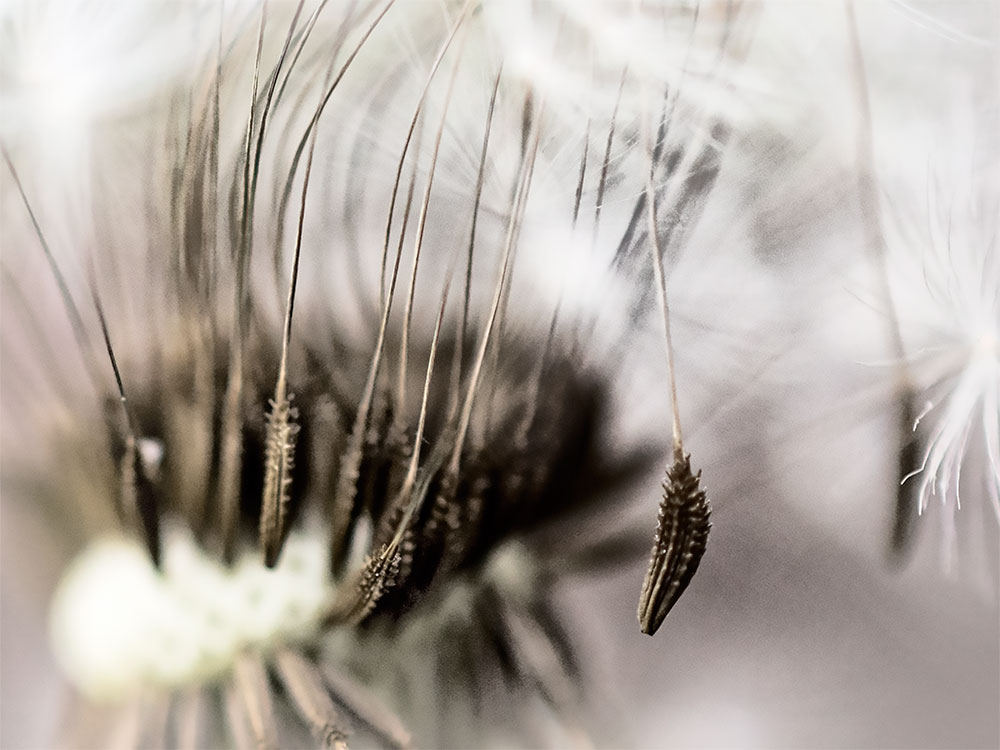 “…you cannot know how many people your words, actions and thoughts have touched.
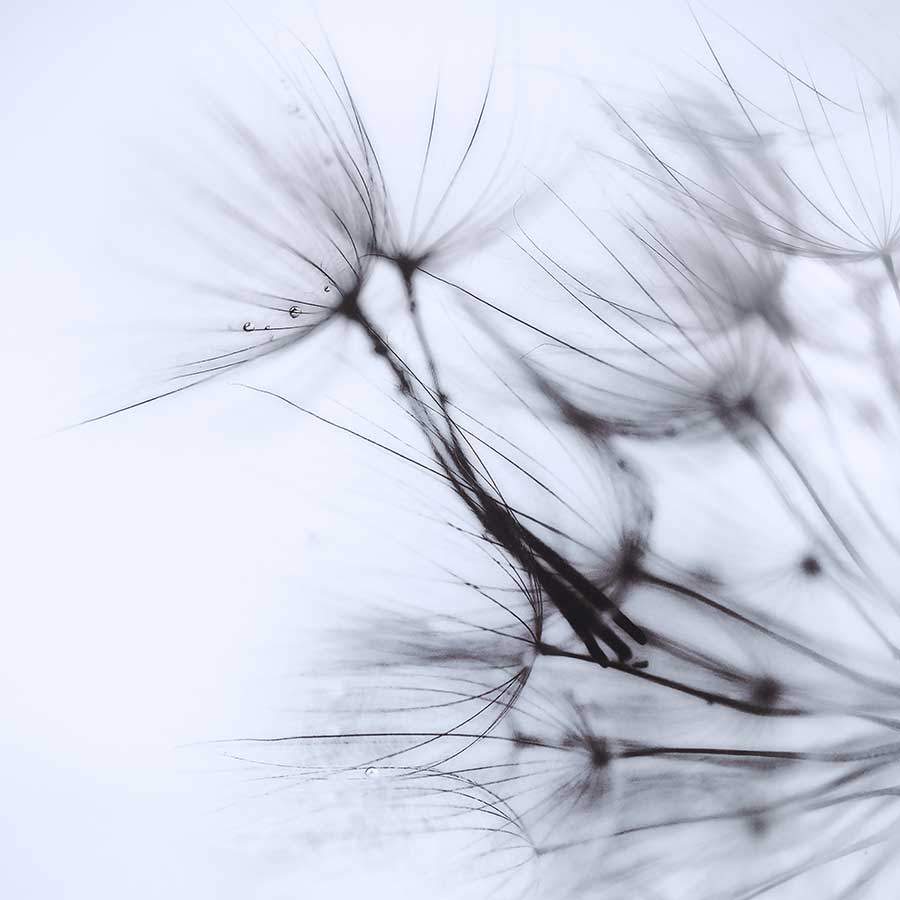 The ocean of suffering is immense, but if you turn around, you can see the land. The seed of suffering in you may be strong, but don’t wait until you have no more suffering before allowing yourself to be happy. When one tree in the garden is sick, you have to care for it. But don’t overlook all the healthy trees. Even while you have pain in your heart, you can enjoy the many wonders of life — the beautiful sunset, the smile of a child, the many flowers and trees. To suffer is not enough. Please don’t be imprisoned by your suffering. … When you have suffered, you know how to appreciate the elements of paradise that are present. If you dwell only in your suffering, you will miss paradise. Don’t ignore your suffering, but don’t forget to enjoy the wonders of life. For your sake and the benefit of many beings.




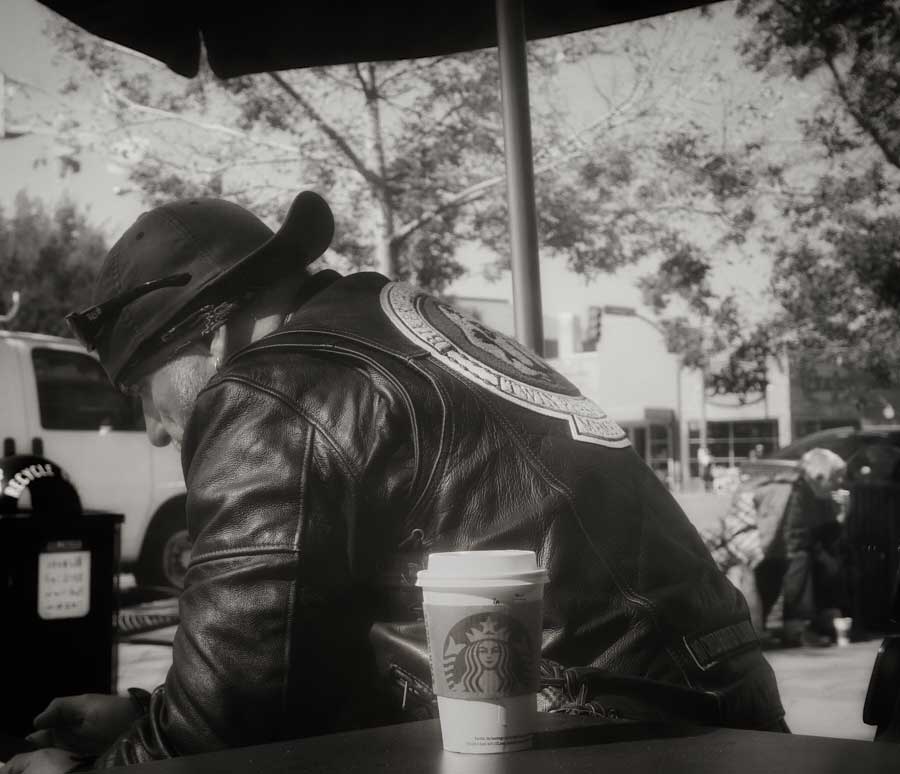












 a meditative journey
You must be logged in to post a comment.