In which direction
Should head my longing?
On an autumn night
The skies are full of
The moon’s light... Omoro Gojusshu (www.wakapoetry.net)

In which direction
Should head my longing?
On an autumn night
The skies are full of
The moon’s light... Omoro Gojusshu (www.wakapoetry.net)
In this world
the living grow fewer,
the dead increase–
how much longer must I
carry this body of grief?
Ono no Komachi (J Hirshfield & M AratanI, The Ink Dark Moon)
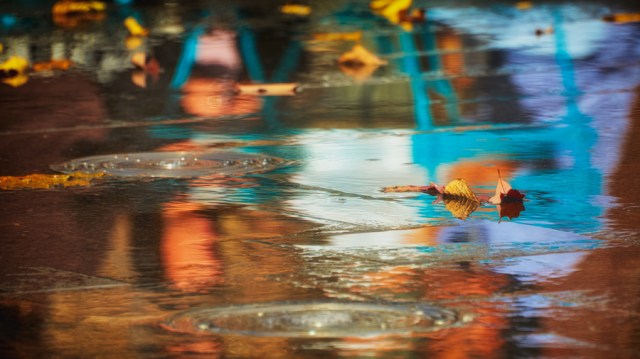
Nikon D750 f/5.6 1/400s 300mm 200 ISO

A + J

Tokiwa Mountain’s
pine trees are always green–
I wonder,
do they recognize autumn
in the sounds the blowing wind?
~Ono no Komachi (J Hirshfield & M Aratani, The Ink Dark Moon)
Life seems to invite periods of time in which I think, “I’ve been here before.” For example, my first readings about contemplative photography occurred about 6-7 years ago. Even though this genre resonated with me, I chose to put it aside as there was limited resources on the internet and what training programs I was able to find were a bit outside of my financial resources.
In June of this year, I began to explore contemplative photography as part of this A Photo Study project. Today, this 12th posting of contemplative photography has been motivated by A Karr and M Wood’s discussion of “simplicity” within their book, The Practice of Contemplative Photography. What I find interesting is that the January, 2018, blog of this project was, A Photo Study: Simplification and Negative Space, which was inspired by one of Ted Forbes’ composition videos.
Even though life seems to move in a linear progression from birth to death; at times like this I find myself wondering if there are periods of time in which there are episodes of circular movements within one’s life journey in which we are “presently” invited to pause and reflect upon our “past” before time nudges us into a new present, our future.
Well, I think I’ve digressed from this week’s photo study, simplicity. Karr and Wood note that their simplicity exercise is to open us to the relationship between form and space, to open ourselves to the experience of simplicity without seeking an external validation of our concept of simplicity.
Space intensifies the experience of form, and simple form intensifies the experience of space. … Simplicity and space are aspects of our perception. Visual space can be produced by a red wall, a length of gray fabric…a smooth beach…a backdrop of dark shadows, gray pavement…sky.. An object seen seen against any unadorned expanse will be surrounded by visual space.
Their definition of space brings to mind the post, Negative Space, in which I wrote:
In photography negative space is perhaps the most important element as it embraces the subject within your image — the element of interest — helping it stand out and inviting the viewer’s attention. It is the aspect within a photograph that generally doesn’t attract much attention. It is sometimes referred to as white space and has the potential to change what appears to be an average subject into an outstanding image
For this exercise, Kerr and Wood encourage a point of departure in which our intention should be to recognize perception where form and space produce strong contrasts—where the experience of form is weighted because of the space around it. …to look at one thing at a time. Look at objects and also look at their environment. Don’t hurry. Proceed in a relaxed way that allow you to see the space around things, not just the things themselves.
The first series of the images in the slideshow below are of a couple of photo walks directed by my understanding, thus far, of contemplative photography especially in regards to flash of perspective, visual discernment, and forming the equivalent, comparable to what I perceived—nothing more, nothing less.
The second series of images in the slide show below are part of the images I created as part of the simplification and negative space blogs posted earlier this year. These images, I believe, were created by a natural inclination towards flash of perspectives, visual discernment, and a bit of digital darkroom creative exploration.
I enjoy the creative playgrounds offered by Photoshop, Capture One, and Nik. Am looking forward to a comparison of images you created in repose to the earlier blogs on simplification and negative space with those of simplicity as defined within contemplative photography. Please tag with #aphotostudy.

go…? Nikon D750 f/7.1 1/640s 85mm 100 ISO
… to hold a moment, how to record something so completely, that all who see [the picture of it] will relive an equivalent of what has been expressed. ~Alfred Stieglitz (cited: http://www.metmuseum.org)
The theory of equivalence was inspired by Wassily Kandinsky’s belief that colors, shapes, and lines reflect the inner, often emotive “vibrations of the soul.” In his cloud photographs, which he termed Equivalents, Stieglitz emphasized pure abstraction, adhering to the modern ideas of equivalence, holding that abstract forms, lines, and colors could represent corresponding inner states, emotions and ideas.
The following are excerpts from Equivalence: The Perennial Trend: Minor White, PSA Journal, Vol. 29, No 7, pp 17-21, 1963 (cited: http://www.johnpaulcaponigro.com)
A change of perspective is a change in state. Jean Piaget reminds us that, “What we see changes what we know. What we know changes what we see.” Perception changes reality… The more conscious the perception the stronger the change. Furthermore, the quality of consciousness one engages perception with influences what is perceived, what is produced, how it is received and the consequences that has. Acting on what one observes, choosing and sustaining one thing / quality amid many others, reinforces that state of being and this is particularly true if during observation one creates something tangible and durable and never more true if multiple related works are created. Often, during the process of manifestation perception continues to change, further extending this process of revelation and transformation.
The visible can be used to reveal the invisible; the external can be used to reveal the internal. ~Alfred Stieglitz
Minor White remarked, “One should photograph things not only for what they are but also for what else they are.” and “Equivalence is a function, not a thing.” He did not mean to suggest that equivalence was merely a rhetorical device. Equivalence is more than a rhetorical device, not a simile that suggests shared commonalities (this is like that), not a metaphor that observes shared qualities through the power of transformation (this is that), but a process inclusive and transcendent of both. Like a simile its power starts with the recognition of shared qualities and like a metaphor its power lies in transformation, but an equivalent transcends both through a heightened state of self-awareness, even to the point of transforming the self through its accompanying effects of clarity and commitment.
Equivalence embraces and elevates the debate over whether photographs are windows (onto the world) or mirrors (into the soul) and whether they are taken (through distant observation, objective to varying degrees) or made (through immediate interaction, subjective to varying degrees), illuminating many more levels of an evolving process. Through equivalence the photographic object created becomes a reflection of both the external things it represents and the internal states of its creator. This reflective capacity is extended to the viewers, who re-experience this shared process in their own ways.
Resonance is a consequence of equivalence. What we create can transform us. We then become co-creators, creating not only things and ideas but selves. What we create can also transform others, triggering cascades of sympathetic vibrations, if we imbue our creations with a persistent resonance, brought on by intensity, clarity and connection (connection to subject, medium, self, and others). Through the experience of art, the powers of perception and transformation can be awakened, in both the ones who create directly and the ones who [perceive] indirectly.
Stieglitz set a shining example for us all. He demonstrated that the full power of our photographs lies not in special subjects or moments but in what we bring to the picture, which can be much more than technical skill, compositional prowess, and cultural awareness. Through photography we can simultaneously bear witness to things / events, affirm our connection / participation with them (even if only as observers, no small thing), and clarify our understanding / interpretation of the confluence of everything that is brought to bear in each moment and the continuing resonances they produce. More than an intellectual interpretation or emotional expression, this is a process of holistic integration.
The photograph can be much more than a material trace of another material; it can even be much more than a trace of light and time; it can also be a trace of spirit, the energetic confluence of body, mind, and emotion, either single or multiple.

White reminds us that this process of self-realization is open to everyone, “With the theory of Equivalence, photographers everywhere are given a way of learning to use the camera in relation to the mind, heart, viscera and spirit of human beings. The perennial trend has barely been started in photography.” Though all photographers do it, not all photographers do it with equal clarity or intensity. Regardless of what level they engage this process, whenever photographers break through to new levels of consciousness the results are transformative for the photographer and the viewer and even the viewed, sometimes subtly and sometimes dramatically is a form of contemplative photography that asks us to see our world in a new way. In some ways it seems very simple, but it is not always easy.

Once we establish the discipline of looking and seeing we are free to explore the open dimensions of the phenomenal world. As this orientation becomes more heartfelt, one becomes more attuned to the intimate qualities of contact, communication and natural expression in clear seeing. This brings relaxation and appreciation: the eye is allowed to fall through the world and celebrate this visual communion.
The discipline of looking and seeing cultivates a subtle and profound aesthetic sensibility. While this quality of seeing is genuine and fulfilling there remains a subtle allegiance to an underlying form of contemplative appreciation. The practice of direct perception undercuts this subtle ground and reference point. By completly trusting the unconditional power of the gap of perception one drops reference points and connects with the phenomenal world on its own terms. In direct perception there is no space for doubt or preference. Seeing is believing. With this confidence one enters the play of form and chaos in pure perception. Nothing added; nothing missing: each perception is an image of itself.
~cited: http://www.miksang.org
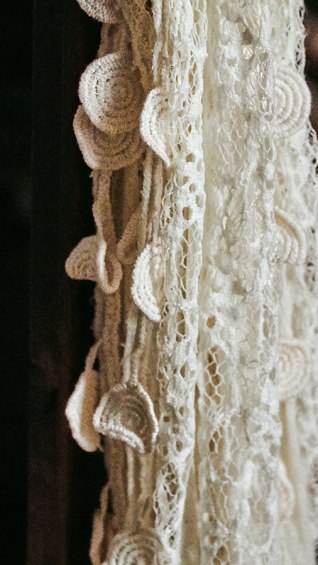
Forming the equivalent comes into play when one creates an image that reflects what was seen “—nothing more, nothing less.” It requires an intention to remain with the perception connected with as one engages the shutter. Making “sure the choices [depth of field, exposure, and color balance] you make honestly reflect your perception.”
…you have seen the subject clearly, without conceptual filters or discursiveness. You have rested with the perception in visual discernment, without agitation or photographic thinking.
This phase requires the silencing of composition rules/techniques and restraining the impulse to play around with various camera settings. Yes, easier said than done!

Texture is one of the photo assignments Kerr and Wood invites us to connect with as a means to further our awareness of the “flash of perception.” They noted that when we open ourselves to color the experiences are more sudden and intense than when intentionally photographing texture.
As I set out on this exercise, silencing a tendency to pre-identify objects of texture—grass, tree bark, mirrors—was, at first, a bit of a struggle. Then I found that when I opened myself to be with a consciousness of seeing and feeling…as if the surface quality that I visually connected with also invited me to touch, a combining of a visual and tactile moment…the experience tended towards mental qualifications of: silky, bubbly, prickly, nubby, fluffy, grainy, gritty, etc. A busy mind is indeed difficult to silence.
I do enjoy the exchanges of ideas and questions as these exchanges help clarify the nuances of Contemplative Photography. Let’s tag with #aphotostudy.
There are no colors out there in the world, Galileo tells us. They only exist in our heads. In the first of our dialogues about the mind, Riccardo Manzotti and I established that by “consciousness” we mean the feeling that accompanies our being alive, the fact that we experience the world rather than simply interacting with it mechanically. We also touched on the problem that traditional science cannot explain this fact and does not include it in its account of reality. That said, there is a dominant understanding of where consciousness happens: in the brain. This “internalist,” or inside-the-head, approach shares Galileo’s view that color, smell, and sound do not exist in the outside world but only in the brain. “If you could perceive reality as it really is,” says leading neuroscientist David Eagleman, “you would be shocked by its colorless, odorless, tasteless silence.”
…the subject/object divide, not to mention the addition of a feeling or “percept,” is particularly pertinent when we talk about color.
…when scientists look inside the brain to see what’s going on, they find only billions of neurons exchanging electrical impulses and releasing chemical substances. They find what they call correlates of consciousness, not consciousness itself; or in this case, they find correlates of color, but not color itself. There is no yellow banana in the head, just the grey stuff
..the other traditional claim, still widely taught in school, that colors exist in light, or that different colors are different wavelengths of light. And of course the colors of the rainbow immediately come to mind. But that explanation doesn’t work 100 percent either. The same wavelength, for example, will give rise to different colors if the surrounding environment is different.
…Three hundred years on, what and where colors actually are remains a mystery.
~cited: NYR Daily, The Color of Consciousness by Riccardo Monzotti & Tom Parks
We often take something that is clear to us initially, and we begin to embellish, over-think and romanticize it, and then translate it into the photographic medium all the way through Photoshop and filters and everything. We begin with our original experience, and, when it is done, there is little or no relationship between the original perception and the final result. This the Miksang version of “lost in translation.”
~M Wood, (Opening the Good Eye)
Contemplative practices cultivate a critical, first-person focus, sometimes with direct experience as the object, while at other times concentrating on complex ideas or situations. The practical, radical, and transformative aspects of this practice is noted to increase a deepening concentration and quieting of the mind.
Mindfulness is:
To experience photography as a way of seeing and as a contemplative practice, an attitude of genuine receptivity is required. The absence of expectations and preconceptions opens us to the beauty within the ordinary. We are more able to become engaged with the variables within colors, lines, light, forms, textures, space so that within this silent stillness an intimacy inspires us to pick up our camera in order to see through the viewfinder and then…
…we begin to see the difference between a perception and a conception, and our allegiance begins to align with freshness.
~A Karr & M Wood (The Practice of Contemplative Photography)
Being present with a perception of an object that has visually awakened you allows for what is referred to by M Wood as visual discernment in which the photographer delays picking up her camera and allows a resting in a contemplative state of mind. Within the stillness of this pausing, it is noted that the relationship between the brain, light, and visual form of the object will silently and visually begin an introduction. To be relaxed, aware, receptive, and inclusive in these moments is to begin to become acquainted with…the photographer, the external form, eyes, eye consciousness, and the brain’s processing of light, colors, shapes, lines, texture.
And yes, most likely during this process your discursive mind will interrupt the process, like a jealous child. So, when you become aware of the dialogue, simply note and smile at the thoughts and return to the silent visual introduction…with a relaxed, letting go, and aware presence. If, you find that you are unable to return…just let go of the experience…other objects of perception are waiting for a similar moment of connection and introduction.
In the fourth posting of contemplative photography, an exercise, Opening a Door to Sensory Seeing was offered as a way to experientially explore what A Karr and M Wood identify as “flashes of perception.” Within The Practice of Contemplative Photography, they offer us a process of discovery, Looking Deeply by which to experience “visual discernment.”
This is the type of extensive engagement with the world that opens us to the subtleties of perception, of becoming aware of the meeting of our eyes and eye consciousness as we silently open ourselves to this amazing world.
I would love to hear about your thoughts about visual discernment and the Looking Deeply exercise.

Nikon D750 f/8 1/400s 28m 1400 ISO
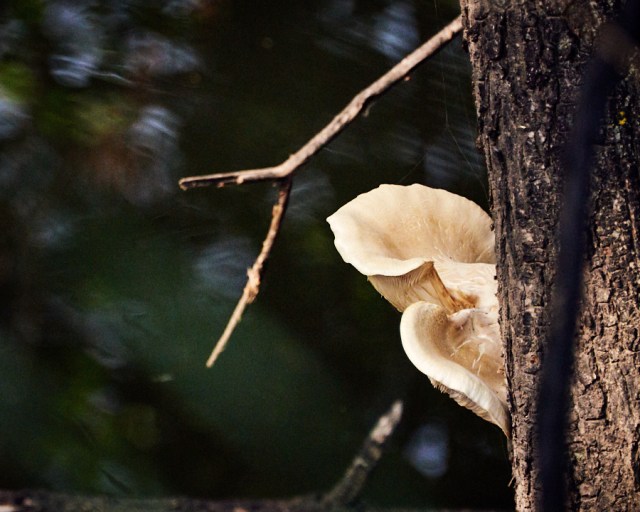
Nikon D750 f/5.6 1/400 300mm 100 ISO
When I was 14 I realized that a yucky, repetitive chore like mowing the lawn would end so much more quickly if I just allowed my mind to wander. In time I realized I could escape pain (physical and emotional) by shifting focus into an internal place of imaginative wanderings. As I write this it seems as if I chose to function in a vague dissociative dimension that is commonly referred to as autopilot. This mindless functioning is similar to how many people go through their daily lives, unaware of their unawareness.
To me this choice to go into autopilot is a stress management tool and can be an effective way to mange difficult moments; e.g., a root canal. The downsides of living life mindlessly by shifting focus to a place or time that is other than the present moment are:
1) life passes us by and we’ve miss wondrous moments – infant smiles, sun rises, bubble rainbows, falling stars, eye contact
2) we interact with others more from an imagined place, conversation, or conclusion than from reality itself
3) physical pain becomes chronic due to muscular tension that builds up from internal rehearsed arguments, speeches.
I have come to realize there is a physical tightening or bracing that unconsciously occurs while we are in our head. It is as if the brain senses the danger that comes from inattention and thus braces for an imagined attack from a saber tooth tiger or the possible fall that could occur while reading and walking.
4) we respond to life’s challenges from places of learned conditioning and imagined possibilities. For example, I have found myself grieving the ending of a Mozart piece while in the middle of the music. Thus sadness created from an expected outcome deafens me to the moment by moment experience. I call this personal crazy making.
So to pause in the middle of these emotional and mental rapids is to intentionally bring a roaming mind into the present. This intentional returning to self is to experience the refreshing flow of the breath; the movement of music as it travels throughout our soul (and to be with the music until it is no more and ask of ourselves, “where did the music go?”).
To quiet the ongoing ramblings within the mind and bring oneself into the present environment is to witness the dance of light and shadow upon a wall or the flow of steam above a cup of coffee. This stilled silence allows us to emotionally connect with another through the art of listening that guards us from injecting ourselves into their story.
When I do this I find that that these moment gift me with peaceful bliss as yesterday is not here and the next second has paused. In truth, despite all the worldly worries, possibilities, have tos, and shoulds this moment of non- judgmental awareness is life.
My awareness of this brings me to an intention. An intention that when doing yucky chores I will bring my focus to the sensual experience – the various sights, sounds, tastes, sensations, scents associated with dusting, washing dishes, sweeping, ect. Yet, I soon realize I unwittingly traveling through a land of Oz. So I non-judgmentally smile to myself in greeting and return to the moment, knowing and accepting that I’ll soon realize my mind has taken me elsewhere once again.
Research has found that mindfulness is associated with improved stress management, health, pain management, and problem solving. So to identify a event in one’s life — listening to music, bathing, walking, eating, knitting, writing in which to set out to be intentionally present is the door by which to learn how to be with oneself and to become aware when we have slipped away into a realm of mind making.
A daily formal meditative practice is good but most people struggle with setting aside 10 – 15 minutes for themselves (even though they will set aside hours watching TV).
So periodically throughout a day, I recommend a returning to the moment for a few minutes by asking oneself:
What am I thinking?
What physical sensations am I aware of in this moment?
What feeling am I feeling?
Where in my body do I feel this?
Shift your attention to the physical sensations of your breath. Be present with your breath for 3 cycles of in-breath, pause, out- breath, pause.
Ask yourself, “are my thoughts and/or feelings asking me to do something?” Listen to yourself for an answer.
End this mindful practice by bringing your awareness once again to your in-breath and with the out-breath release with a sigh. Gift yourself with a smile.
On a personal note, when I ask myself, “what am I thinking?” I often find that I can’t recall my thoughts.
May I welcome the peace within my in-breath. May I smile with the flow of peace within my out-breath. May all living beings know peace.
This week’s A Photo Study is inspired by the writings of A Karr and M Wood (The Practice of Contemplative Photography), “Photographing color gives us something to look for that will synchronize [cause or occur to operate at the same time] eye and mind.”
Photographing color is the first of their contemplative photography assignments in which the photographer is encouraged to open herself to color:

labeling the color “red”
As always, I’m looking forward to reading your comments and seeing what colors touched your awareness. Let’s tag with aphotostudy.
 a meditative journey
You must be logged in to post a comment.