The most important word in this haiku is “too” (mo). The frog’s eyes look shiny, as if filled with tears. The “too” suggests someone else in the scene, and that someone else has to be Issa. Why are there tears in the poet’s eyes? He doesn’t say. Instead, he shows us, simply, a sunset and a frog. The day is over. Is the frog sad about this? Regretful? And what if the whole scene is symbolic, sunset suggesting death and the day that is almost gone, a lifetime? Then, the frog’s and Issa’s tears become even more significant and poignant. Together they weep for what has been and will never be again.
64th day of self isolation
Skyscape photograph Nikon D750 f/8 1/100s 190 mm 400 ISO edited: Capture One 20 & Photoshop
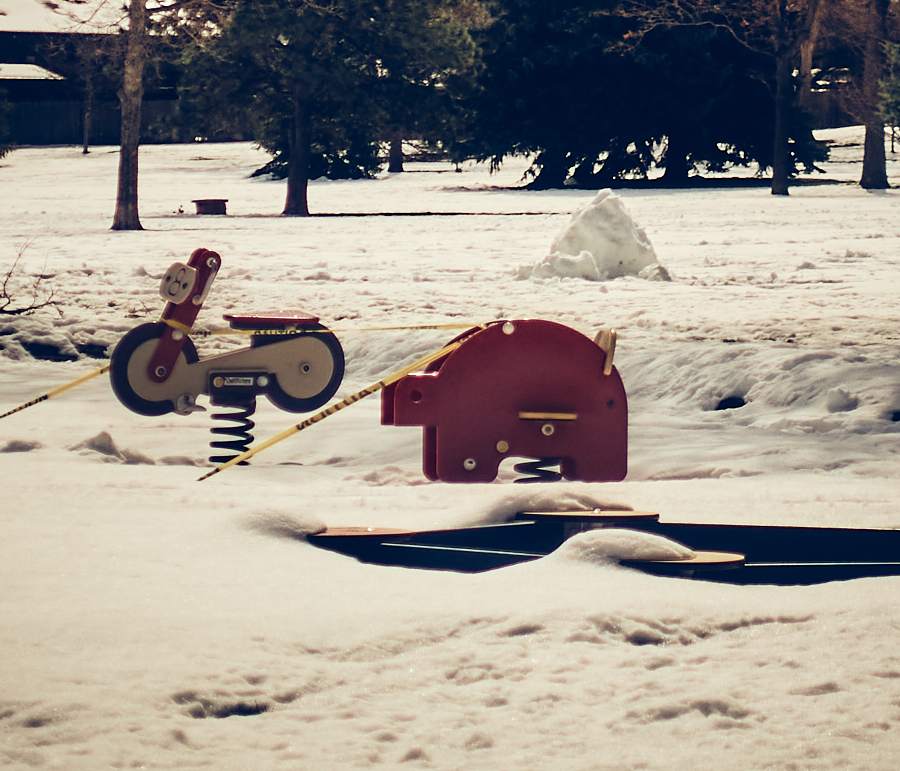
I find myself being drawn again and again to how the yellow caution tape forms a number of barriers around play areas within a park near my home. The tape intensifies the overwheming silence and emptiness contrasting with the news blitz that feeds powerlessness, sadness, anger, confusion, mistrust, division, anxiety, etc.
The empty playground also beings to mind the story of The Pied Piper of Hamelin. The story is a familiar one, but what most of us probably don’t know is that it has its feet at least somewhat planted in an apparently true event that took place in the real-life town of Hamelin, Germany in 1284.
The earliest accounts of the story don’t include the rats, which wouldn’t show up until around the year 1559, but they do include the piper, dressed in his “clothing of many colors.” there is not enough historical data to ascertain for certain what happened in the town of Hamelin in 1284, there is little doubt that something occurred there which left a heavy mark on the town, and on world folklore. Theories advanced over the years include that many of the town’s children died of natural causes that year; or possibly drowned in the nearby river; or were killed in a landslide, thus explaining the recurring motif of the rats being led into the water, or of the mountain opening up and swallowing the children. The pied piper himself is considered a symbolic figure of death.
One other explanation is that the children may have died of the Black Plague, which could be why the rats were later added into the story, though the Black Plague didn’t hit Germany until the 1300s, making its arrival probably too late to be the source of the legend.
Other theorists hold that the story of the pied piper actually refers to a mass emigration or even another Children’s Crusade like the one that may have occurred in 1212.
Our first clue about what really happened in the town of Hamelin comes from a stained glass window that stood in the town’s Market Church until it was destroyed in 1660. Accounts of the stained glass say that it alluded to some tragedy involving children, and a recreation of the window shows the piper in his colorful clothes and several children dressed in white. The date is set by an entry in Hamelin’s town chronicle, which was dated 1384 and said, simply and chillingly, “It is 100 years since our children left.”
Grammarist point out that the phrase “pied piper” usually has a pejorative connotation, pointing out that, “When it is time to pay the piper it is time to accept the consequences of a thoughtless or rash action” or to “fulfill a responsibility or promise, usually after the fulfillment has been delayed already.” Both of these meanings probably tie back to the legend of the pied piper.
Even the words “pied piper” have entered into common usage to mean everything from “a charismatic person who attracts followers” to “a leader who makes irresponsible promises” to “one who offers strong but delusive enticement,” according to the Merriam Webster Dictionary entry for pied piper meaning. “Pied piping” is also a phrase used to describe a certain phenomenon in linguistics in which some words “drag” others along with them when moved to the front of a sentence. (cited: The Chilling Story Behind the Pied Piper of Hamelin)
Now that I have got this obvious allusion out of my system, let’s move on the the composition elements within the above photograph:
Rule of Thirds
Rule of Odds
Leading Lines from right to left
Space
Triangle created by the placement of the “triangle” snow pile with the two subjects
“The rapid increase of carbon dioxide concentration in Earth’s modern atmosphere is a matter of major concern. But for the atmosphere of roughly two-and-half billion years ago, interest centres on a different gas: free oxygen (O2) spawned by early biological production. The initial increase of O2 in the atmosphere, its delayed build-up in the ocean, its increase to near-modern levels in the sea and air two billion years later, and its cause-and-effect relationship with life are among the most compelling stories in Earth’s history.”
(cited: Lyons, Timothy W.; Reinhard, Christopher T.; Planavsky, Noah J. The rise of oxygen in Earth’s early ocean and atmosphere: Nature, Volume 506, Issue 7488, pp. 307-315 (2014).
“The oxygen holocaust was a worldwide pollution crisis that occurred about 2,000 million years ago. Before this time there was almost no oxygen in the Earth’s atmosphere. The Earth’s original biosphere was as different from ours as that of an alien planet. But purple and green photosynthetic microbes, frantic for hydrogen, discovered the ultimate toxic waste, oxygen. Our precious oxygen was originally a gaseous poison dumped into the atmosphere. … (The atmospheres of Mars and Venus today are still more than 95 percent carbon dioxide; the Earth’s is only 0.03 percent.)…”
(cited: Lynn Margulis, Dorion Sagan Microcosmos: Four Billion Years of Microbial Evolution
coming or going ~ Ryokan (Trans: K tanahashi, Sky Above, Great Wind)
Nikon D750 f/1.8 1/400 35mm 200 ISO
with nothing
to touch, a dead branch
grabs at the sky ~Katsura Nobuko (cited: Trans: M Ueda, Far Beyond the Field)
Nikon D750 f/1.8 1/10s 35mm 200 ISO
Protecting the child
from the cold autumn wind,
the old scarecrow. ~ Issa (cited: Trans: S Hamill, The Spring of My Life)
Nikon D750 f/1.8 1/640s 35mm 200 ISO
Winter wind!
A charcoal peddler all alone
in a small ferry boat ~ Buson (cited: Trans: Y Sawa & E M Shiffert, Haiku Master Buson)
A special thank you to the Lens-Artists Photographers who continue to challenge and inspire. The above images and poetry is submitted in response to Travels and Trifles challenge: distance.
Given that we can live only a small part of what there is in us–what happens with the rest?
Pascal Mercier, Night Train to Lisbon
In this lodging
that no one visits,
where no one comes to call
from the moon in the trees
beans of light come poking in
~Saigyō (cited: Trans: B Watson, Poems of a Mountain Home)
“Of the thousand experiences we have, we find language for one at most and even this one merely by chance and without the care it deserves. Buried under all the mute experiences are those unseen ones that give our life its form, its color, and its melody. Then when we turn to these treasures, as archaeologists of the soul, we discover how confusing they are. The object of contemplation refuses to stand still, the words bounce off the experience and in the end, pure contradictions stand on the paper. For a long time, I thought it was a defect, something to be overcome. Today I think it is different: that recognition of the confusion is the ideal path to understanding these intimate yet enigmatic expertises. That sounds strange, even bizarre, I know. But ever since I have seen the issue in this light I have the feeling of being really awake and alive for the first time.”
~Pascal Mercier, Night Train to Lisbon. pg 17
I think this is a good time to pull away from the computer, close our eyes, and open ourselves to “Clarinet Concerto in A, K. 622: II. Adagio”.
“Even after decades as a successful artist…if I choose an object [to draw], fear becomes a goblin holding me back–fear of failure, of not measuring up, or of just being banal, but mostly fear of my drawing looking weird. Drawing makes me vulnerable. Doubt has a role in holding back the sheer joy of expression … the strongest initial resistance to drawing, for me, comes from the inner critic–the judgmental voice in my head. I imagine I hear people judging my work, devaluing my efforts, or comparing my sketch unfavorably to someone else’s finished work, and I just don’t want to face that!
“The great twentieth-century painter Philip Guston, known to work long hours in the studio, once repeated something the composer and artist John Cage had told him: ‘When you start working, everybody is in your studio–the past, your friends, your enemies, the art world, and above all, your ideas–all are there. But as you continue painting, they start leaving, one by one, and you are left completely alone. Then, if you are lucky, even you leave.’ Guston and Cage before him, were articulating the reality that dealing with internal resistance, with the inner critic, is an integral part of an ongoing creative practice…” (cited: J F Simon, Drawing your own Path)
Let’s take a break, make a cup of tea, and listen to the Colorado Symphony’s Digital Ode to Joy
“Life may be brimming over with experiences, but somewhere, deep inside, all of us carry a vast and fruitful loneliness wherever we go. And sometimes the most important thing in a whole day is the rest we take between two deep breaths, or the turning inwards in prayer for five short minutes.”
~ Etty Hilleson, Trans: A Pomerans, In Interrupted Life The Diaries of Etty Hillesum. pg. 78
“The silence after a snowstorm isn’t just your imagination — all those tiny flakes actually trap the sounds of your surroundings.
“Chris Bianchi, a meteorologist at Weather Nation, described the phenomenon as a sort of citywide cup of tea: After a big storm, we can take a few minutes to relax and take in the quiet.
“The science behind that quiet comes down to how sound waves travel (or, more accurately, don’t travel) through snowflakes.
“‘Snowflakes, when they’re spaced further apart, there’s little gaps, obviously invisible to the naked human eye,’ Bianchi said. ‘But there are these little gaps within the snow and those are very efficient at absorbing sound.’
“The sound waves from cars, buildings and people get trapped in those small places between the snowflakes.
“Not just any snow can trap noise. It has to be the freshly fallen, light and fluffy. Wet and heavy snow doesn’t leave those spaces for sound to be trapped.
“One study found a couple of inches of snow can absorb as much as 60 percent of sound. Snow can act as a commercial sound-absorbing foam when it’s in that fluffy, freshly fallen state.
“As the snow starts to melt, those little sound-catching spaces start to go away too.
“(When snow melts) it compacts, and that compaction reduces the amount of little crevices and nooks and crannies that sound is able to be trapped in,” Bianchi said.
“So, for at least a few hours or even a day after a snowstorm, we can get some reprieve from all that noise around us.
“‘It’s calming, it’s relaxing, it’s tranquil,’ Bianchi said. ‘Life is kind of forced in a sense to slow down.'”
cited: CPR News, Claire Cleveland and Andrea Dukakis, “Yes, it really is quieter when it snows. Here’s the science behind the calm after the storm. February 4, 2020.
The Story of Ming Lan, based on the novel written by Guan Xin Ze Luan, follows the concubine-born 6th child of the Sheng household from her childhood into adulthood. Ming Lan first meets Gu Ting Ye, the 2nd son of the Gu Family, as his rival in a game of Touhu, but when she encounters him again in a time of need he goes to great lengths to help her. This dynamic plays out on a grander scale when they meet again as adults. Both Ming Lan and Ting Ye are unfavored children who suffer as a result of internal scheming in their households. Ming Lan adapts by learning to hide her talents, spirit, and intelligence, while Ting Ye, long painted as a scoundrel, decides to live recklessly. Yet they each have a rare gift of foresight. Through cunning schemes and daring endeavors, they both rise in position and work to obtain justice from those that have wronged them. Together they shape the new Emperor’s regime and work to sow and harvest a bright future
Editing photographs
Continuing with 30 day project, same lens camera wide open, that was included in an educational Thorsten von Overgaard Photography webinar.
Nikon D750 f/1.8 1/4000s 35mm 200 ISO
Exercising and meditating
How are you taking care of yourself during this time of the COVID-19 virus in which we are all encouraged to socially isolate and by doing so we are also caring for others?
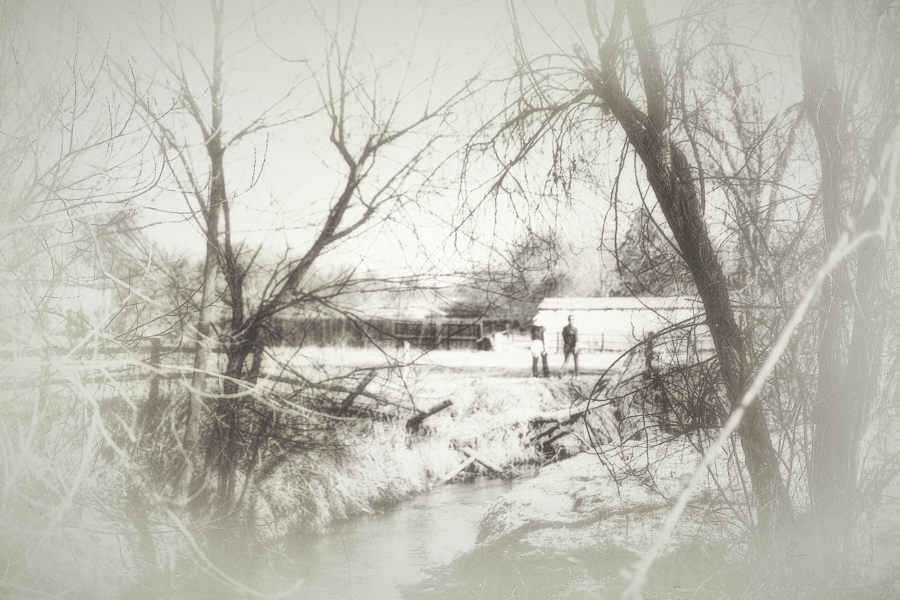
Chaos – eternal, immense, uncreated – from which all is born; nether darkness nor light, nor damp nor dry, not hot nor cold, but all things mingled, eternally one and limitless.
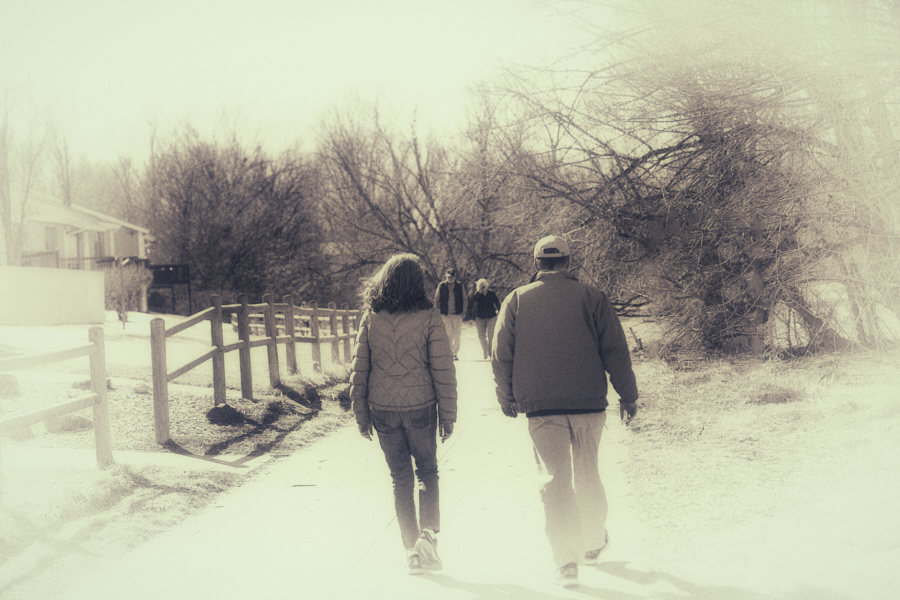
winterwalk Nikon D750 f/1.8 1/4000s 35mm 200 ISO
Chaos was the beginning. Within her void slumbered, in undifferentiated fusion, all the elements, the potential, the seed of a person. Yet, some say that Chaos was born from Mist and that Mist was the first to exist.
Mist is symbolic of things indeterminate, or the fusing together of the elements of air and water, and the inevitable absorbing of the outlines of each aspect and each particular phase of the evolution process.
It is also said that Chaos existed from the beginning together with Nyx, the goddess of Night, mother of Erebus, god of darkness, and Tartarus, the underworld.
Or is Chaos the soul’s state of potentiality – eternal, vast, uncreated, where all is intermingled, folding and unfolding, evolving and enveloping – prior to the birth to the unconscious?
winterwalk Nikon D750 f/1.8 1/4000s 35mm 200 ISO
stillness– in the depths of the lake billowing clouds
*David G. Lanoue (a translator of Japanese haiku, a teacher of English and world literature, a writer of haiku and “haiku novels) writes that this haiku serves as a substitute for experience–or, perhaps, a clear window into experience–allowing the reader, in contemplation, to see that same lake, those same clouds, and to feel the serenity and stillness of the moment.
The above images are drawn from a 30 day photo assignment (same lens – camera wide open) and are submitted in response to Leya’s lens-artists photo challenge: chaos.









 a meditative journey
You must be logged in to post a comment.