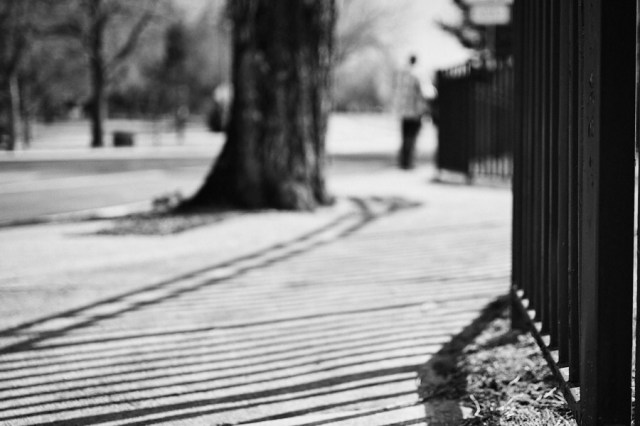
The three grounds within this black and white image begins with the play of light and shadow at the bottom of the page. The shadowed lines on the left side of the image brings the eye to the tree and human figure in the mid ground and then to the trees in the background.
The spot light on the bathroom counter was the eye catcher for me. The toothbrush holder and its shadow defines the foreground. The tissue box sits within the middle ground while its reflection in the mirror creates the background.

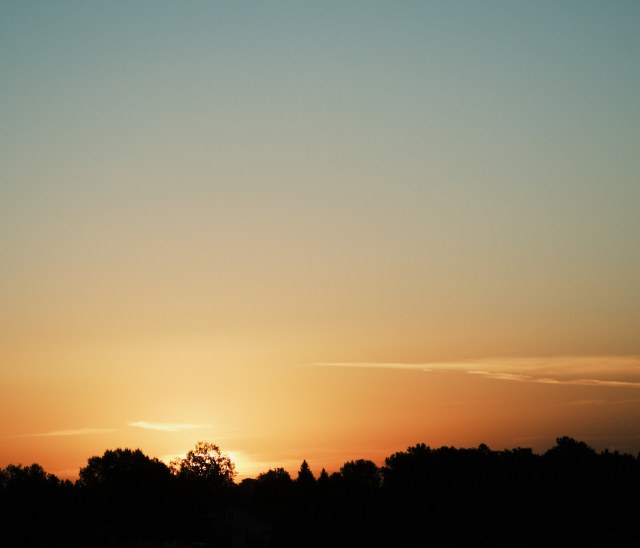
Since warm colors seem to be closer than cold colors could one of my dawn images offer an exploration of how color may come into play creating the three grounds. I see the foreground defined by the black horizon while the morning’s sun light as well as the orange in the sky creating the middle ground as the sky’s blue at the top of the image brings us to the background.
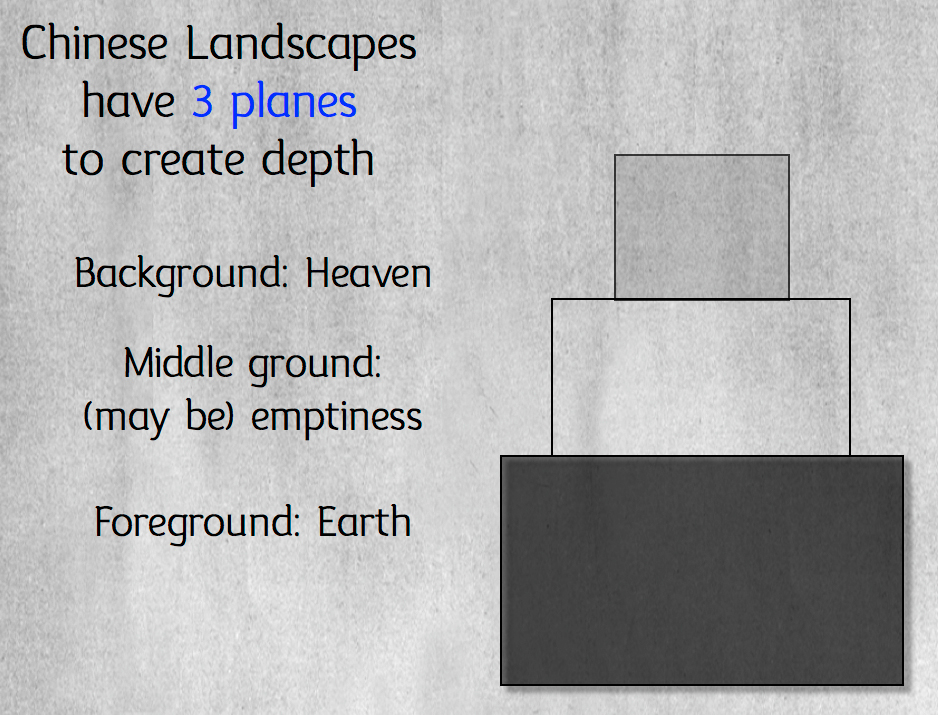
I find it interesting that most Chinese landscapes contain three individual vertical plans to represent depth within paintings. The foreground usually consists of “earthly bound” objects like people, animals, buildings, and forest. The middle plane often represents emptiness in the form of clouds, mist or water. The background plane often includes “heavenly” elements such as hills and mountains as well as sky. The Chinese landscape painters did not use perspective as we paint it in representational art (or see it via the one-point perspective lens of a camera), but instead showed depth with the three planes. In each one of these planes negative space – emptiness – plays a key compositional role.*
This was fun, thank you Patti
*cited: The Luminous Landscape
 a meditative journey
You must be logged in to post a comment.