
silent sunday
The last part of the Diary [Sarashina Diary] is concerned chiefly with accounts of pilgrimages and dreams. She married, who and when is not recorded, and bore children. Her husband dies, and with his death the spring of her life seems to have run down. Her last entry is very sad: “My people went to live elsewhere and I lived alone in my solitary home.” So we leave her “a beautiful, shy spirit whose life had known much sorrow.” ~Diaries of Court Ladies of Old Japan

Image and excerpt from Diaries of Court Ladies of Old Japan submitted in response to Traveling at Wits End’s photo challenge: the journey home.

margaret’s home.… Nikon D750 f/5 1/400s 72mm 320 ISO

Nikon D750 f/5.6 1//400s 300mm 640 ISO
When spring escapes
freed from being huddled in winter’s sleep,
the birds that had been stilled
burst into song.
The buds that had been hidden
burst into flower.
The mountains are so thickly forested
that we cannot reach the flowers
and the flowers are so tangled with vines
that we cannot pick them.
When the maple leaves turn scarlet
on the autumn hills,
it is easy to gather them
and enjoy them.
We sigh over the green leaves
but leave them as they are.
That is my only regret–
so I prefer the autumn hills.
~Princess Nukada – 7th Century (K Rexroth I Atsumi, The Burning Heart*)
*note: Princess Nukada lived in the later half of the 7th Century. She was the daughter of Prince Kagami, wife and the favorite of Emperor Temmu.
looking at the mountain
looking at the sea…
autumn evening
~Issa (www.haikuguy.com)

Nikon D750 f/4.5 1/400s 58mm 250 ISO
None calls upon me, or remembers me in my mountain village.
On the reeds by the thin hedge, the Autumn winds are sighing.
~The Sarashina Diary, A.D. 1009-1059 (Diaries of Old Japan)

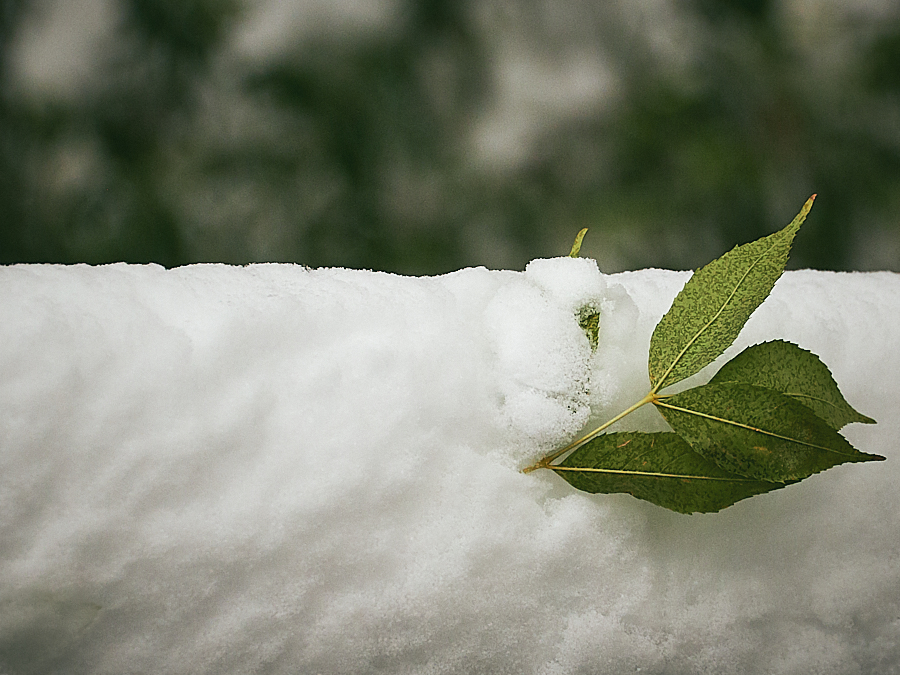
Tokiwa Mountain’s
pine trees are always green–
I wonder,
do they recognize autumn
in the sounds the blowing wind?
~Ono no Komachi (J Hirshfield & M Aratani, The Ink Dark Moon)

Nikon D750 f/5.6 1/400s 135mm 400 ISO
… You press your mind, your forehead, against the beginning of a book, the cool cover of it, appreciating its impenetrability. It is rectangular and thick, heavy enough to stop a bullet or press a leaf flat. It will, you think, never let you through. And then you begin to lean into it, applying little attentive pressure, and the early pages begin to curl back with a soft, radish-slicing sound, and you’re in. You’re in the book. The thick, segmental chapters fan out into their component pages, and each turned page dematerializes itself, once read, into the fluent, cajoling voice its words carry. …When you reach the last sentence, there rests under you left thumb a monolithic clump of paper through which, it seems, you could not possibly have traveled. ~N Baker (preface), A Book of Books
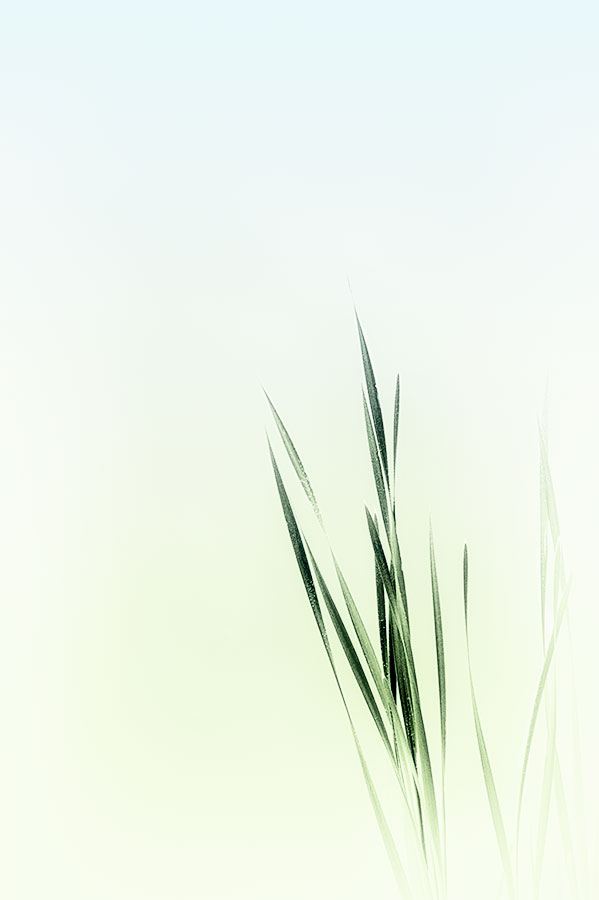
I am like dew on the grass–
And pitiable wherever I may be–
But especially am I oppressed with sadness
In a field with a thin growth of reeds.
~The Sarashina Diary, 1009-1059 (Diaries of Court Ladies of Old Japan

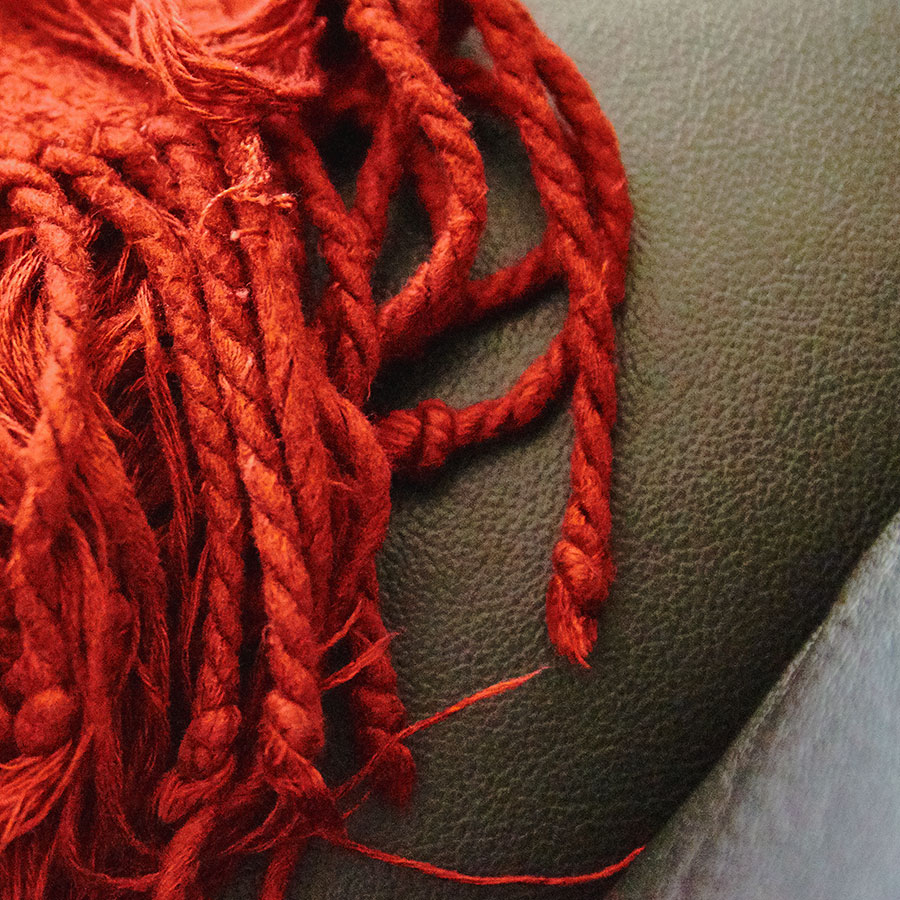
Once we establish the discipline of looking and seeing we are free to explore the open dimensions of the phenomenal world. As this orientation becomes more heartfelt, one becomes more attuned to the intimate qualities of contact, communication and natural expression in clear seeing. This brings relaxation and appreciation: the eye is allowed to fall through the world and celebrate this visual communion.
The discipline of looking and seeing cultivates a subtle and profound aesthetic sensibility. While this quality of seeing is genuine and fulfilling there remains a subtle allegiance to an underlying form of contemplative appreciation. The practice of direct perception undercuts this subtle ground and reference point. By completly trusting the unconditional power of the gap of perception one drops reference points and connects with the phenomenal world on its own terms. In direct perception there is no space for doubt or preference. Seeing is believing. With this confidence one enters the play of form and chaos in pure perception. Nothing added; nothing missing: each perception is an image of itself.
~cited: http://www.miksang.org

Forming the equivalent comes into play when one creates an image that reflects what was seen “—nothing more, nothing less.” It requires an intention to remain with the perception connected with as one engages the shutter. Making “sure the choices [depth of field, exposure, and color balance] you make honestly reflect your perception.”
…you have seen the subject clearly, without conceptual filters or discursiveness. You have rested with the perception in visual discernment, without agitation or photographic thinking.
This phase requires the silencing of composition rules/techniques and restraining the impulse to play around with various camera settings. Yes, easier said than done!

Texture is one of the photo assignments Kerr and Wood invites us to connect with as a means to further our awareness of the “flash of perception.” They noted that when we open ourselves to color the experiences are more sudden and intense than when intentionally photographing texture.
As I set out on this exercise, silencing a tendency to pre-identify objects of texture—grass, tree bark, mirrors—was, at first, a bit of a struggle. Then I found that when I opened myself to be with a consciousness of seeing and feeling…as if the surface quality that I visually connected with also invited me to touch, a combining of a visual and tactile moment…the experience tended towards mental qualifications of: silky, bubbly, prickly, nubby, fluffy, grainy, gritty, etc. A busy mind is indeed difficult to silence.
I do enjoy the exchanges of ideas and questions as these exchanges help clarify the nuances of Contemplative Photography. Let’s tag with #aphotostudy.
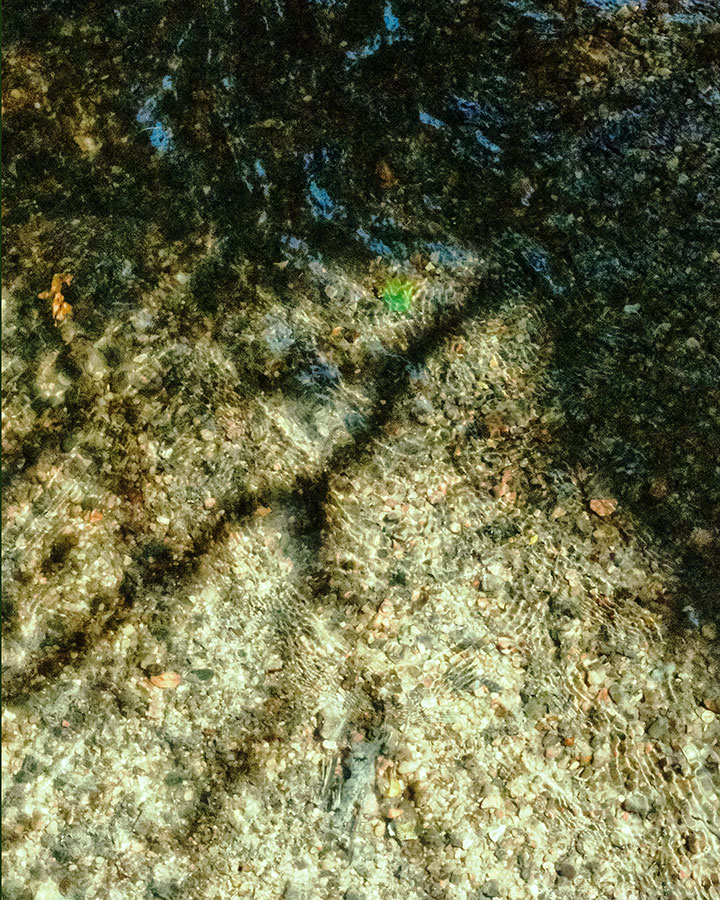
Spring Creek… Nikon D750 f/29 1/320s 85mm 12800 ISO
 a meditative journey
You must be logged in to post a comment.