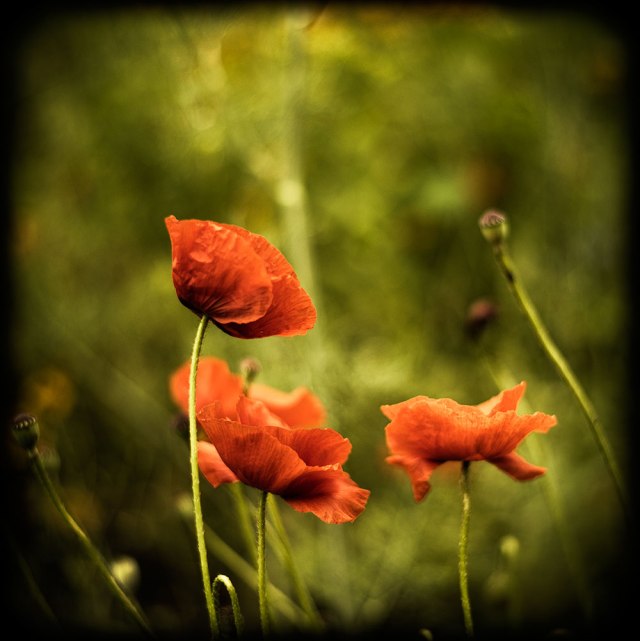
a photo study: rhythm I

Rhythm, a vital element within music, dance, and poetry, is also important in photography. Ted Forbes writes that visual pulses are within all visual compositions.

EmptyName-203_HDR

Repetition is easy to find…all around us are shapes that are pretty basic and similar to each other. We will see them repeating at regular intervals within nature, design, works of art, architecture, and photography.

rythum-7kittyparkingweb

Standard rhythm involves the same or similar elements repeating at regular intervals — think of equally spaced light posts extending from left to right across the frame, the slats of a crib, or a series of windows on the side of a city apartment building. These patterns can be thought of as a subset of rhythm in that patterns always have rhythm, but rhythm doesn’t always have patterns.

rhythumweb

Rhythm affects the quality of our viewing experience and helps draw and keep the observer’s eye within the frame. Visual rhythm is often most powerfully used as a vehicle for or backdrop to your central story or primary subject.

rythumtrioweb

After a week of studying rhythm, I’m finding a need to stay with this topic as the extension of rhythm within sound and physical sensations to a visual format is like…hmm…sitting in an introduction to physics class. Well, maybe not exactly like a physics class…maybe more like an introduction to “imaginary numbers.”

compositionbwebwy

In the meanwhile, I’ve concluded this week’s photo study blog with a Ted Forbes’ video rhythm in visual composition.   I would enjoy hearing your thoughts and understanding about rhythm as well as seeing some of your creative use of repeating patterns.

xdrive photography learning – 20 – bokeh

Within xdrive photography’s bokeh lesson, Raj notes that the unique blur within photographs known as bokeh is a composition tool that allows a photographer to guide a viewer’s eye as well as to keep distracting elements hidden.

cropped-dandelionproject13118web.jpg

Nikon D750    f/3.2    1/320s   40mm   ISO100

exdrive-1web

Nikon D750     f/5.6   1/320s   230mm   ISO 100

xdrivewebfloral

Nikon D750     f/5.6   1/200   210mm   ISO 100

Over to you Raj.  Thank you for this informative lesson and your amazing images.

cee’s black & white photo challenge: patterns

their traveling hats
looking small…
mist
~Issa (www.haiku.guy)

brendakofford_emigrate4web

emigrate IIII   Nikon D750   f/3.3   1/1,000   40mm   

Hop on over to  Cee’s Photography to join this week’s black and white photo challenge.

black-white-banner


a flower is not a flower

100dayspoppy

Aryeah Kaplan wrote that when one is in a meditative state, one has obtained the ability to turn off faint after-images that are constantly with us and interfere with seeing objects with total clarity. He noted that when one is able “to turn off the spontaneous self-generated images . . . the beauty of the flower . . . seen in these higher states of awareness is indescribable [and] appears to radiate beauty.

~Aryeah, Kaplan, Jewish Meditation: A Practical Guide, p.9

wordless wed

A flower is not a flower.  It is made only of non-flower elements–sunshine, clouds, time, space, earth, minerals, gardeners, and so on. A true flower contains the whole universe. If we return any one of these non-flower elements to its source, there will be no flower. That is why we can say, “A rose is not a rose. That is why it is an authentic rose.” We have to remove our concept of rose if we want to touch the real rose.

~Thich Nhat Hanh, The Heart of the Buddha’s Teaching, p. 129


deconstruction2

…when we hold a rose we see that it is composed of multiple elements, some tangible – leaves, stem, thorns, petals, stamens – and others intangible – scent, color, memories. If you were to remove any of these constituent parts, would you find an entity know as “rose”? As we are unable to find the rose in the absence of any one of these parts, we are also unable to find an enduring solid rose in any one of these elements.

~B Catherine Koeford, A Meditative Journey with Saldage, pp152-153

thursday’s special: pick a word in february – y3

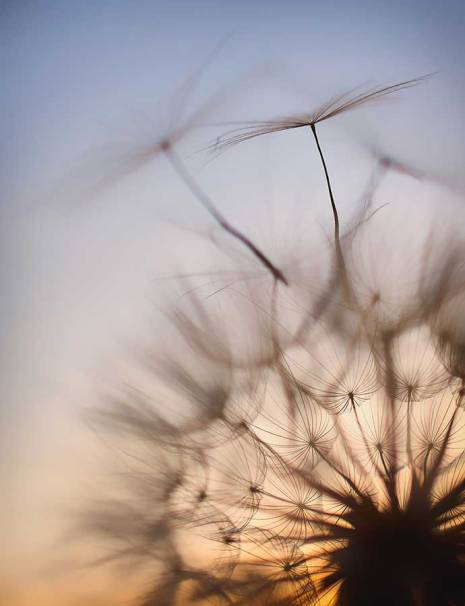
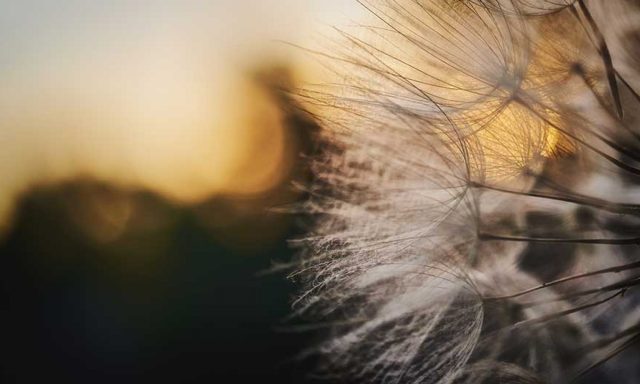
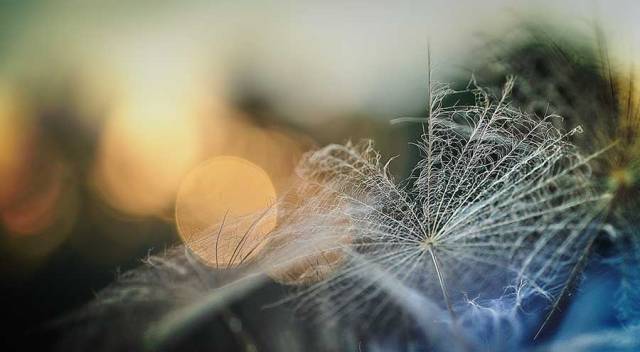
For the month of February Lost in Translation’s challenge is to match one or more images with five words:  innate, protuberant, rectangular, interspersed, and fluorescent.  Four of the five words are illustrated within these goat’s beard images while two of the three are rectangular.

dandelionproject13118-3web

brendakofford_dandelionproject2218web

dandelionproject12618-1web

wpc: beloved

shapes-42web

Imagine the dimension of time as a vertical line. Place yourself in the present on that line with the past above you and the future below you. Establish yourself in time. See all your ancestors that have come before you. The youngest generation of your ancestors is your parents. All of them are above you on this line of time. Then below you, see all your dependents, your children, your grandchildren, and all their future descendants. If you have no children, your descendants are the people you have touched in your life, and all the people they in turn influence. 

In you are both your blood ancestors and your spiritual ancestors. You touch the presence of your father and mother in each cell of your body. They are truly in you, along with your grandparents and great-grandparents. Doing this, you realize their continuation. You may have thought that your ancestors no longer existed, but even scientist will say that they are present in you, in your genetic heritage, which is in every cell of your body. 

plums

Look into a plum tree. In each plum on the tree there is a pit. That pit contains the plum tree and all previous generations of plum tree. The plum pit contains an eternity of plum trees. Inside the pit is an intelligence and wisdom that knows how to become a plum tree, how to produce branches, leaves, flowers, and plums. It cannot do this on its own. It can only do this because it has received the experience and heritage of so many generations of ancestors. You are the same. ~Thich Nhat Hanh (No Death, No Fear, 137-138)

baseballcaps3

This posting  was created in memory of Dustin, Bob, Elberta, Donna, Chris, Larry, and Margaret who all live on within the lives of my beloved.

Umwelt

The depths of the hearts
Of humankind cannot be known.
But in my birthplace
The plum blossoms smell the same
As in the years gone by.

~Ki no Tsurayuki

shapes-22webshapes-23web

The video below was created by Yoshiyuki Katayama and cited at Aeon.com.  Please gift yourself with this amazing visual journey with nature.

A term introduced by the Baltic German biologist Jakob von Uexküll in 1909, Umwelt refers to an organism’s internal and limited perceptual experience of the external world. This stunning experimental exploration of the concept from the Japanese artist Yoshiyuki Katayama contrasts flowers blooming at time-lapse speeds with insects and spiders atop them, captured in real time. As these two organisms move at what appear to be similar speeds, the viewer is reminded of the disparate timescales on which they usually operate, and the very different evolutionary goals that they pursue even as they interact with one another.


Umwelt from Yoshiyuki KATAYAMA on Vimeo.

a photo study: lines

This week my year-long commitment to study various elements of photography composition introduced me to lines: horizontal, vertical, diagonal, organic, and implied. Ted Forbes  (The Art of Photography) wrote that while lines don’t actually exist in nature they are most likely the most basic element of visual composition. He further noted:

Lines serve many purposes in visual composition. They can divide the composition, they can direct the viewers eye, they can define shapes and they can make a statement to the feel or interpretation of the image by the viewer. Line’s speaking to the feel of a composition is extremely important.

horizontal

procycle-(2)web

vertical

horizonaloddweb


diagonal

brenakofford_dandleionprojectsunweb

organic

impliedlines-4web

implied

impliedlines-1webredo

After this week, I am finding myself wondering about leading and curving lines as well  finding myself in a bit of muddy water in regards to the differences between lines and shapes.  Am I overthinking?

Would love to hear your thoughts and please feel free to join in.

To sum up this week here is Ted Forbes’,  Photography Composition: Line.