quite a feat– in utter silence the plum tree blooms ~Issa (cited: haikuguy.com)
Returning to silence begins with an awareness of our in-breath and our out-breath. The uniting of body and mind opens a door to noble silence. We become available to life and life becomes available to us with just three seconds of mindfulness of the breath…releasing the past and the future.
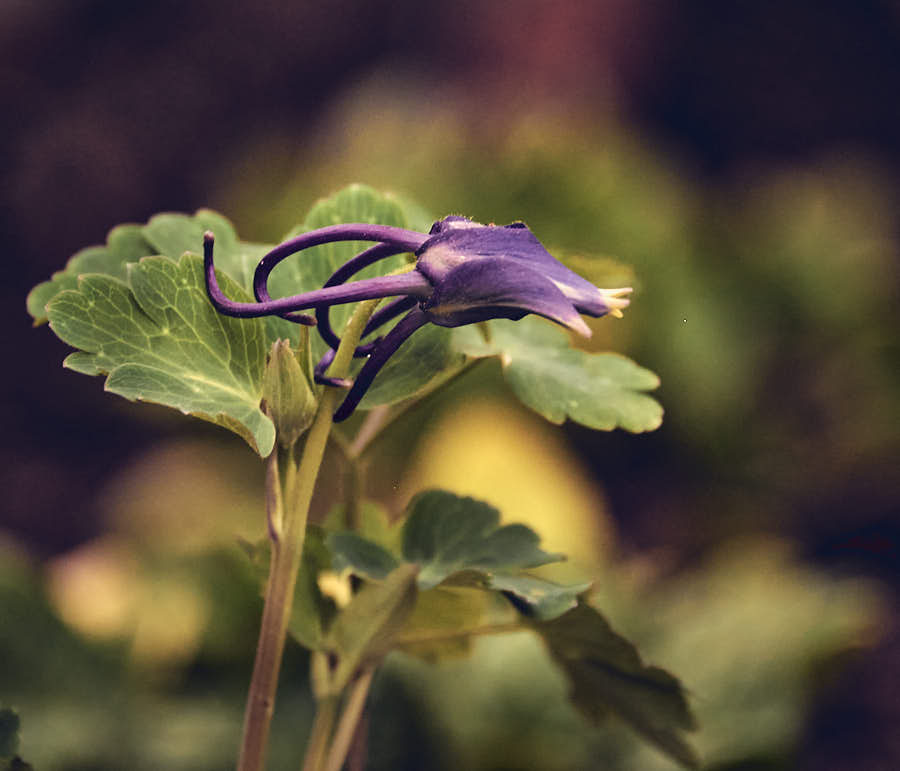
Nikon D750 f/5.6 1/100s 300mm 400 ISO/neutral density filter edited: Capture One 20
Around my home are the river rock I’ve picked up during nature walks so I’ve especially enjoyed the video, “Matter and Memory” by Katayama Yoshiyuki. As an introduction to this video, she noted:
“I like so-called ordinary stones, and I often bring them home as a souvenir if there are stones that I like when I go somewhere far away.
Ordinary stones are generally worthless, but I sometimes feel that they are more valuable to me than expensive goods that are mass production.
Stones are like containers with nothing inside. That is why I feel I can pack a lot of memories or scenery of the land into the stones and bring them home.
“‘That which I could never find without going to that place’ It is probably an important factor, I think.”
In the peaceful light Of the ever-shining sun In the days of spring, Why do the cherry’s new-blown blooms Scatter like restless thoughts? ~ Ki no Tomonori
Nikon D750 f/8 1/8s 300mm 400 ISO edited: Capture One 20 and Color Efex Pro 4
“There is a mountain called Ashigara [Hakoné] which extends for ten and more miles and is covered with thick woods even to its base. We could have only an occasional glimpse of the sky. We lodged in a hut at the foot of the mountain. It was a dark moonless night. I felt myself swallowed up and lost in the darkness, when three singers came from somewhere. One was about fifty years old, the second twenty, and the third about fourteen or fifteen. We set them down in front of our lodging and a karakasa [large paper umbrella] was spread for them. My servant lighted a fire so that we saw them. They said that they were the descendants of a famous singer called Kobata. They had very long hair which hung over their foreheads; their faces were white and clean, and they seemed rather like maids serving in noblemen’s families. They had clear, sweet voices, and their beautiful singing seemed to reach the heavens. All were charmed, and taking great interest made them come nearer. Some one said, ‘The singers of the Western Provinces are inferior to them,’ and at this the singers closed their song with the words, ‘if we are compared with those of Naniwa’ [Osaka]. * They were pretty and neatly dressed, with voices of rare beauty, and they were wandering away into this fearful mountain. Even tears came to those eyes which followed them as far as they could be seen; and my childish heart was unwilling to leave this rude shelter frequented by these singers.
“Next morning we crossed over the mountain.** Words cannot express my fear*** in the midst of it. Clouds rolled beneath our feet. Halfway over there was an open space with a few trees. Here we saw a few leaves of aoi**** [Asarum caulescens ]. People praised it and thought strange that in this mountain, so far from the human world, was growing such a sacred plant. We met with three rivers in the mountain and crossed them with difficulty. That day we stopped at Sekiyama. Now we are in Suruga Province. We passed a place called Iwatsubo [rock-urn] by the barrier of Yokobashiri. There was an indescribably large square rock through a hole in which very cold water came rushing out.”
“Mount Fuji is in this Province. …”
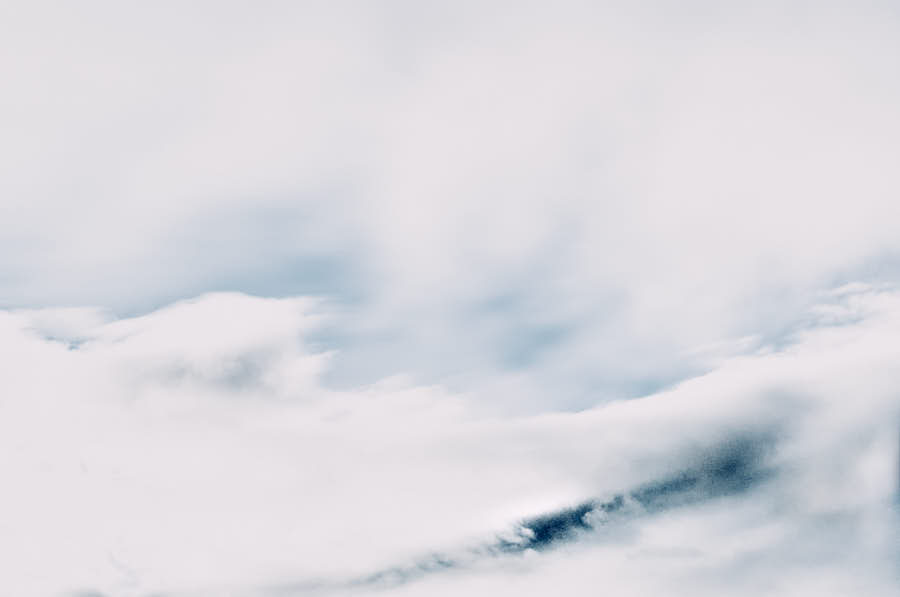
skyscape photograph created with Nikon D750 f/8 1/500s 200mm 400 ISO and edited in Capture One 20 and Photoshop
Footnotes:
*This seems to be the last line of a kind of song called Imayo, perhaps improvised by the singers; its meaning may be as follows: “You compare us with singers of the Western Provinces; we are inferior to those in the Royal City; we may justly be compared with those in Osaka.”
**Hakoné Mountain has now become a resort of tourists and a place of summer residence.
***Fear of evil spirits which probably lived in the wild, and of robbers who certainly did.
**** Aoi, or Futaba-aoi. At the great festival of the Kamo shrine in Kioto the processionists crowned their heads with the leaves of this plant, so it must have been well known.
From childhood’s hour I have not been As others were—I have not seen As others saw—I could not bring My passions from a common spring— From the same source I have not taken My sorrow—I could not awaken My heart to joy at the same tone— And all I lov’d—I lov’d alone— Then—in my childhood—in the dawn Of a most stormy life—was drawn From ev’ry depth of good and ill The mystery which binds me still— From the torrent, or the fountain— From the red cliff of the mountain— From the sun that ’round me roll’d In its autumn tint of gold— From the lightning in the sky As it pass’d me flying by— From the thunder, and the storm— And the cloud that took the form (When the rest of Heaven was blue) Of a demon in my view—
Alone by Edgar Allan Poe video created by illneas, “I film and create movies for my favorite poems or spoken word art.”
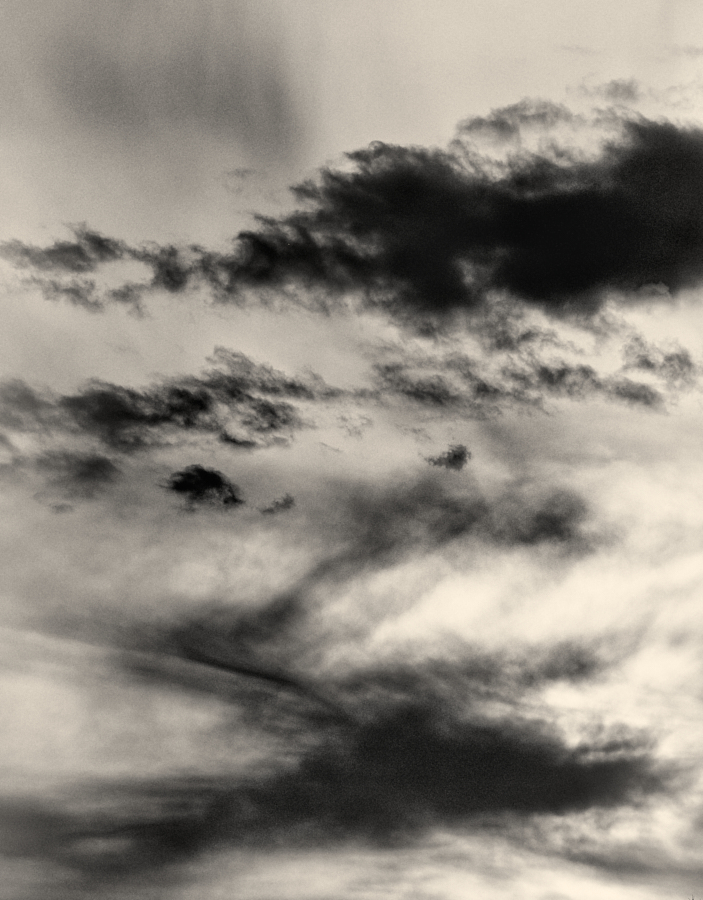
skycape photography: Nikon D750 f/5.6 1/2500 112mm 400 ISO edited in Capture One
excerpt: Jens Peter Jacobsen, Niels Lyhne. A Project Gutenberg of Australia ebook. *
“Niels Lyhne … was not in his poems; he merely put the verses together. But now a change came over him. Now that he wooed a woman and wanted her to love him–him, Niels Lyhne of Lönborggaard, who was twenty-three years old, walked with a slight stoop, had beautiful hands and small ears, and was a little timid, wanted her to love him and not the idealized Nicolaus of his dreams, who had a proud bearing and confident manners, and was a little older–now he began to take a vital interest in this Niels whom he had hitherto walked about with as a slightly unpresentable friend. He had been so busy decking himself with the qualities he lacked that he had not had time to take note of those he possessed, but now he began to piece his own self together from scattered memories and impressions of his childhood and from the most vivid moments of his life. He saw with pleased surprise how it all fitted together, bit by bit, and was welded into a much more familiar personality than the one he had chased after in his dreams. This figure was far more genuine, far stronger, and more richly endowed. It was no mere dead stump of an ideal, but a living thing, full of infinite shifting possibilities playing through it and shaping it to a thousandfold unity. Good God, he had powers that could be used just as they were! He was Aladdin, and there was not a thing he had been storming the clouds for but it had fallen right down into his turban.”
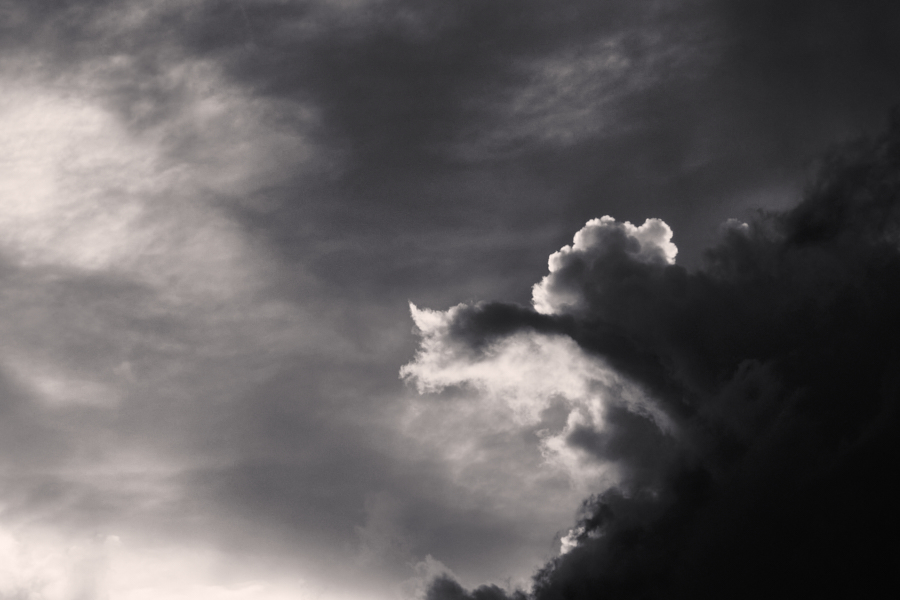
skyscape: Nikon D750 f/8 1/125s 92mm 400 ISO edited Capture One 20
*This ebook is made available at no cost and with almost no restrictions whatsoever. You may copy it, give it away or re-use it under the terms of the Project Gutenberg of Australia License which may be viewed online at http://gutenberg.net.au/license.html.
I’ve found that my daily walks through a community park has become impacted by the increasing number of people who are gathering without masks, disregarding distance recommendations, and (confusingly) allowing their dogs to run free of their leash.
Seemingly, resistance to limitations has no boundaries.
I’m a bit more anxious about dogs especially when walking with my great granddaughter as we have the choice to distance ourselves, refrain from touching our faces, and engage in the ritual of washing hands and masks upon returning home. Dogs on the other hand are know to bite… and a bite will result in an emergency room visit and a confrontation that most likely will be tinted with ugly aggression. These imagined potentialities serve to intensify anxiety even more so than the possibility of stepping into dog poop and imagined consequences… Oh dear!
So…with the intention to journey through this delicate and uncertain time with a mindfulness that focused more on gratitude than on negative thoughts and feelings, I have chosen to spend my evenings photographing sunsets from the security of my veranda.
Gatha for Donning a Mask
Putting on my mask I think of protecting and caring for my community. Seeing someone wearing their mask I think of how they are caring for me. Smiling at each other with our eyes, waving hello with our hands We are even more connected in care Despite the distance. ~ Prajna Choudhury
skyscape photography: Nikon D750 f/8 1/25s 32mm 400 ISO edited in Capture One
This post was inspired by Leya’s lens-artists photo challenge: delicate. Thank you Leya and all the lens-artists photographers.
Say this city has ten million souls, Some are living in mansions, some are living in holes: Yet there’s no place for us, my dear, yet there’s no place for us.
Once we had a country and we thought it fair, Look in the atlas and you’ll find it there: We cannot go there now, my dear, we cannot go there now.
In the village churchyard there grows an old yew, Every spring it blossoms anew; Old passports can’t do that, my dear, old passports can’t do that.
The consul banged the table and said: ‘If you’ve got no passport, you’re officially dead’; But we are still alive, my dear, but we are still alive.
Went to a committee; they offered me a chair; Asked me politely to return next year: But where shall we go today, my dear, but where shall we go today?
Came to a public meeting; the speaker got up and said: ‘If we let them in, they will steal our daily bread’; He was talking of you and me, my dear, he was talking of you and me.
Thought I heard the thunder rumbling in the sky; It was Hitler over Europe, saying: ‘They must die’; We were in his mind, my dear, we were in his mind.
Saw a poodle in a jacket fastened with a pin, Saw a door opened and a cat let in: But they weren’t German Jews, my dear, but they weren’t German Jews.
Went down the harbour and stood upon the quay, Saw the fish swimming as if they were free: Only ten feet away, my dear, only ten feet away.
Walked through a wood, saw the birds in the trees; They had no politicians and sang at their ease: They weren’t the human race, my dear, they weren’t the human race.
Dreamed I saw a building with a thousand floors, A thousand windows and a thousand doors; Not one of them was ours, my dear, not one of them was ours.
Stood on a great plain in the falling snow; Ten thousand soldiers marched to and fro: Looking for you and me, my dear, looking for you and me.
Moving Poems, Refugee Blues by W H Auden, by Dave Bonta
Set to the verses of W.H. Auden’s 1939 poem, the multi-award winning “Refugee Blues” charts a day in ‘the jungle’, the refugee camp outside Calais. More intimate and unlike much of what has been seen in the mass media, this documentary poem counterpoints the camp’s harsh reality of frequent clashes with the French riot police with its inhabitants’ longing for a better future.
skycape photography: Nikon D750 f/8 1/400s 150mm 400 ISO edited in Capture One and Photoshop
excerpt from Rainer Maria Rilke’s Letters to a Young Poet. Trans: MD Herter Norton
“I want to talk to you again… You have had many and great sadnesses, which passed. And you say that even this passing was hard for you and put you out of sorts. But, please, consider whether these great sadnesses have not rather gone right through the center of yourself? Whether much in you has not altered, whether you have not somewhere, at some point of your being, undergone a change while you were sad? Only those sadnesses are dangerous and bad which one carries about among people in order to drown them out; like sicknesses that are superficially and foolishly treated they simply withdraw and after a little pause break out again the more dreadfully; and accumulate within one and are life, are unloved, spurned, lost life, of which one may die. Were it possible for us to see further than our knowledge reaches, and yet a little way beyond the outworks of our divining, perhaps we would endure our sadnesses with greater confidences than our joys. For they are moments when something new has entered into us, something unknown; our feelings grow mute in shy perplexity, everything in us withdraws, a stillness comes, and the new, which no one knows, stands in the midst of it and is silent. …”
skycape photography: breaking through Nikon D750 f/8 1/80s 190mm 400 ISO edited in Capture One
“… We have found, they will say, a path of speculation which seems to bring us and the argument to the conclusion that while we are in the body, and while the soul is mingled with this mass of evil, our desire will not be satisfied, and our desire is of the truth. For the body is a source of endless trouble to us by reason of the mere requirement of food; and also is liable to diseases which overtake and impede us in the search after truth: and by filling us so full of loves, and lusts, and fears, and fancies, and idols, and every sort of folly, prevents our ever having, as people say, so much as a thought. For whence come wars, and fightings, and factions? whence but from the body and the lusts of the body? For wars are occasioned by the love of money, and money has to be acquired for the sake and in the service of the body; and in consequence of all these things the time which ought to be given to philosophy is lost. Moreover, if there is time and an inclination toward philosophy, yet the body introduces a turmoil and confusion and fear into the course of speculation, and hinders us from seeing the truth: and all experience shows that if we would have pure knowledge of anything we must be quit of the body, and the soul in herself must behold all things in themselves: then I suppose that we shall attain that which we desire, and of which we say that we are lovers, and that is wisdom, not while we live, but after death, as the argument shows; for if while in company with the body the soul cannot have pure knowledge, one of two things seems to follow-either knowledge is not to be attained at all, or, if at all, after death. For then, and not till then, the soul will be in herself alone and without the body. In this present life, I reckon that we make the nearest approach to knowledge when we have the least possible concern or interest in the body, and are not saturated with the bodily nature, but remain pure until the hour when God himself is pleased to release us. And then the foolishness of the body will be cleared away and we shall be pure and hold converse with other pure souls, and know of ourselves the clear light everywhere; and this is surely the light of truth. For no impure thing is allowed to approach the pure. These are the sort of words, Simmias, which the true lovers of wisdom cannot help saying to one another, and thinking. You will agree with me in that?”






 a meditative journey
You must be logged in to post a comment.