This year-long project seems to be drawing upon composition elements that were covered at the beginning of this study. Recently, I revisited the post which explored the elements of simplicity as part of this series on contemplative photography.
Today, I find myself going back and re-reading the two separate post about rhythm. Rhythm involves the same or similar elements repeating at regular intervals. Repetition is easy to find…all around us are shape that are pretty basic and similar to each other. We see them repeating at regular intervals within nature, design, works of art, architecture, and photography.
The origin of repetition is from the French repeticion or Latin repetitio(n-), from repetere – repeat.
When you repeat a certain size or shape or color you add strength to the overall image of a photograph. If you want to make a statement, you repeat certain elements again and again. If you repeat something once or twice it becomes more interesting. If you repeat something many times it becomes a pattern and takes on a life of its own.
Patterns give us order in an otherwise chaotic world.
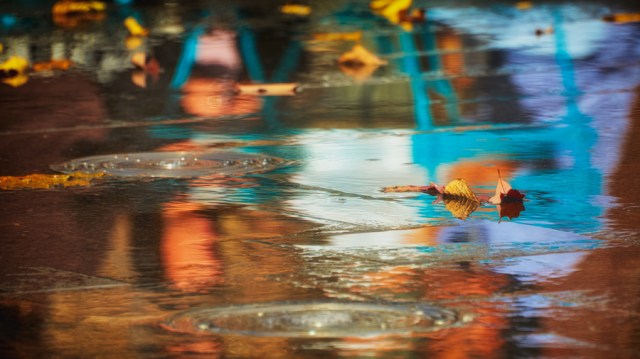
A Karr and M Wood (The Practice of Contemplative Photography) invites photographers to “see patterns of light–not things that are illuminated, or shadows cast by objects that block the light.”
I found that this exercise “seeing patterns of light” was a bit of a challenge for as I was more drawn towards patterns created by shadows. Therefore, while on a photo walk, I found that when I connected with light, I had to actually stop and question, “is this a light pattern or a shadow pattern?”
This slideshow requires JavaScript.
I challenge you to open yourself to seeing light…patterns of light. I would enjoy seeing your creations and reading about your experiences and thoughts about light patterns. Let’s tag with #aphotostudy.
Thinking of the world
Sleeves wet with tears are my bed-fellows.
Calmly to dream sweet dreams–
There is no night for that. ~Izumi Shikibu (Diaries of Court Ladies of Old
We are resolved to form a U.S. Caravan of supporters who will meet the Central American Caravan in Mexico, witness their movement, and accompany them into the U.S. At the border, we will assist those seeking entry with their demands to enter the US without losing their liberty
Hate speech and violence have crept into our communities with the targeting of synagogues, churches and other houses of worship and murders of their congregations. We want and need to stop this violence and we are calling you to stand with us, to put your bodies on the line.
The right to migrate is fundamental. Without it, the right to work, to be free, to live, cannot be realized. We reaffirm our conviction that every member of the Central American Caravan has an inalienable human right to flee from violence and poverty and toward better economic and political conditions elsewhere, regardless of national boundaries. We submit that they possess a right to enter and remain in the U.S. equal to anyone born there.
It has become amoral to engage in neutrality or silence on the right to migrate. On this issue there is a right side of history and a wrong side – but there is no middle. Each of us is morally obliged to choose such a side. The law will either make human beings illegal, or it will legalize equality, but it cannot accomplish both. The world is asking you to choose a side.
The New Sanctuary Coalition is resolved to choose the side of liberty and equality. We are resolved to sacrifice in solidarity with those leaders of liberty and pioneers of equality who are nonviolently asserting their right to migrate by moving their caravan of brave souls across the U.S./Mexican border.
If you are a lawyer, join our legal community. If you are a faith leader, join our clergy group. If you are a person of conscience, join our local organizing in your state. Click here to tell us how you would like to get involved and we will connect you with an organizing community that matches your skills and interests.
“I suggest that… Although healthy persons communicate and enjoy communicating, the other fact is equally true, that ‘each individual is an isolate, permanently non- communicating, permanently unknown, in fact, unfound.’” ~ Winnicott, The Holding Environment
“…What was really incomprehensible was the discussion, as it was called. Cast into and enclosed in the gray lead frame of polite empty British phrases, the people spoke perfectly past one another. Constantly they said they understood each other, answered each other. But it wasn’t so. No one, not a single one of the discussants, showed the slightest indication of a change of mind in view of the reasons presented. And suddenly, with a fear I felt even in my body; I realized that’s how it always is.Saying something to another, how can we expect it to affect anything? The current of thoughts, images and feelings that flows through us on every side, has such force, this torrential current, that it would be a miracle it it didn’t simply sweep away and consign to oblivion all words anyone else says to us, if they didn’t by accident, sheer accident, suit our own words. Is it different with me? I thought. Did I really listen to anybody else? Let him into me with his words so that my internal current would be diverted.” ~ Pascal Mercier, Night Train to Lisbon (pg 136-137)
“…It is a joy to be hidden but disaster not to be found.” ~ Winnicott, The Maturational Processes and the Facilitating Environment : Studies in the Theory of Emotional Development
The word photograph is derived from two Greek roots: photo or light, and graph, to write.
Throughout this learning journey, each blog emerged from the previous blogs creating an unplanned exploration of creation with a camera.Today’s blog which is being guided by H Zehr’s, discussion of light (The Little Book of Contemplative Photography) has suggested to me that an effective study guide of photography should introduce the topic of light as part of compositional and technical topics. Why?Because as Zehr writes:
To photograph is to draw with light. To photograph is to receive and hold light; a photograph is ‘frozen light.’ Light is the essence of photography.Without light, there is no photograph.
Light and its absence—shadow—are the essential building blocks of all images.
Light defines and reveals. It can convert drama or quietude. It an show texture or hide it.It can suggest warmth or coldness. It captures our attention, leads our eye.
Attention to light will…dramatically heighten your overall visual awareness and improve your photographic eye.
The Five Characteristics of light
Quantity:The brightness or dimness of light guides a photographer in her adjustment of aperture and shutter speed settings and use of a tripod or neutral density lens in order to provide the correct exposure and aid the photographer in creating her intention.
Quality:The hardness and softness of light.
Zehr writes, “The most emotive characteristic of light is it’s hardness or softness.On one end of the continuum of quality there is light that is highly directional and comes from a relatively small source (relative to the subject).Hard light brings out bright areas with hard shadow lines. Transitions from light areas to dark areas are often abrupt. Hard light can be dramatic, theatrical.
Soft light is diffused light. This is light created by a relatively large light source traveling through clouds or cloth. The light on an overcast day is diffused light,as is the light coming through sheer window drapes or reflected off light walls.Diffused light can gently suffuse the subject with light. Transitions from light to dark are gradual, with soft-edged shadows.Diffused light often provides better ‘modeling’ or three-dimensionality, because the light gradually falls off as the distance away from the light source increases.
3. Direction:Sidelight tends to show up textures because the light skims rough surfaces, causing rhythms of light and shadow that suggest three-dimensionality. Sidelight also maximizes three-dimensional of the subject.
Backlight may cause the subject to be outlined in light but, if there is insufficient light from the front, the subject may look too dark.
Direct frontal light lights the subject evenly, often minimizing three-dimensionality.
4. Contrast – the differences between light and dark areas within an image. A scene or image that has great differences between light and dark is said to be high contrast or “contrasty.” A scene or image the has less significant differences and more gradual transition is said to be softer or less contrasty. Overall contrast refers the extremes of light and dark in the image or scene as a whole. Local contrast refers to the extremes or transitions in some part of the scene or image.
5. Color – a characteristic of light that we often overlook because our eye makes automatic adjustments of which we are unaware. Films and digital sensors are sensitive to light color. The white balance on a digital camera attempts make appropriate adjustments.You may have heard photographers talk about the ‘sweet light” of evening – light that is warmer and more diffused than earlier in the day. Light color has some significance in black-and-white photography because film does not see color the way the eye does.
This slideshow requires JavaScript.
Exercise 1: Warm up exercise
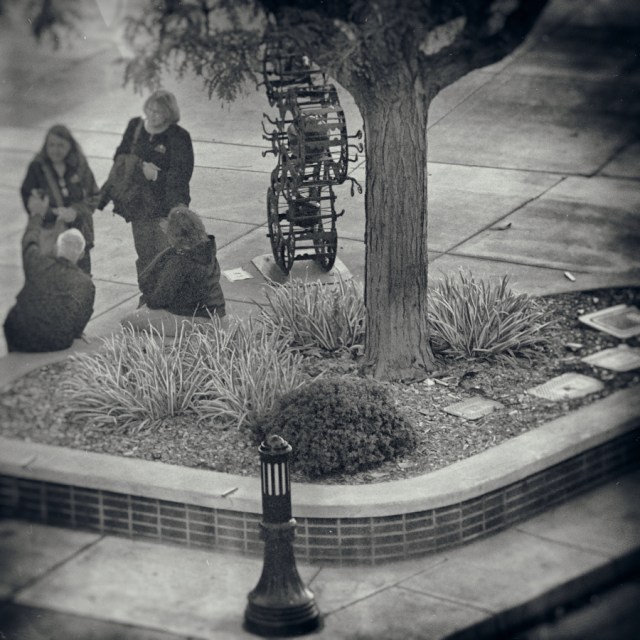
Spend some time looking at a black and white photographto examine the light in the image and pay attention to the graduations of tones.
Where is the light in the image?
Where are the shadows?
What is the source of light?
What characteristics does the light have — hard vs soft, contrast, color
What shapes, forms, movements does the light create or suggest
How does the light affect the movement of your eye
What are the emotional effects of these characteristics of light
Exercise 2:Playing with Light
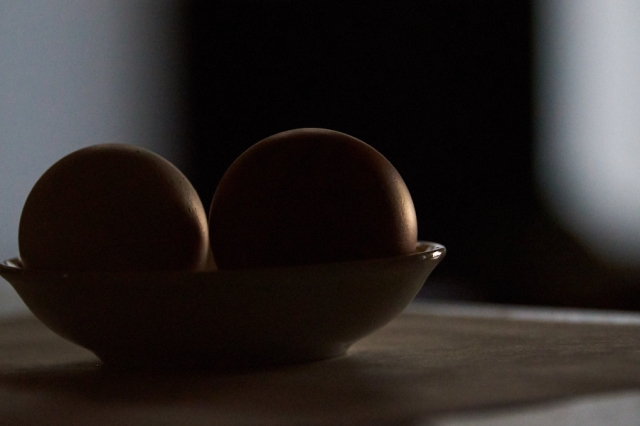
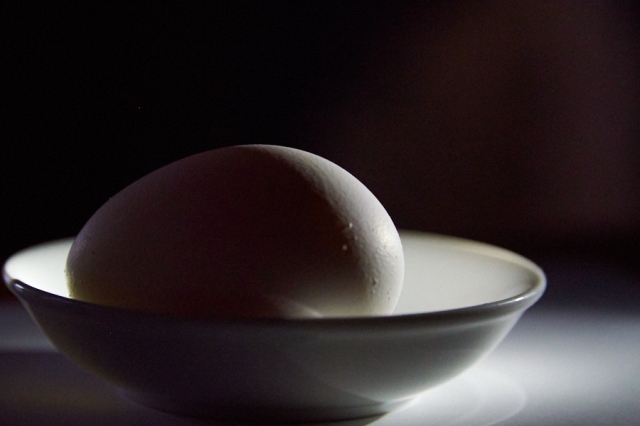
Photograph an object that you can move around
Photograph in a relatively dark space
Use one or more light sources; i.g., diffused light from a window that has some sheer material or bounce light off a wall or a white poster board. A directed or ‘spot’ sourcecan be created with a flood or spotlight in a clamp or a desk light.
Use only one light source at a time.Try shining the light from different directions (including low rand higher angles) by either moving the object or the light source.
As always, I am looking forward to seeing the images that you created as you played with light. Which light is your favorite? Let’s tag with #aphotostudy.
“… in the big room they now entered, time had stood still. It was furnished with ascetic sparseness. At one end, facing the wall was a desk and a chair. At the other end, a bed with a small rug in front of it, like a prayer rug. In the middle was a reading chair with a standing lamp and next to it mountains of messy piles of books on the bare floorboards. Nothing else. The whole thing as a sanctuary, a chapel to the memory of Amadeu Inácio de Almeida Prado, doctor, resistance higher and goldsmith of words. The cool, eloquent silence of a cathedral prevailed here, the impassive rustle of a room filled with frozen time.” ~Pascal Mercier, Night Train to Lisbon (pg. 108)
“It was not in the first few moments that I saw all these things, though I saw more of them in the first moments than might be supposed. But, I saw that everything within my view which ought to be white, had been white long ago, and had lost its lustre, and was faded and yellow. I saw that the bride within the bridal dress had withered like the dress, and like the flowers, and had no brightness left but the brightness of her sunken eyes. I saw that the dress had been put upon the rounded figure of a young woman, and that the figure upon which it now hung loose, had shrunk to skin and bone. Once, I had been taken to see some ghastly waxwork at the Fair, representing I know not what impossible personage lying in state. Once, I had been taken to one of our old marsh churches to see a skeleton in the ashes of a rich dress, that had been dug out of a vault under the church pavement. Now, waxwork and skeleton seemed to have dark eyes that moved and looked at me. I should have cried out, if I could.” ~Charles Dickens, Great Expectations









 a meditative journey
You must be logged in to post a comment.