forests, sea ice, soil, rain, ecosystems, sentient beings

Nikon D750 f/5.3 1/400s 105mm 1250 ISO

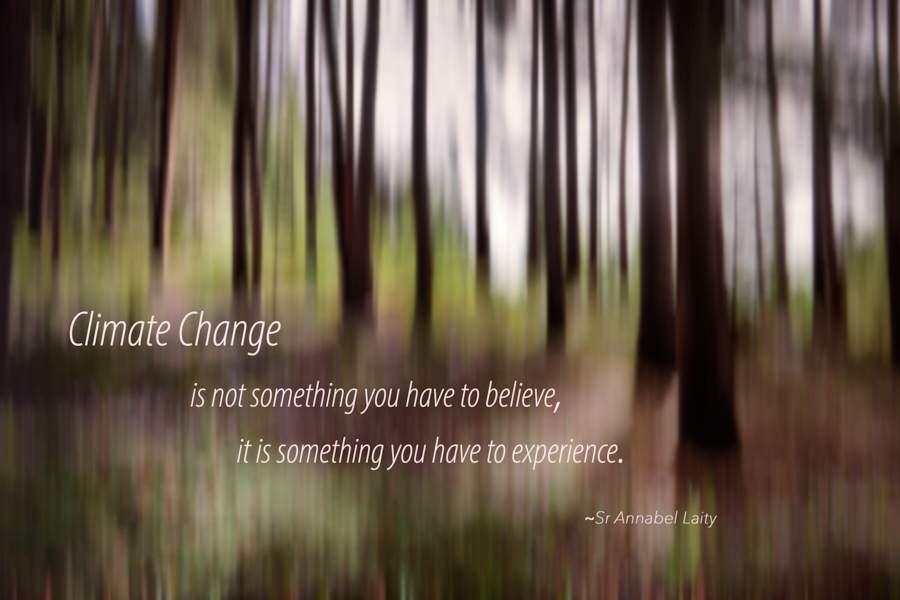
The heat of a warming planet, like an artist’s palette knife on a canvas, etches its way across Western forests, slowly altering ecosystems that have flourished for centuries. cited: Climate change is transforming Western forests. Mark Jaffe, The Colorado Sun July 25, 2019

  • “As ecosystems change, there are going to be winners and losers,” said Thomas Veblen, a biogeographer and distinguished professor at the University of Colorado. “The regulator function of the forest could diminish … leading to more runoff and flash floods. With a reduction of the forest canopy, we are going to see the potential for greater erosion. The question is how much of the forest will fail to regenerate.”

Coasts, oceans, ecosystems, weather and human health all face impacts from climate change, and now valuable soils may also be affected. Climate change may reduce the ability of soils to absorb water in many parts of the world, according to a new study. And that could have serious implications for groundwater supplies, food production and security, stormwater runoff, biodiversity and ecosystems. cited: Climate change may cut soil’s ability to absorb water. Rutgers University, Science Daily, September 11, 2019

  • … a study published in the journal Nature last year showing that regional increases in precipitation due to climate change may lead to less water infiltration, more runoff and erosion, and greater risk of flash flooding.

The Arctic Ocean could become ice-free in the summer in the next 20 years due to a natural, long-term warming phase in the tropical Pacific that adds to human-caused warming, according to a new study: cited: Ice-free Arctic summers could happen on earlier side of predictions. American Geophysical Union, Science Daily, February 27, 2019.

  • There are different climate models used by researchers to predict when the first ice-free Arctic September will occur. Most models project there will fewer than 1 million square kilometers of sea ice around the middle of this century, but projections of when that will occur vary within 20-year windows due to natural climate fluctuations.
Nikon D750 f/3.2 1/4,000 40mm

A global study has found a paradox: our water supplies are shrinking at the same time as climate change is generating more intense rain. And the culprit is the drying of soils, say researchers, pointing to a world where drought-like conditions will become the new normal, especially in regions that are already dry. cited: The long dry: Why the world’s water supply is shrinking. University of New South Wales, Science Daily, December 13, 2018.

  • “It’s a double whammy,” said Sharma. “Less water is ending up where we can store it for later use. At the same time, more rain is overwhelming drainage infrastructure in towns and cities, leading to more urban flooding.”

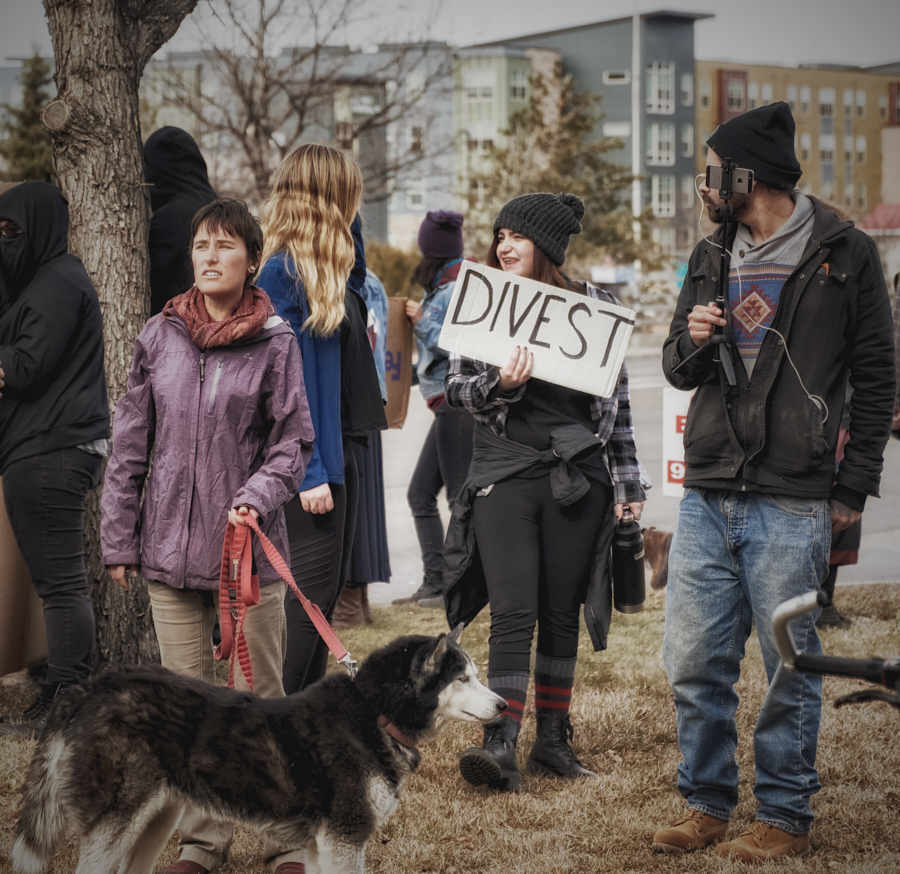
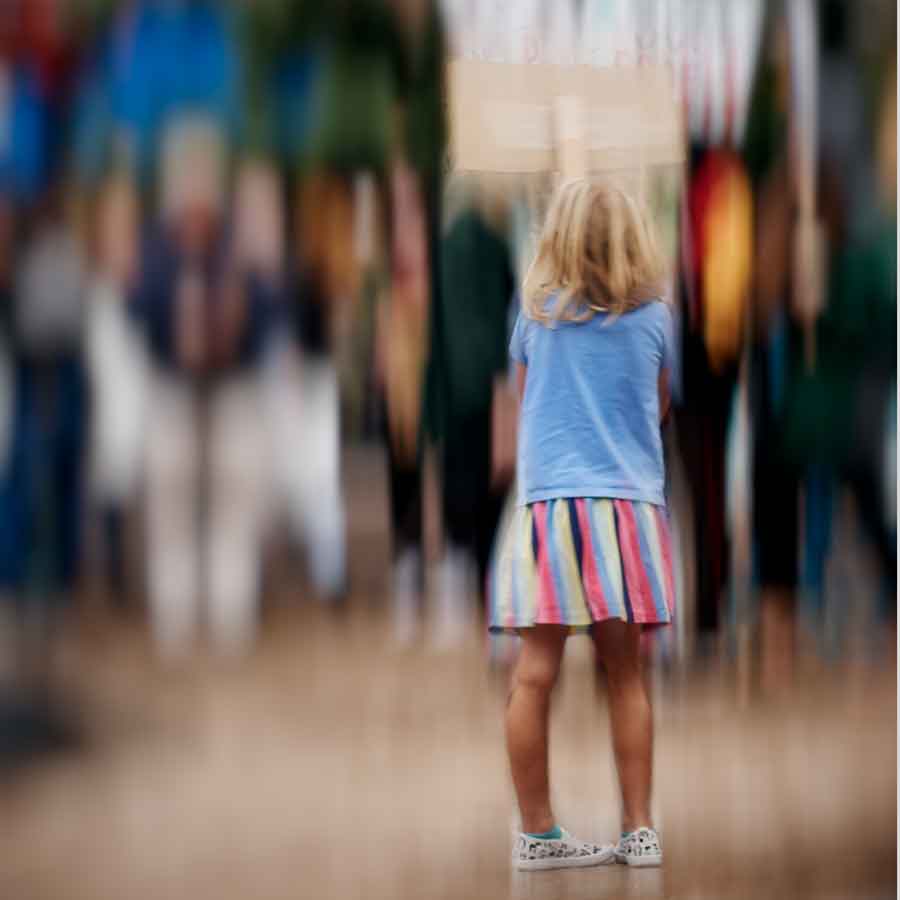
Youth Climate Strike Coalition Demands

WE, AS A GLOBAL SOCIETY, ARE AT A CROSSROADS. WE HAVE A DECISION TO MAKE. ARE WE GOING TO CHOOSE MONEY OR POWER OR ARE WE GOING TO CHOOSE THE FUTURE? THE SEPTEMBER 20 STRIKE IS AN INVITATION TO EVERYONE TO CHOOSE US. CHOOSE THE KIDS, CHOOSE HUMANITY, CHOOSE THE FUTURE.

Strikewithus.org

A Green New Deal

  • Transform our economy to 100% clean, renewable energy by 2030 and phase out all fossil fuel extraction through a just and equitable transition, creating millions of good jobs
  • A halt to all leasing and permitting for fossil fuel extraction, processing and infrastructure projects immediately

Respect of Indigenous Land and Sovereignty

  • Honor the treaties protecting Indigenous lands, waters, and sovereignty by the immediate halt of all construction, leasing, and permitting for resource extraction, processing and infrastructure projects affecting or on Indigenous lands
  • Recognize the Rights of Nature into law to protect our sacred ecosystems and align human law with natural law to ban resource extraction in defense of our environment and people

Environmental Justice

  • A transition that invests in prosperity for communities on the frontlines of poverty and pollution
  • Welcoming those displaced by the cumulative effects of the climate crisis, economic inequality, violence, and lack of opportunity.

Protection and Restoration of Biodiversity

  • Protection and restoration of 50% of the world’s lands and oceans including a halt to all deforestation by 2030

Implementation of Sustainable Agriculture

  • Investment in farmers and regenerative agriculture and an end to subsidies for industrial agriculture

are you ready…

Fighting climate breakdown is about much more than emissions and scientific metrics – it’s about fighting for a just and sustainable world that works for all of us.

https://globalclimatestrike.net

On Sept. 20-27, climate action organizers are planning a Global Climate Strike, with hopes that massive and consistent turnout will make a difference. If you’d like to join the 2019 Global Climate Strike, there are lots of ways you can get involved. And if there isn’t a strike planned in your city, the organizers want to help you plan one yourself. 

“The climate crisis is an emergency but we’re not acting like it,” the strike’s official website reads. “People everywhere are at risk if we let oil, coal and gas companies continue to pour more fuel on the fire.” And yes, though past strikes have focused on students, adults are welcome and absolutely encouraged to take part, too.

just in case…

you missed this morning’s NPR’s Morning Edition.

 “Let’s write a song about a woman telling a guy off.”

Ulaby, Neda. “‘You Don’t Own Me,’ A Feminist Anthem with Civil Rights Roots, Is All About Empathy.” June 26, 2019
https://www.npr.org/2019/06/26/735819094/lesley-gore-you-dont-own-me-american-anthem

“Many have taken up the song [You Don’t Own Me] as a symbol of women’s empowerment — like when the female cast of Saturday Night Live sang ‘You Don’t Own Me’ with actress Jessica Chastain the night of the 2018 Women’s March — but this fiercely feminist anthem was written by two men. David White died earlier this year, but John Madara, now 82 years old, says the two songwriters were disgusted by how much music written for female singers in the early 1960s centered on mooning over guys and decided to try something: “Let’s write a song about a woman telling a guy off.

“Madara says the song’s sensibility was also shaped by his upbringing in a multiracial Philadelphia neighborhood and his participation in the civil rights movement. ‘I saw how black people got treated,’ he says. ‘It was horrible, horrible, horrible. My friends and I got locked up in Philadelphia and Mississippi, and they treated us like gangsters. And my black friends got hit more than I got hit. [The police] had billy clubs and hit you across the legs, but the black guys got hit across the body. Those are things you don’t forget.'”

And while we’re talking about empathy, please join

“Lights for Liberty:  A Vigil to End Human Detention Camps”. 

Lights for Liberty is calling for communities around the country to join them in holding an event called:  “Lights for Liberty:  A Vigil to End Human Detention Camps”.  The event will take place on Friday, July 12.  To find out more about the organization and their plans for this national vigil you can go to their website – https://www.lightsforliberty.org/

solitary

“Reachable, near and not lost, those remained amid the losses this one thing: language.

horsetooth reservoir… Nikon D750 f/7.1 1/25s 85mm 100 ISO

“It, the language remained, not lost, yes in spite of everything. But it had to pass through its wounded wordlessness, pass through frightful muting, pass through the thousand darknesses of deathbringing speech. It passed through and giveback no words for that which happened.” ~Paul Celan* (cited: V. Schwarcz, Bridge Across Broken Time p. 85)

*Poet, translator, essayist, and lecturer, influenced by French Surrealism and Symbolism. Celan was born in Cernăuţi, at the time Romania, now Ukraine, he lived in France, and wrote in German. His parents were killed in the Holocaust; the author himself escaped death by working in a Nazi labor camp. “Death is a Master from Germany”, Celan’s most quoted words, translated into English in different ways, are from the poem ‘Todesfuge’ (Death Fugue). Celan’s body was found in the Seine river in late April 1970, he had committed suicide.

Caution Blind Corner

…If we don’t have journalism, we don’t have democracy. ~Barbie Zelizer, director of Penn’s Center for Media at Risk

The fabric of press freedom in the US has been frayed and weakened by political stigmatisation of journalists and cries of “fake news”, but it risks much greater, and more permanent, damage from other forces, including harassment, detention and criminalisation. (cited: The Guardian The biggest risk to American journalism isn’t posed by Trump)

Nikon D750….Caution Blind Corner

In the context of this new world order of dramatic political, social, and unparalleled technological change, the role of media has never been more important, and it’s also never been more dangerous…Foreign reporters in war zones, as well as domestic reporters and journalists like me in war zones of our own here at home, are facing angry people and the threats of violence.” (cited: Multichannel Don Lemon: Role of Journalists Vitally Important in Today’s Divisive Political Environment.)

Who Will Write Our History

In November 1940, days after the Nazis sealed 450,000 Jews in the Warsaw Ghetto, a secret band of journalists, scholars and community leaders decided to fight back. Led by historian Emanuel Ringelblum and known by the code name Oyneg Shabes, this clandestine group vowed to defeat Nazi lies and propaganda not with guns or fists but with pen and paper. Now, for the first time, their story is told as a feature documentary. Written, produced and directed by Roberta Grossman and executive produced by Nancy Spielberg, Who Will Write Our History mixes the writings of the Oyneg Shabes archive with new interviews, rarely seen footage and stunning dramatizations to transport us inside the Ghetto and the lives of these courageous resistance fighters. They defied their murderous enemy with the ultimate weapon – the truth – and risked everything so that their archive would survive the war, even if they did not.

katsura nobuko

Wild geese —

between their cries, a slice

of silence ~ Katsura Nobuko (M Ueda, Far Beyond the Field)

Nikon D750 f/5.6 1/2500 s 170 mm 1800 ISO

Katsura Nobuko was born Niwa Nobuko in Osaka, Japan on November 1, 1914. When she was five, she almost died of acute pneumonia. After graduating from Ootemae Girls’ High School, she began writing haiku when the poems in ‘Kikan’ (The flagship) magazine impressed her with their nontraditional style. She subsequently met the magazine’s editor, Hino Soojoo, and became his protege. Her marriage in 1939 changed her family name to Katsura, but her husband died two years later.

Childless, Nobuko returned to her mother’s home. On March 13, 1945, the home caught fire as the American planes bombed Osaka. Unable to put out the fire she gathered her haiku manuscripts before fleeing barefooted. It is said that when she was reunited with her mother, her mother – weeping – said, “You are safe — that’s all I care.” The rescued manuscripts were later published in her first volume, ‘Gekkoo shoo (Beams of the moon 1949).

Wall…street

Nikon D750 RX1003 f/8 1/1000s 320 ISO

The name of [Wall Street] originates from an actual wall that was built in the 17th century by the Dutch, who were living in what was then called New Amsterdam. The 12-foot (4 meter) wall was built to protect the Dutch against attacks from pirates and various Native American tribes, and to keep other potential dangers out of the establishment.

The area near the wall became known as Wall Street. Because of its prime location running the width of Manhattan between the East River and the Hudson River the road developed into one of the busiest trading areas in the entire city. Later, in 1699, the wall was dismantled by the British colonial government, but the name of the street stuck.

The financial industry got its official start on Wall Street on May 17, 1792. On that day, New York’s first official stock exchange was established by the signing of the Buttonwood Agreement. The agreement, so-called because it was signed under a buttonwood tree that early traders and speculators had previously gathered around to trade informally, gave birth to what is now the modern-day New York Stock Exchange NYSE.

Today, …in some circles, the term “Wall Street” has become a metaphor for corporate greed and financial mismanagement

cited: LiveScience : Denise Chow, Assistant Managing Editor | May 3, 2010 01:04pm ET

2018 photography review, september

September was the month when the American political environment had me wonder if I, like Washington Irving’s character, Rip Van Winkle, had slept through a cultural change so profound that my childhood values, morals, and guiding principles were left to rot in the wave of adults regressing back to the elementary school playground’s name-calling, bullying, and violence that left me cringe and hide with overwhelming fear and confusion.

What has blinded us to empathy? When did social justice become a basis of negation? How did human rights become a political loss? While the Great Wall of China is one of the great architectural wonders of the world, does anyone remember the lives of those encircled by the Warsaw Wall or the delight when the Berlin Wall came down?

If I didn’t have photography which invites me to shift “focus”, would this social regression have me rise up in anger and resentment? Would I become blind and deaf to my own moral shame and moral dread? So…in reflection contemplative photography invited my internal voice to become silent and see the world through a different lens.

In September, one of the blogs I posted noted,

“Henri Cartier-Bresson… is reported to have said,  “Thinking should be done beforehand and afterwards—never while actually taking a photograph. Success depends on the extent of one’s general culture, on one’s set of values, one’s clarity of mind and vivacity.

…the creative mind of a photographer is like a piece of unexposed film. It contains no preformed images but is always active, open, receptive, and ready to receive and record an image.~Minor White cited: W Rowe, Zen and the Magic of Photography

I invite you to spend some time with “To Live”, an amazing story of a family’s survival through times of change.