It is a joy to be hidden and a disaster not to be found. ~D.W. Winnicott

Joining Paula’s (Lost in Translation) challenge: Words of Wisdom
It is a joy to be hidden and a disaster not to be found. ~D.W. Winnicott
Joining Paula’s (Lost in Translation) challenge: Words of Wisdom
In Chinese Medicine, the Five Elements represent the five unique energies that are present in all things throughout nature. These include Metal, Water, Wood, Fire, and Earth. Each element expresses itself differently depending on where it’s found and also manifests in our body organs, emotions, and personalities.
When Qi is moving through our body freely, the Five Elements are said to be in balance, as Qi needs to be moving constantly for optimum health. But imbalances between the Five Elements and their corresponding energetic channels (meridians) can cause the Qi to either stagnate, or become excessive, affecting our wellbeing.*
Everything relies on everything else in the cosmos in order to manifest—whether a star, a cloud, a flower, a tree, or you and me.~Thich Nhat Hanh
metal
If there was no earth there would be no metal. If there was no metal this photograph would not be.

fire
If there was no wood there would be no fire. If there were no fires there would be no prairie, savanna, chaparral and coniferous forests.

wood
If there was no earth there would be no wood. If there was no wood there would be no carpenters.

water
If there were no hydrogen atoms and oxygen atoms there would be no water. If there was no water there would be no fish.

earth
Without the Milky Way there would be on earth. Without our earth there would be no us.

This week Sofia (photographs) invites photographers to focus on one of the elements…and to try to get as many in one photo as possible…
*cited: poweryogaaco.com

An authentic smile … arouses an authentic feeling of freshness, and I think the smile belongs only to human beings.~ Dalai Lama
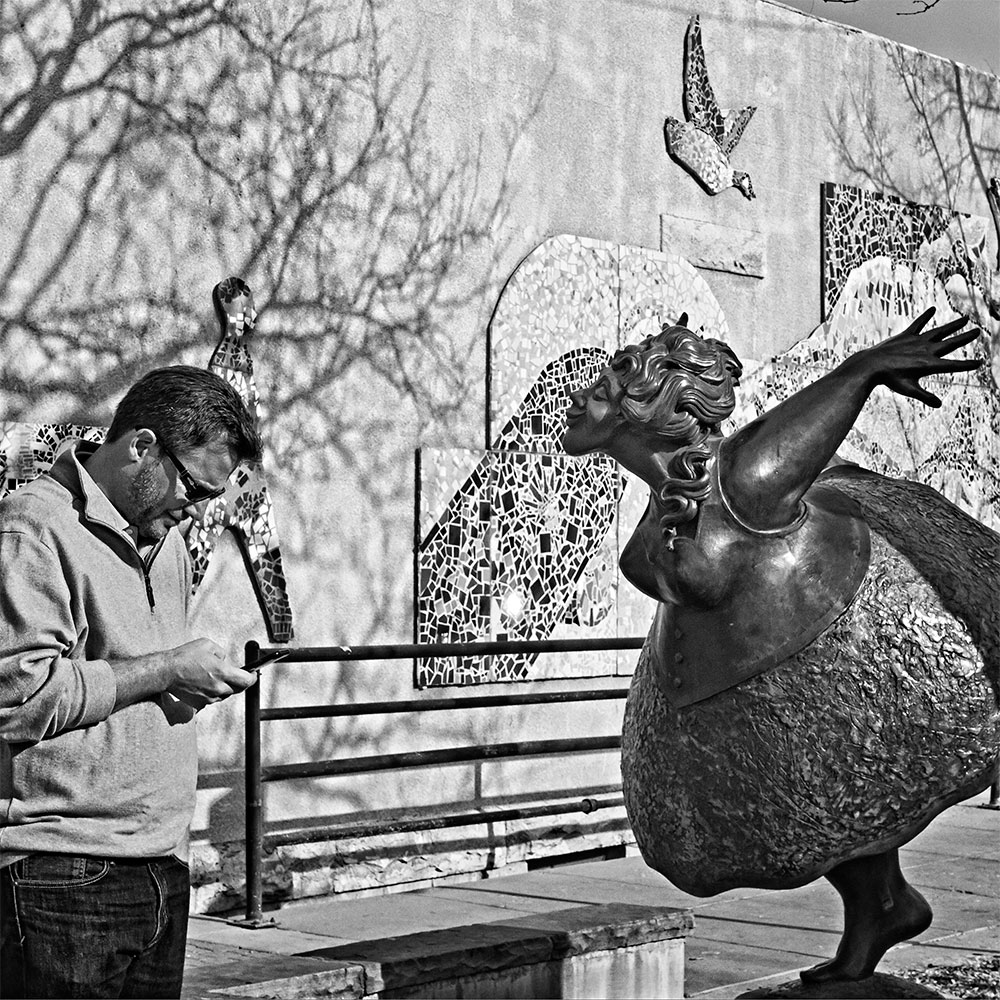
If we want those smiles, we must create the reasons that make them appear. ~ Dalai Lama

I love smiles, and my wish is to see more smiles, real smiles …~ Dalai Lama
Leya has invited bloggers to “share something that made us smile, made You smile – and make the world smile with us! Old or new smiles, big or small, we welcome them all!”
A smile awakens a smile. A frown returns a frown.

Imagine the dimension of time as a vertical line. Place yourself in the present on that line with the past above you and the future below you. Establish yourself in time. See all your ancestors that have come before you. The youngest generation of your ancestors is your parents. All of them are above you on this line of time. Then below you, see all your dependents, your children, your grandchildren, and all their future descendants. If you have no children, your descendants are the people you have touched in your life, and all the people they in turn influence.
In you are both your blood ancestors and your spiritual ancestors. You touch the presence of your father and mother in each cell of your body. They are truly in you, along with your grandparents and great-grandparents. Doing this, you realize their continuation. You may have thought that your ancestors no longer existed, but even scientist will say that they are present in you, in your genetic heritage, which is in every cell of your body.

Look into a plum tree. In each plum on the tree there is a pit. That pit contains the plum tree and all previous generations of plum tree. The plum pit contains an eternity of plum trees. Inside the pit is an intelligence and wisdom that knows how to become a plum tree, how to produce branches, leaves, flowers, and plums. It cannot do this on its own. It can only do this because it has received the experience and heritage of so many generations of ancestors. You are the same. ~Thich Nhat Hanh (No Death, No Fear, 137-138)

This posting was created in memory of Dustin, Bob, Elberta, Donna, Chris, Larry, Margaret, Thella, John, Clive, and Jeff who all live on within the lives of my beloved.
“Reachable, near and not lost, those remained amid the losses this one thing: language.
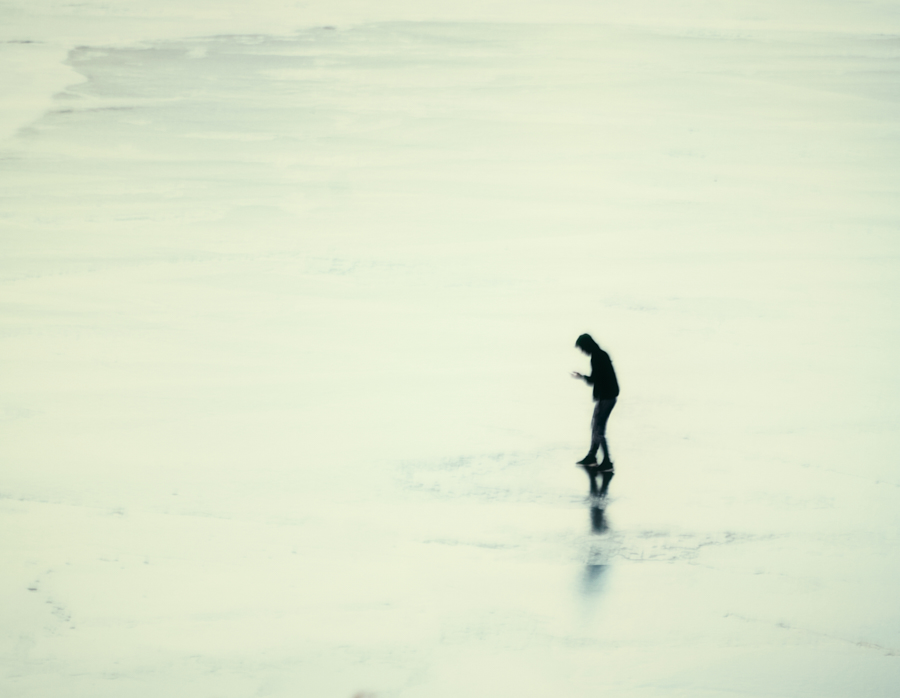
“It, the language remained, not lost, yes in spite of everything. But it had to pass through its wounded wordlessness, pass through frightful muting, pass through the thousand darknesses of deathbringing speech. It passed through and giveback no words for that which happened.” ~Paul Celan* (cited: V. Schwarcz, Bridge Across Broken Time p. 85)
*Poet, translator, essayist, and lecturer, influenced by French Surrealism and Symbolism. Celan was born in Cernăuţi, at the time Romania, now Ukraine, he lived in France, and wrote in German. His parents were killed in the Holocaust; the author himself escaped death by working in a Nazi labor camp. “Death is a Master from Germany”, Celan’s most quoted words, translated into English in different ways, are from the poem ‘Todesfuge’ (Death Fugue). Celan’s body was found in the Seine river in late April 1970, he had committed suicide.
Every life is a point of view directed upon the universe. Strictly speaking, what one life sees no other can. Every individual, . . . is an organ, for which there can be no substitute, constructed for the apprehension of truth . . . Without the development, the perpetual change and the inexhaustible series of adventures which constitute life, the universe, or absolutely valid truth, would remain unknown . . . Reality happens to be like a landscape, possessed of an infinite number of perspectives, all equally veracious and authentic. The sole false perspective is that which claims to be the only one there is. ~José Ortega y Gasset

Death of a loved one disturbs the relationships that sustain a person’s sense of ‘identity’ and the high level of binding and cathexis concentrated on the person who is lost is suddenly disrupted . . . there is a close link between the doctrines of egolessness and suffering.
De Silva, Padmasiri. An Introduction to Buddhist Psychology. Landam, MD, 2000.

Through this lens of Buddhist thought, I begin to feel a crumbling of a child’s self with an understanding of how my father’s absolute and final absence from our lives disrupted the multiple relationships between my father, mother, sister, and me. Besides the sudden severing of the identity I was forming via my father, the connecting emotional threads between those of us that were left, although still intact, were unknowingly stretched and pulled by our own individual fears of egolessness.
My father’s death left my mother, a young woman deaf from infancy, with two daughters and pregnant with her first son. I do not recall whose idea it was to wander outside the house early that morning as my mother slept. I can, however, imagine my young self following my older sister as if an invisible thread that tied us together tugged me along as she, with her five-year-old world view, undertook an emotional duty to find our father. Did we believe we could find him fly fishing in the creek that ran alongside the house? Or was there something about the water that enticed us into abandoning our search? I can recall to this day the cessation of anxiety and arising rapture that coincided with my surrender to the inevitable. Two young men, I am told, rescued us both from this search for our father.
Koeford, BC. A Meditative Journey with Saldage Homesickness for a place, a time, a person that cannot be
To be human was to be a sentient being who remembers.*

“The third-century classic Jinshu summarized the paradox of memory: ‘Qing you yi sheng, bu yi ze wu qing.’ No words in English can capture the condensed reservations expressed in nine simple characters. The first four summarize ancient psychology: emotion is born out of remembrance. The next five advise the wise to stem this process of arousal altogether: where there is no remembrance, emotion will dissolve as well. The point, simply put, is that distress causes memory. To be sure, it is human to have feelings, but this can be curbed by a willful quieting of the emotional upheaval caused by remembrance.
“Simcha, the Hebrew word for ‘joy,’ has as its root macha, meaning ‘to remove’ or ‘wipe away.’ To be joyful, in this sense, is to be free of the tearful weight of the past.
“In the end, however, neither Chinese or Jewish rememberers settled for the peace of a memoryless world.
“The opposite of quietude can be found in the story of Lot’s wife… Here, a woman who refuses to walk away from history is turned into salt–a concrete symbol of endless weeping. Lot’s wife captures the need to remain connected to the past and dares to stand still when the known world is about to crumble. Although some might argue that Lot’s wife looked back with nostalgic regret for past pleasures, Anna Akhmatova, in the poem, ‘Lot’s Wife,’ suggest she did so out of her refusal to become deaf to the grief embedded in the past.”*
*Vera Schwarcz, Bridge Across Broken Time
saturday morning with Kahlil Gibran
“Then a woman said, Speak to us of Joy and Sorrow.

… Your joy is your sorrow unmasked.
And the selfsame well from which your laughter rises was often times filled with your tears.
… The deeper that sorrow carves into your being, the more joy you can contain.
…Some of you say, “Joy is greater than sorrow,” and others say, “Nay, sorrow is the greater.”
But I say unto you, they are inseparable.
… Verily you are suspended like scales between your sorrow and your joy.
Only when you are empty are you at stand still and balanced.” …*
*cited: Kahlil Gibran, The Prophet, 1973. pp 29-30
Leica V-Lux 5, f/4 … 1/60 s … 32.65 mm … 125 ISO
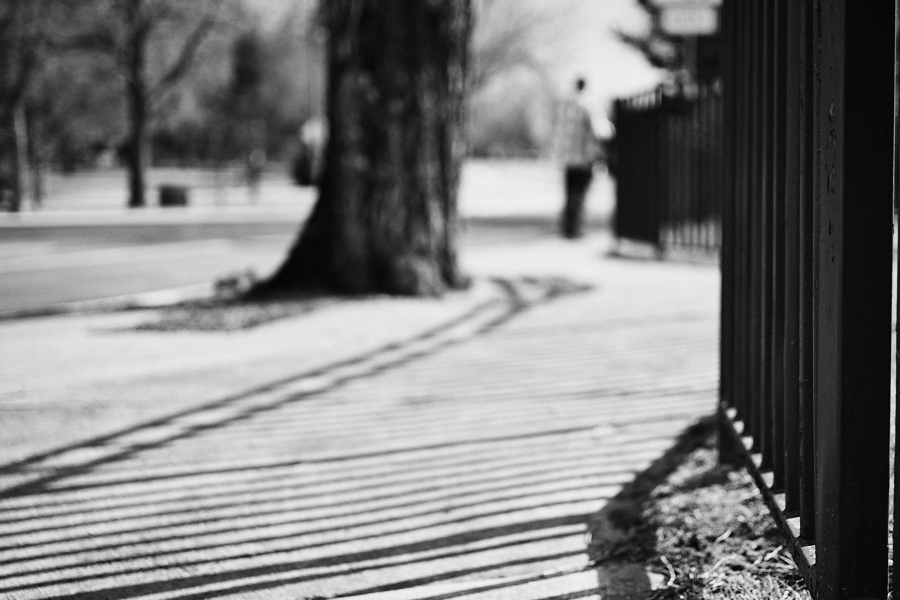
Nikon D750… f/1.8 1/800s 35mm 200 ISO
“FRIDAY MORNING, 9 O’CLOCK. People complain about how dark it is in the mornings. But this is often the best time of my day, when the dawn peers grey and silent into my pale windows. Then my bright little table lamp becomes a blazing spotlight and floods over the big black shadow of my desk. … This morning I am wonderfully peaceful. Just like a storm that spent itself. I have noticed that this always happens following days of intense inner striving after clarity, birth pangs with sentences and thoughts that refuse to be born and make tremendous demands on you. Then suddenly it drops away, all of it, and a benevolent tiredness enters the brain, then everything feels calm again …”
cited: Trans: Arno Pomerans, An Interrupted Life The Diaries of Etty Hillesum, pg 69.
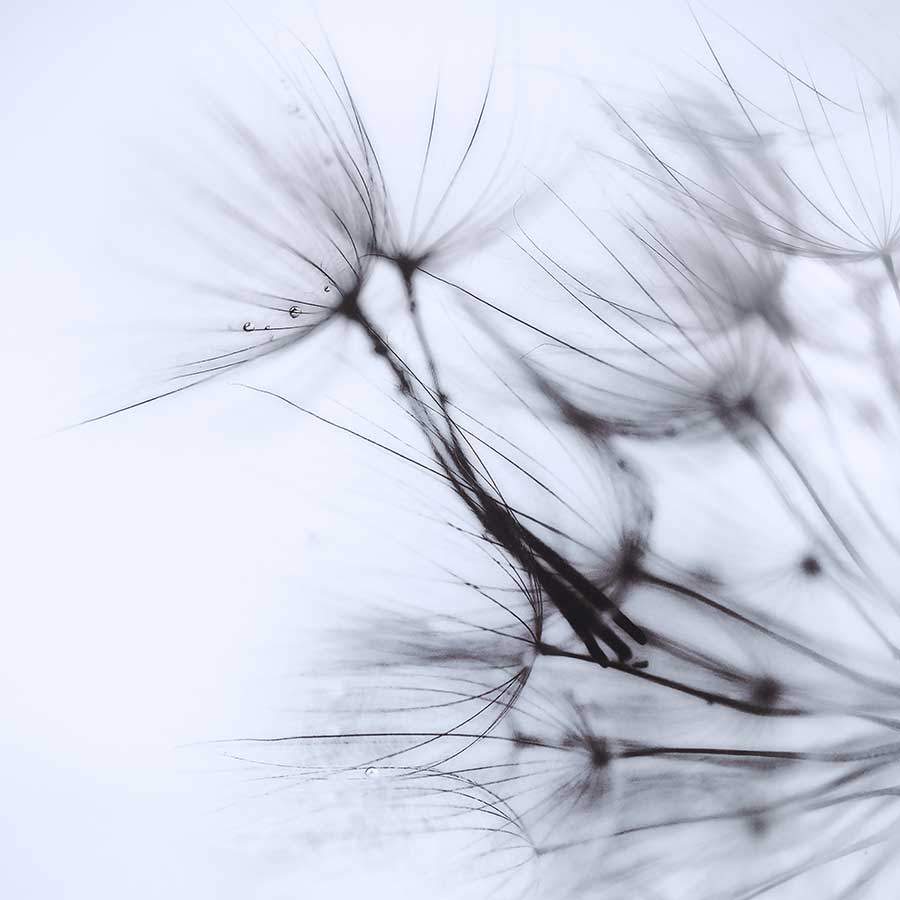 The ocean of suffering is immense, but if you turn around, you can see the land. The seed of suffering in you may be strong, but don’t wait until you have no more suffering before allowing yourself to be happy. When one tree in the garden is sick, you have to care for it. But don’t overlook all the healthy trees. Even while you have pain in your heart, you can enjoy the many wonders of life — the beautiful sunset, the smile of a child, the many flowers and trees. To suffer is not enough. Please don’t be imprisoned by your suffering. … When you have suffered, you know how to appreciate the elements of paradise that are present. If you dwell only in your suffering, you will miss paradise. Don’t ignore your suffering, but don’t forget to enjoy the wonders of life. For your sake and the benefit of many beings.
When I was young, I wrote this poem. I penetrated the heart of the Buddha with a heart that was deeply wounded.
My youth
an unripe plum.
Your teeth have left their marks on it.
The tooth marks still vibrate.
I remember always,
remember always
Since I learned how to love you,
the door of my soul has been left wide open
in the winds of the four directions.
Reality calls for change.
The fruit of awareness is already ripe,
and the door can never be closed again.
Fire consumes this century,
and mountains and forest bear its mark.
The wind howls across my ears,
while the whole sky shakes violently in the snowstorm.
Winter’s wounds lie still,
Missing the frozen blade,
Restless, tossing and turning
in agony all night.
I grew up in a time of war…Once the door of awareness has been opened, you cannot close it. The wounds of war in me are still not all healed. … Embrace your suffering, and let it reveal to you the way to peace.
~Thich Nhat Hanh (The Heart of the Buddha’s Teaching, pp. 3-5)

if I go to heaven I will forget you,
and
if I go to hell you will forget me.*
In China a person who will not forget the past is described as ‘one who did not drink Old Lady Meng’s soup.’ Borrowed from Buddhist folklore, Old Lady Meng dispenses the Broth of Oblivion to souls leaving the last realm of the underworld on their way to reincarnation. After drinking her soup, the soul is directed to the Bridge of pain that spans a river of crimson water. There, two demons lie in wait: Life-Is-Not-Long and Death-is-Near. They hurl the soul into waters that will lead to new births.
Old Lady Meng is more than a quaint antidote for the Greeks’ Mnemosyne. She embodies a psychological understanding about the forces that promote, indeed demand, forgetting for the sake of ongoing life. It is not enough to note that water is linked with amnesia in Chinese folklore as much the same way that the river Lethe is associated with forgetting in Greek mythology. The challenge here is to make sense of the distinctively Chinese attachment to remembrance in spite of the benefits of Old Lady Meng’s soul.
In Jewish tradition, too, the benefits of amnesia were acknowledged along with the sacred commitment to recollection. There is a midrash, or Torah-based story, that teaches us a lesson similar to that of Lady Meng: ‘God granted Adam and Eve an all-important blessing as they were about to leave the Garden of Eden: I give you, He said, ‘the gift of forgetfulness.” What is so precious about amnesia? Why would God, who demands fidelity to memory, offer the relief from recollection? Perhaps it is because without some ability to forgive and forget we might become bound by grudges and hatred. To remember everything may be immobilizing. To flee from memory, however, leads to an ever more debilitating frenzy.(40-41)**
source:
*Arang and the Magistrate
Munhwa broadcasting corporation
**Bridge Across Broken Time
Vera Schwarcz
 a meditative journey
You must be logged in to post a comment.