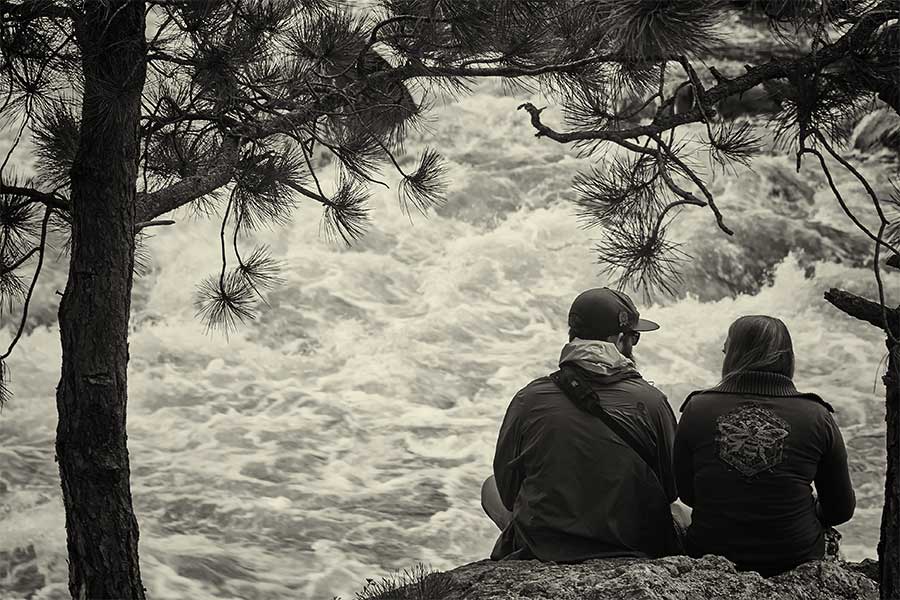
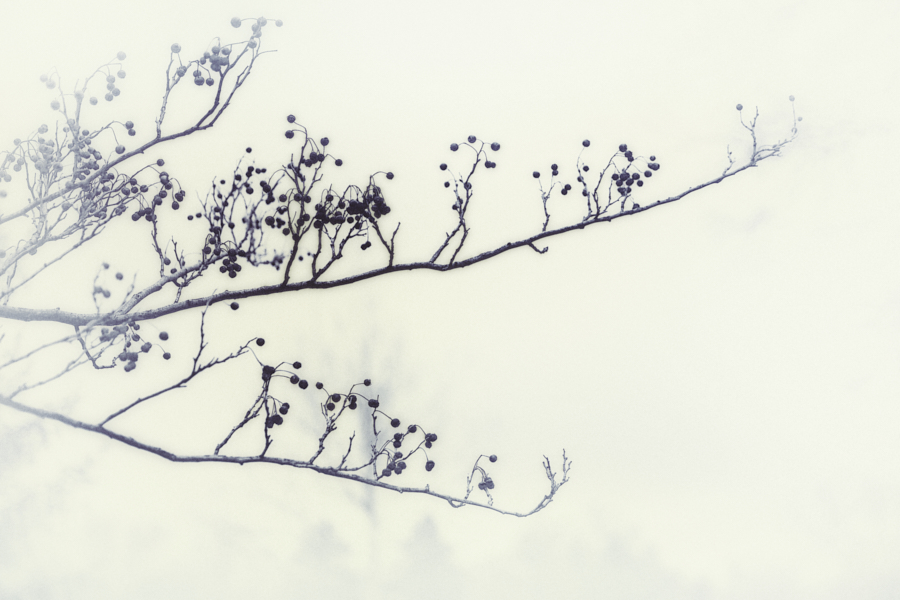
for you who
rarely visit,
though you have already arrived,
may the early evening storm
not blow so hard!
~Ryokan*
*cited:
Sky Above, Great Wind
K Tanahashi
initially posted on September 1, 2015
merging lines with light and shadow
the eye that is penetrating sees clearly,
the ear that is penetrating hears clearly,
the nose that is penetrating distinguishes odors,
the mouth that is penetrating distinguishes flavors,
the mind that is penetrating has understanding,
and the understanding that is penetrating has virtue. ~ CHUANG-TZU
initially posted in August, 2012

Alon Goshen-Gottstein, (Coronaspection: Introspection I Tablet Magazine) is undertaking a project in which forty religious leaders are individually responding to seven questions during this time of global crisis.
Part 1 of this project includes: Rabbi Berel Lazar, Russia; Patriarch Sahag II Mashalian, Turkey; Swami Chidanand Saraswati, India
1. What have been your greatest challenges in dealing with the present Corona crisis?
2. Corona is bringing out a lot of fear in people. How does one deal with fear? What spiritual advice could you offer to people struggling with fear?
3. Corona has forced people into solitude. How should time be spent in solitude? Many people do not have experience and habits that would allow them to make the most of this opportunity. What advice could they be given?
4. Corona brings about deprivation. We are deprived of our freedom, of our habits. We lose things, and even more so- people we love. How does one deal with all forms of deprivation?
5. What does Corona teach us about our interconnectivity? What are spiritual applications that people can practice consciously?
6. Corona forces us into our own protective space, but it also calls us to solidarity. How to practice solidarity? What are teachings that support solidarity? What actions express solidarity? What can one do to express solidarity, even from within the confines of one’s home and protection?
7. Many people say the world will be different after this Corona crisis. What blessings do you see Corona bringing to the world? How can the world be different, for the better, following this crisis?
One of the most important conceptual threads that runs through the project is the recognition that for all its hardships, the coronavirus is in some way also a blessing. To uncover that blessing we may need the eyes of the other and the experience of another spiritual tradition and how it is able to find blessing even in hardship.
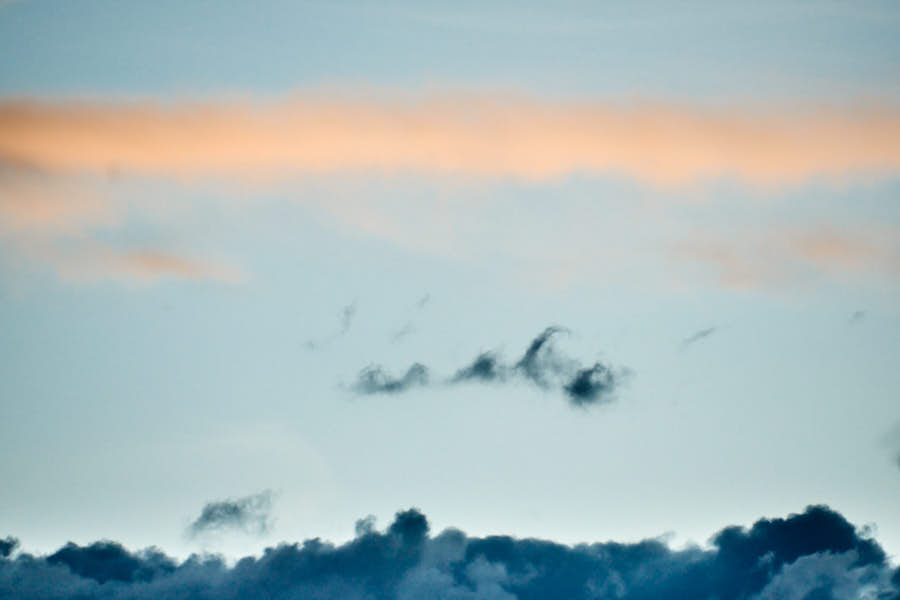
Skyscape photograph: Nikon D750 f/5.6 1/400s 300 mm 400 ISO edited in Capture One 20
Our heroes must be summoned from within. It’s up to us to put them to work and to learn how to save ourselves.

“People …like the idea of someone with special powers watching over us, ready to intervene in a crisis and keep us safe from dark forces. The Buddha…spoke of ‘the two bright qualities [that] protect the world’ (dve sukka dhamma lokam palenti—Anguttara Nikaya 2.9). These are Hiri, or conscience, and Ottappa, our respect for others. …
“Today, …the greatest dangers we face now erupt from within our own hearts: human greed, hatred, and delusion, the arch villains that cause so many real-world problems. Greed, the powerful impulse to snatch whatever it can, will take even life itself from the defenseless. Hatred drives us to do unspeakable things to those we view as other. And delusion, so willingly embraced, smothers any insight that might arise about the danger we’re in or the harm we may do. The twin guardians are the crucial allies we have to foil their plots.
“The first hero, Hiri, can be thought of as conscience or self-respect. She… flies into our mental world at the moment when we are considering doing something that we know deep down to be wrong. Hiri is our personal sense of ethical integrity, our moral compass, our intuitive understanding of what is right and wrong, what’s appropriate and what isn’t. She is not a severe critic but a soft, caring voice whispering in our ear and guiding us through our lives with courage and compassion. She saves us from the demons lurking within and stands beside us when we say, ‘No, that is just not right. I will not do it (or say it or think it).’
“Her intrepid ally Ottappa is the elemental force of caring for others and respecting their concerns. It appears on the scene when we’re tempted to do something that is against the laws of propriety, is outside the social norm, or would be condemned by the people we respect. Ottappa draws its strength from the fact that we are social creatures who belong to a family or community, and that our actions are rooted in and accountable to a larger collective order.
“…The Buddha said [Hiri and Ottappa] guard the world, protecting it from getting broken by the onslaught of the worst parts of ourselves. Without them people could act like beasts, ravaging even their own mothers. We all know what atrocities human beings are capable of. For so many victims, Hiri and Ottappa do not always show up in time, held at bay by their nemeses, Ahiri (lack of conscience) and Anottappa (lack of respect). These two anti-heroes are present every time a harmful, cruel, or ignorant deed is done, blocking out the benevolent effects of conscience and respect.
“Fortunately Hiri and Ottappa have other friends, including Sati, or mindfulness, who goes first into every fray and summons the team into action. Sati is conscious awareness of what is happening right now, and Ahiri and Anottappa can only function when such awareness is absent. When people do harm to themselves and others, they are often not aware of what they are doing. They are conscious enough to act, but not conscious enough to be aware of the quality of their actions or of their consequences. Whenever a person musters even a degree of mindfulness, conscience and respect arrive there too, helping them do, say, and think what is helpful rather than what is harmful…”
cited: Andrew Olendzik, Guardians of the World Tricycle, Fall 2017
Nikon D750 f/8 1/50s 145mm 400 ISO
edited in Capture One 20 and Photoshop
Solitary … day 46
Within our home, the setting sun…a time of gratitude and metta meditation


My people went to live elsewhere and I remained alone in my solitary home. I was tired of meditation and sent a poem to one who had not called on me for a long time.
Weeds grow before my gate
And my sleeves are wet with dew,
No one calls on me,
My tears are solitary–alas!
She was a nun and she sent an answer:
The weeds before a dwelling house
The Sarashina Diary, Diaries of Court Ladies of Old Japan
May remind you of me!
Bushes bury the hut
Where lives the world-deserted one.


Amy (The World is a Book…) writes that because of “the lockdown, we are spending more time at home. But, hopefully this isn’t limiting our interest in photographing. This week, we invite you to share photos taken at home.”
above images created with a Nikon D750
setting sun: f/7.1 1/1250s 65mm 400 ISO
wind chime: f/5.6 1/15s 125mm 400 ISO
silhouette: f/5.6 1/3200 230mm 400 ISO
may all sentient beings slumber in peace: f/8 1/20s 25mm 400 ISO
Stay at Home Order … day 30 plus 14 seclusion retreat days

everything is connected by causality … and if nothing else, Covid-19 is waking us up to the fact that we are all connected
Brian Boucher, CNN These ancient images of the Buddha are more timely than you think
if one comes across a person who has been shot by an arrow, one does not spend time wondering about where the arrow came from, or the caste of the individual who shot it, or analyzing what type of wood the shaft is made of, or the manner in which the arrowhead was fashioned. Rather, one should focus on immediately pulling out the arrow.
~ The Buddha

Life is short; it must not be spend in endless metaphysical speculations which will not be able to bring us the Truth.
Andres Hedman, Consciousness from a Broad Perspective

“The Buddha’s teachings can be read on many levels … at a fundamental level, all the storytelling was a way of conveying ethical values. One of them is the peaceful coexistence of all life forms, which is very germane today. We’ve wandered dangerously far from that principle in the era of climate change. Referring to the seated Buddha sculpture in San Francisco, which is inscribed with the message that all things are connected by causality (in contrast with the deterministic belief that our fate is out of our hands)… What [the Awakened One] saw when he woke up is that things don’t happen by chance, that everything is connected by causality … and if nothing else, Covid-19 is waking us up to the fact that we are all connected.”
Brian Boucher, CNN These ancient images of the Buddha are more timely than you think
All images created with a Nikon D750
sunset april 23, 2020: f/5.6 1/500 42mm 400 ISO
basketball court: f/5.8 1/800 100mm 400 ISO
spring blossoms: f/5.6 1/160s 300mm 400 ISO
Stay at Home Order … day 9 plus 14 seclusion retreat days
So remote the mountains
the only callers to break
the tedium of my window
are top branches of sumac
just starting to change color
~Saigyō (cited: B Watson, Poems of a Mountain Home)

Nikon D750 f/1.8 1/4000s 35mm 200 ISO
What is faith: a wholesome mental formation
belief, credence, credit, trust, hope, confidence, sureness, certainty, reliance, dependence, acceptation, reception, credulity, suspension of disbelief
The absence of faith is suffering. This time of uncertainty “…has brought me to a place and time in which to unweave and sort through the pseudo-beliefs I have simply, without question, absorbed through the lens of childhood fantasy and comprehension. To begin this process is to reformulate beliefs through a process of mindfulness and analysis and then to know for myself, “These things are bad, blamable, censured by the wise; undertaken and observed, these things lead to harm and ill… These things are good, blameless, praised by the wise… These things lead to benefit and happiness.”
“It is not an easy undertaking to not simply believe what has been learned within family, school and church as well as conclusions reached through readings. The invitation to not simply follow tradition brings to the surface conflicts with compliance and opposition that come from an avalanche of values and guiding principles that outlines how I understand the roles and expectations of women.
“To not adhere to that which was surmised within family stories about an ancestor, who upon seeing a swarm of locust “knelt in his patch of grain and pleaded with his Maker to spare his wheat” and then saw them divide and not damage his remaining crops. Or within the story about the ancestor, who during a trip from New York to England, calmed the seas with a prayer, and while in England, after much fasting and prayer administered to a deaf and dumb boy who was subsequently healed. To not simply believe opens a door of pondering about generations of family members who intimately knew powerlessness and insecurity, who eased their feelings of incompetence through prayer, and whose conceptions blinded them to their neighbors’ plight.
“To not simply believe that I must endure suffering is to reject the axiom that there is an absence of fundamental faith and goodness. To not adhere to the assumed abilities of ancestors frees me from the belief that a sincere act of making amends for my sins will open the doors to Shangri-La. To not simply draw upon scripture unbinds me to the shame that I don’t have the faith – even of the size of a mustard seed – to be deeded as “good and without sin” so what I wish for, even that which goes counter to nature’s laws, will be granted. To ease the suffering within discontent is to not simply hold to be true that I am to acquiesce to pain until the final judgment of death, and only then will I be forever at peace, or forever condemned to an existence of even greater suffering.
“To not simply believe opens my ears to the incongruence within a belief in an all-knowing presence who, if not validated, punishes, absent of the grace within loving-kindness. To not simply believe brings a compassionate acknowledgment to the painful efforts to sway God into granting me my desires through bargaining, sacrifice, negation, and suffering, and to finally surrender with acceptance to “Thy will be done on earth as it is in heaven.” To not simply believe sheds light upon the greed, aversion, and delusions that are intertwined into my conception of and relationship with life.
“I do hold that my beliefs and the subsequent desire for their illusive promises of validation, forgiveness, or reunification have set me upon an unending path of suffering. These beliefs lead to harm and ill as they are like thorns that tear into my heart. This searing pain releases resentment intertwined with envy, awakens alienation, and denies me the essence of Christ’s wisdom and loving compassion.
“Christ stood before self-righteous anger and commanded that only the one without sin was to cast the first stone of punishment and, at another time and in the midst of his own suffering, sought forgiveness for those who “know not what they do.” Within these written words, I hear compassion speaking for the suffering intertwined within anger ungoverned by moral shame and moral dread. Compassion is telling us how suffering, entangled into knots of mental, emotional, and social turmoil, deafens us to our guiding principles and blinds us to the horrors our moral shame will witness as it awakens from darkened ignorance.”*
The practice of the presence of God as being
comparable to that of consciousness
finally makes possible “full awareness” applied
to every thought, world, and deed.
~ Unknown
*cited: BC Koeford, A Meditative Journey with Saldage
Stay at Home Order … day 8 plus 14 seclusion retreat days
The true person is
Not anyone in particular;
But, like the deep blue color
Of the limitless sky,
It is everyone, everywhere in the world.
~Eihei Dōgen

Yesterday my mother came to visit…it was a remembered touch that announced her arrival not as the frail woman with a fierce determination time had transformed from the woman who carried with her the stature of Danish Vikings…warriors, explorers, conquerors, survivors. The English genes of a woman whose life was colored by an incessant search for union with God, an unquestioning moral and social mandate, and an aloneness I did not know.
She visited as my mom and walked alongside me as I gathered the ingredients for homemade soup, she watched me — with discerning eyes — as I made the bed and gathered the laundry, and she sat with me as I flipped through a photo book of fading memories. Memories…the mundane moments swept away into darkness by brooms of discontent, negation, and yes…shame. The shame that arises from a felt sense of a marginalized family’s “being different.”
She woke the memory within the shifting images of a night when I saw her sitting alone within the silence of deafness nested within the silence of night. Before her was a topsy-turvy pile of children’s scuffed and worn shoes. I watched her from the doorway, hiding as I did not want to be sent back to bed, slowly polishing each one and then matching them into pairs, forming a straight row — creating a sense of order. When her eyes acknowledged my presence, she invited me to sit alongside her. Moments passed as I felt her listening presence…a mother and a daughter sitting quietly in a dimly lit room, a protective barrier.
As this remembering faded, I felt a gentle gaze that spoke of a silent loving-kindness. It was as if she came from a place of waiting knowing that the barriers that blocked me from being receptive to the multiple color threads that weaved her life had begun to weaken and fade and — for the first time — I entered, felt, and embraced her aloneness. And she, in return, eased the discontent that ebbs and flows throughout this time of uncertain isolation.
I have often wondered, since her passing, that if we had met – not as mother-daughter but as children in a playground would she have wanted to be my friend?
Stay at Home Order … day 7 plus 14 seclusion retreat days
2020
And the people stayed home. And read books, and listened, and rested, and exercised, and made art, and played games, and learned new ways of being, and were still. And listened more deeply. Some meditated, some prayed, some danced.
Some met their shadows.
And the people began think differently. And the people healed. And, in the absence of people living in ignorant, dangerous, mindless, and heartless ways, the earth began to heal.
And when the danger passed, and at the people joined together once again, they grieved their losses, and made new choices, and dreamed new images, and created new ways to live and heal the earth fully, as they had been healed. ~Kitty O’Meara.

Towards the end of a meditative walk around the park, I paused at the edge of a catchment pond. The morning sun brought clarity to the stilled water, sharp contrasting lights and shadows painted the reflection of three young, barren trees — a blue cloudless sky. The stillness was interrupted by silent surface ripples that created zigzagged branches upon the shimmering surface. Then…a deep low rumble of an approaching train with its horn bursting with pleas for all in its path to pause joined by the honking of geese. I waited with breath abated, “would their flight path be reflected on the water.” Yes! An amazing composition! Three small trees and three geese in flight reflected on an image of space and time.
Suddenly it all became fragments of canvas torn apart, “I should have brought my camera!” Forgetting that this morning walk was undertaken with the intention to simply return to the present – a quick glance at the watch, “I’ll be back tomorrow…8 a.m.!”
A beautiful moment. A silent exchange. A greeting from mother nature’s paintbrush to a quieting presence — disconnected by: regret about an earlier decision, craving for what had been, and a temporary ignorance of impermanence.
I now find myself contemplating how my thoughts/words thrown into this series of unsettling moments have the potential to quiet reflecting states of mind, feelings, actions or to create a turmoil of inner states that create distorted waves of mind, thoughts, and behavior.
Words, like stones, thrown into a pond have the potential to bring about gentle ripples or explosive columns of water. Is there a fear of what lies hidden…or is there a challenge to that hidden in the shadows to emerge so that I can see this monster? Do the stones thrown at this monster have a purpose…to blame, judge, distract from a growing sense of uncertainty or a calling out to be saved…a silent belief/wish of unity, a coming together of collective skills, a global sharing of words that comfort and heal?
I ponder how in my powerlessness, I am able to connect with self/others with an initial contact as I did with the pond or reflect first with a simple question, “will these words/actions that sit at the edge of expression ease disruption or increase explosive states of being?
The culminating power within tiny seeds of intention…
Nikon D750 f/1.8 1/4000s 35mm 200 ISO
Seclusion Retreat … 11th day
Again,
I sneak into your garden
to eat aronia berries.
(Please keep yourself hidden
until I go away!)
~Ryokan (cited: K Tanahashi, Sky Above, Great Wind)
It was about 20 years ago when I was first introduced to the word equanimity, grandmother’s calm. Of note, my maternal grandmother was anything but calm. Yet, even to this day I find myself puzzled about that sudden very brief phone call in which she asked if I was pregnant. She in Oregon; I in Colorado. A couple weeks later, a positive pregnancy test. How did she know?
Equanimity is felt within the grandparent who have more than one grandchild; that is, each child is her/his grandchild and each receives love with inclusiveness absent of discrimination.
Sister Dang Nghiem (Mindfulness as Medicine) identities equanimity as an element of true love that contains inclusiveness. Inclusiveness. Yes, I personally am acquainted with the felt sense of inclusiveness — cherished and joy-filled memories gifted with unconditional togetherness (a silent moment of gratitude). Regrettably, I, as so many, am also very aware of exclusion’s uncertain darkness (A silent prayer, may we be free from anxiety).
Reflecting on the continuum of inclusion and exclusion, I find that moments of inclusiveness also block connection with others. Is there a clear differentiation between when one is in or out? (May we all love and be loved).

I hope you find grounding in the following article written by Gary Gach, Practicing equanimity in a state of emergency. Lion’s Roar March 19, 2020.
“When the crowded Vietnamese refugee boats met with storms or pirates, if everyone panicked, all would be lost. But if even one person on the boat remained calm and centered, it was enough. It showed the way for everyone to survive.”
–Thich Nhat Hanh
“When I first heard about COVID-19 in January, I knew I’d have to dial up my equanimity mode. Equanimity is an evenness of mind, considered by Buddhists as one of four Brahma Viharas (sublime attitudes, or immeasurable abodes). Equanimity enables us to remain alert for danger while calm – and level-headed in the midst of emergency – all on an even keel.
“Equanimity doesn’t mean indifference. Mindful equanimity is grounded in caring. When I’m open-hearted and present with the suffering within and around me, then I can engage in meaningful compassionate action. Since a person can be a carrier of COVID-19 and remain asymptomatic, when I’ve done all I can to be safe, then I’m glad to know I’m not a vector for the virus to travel on to others.
“Equanimity means inclusivity. It’s interesting to note how this isn’t an epidemic we’re living through but a pandemic. The Greek roots of the word pandemic mean “pertaining to all people; public, common.” It’s vital we not let this pandemic fracture or fragment our commonality. The fact we all could eventually contract this virus is a most strange but very real reminder that we are all one.
“The inclusivity of equanimity means embracing our pain and our joy as one. It also means acknowledging obstacles as well as breakthroughs. While I’m hopeful for breakthroughs, I’d like to point out three common obstacles in our path. With mindfulness, we can stop, breathe, and smile at ourselves before our awareness gets hijacked by our habit energies of denial, anger, and fear.
“It’s a common tendency to shut down, go numb, and ignore any 800-lb gorilla in the room. Our deluded tendency to ignore has two toxic cousins: anger and fear. It’s needful to be aware of anger so we don’t blindly act out from its knee-jerk impulses. If I had tickets for this year’s now-cancelled SXSW festival in Austin, I might feel bummed that it was cancelled, push away my disappointment, then let out my micro-aggression on some innocent passerby. Moreover, other people are now living close to the edge, too, and so my anger can easily trigger their own. Say traffic stalls: rather than honk my horn and set off a chain reaction, I can pause, breathe, and smile at my natural instinct, that of others, refrain from honking back, and remain in equanimity.”
FYI
On Monday, March 23, TED kicks off a free, live and daily conversation series, TED Connects: Community and Hope. As COVID-19 continues to sweep the globe, it’s hard to know where to turn or what to think. Hosted by head of TED Chris Anderson and current affairs curator Whitney Pennington Rodgers, this new program will feature experts whose ideas can help us reflect and work through this time with a sense of responsibility, compassion and wisdom.
We are in this global boat together, please be safe.
You must be logged in to post a comment.