a softly blowing
world-improving breeze…
fireflies flit
~Issa (cited: http://www.haikuguy.com)

Image and Issa’s haiku submitted in response to Travels and Trifles lens artist’s challenge: soft
a softly blowing
world-improving breeze…
fireflies flit
~Issa (cited: http://www.haikuguy.com)
Image and Issa’s haiku submitted in response to Travels and Trifles lens artist’s challenge: soft

Sometimes I wonder if life is just a series of links that takes us on journeys of multiple “turned corners” until we suddenly find ourselves in some unimagined place. This week’s photo study is such a journey undertaken to research the genre of street photography.


I found four amazing street photographers (David Geffin, Jasper Tejano, Fan Ho, Dotan Saguy). Each of them inspired me to explore new ways of seeing the life around me through variations of light, shadow, shapes, colors, and tones. I invite you to wander about their online galleries.
“You don’t need to be on ‘a street.’ Street photography is more about capturing candid and often fleeting moments. If you think of street photography in that way, you will always be ‘out on the street,’ looking to make photographs.” ~David Geffin
“Though I admire many street photographers who present their work in black and white, color street photography, to me, presents life with much more realism and dynamism. Especially with my work on silhouettes, the darkness of my subjects will just drown in the different shades of gray. I need color to make my subjects emerge from the frame.” ~Jasper Tejano
“I always had an instinct for light, shadow, lines and form but the second important thing is the subject matter; the character that will create empathy.” ~ Fan Ho (1931-2016)
Ted Forbes, The Art of Photography Remembering Fan Ho
“For me street photography is above all about people and moments. … it’s just a question of being present with all my senses. The best I can describe myself in that state is as a meditative hunter.” ~Dotan Saguy
I do hope you enjoyed your linked journey through these amazing images. Do you have a street photographer that awes you? If so, please share and tag with #aphotostudy.
For this week’s photo study, I decided to continue with Ian’s creative composition posts as they seem to be an ideal way to revisit basic elements of composition and explore how to incorporate them into street photography. He begins the second positing with noting the importance of slowing down with intentional “seeing” as a foundation to finding the ideal background and good light and then deciding to or not to press the shutter.
via Creative Composition in Street Photography – Part Two
Photography is not what’s important. It’s seeing.
The camera, film, even pictures, are not important.
~Algimantas Kezys (cited: H Zehr, The Little Book of Contemplative Photography)
Setting the Stage, Timing the Steps (fishing) Ian writes, “The key concept for this approach is to establish the static elements in your frame first (i.e. background and light), then patiently work to add interesting dynamic elements by moving close and far, exploring various angles, adjusting the camera’s settings, and finally with patience waiting for the person who fits into your story to walk on your stage.
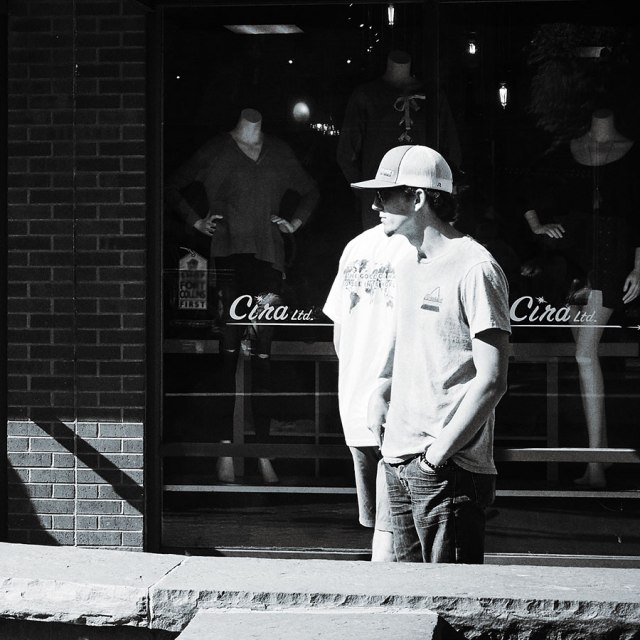
Frame within a Frame Create a frame within the image through the use of doorways, windows, window displays, trees, or any object that creates a frame around your subject.

Leading Lines Drawing the viewer’s eye is an important compositional element especially when lines converge toward each other and draw the eye to the subject. I found that the gaze of both the man and the dog create an implied line as well as invite a story.
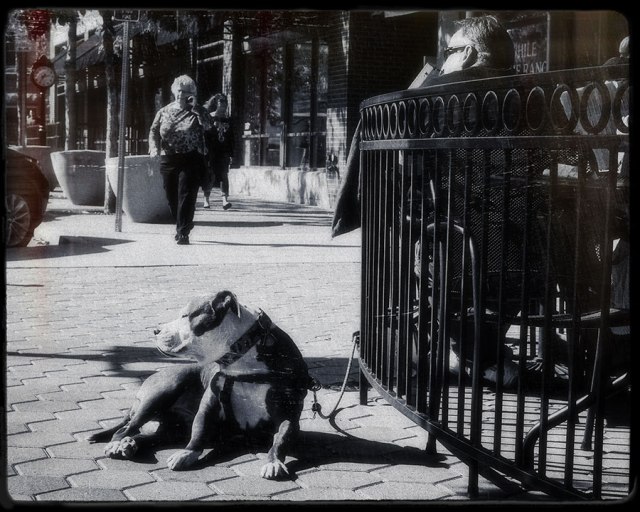
Juxtaposition Ian describes juxtaposition is where two adjacent objects appear to contrast with each other, as within the image below. The person in the foreground leans to the left opening us to the elderly man in the midground who is leading left. The Starbucks coffee cup in the center adds a social justice element as well as a contrast to both men.

Perspective – create high-angle images by standing on stairs, platforms, balconies or low-angle photos by getting close to the ground and shooting upwards.

Scale Images where the subject is dwarfed by the environment seems to be a way of introducing feeling into the image and drawing the eye to the person within the frame.
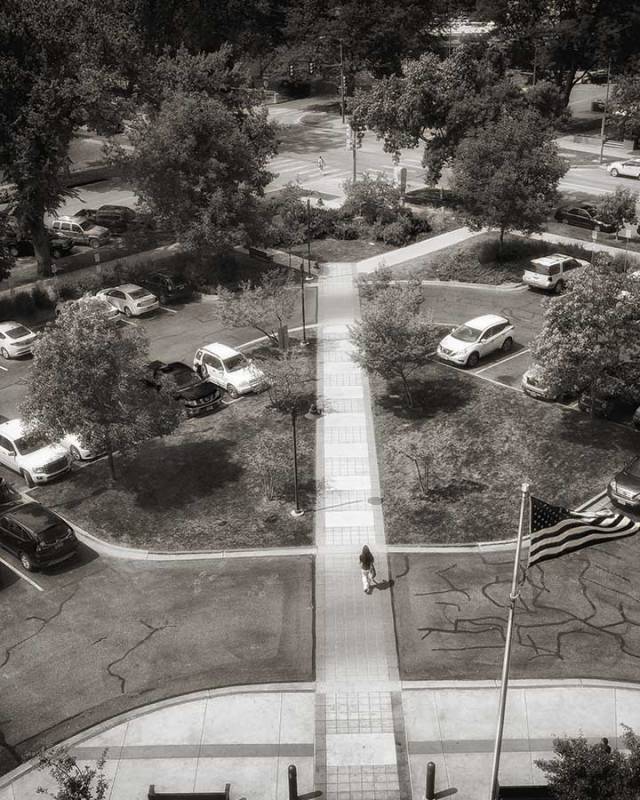
Color Color intermixed with light, shadows, and silhouettes have the potential to create unique photographs that nudge images away from the photojournalism and documentary genre.
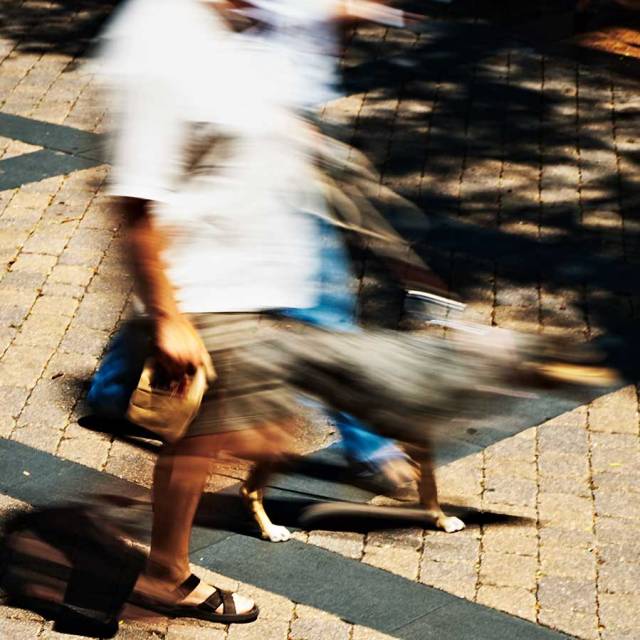
Reflections Entire stories can be created through the layers that are created when photographing through glass.
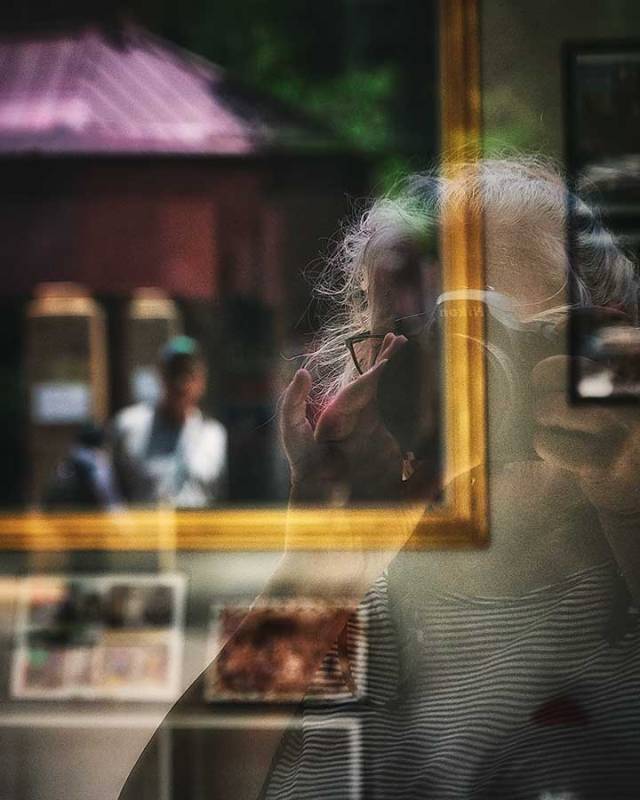
Light and Shadows Using your exposure compensation to drop the exposure on the frame (which protects the highlights while creating wonderful deep shadows) will create amazing interactions of shadows, light, and silhouettes.

The Candid Frame Within “Less than Obvious”, Ibarionex encourages us to open ourselves to “seeing” the world’s amazing detail and “being” intentional before we press the shutter.
I hope you find Ian’s educational blog and the Candid Frame to be an invaluable sources of information as well as doorways to a world of creative possibilities. I’m looking forward to seeing your creative work as well as reading your throughs about the use of basic composition elements into street photograph. Let’s tag with #aphotostudy. Until next week…
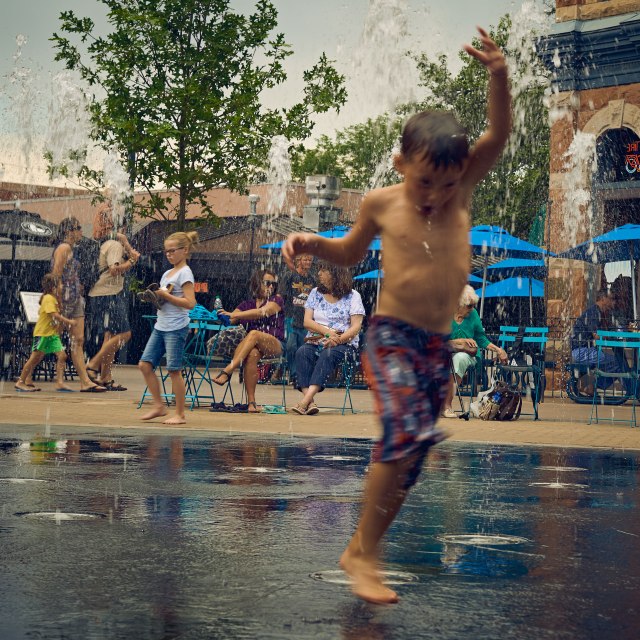
Nikon D750 f/7.1 1/80s 50m 100 ISO
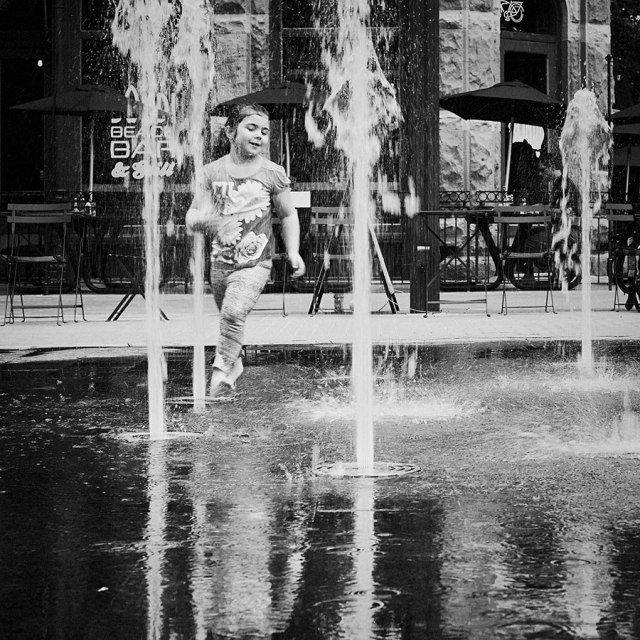
Nikon D750 f/7.1 1/80s 50m 100 ISO
Images submitted for this week’s lens artists photo challenge: cooling

Nikon D750 f/8 1/8s 300m 100 ISO
“He sought out a background with formal qualities interesting in themselves. Often it was a wall parallel to the place of the image, or a space lending perspective with defined graphic lines. Then he waited for figures to come and find their place in this arrangement of forms, in what he himself called ‘simultaneous coalition.’ His approach to composition was like a little theater with a set and actors. One part of what formed the geometric quality of his images was perfectly controlled: the other–and probably the most important-was the result of chance.” (cited: Aperture Masters of Photography Henri Cartier-Bresson)
This week I would like to introduce you to Ian MacDonald, an Official Fujifilm X Photographer and educator living in Vancouver, British Columbia, Canada. In his first of a series of street composition blogs, he reviews:
What really matters in a photograph

Nikon D750 f/2 1/5s 35m 160 ISO
Setting the stage

Nikon D750 f/8 1/8 135m 100 ISO
Street portraits
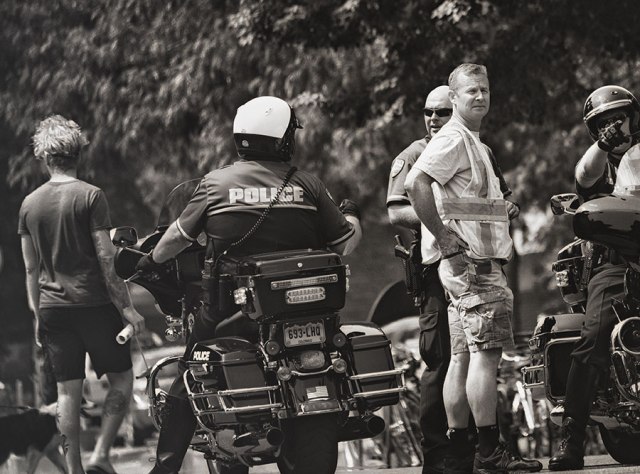
Nikon D750 f/5.6 1/160 300m I00 ISO
Detail Shots
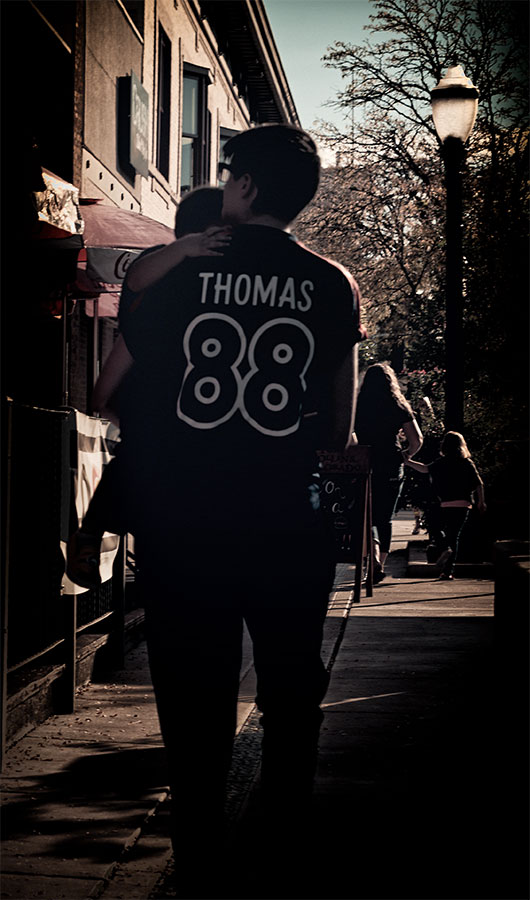
Nikon D750 f/8 1/100 68m 100 ISO
I hope you, also, find this to be interesting and informative. As always, I would love to read your thoughts and see your images. Let’s tag with #aphotostudy. Until next week…
This week’s photo study was inspired by The Candid Frame’s video in which Ibarionex speaks about the opportunities of light and shadow that a photographer will find in rural communities as well as in the dynamics of cities such as New York or Hong Kong.
Bring out the play of light and shadow within the scene.
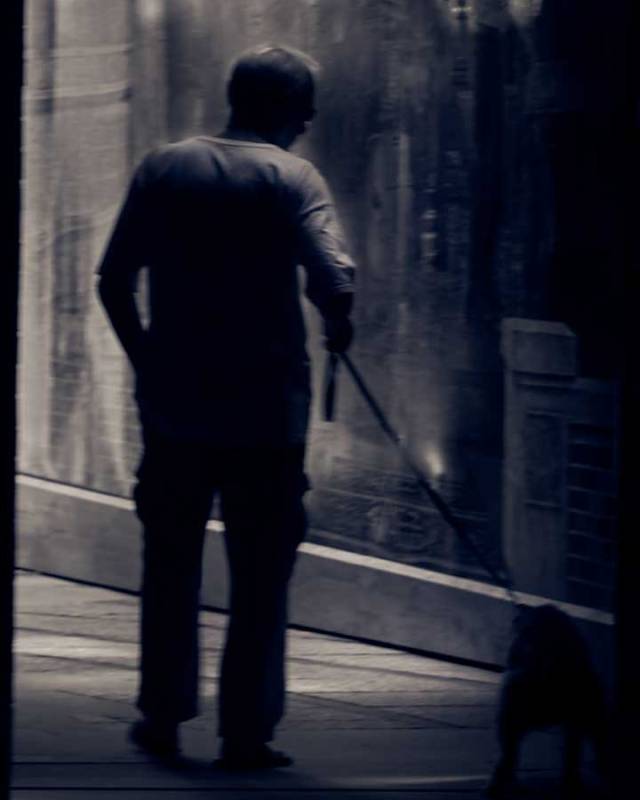
Be open to how light and shadow shifts the mundane into something exciting.
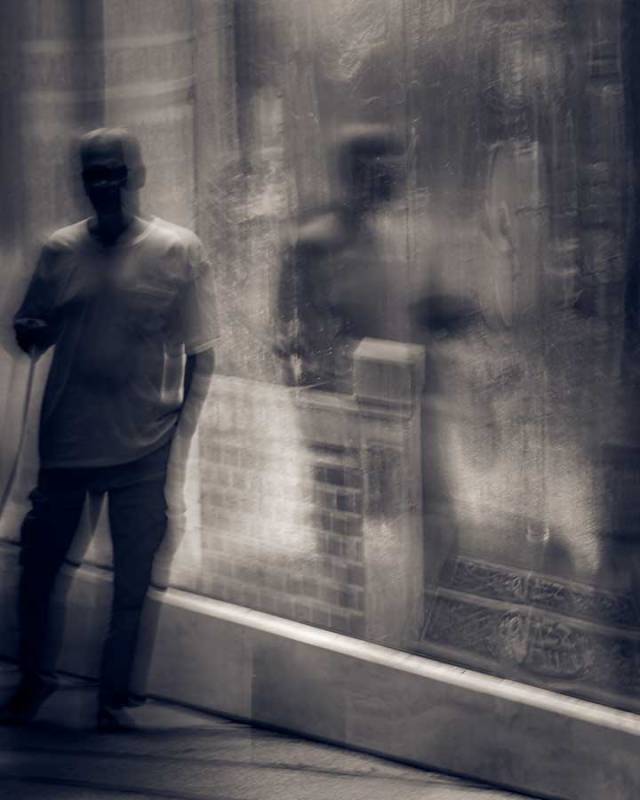
Allow the shadows to go black by adjusting the exposure.
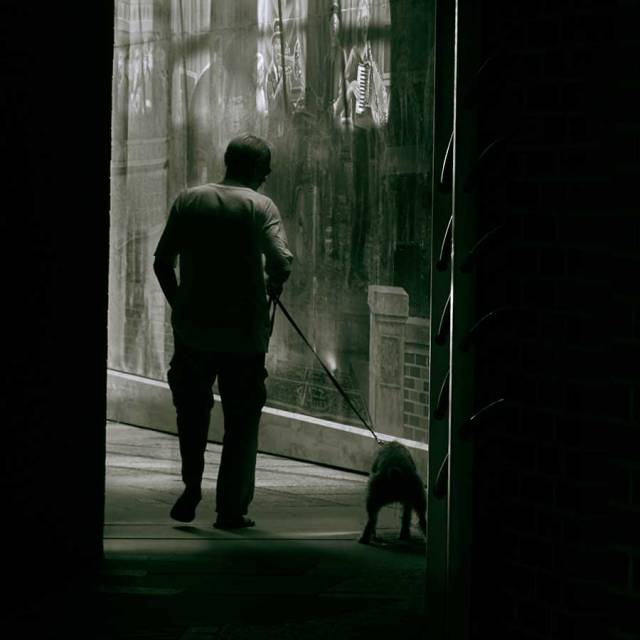
Find a scene and wait…
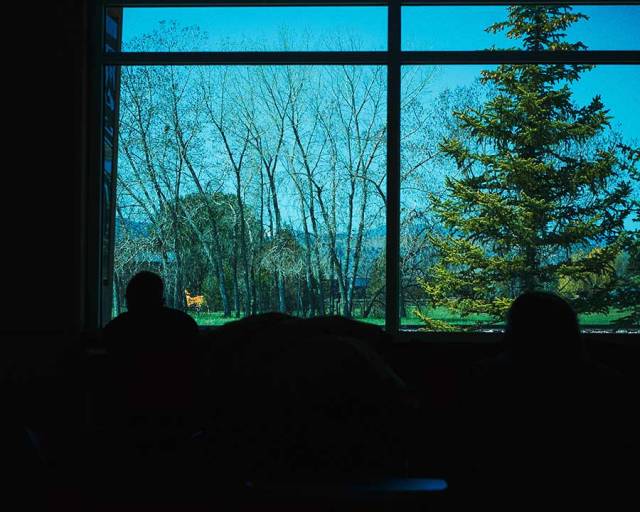
 I appreciate the encouragement to silence the envy when viewing photographs created within the dynamics of large urban areas by waking up to the amazing opportunities of light and shadow one will find…anywhere.


I hope you, too, are inspired by The Candid Frame’s video, Street Photography Anywhere. I am looking forward to reading your comments and seeing how you play with light and shadow within your town. Let’s tag with #aphotostudy.
mother and children
are separated…
hunted birds
~Issa (www.haikuguy.com)
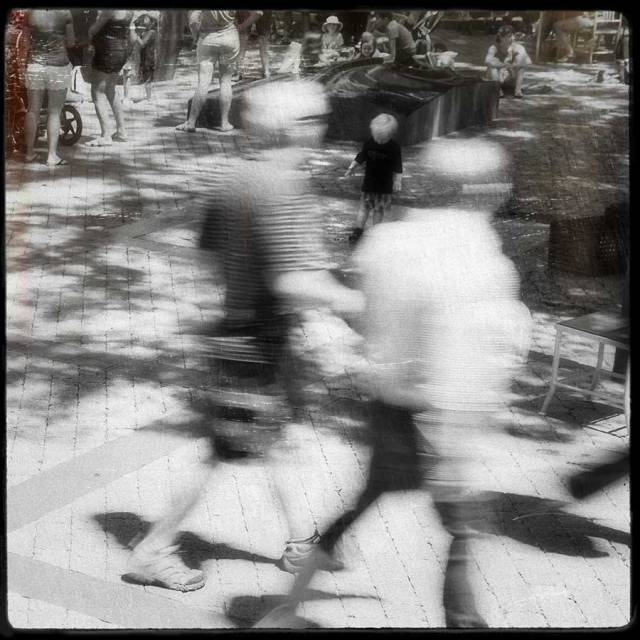
Nikon D750 f/5.6 1/10s 35m 100 ISO
slightly aslant

Ricoh GX100 f/4.1 1/200 5.1m 80 ISO
This week’s photo study was motivated by Ted Forbes’ (The Art of Photography) photo assignment that explored high-angle photography.
High-angle photography is created when the photographer is situated above her subject(s)–upper floors of a buildings, at the top of stairs, up on a ladder, holding the camera above the head–and the camera is focused downwards. It is often used for the group shot as it is the best way to include everyone in an image and brings about a dynamic element not found in an eye-level image.

Ricoh GX100 f/2.5 1/143s 5.1m 80 ISO
It can also be use for a standard portrait where the subject’s eye are looking up at the camera; yet, it has the potential to have a person appear small, vulnerable, weak, subservient, confused, or childlike.

Nikon D750 f/4.1 1/500s 46mm 100 ISO
A sense of solitude and isolation can be evoked when photographing from the vantage point of looking down from the upper floors of a building. It also has the potential to bring about a sense of freedom, transcendence, and omniscience as you, the viewer, are invited to be see the whole picture. Also from this perspective, people’s faces and expressions are less likely to be part of the image and, because they are less likely to be aware of your camera, poses and actions will be more natural.
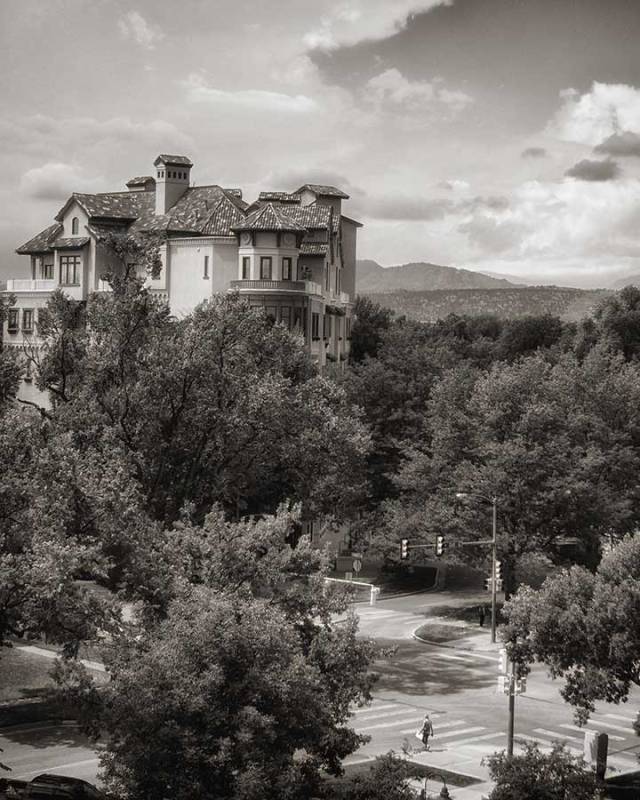
Ricoh GX100 f/3.9 1/125s 10.5m 80 ISO
When compositing from buildings, interesting images are created through the use of lines, objects, and patience to wait until someone walks into your canvas.
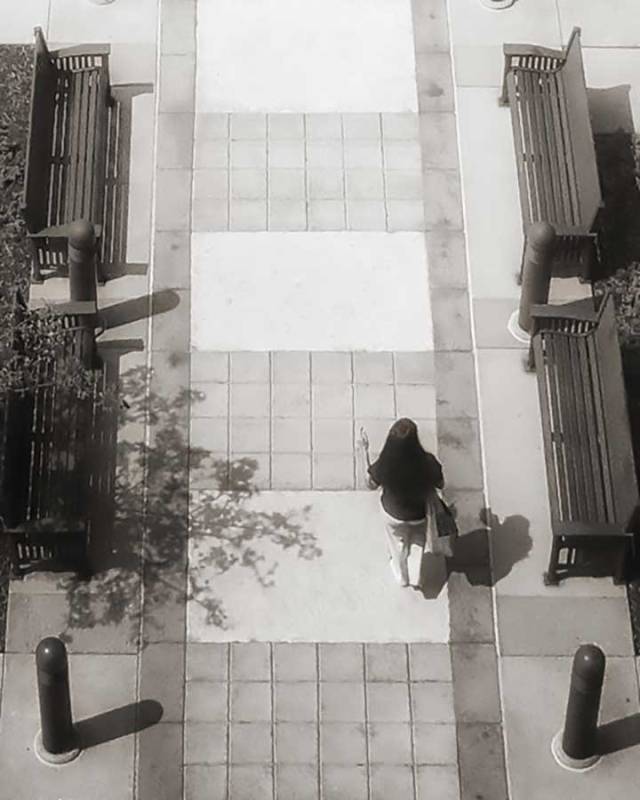
Ricoh GX100 f/4.1 1/200 5.1m 80 ISO
I found that street photography from “high above it all” is less likely to stir up the same degree of anxiety that I experience with eye-level photography. Would love to see your images taken from this perspective and to read about your experiences. Let’s tag wit #aphotostudy.
I hope you enjoy these amazing examples of high-angle photographs.
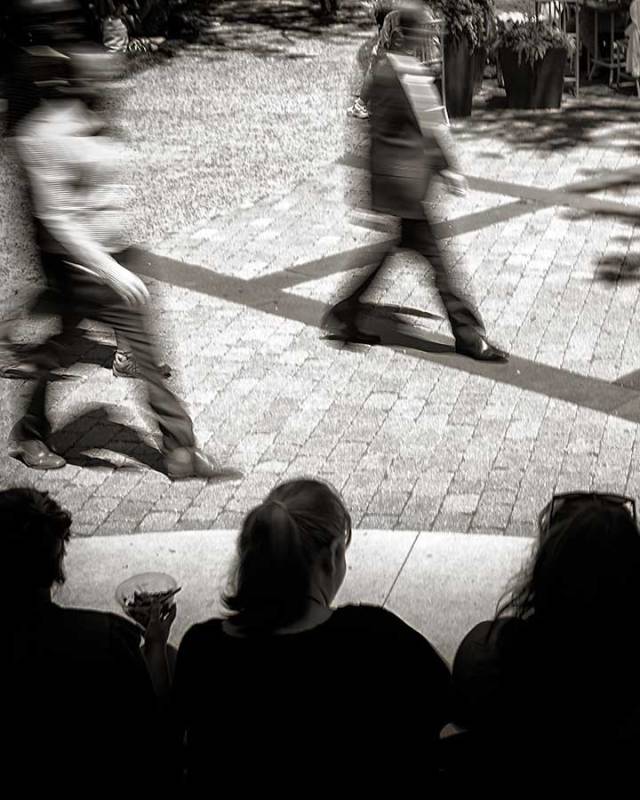
Nikon D750 f/5.6 1.10s 35mm 100 ISO
 Richo GX100 f/5.1 1/320 5.1m 80 ISO[/caption]
Marcus, Streets of Nuremberg, invites those who are interested in street photography to “try to shoot people who are engulfed in their every day business, unaware of the photographer aiming the camera at them. Obviously, using a longer lens (or zoom) does help not to get too close. But even with a wide angle lens, the camera up at the eye, you can wander through shops, bars or your local market, looking for interesting scenes, people, gestures, colors, patterns – and press the shutter when something catches your eye and gets your creative juices flowing. Move naturally, shoot, and trust me you will not be noticed.”
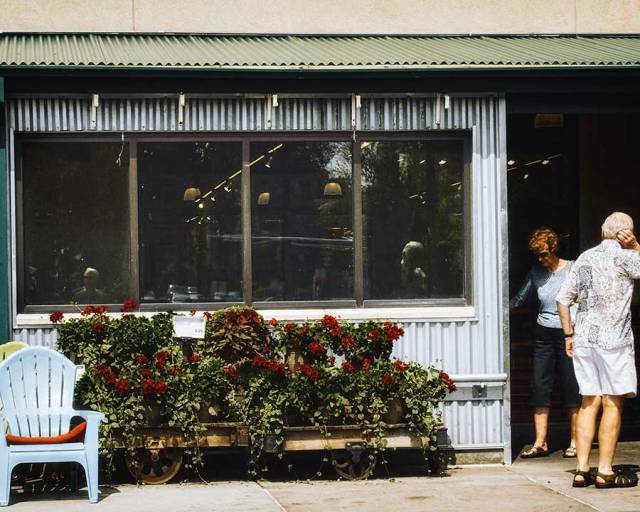
Richo GX100 f/7.9 1/320 15.3mm ISO 80
The Moment… the importance of the “moment”, those previous seconds in which a scene’s potential as a great photograph exists
 a meditative journey
You must be logged in to post a comment.