life’s passages … 101

How invisibly

it changes color

in this world,

the flower

of the human heart.

                              ~Ono no Komachi*

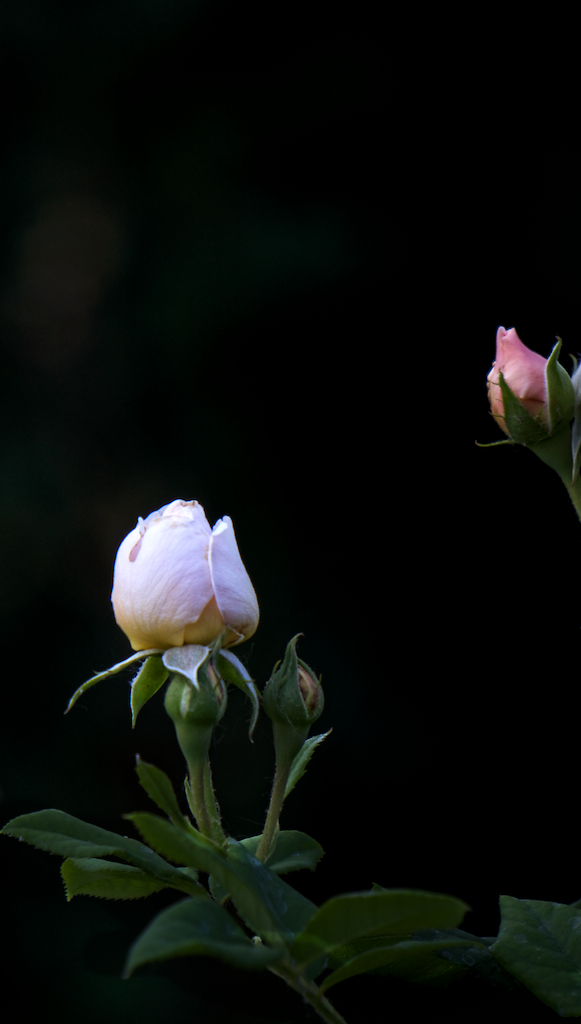
rose


“… our ordinary vision is limited, and…our conventional consensus of reality is not the only version of reality.

The complex multidimensionality of the modern world no doubt contributes to the constructive habit of the mind that, in its attempt to provide meaning, continually rearranges the world to fit individual needs.  The failure to recognize the constructive nature of the mind can be a major obstacle to artistry and creativity.  Conversely, understanding the constructive nature of the mind and reality can lead the way to Great Understanding in the art of photography and in the art of living.” (61)**

cited:

*The Ink Dark Moon

Trans: Jane Hirshfield with Mariko Aratant

**Tao of Photography

Philippe L Gross & S.I. Shapiro

life passages … 99

Is my mind elsewhere

Or has it simply not sung?

Hototogisu*

~Ihara Saikaku (1642-1693)**

*Hototogisu, translated as cuckoo, wood thrush and sometimes nightingale.

The bird’s song is a strong but mournful cry.

It is said to die after singing 8,008 times.

It is also known as the “bird of time,”

“messenger of death” and “bird of disappointed love,”

and flies back and forth from this world to the next.

Confucian axiom: If one’s mind is elsewhere, one will look but not see, listen but not hear

**cited in:

The Classic Tradition of Haiku

Edited by:  Faubion Bowers

lens-artists: music to my eyes

The child claps his hands

playing alone, happily,

under a festive tree ~Issa*

artist: R. B. AH**
artist: A. H-A**

Egidio invites photographers to share photographs that are associated with songs. That is, “what music do you hear in your photos?”

I thought to share this masterpiece of abstract art created by a very quiet and thoughtful artist.

While photographs do not bring to mind music, they often speak to me either through haiku or a haiku accompanies me during a photo walk. There are associations with images and scent as well as music and memory.

Music seems more abstract than other art forms because it represents emotional states, symmetry and repetition, and other intangibles. But just because you can’t see or touch these things, doesn’t make them any less real. In preliterate societies, music was probably one of the best methods for storing and conveying complex stories and information.***

One of the best ways to understand how the over-all space of creative expression reflects its parts is to imagine yourself inside the space of the artwork…select a place within the composition where you would like to locate yourself for a few minutes of contemplation. …imagine…passing through different areas of the artwork…feel…energetic patterns. (152)****

*cited: The Spring of My life

Trans: Sam Hamill

**used with permission by the artist

***The Ethan Hein Blog (www.ethanhein,com)

**** McNiff, Shawn

Trust the Process

life’s passages … 84

“The sight of the leaves ever reminds me strangely of my own sadness. I cannot go within, but lie on the veranda; mayhap my end is not far off. I feel a vague anger that others are in comfortable sleep and cannot sympathize with me. Just now I hear the faint cry of a wild goose.* Others will not be touched by it, but I cannot endure the sound.

How many nights, alas!-

Sleepless-

Only the calls of the wild geese-

~The Diary of Izumi Shikibu (cited: Diaries of Court Ladies of Old Japan)

*Footnote within the Diary of Court Ladies of Old Japan notes that the “wild geese visit Japan in Autumn and fly away northwards in the early spring. They are never alone, and their cries calling to each other make the solitary woman feel loneliness more keenly.”

life’s passages … 77

“For remembrance of her I wanted to write about her,”… but I stopped short with the words, “Ink seems to have frozen up, I cannot write any more.” *

How shall I gather memories of my sister?

The stream of letters is congealed. 

No comfort may be found in icicles 

  ~The Sarashina Diary (Diaries of Court Ladies of Old Japan)

Nikon D750 f/4.5 1/400 58mm

*The continuous writing of the cursive Japanese characters is often compared to a meandering river. “Ink seems to have frozen up” means that her eyes are dim with tears, and no more she can write continuously and flowingly.