“‘…who is the founder of the database in the PeaceKeeper Corps?’…
“‘The database is a unique algorithm created by Xu Bin. …’
“‘Is he some kind of charlatan?’
“‘Xu Bin is also known as Youde. He was once the clerk of the National Treasury. He has an incredible memory and he was one of the first officials that was transferred to the Peacekeeper Corps. … He is absurd and ridiculous. He never associates himself with others or the outside world. He focused only on mathematics. He said that only numbers can reveal the truth in this world…’
“‘Can all the things you said prove that you have a clear view of Xu Bin? Can the achievements and opinions on a person that are passed from one to another show the true colors of the man? Can the comments of others show the true colors of the man? Can the later generations get his true color right by guessing through his biography with the historical data or by conjecturing his face through a painter? When it boils down to it, everything depends on how the audience wants to see it and how the writer wants to write it.’
“‘Xu Bin is low-key and introverted by nature. He never expresses himself through poetry. So, we can’t find much information about him.’
“‘Poems that were written are just the thoughts and feelings for one fleeting moment. Will you be able to guess the motives and reasons behind a person’s story through a few isolated words and phrases?…'”
Cited: The Longest Day in Chang’an, Directed by Cao Dun. Written by: Paw Studio. episode 14.
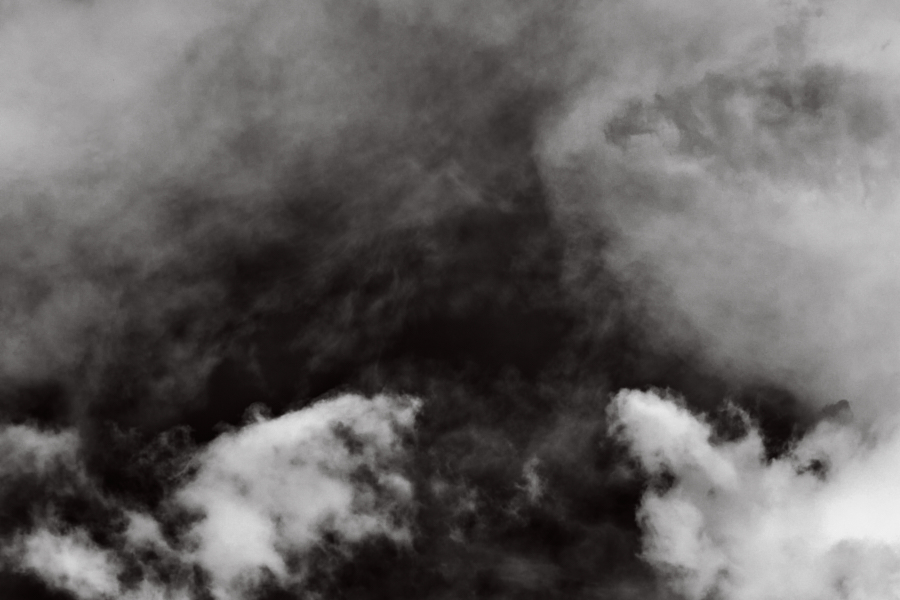
photograph Metadata: Nikon D750 f/8 1/13s 38mm 400 ISO
Our heroes must be summoned from within. It’s up to us to put them to work and to learn how to save ourselves.
sunset
“People …like the idea of someone with special powers watching over us, ready to intervene in a crisis and keep us safe from dark forces. The Buddha…spoke of ‘the two bright qualities [that] protect the world’ (dve sukka dhamma lokam palenti—Anguttara Nikaya 2.9). These are Hiri, or conscience, and Ottappa, our respect for others. …
“Today, …the greatest dangers we face now erupt from within our own hearts: human greed, hatred, and delusion, the arch villains that cause so many real-world problems. Greed, the powerful impulse to snatch whatever it can, will take even life itself from the defenseless. Hatred drives us to do unspeakable things to those we view as other. And delusion, so willingly embraced, smothers any insight that might arise about the danger we’re in or the harm we may do. The twin guardians are the crucial allies we have to foil their plots.
“The first hero, Hiri, can be thought of as conscience or self-respect. She… flies into our mental world at the moment when we are considering doing something that we know deep down to be wrong. Hiri is our personal sense of ethical integrity, our moral compass, our intuitive understanding of what is right and wrong, what’s appropriate and what isn’t. She is not a severe critic but a soft, caring voice whispering in our ear and guiding us through our lives with courage and compassion. She saves us from the demons lurking within and stands beside us when we say, ‘No, that is just not right. I will not do it (or say it or think it).’
“Her intrepid ally Ottappa is the elemental force of caring for others and respecting their concerns. It appears on the scene when we’re tempted to do something that is against the laws of propriety, is outside the social norm, or would be condemned by the people we respect. Ottappa draws its strength from the fact that we are social creatures who belong to a family or community, and that our actions are rooted in and accountable to a larger collective order.
“…The Buddha said [Hiri and Ottappa] guard the world, protecting it from getting broken by the onslaught of the worst parts of ourselves. Without them people could act like beasts, ravaging even their own mothers. We all know what atrocities human beings are capable of. For so many victims, Hiri and Ottappa do not always show up in time, held at bay by their nemeses, Ahiri (lack of conscience) and Anottappa (lack of respect). These two anti-heroes are present every time a harmful, cruel, or ignorant deed is done, blocking out the benevolent effects of conscience and respect.
“Fortunately Hiri and Ottappa have other friends, including Sati, or mindfulness, who goes first into every fray and summons the team into action. Sati is conscious awareness of what is happening right now, and Ahiri and Anottappa can only function when such awareness is absent. When people do harm to themselves and others, they are often not aware of what they are doing. They are conscious enough to act, but not conscious enough to be aware of the quality of their actions or of their consequences. Whenever a person musters even a degree of mindfulness, conscience and respect arrive there too, helping them do, say, and think what is helpful rather than what is harmful…”
“… The unpardonable sin of the supreme power is that it is supreme. I do not curse you for being cruel. I do not curse you (though I might) for being kind. I curse you for being safe! You sit in your chairs of stone, and have never come down from them. You are the seven angels of heaven, and you have had no troubles. Oh, I could forgive you everything, you that rule all mankind, if I could feel for once that you had suffered for one hour a real agony such as I—” Syme sprang to his feet, shaking from head to foot. “I see everything,” he cried, “everything that there is. Why does each thing on the earth war against each other thing? Why does each small thing in the world have to fight against the world itself? Why does a fly have to fight the whole universe? Why does a dandelion have to fight the whole universe? For the same reason that I had to be alone in the dreadful Council of the Days. So that each thing that obeys law may have the glory and isolation of the anarchist. So that each man fighting for order may be as brave and good a man as the dynamiter. So that the real lie of Satan may be flung back in the face of this blasphemer, so that by tears and torture we may earn the right to say to this man, ‘You lie!’ No agonies can be too great to buy the right to say to this accuser, ‘We also have suffered.’ “It is not true that we have never been broken. We have been broken upon the wheel. It is not true that we have never descended from these thrones. We have descended into hell. We were complaining of unforgettable miseries even at the very moment when this man entered insolently to accuse us of happiness. I repel the slander; we have not been happy. I can answer for every one of the great guards of Law whom he has accused. At least—” He had turned his eyes so as to see suddenly the great face of Sunday, which wore a strange smile. “Have you,” he cried in a dreadful voice, “have you ever suffered?” As he gazed, the great face grew to an awful size, grew larger than the colossal mask of Memnon, which had made him scream as a child. It grew larger and larger, filling the whole sky; then everything went black. Only in the blackness before it entirely destroyed his brain he seemed to hear a distant voice saying a commonplace text that he had heard somewhere, “Can ye drink of the cup that I drink of?”
cited: G.K. Chesterton, The Man Who Was Thursday (The Project Gutenberg Ebook)
Note: “This ebook is for the use of anyone anywhere at no cost and with almost no restrictions whatsoever. You may copy it, give it away or re-use it under the terms the Project Gutenberg License included with this ebook or online at www.gutenberg.org.”
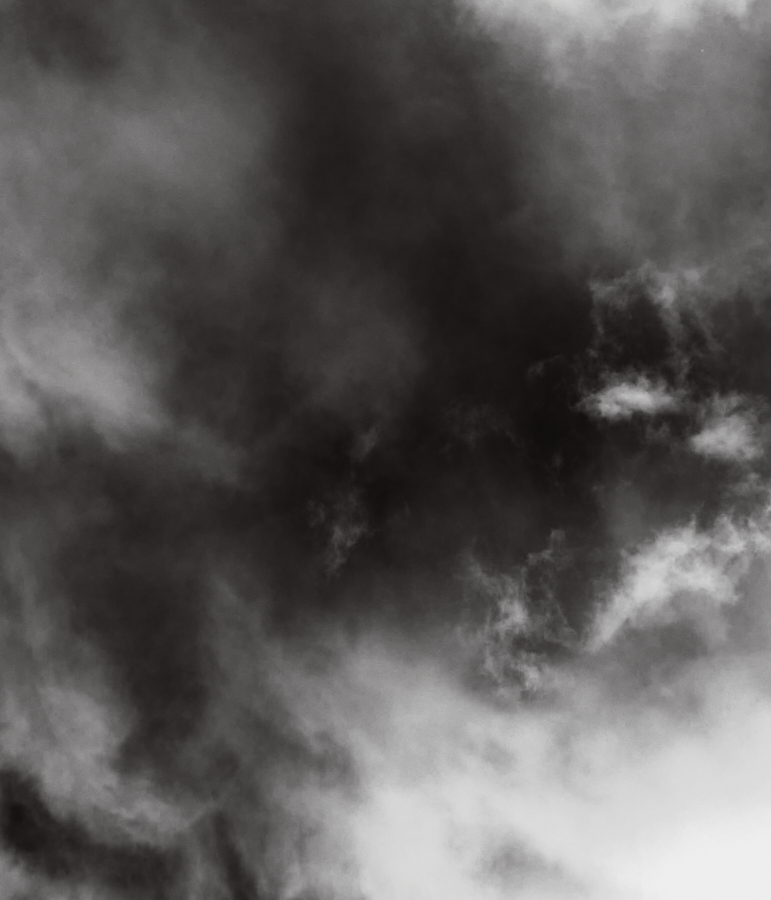
Photograph created with Nikon D750 f/89 1/40s 68mm 400 ISO and edited with Capture One 20
“The Dragon is one of the four spiritually endowed creatures of China, the others being the Unicorn, the Phoenix, and the Tortoise. There are four principal Lung or Dragons–the Celestial Dragon, which supports and guards the mansion of the Gods; the spiritual Dragon, which causes the winds to blow and the rains to fall; the Earth Dragon, which marks out the courses of rivers and streams, and the Dragon of the Hidden Treasure, which watches over wealth concealed from mortals.
Sunset… May 2, 2020
“…from a symbol of spiritual power from whom no secrets are hidden this dragon becomes a symbol of the human soul in its divine adventure, ‘climbing aloft on spiral gusts of wind, passing over hills and dreams, treading in the air and soaring higher than the Kwan-lun Mountains, bursting open the Gate of Heaven, and entering the Place of God.'”
Cited: JSTOR, Captain L Cranmer-Byng. Chinese Poetry and its Symbols
Photograph created with Nikon D750 f/8 1/20s 62mm 400 ISO and Capture One 20
…the fairest dreams and the deepest longings do not add an inch to the stature of the human soul.
Jens Peter Jacobsen, Niels Lyhne Trans: Hanna Astrup Larsen, Project Gutenberg of Australia
sunset… April 28, 2020
“She loved poetry.
“But the poems! They teemed with new ideas and profound truths about life in the great outside world, where grief was black, and joy was red; they glowed with images, foamed and sparkled with rhythm and rhyme. They were all about young girls, and the girls were noble and beautiful–how noble and beautiful they never knew themselves. Their hearts and their love meant more than the wealth of all the earth; men bore them up in their hands, lifted them high in the sunshine of joy, honored and worshiped them, and were delighted to share with them their thoughts and plans, their triumphs and renown. They would even say that these same fortunate girls had inspired all the plans and achieved all the triumphs.
“She lived on poems, dreamed poems, and put her faith in them above everything else in the world. Parents, sisters and brothers, neighbors and friends–none of them ever said a word that was worth listening to. Their thoughts never rose above their land and their business; their eyes never sought anything beyond the conditions and affairs that were right before them.
“Why might not she herself be such a girl? They were thus and so–and they never knew it themselves. How was she to know what she really was? And the poets all said very plainly that this was life, and that it was not life to sit and sew, work about the house, and make stupid calls.
“When all this was sifted down, it meant little beyond a slightly morbid desire to realize herself, a longing to find herself, which she had in common with many other young girls with talents a little above the ordinary. It was only a pity that there was not in her circle a single individual of sufficient distinction to give her the measure of her own powers. There was not even a kindred nature. So she came to look upon herself as something wonderful, unique, a sort of exotic plant that had grown in these ungentle climes and had barely strength enough to unfold its leaves; though in more genial warmth, under a more powerful sun, it might have shot up, straight and tall, with a gloriously rich and brilliant bloom. Such was the image of her real self that she carried in her mind. She dreamed a thousand dreams of those sunlit regions and was consumed with longing for this other and richer self, forgetting–what is so easily forgotten–that even the fairest dreams and the deepest longings do not add an inch to the stature of the human soul.
cited: Jens Peter Jacobsen, Niels Lyhne. A Project Gutenberg of Australia ebook. *
sunset…April 28, 2020: Nikon D750 f/8 1/30s 45mm 400 ISO edited Capture One 20
*This ebook is made available at no cost and with almost no restrictions whatsoever. You may copy it, give it away or re-use it under the terms of the Project Gutenberg of Australia License which may be viewed online at http://gutenberg.net.au/license.html.
What with one thing and another — that cup of coffee (which must nowadays be drunk with reverence, for each day it may be our last)…
Trans: A Pomerans, An Interrupted Life The Diaries of Etty Hillesum 1941 – 1943, pp. 82
sun set
“… Nowadays there are hardly any accidental relationships left; you have a deep if subtly different relationship with each person, and must not be disloyal to one for the sake of the other. There are no wasted and boring minutes any longer, one has to keep learning how to take one’s rest between two deep breaths or in a five-minute chat.
“…It is a good thing from time to time to feel the emptiness and wariness in yourself for a moment or two, just to recall how things used to be and how they are now. The tree outside the house seemed a lifeless lump of timber stabbing a dull sky. But the feeling of deep unhappiness lasted for only a moment. The day seemed to start out so bleakly yesterday. But after an hour of calm and concentrated work everything was fine again.”
cited: Trans: A Pomerans, An Interrupted Life The Diaries of Etty Hillesum 1941 – 1943, pp. 82-85
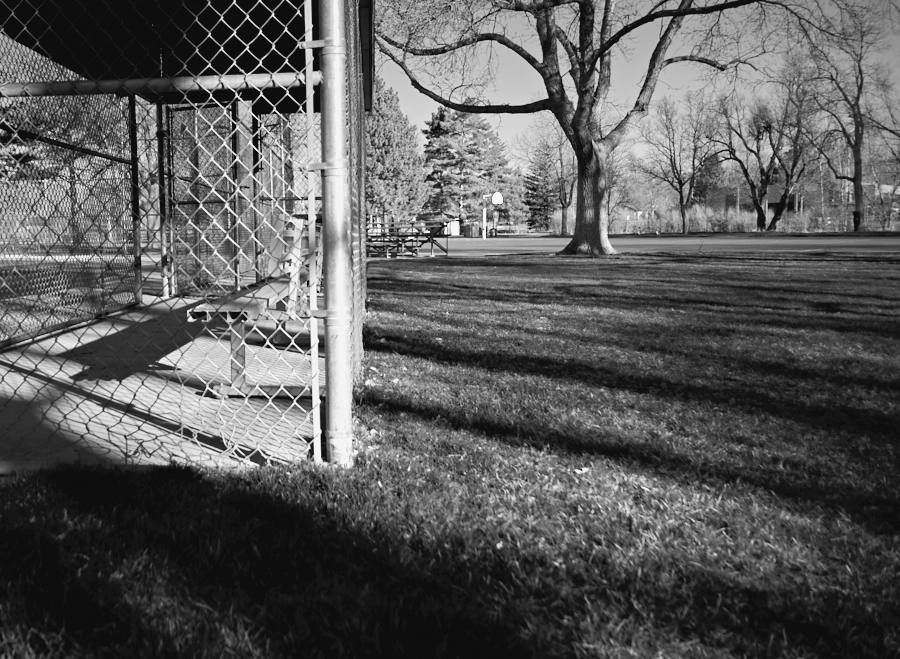
Nikon D750 f/8 1/30s 105mm 400 ISO edited Capture One 20
Sony RX1003 f/1.8 1/200 8.8mm 80 ISO edited in Capture One
“Camus taught us that ‘the only way to fight the plague is with decency’. Whether it is saving the sick and preventing infections, like Dr Rieux, standing up for the most vulnerable, or simply, helping our family and others survive, we are all called on now to find our inner strength, the strength of our forebearers.
Sony RX 1003 f/1.8 1/160 8.8mm 80 ISO edited in Capture One
“The new coronavirus has … sickened thousands of America’s first responders and killed dozens more.
“But many have recovered, and they’re going back to work — back to the crime scene, back into the ambulance, back to the jail. Going back to this deadly pandemic’s front lines.
“They go with a lingering cough and lost weight. They toss and turn at night, wondering if the claims of immunity are true. They fear that picking up extra overtime shifts may expose them, and their families, to additional risks.
“And then they pull on their uniforms and go back to work.”
cited: Stefanie Dazio, Michael R. Sisak and Jake Bleiberg, After COVID-19: Anxious, wary first responders back on job Associated Press
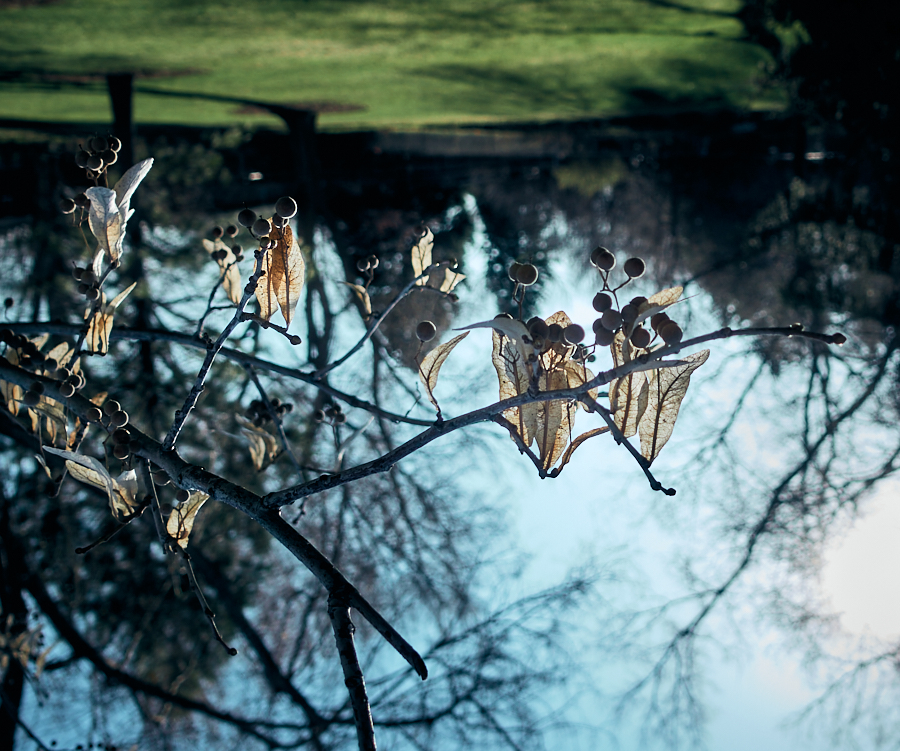
Composing 180º rotated
In a recent email, Bruce Percy wrote, “I think I’m usually an observant composer, but when I use a ground glass on [6X9 Ebony SW23] cameras my mind has to work harder at visualizing the final photograph as the image is flipped vertically and horizontally.
first composition
“I don’t use this camera very often so when I do use it, it usually takes me a few days to start to ‘see’ images the right way up in my mind’s eye.
“After I’ve been doing that for a few days, it’s amazing to note how my mind’s eye adapts. I think there is a lot of usefuleness in working with images when they are rotated at 180º as they force your eye to go into areas of the picture that aren’t normally visited. You spot things in the composition that you normally wouldn’t.”
second composition
Composition elements used within the above image created using a Sony RX1003 f/2.8 1/125s 8.8mm 80 ISO.
While the first image brings my attention to how the spring’s morning sun highlights the autumn leaves, I found that the 180 degree rotation opened my eyes to how irritating the sun was in the upper left as well as invited me to explore using the horizon (rule of thirds).
Composition elements:
subject (leaves) sharpened by using a blurred background
rule of thirds
perspective
space
I would enjoy reading your thoughts about Bruce Percy’s discussion about 180 degree rotation and compositional elements.













 a meditative journey
You must be logged in to post a comment.